- Company Articles
- Products and Technology
- Application Cases
- Two Way Lean Pipe Joint Applications in Automotive Parts Material Racks

Two Way Lean Pipe Joint Applications in Automotive Parts Material Racks
Related Product
Two Way Lean Pipe Joint
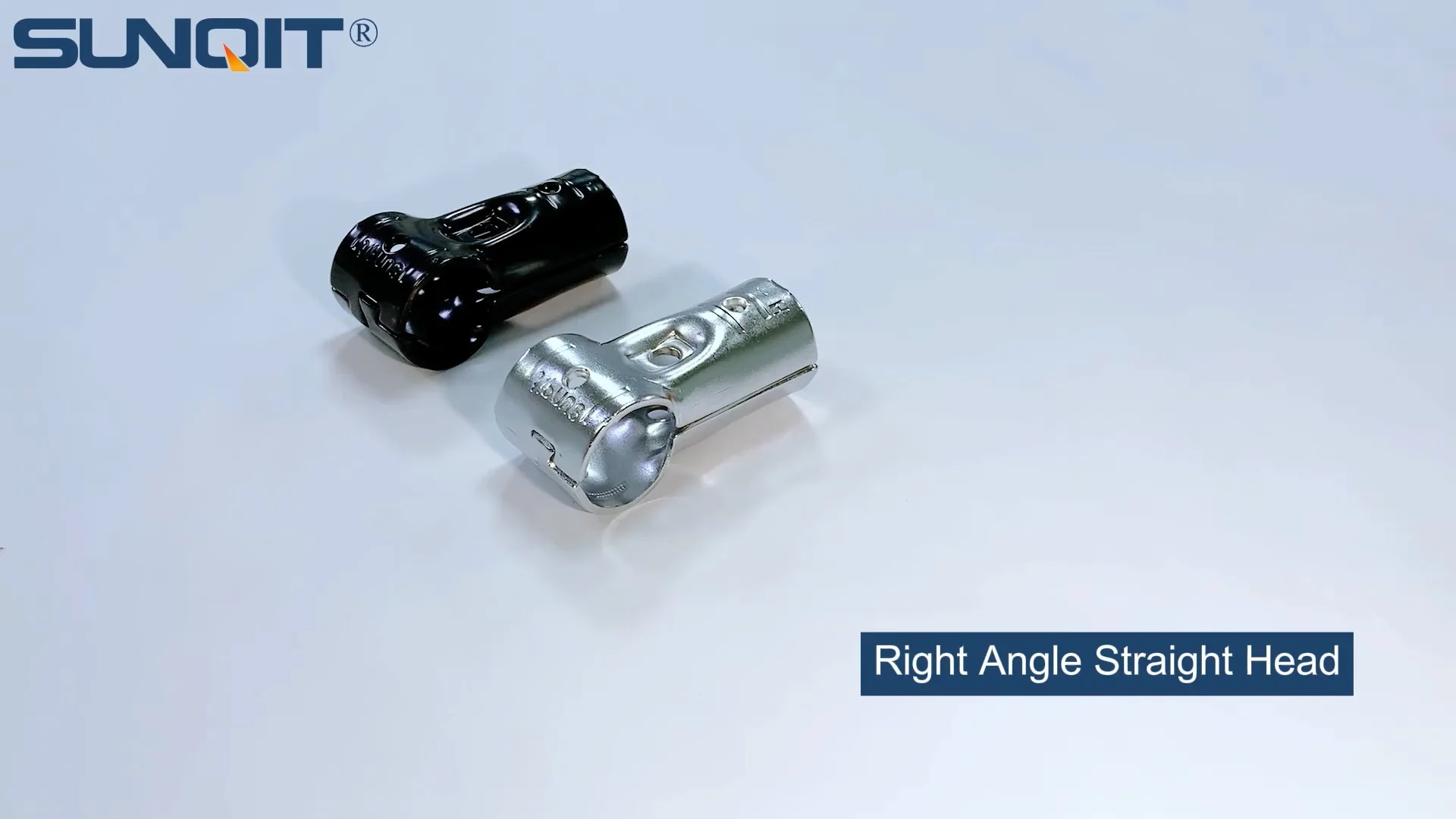
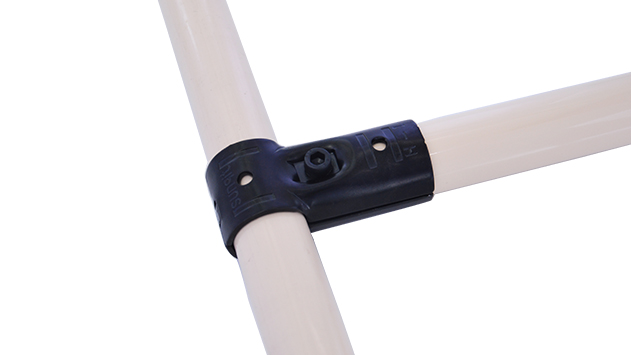
Two way lean pipe joint for 2 pcs 28MM lean pipe connection in straight angle, which used widely in workbench, flow rack, hand trolley frame connection.
In the high-stakes world of automotive manufacturing, where every second counts and precision is non-negotiable, the difference between a smooth production line and a bottleneck often comes down to the smallest details. Material handling—how parts move from storage to assembly, how tools are organized, how workers access components—lies at the heart of operational efficiency. A disorganized material rack can lead to delayed workflows, misplaced parts, and even safety hazards, while a well-designed one becomes an invisible engine driving productivity. This is where lean manufacturing principles step in, and at the core of many lean material handling solutions are unsung heroes like the two way lean pipe joint . These unassuming connectors are far more than just pieces of metal; they are the building blocks of flexible, customizable, and efficient material racks that keep automotive parts flowing seamlessly through the production process.
Understanding the Role of Lean Systems in Automotive Manufacturing
Before diving into the specifics of two way lean pipe joints, it's essential to grasp why lean systems matter in automotive manufacturing. Lean manufacturing, born from the Toyota Production System, revolves around eliminating waste—whether it's time, space, labor, or materials—while maximizing value. In an industry where production lines can stretch for miles and thousands of parts (from tiny screws to large engine blocks) need to be precisely coordinated, waste reduction isn't just a goal; it's a necessity. Disorganized material storage, for example, is a classic source of waste: workers might spend extra minutes searching for a part, or a heavy component might be stored in a hard-to-reach location, leading to fatigue and slowdowns.
Lean material handling systems address this by prioritizing three key principles: modularity, flexibility, and adaptability. Modularity allows systems to be built from standardized components, making assembly quick and repair easy. Flexibility ensures that as production needs change—whether due to a new model launch, increased demand, or process optimization—the system can be reconfigured without a complete overhaul. Adaptability means the system can grow or shrink with the business, avoiding the need for costly replacements. At the intersection of these principles lie lean pipe systems, which use pipes, joints, and accessories to create everything from workbenches to material racks. And among these components, the two way lean pipe joint stands out for its simplicity and versatility, making it a staple in automotive material rack design.
What Is a Two Way Lean Pipe Joint?
At first glance, a two way lean pipe joint might seem simple: a small, often metal connector designed to join two lean pipes at a fixed angle (typically 90 degrees, though some designs allow for adjustment). But its simplicity is precisely its strength. Most two way joints are made from durable materials like galvanized steel, stainless steel, or aluminum, chosen for their resistance to corrosion (critical in factory environments where oils, coolants, and humidity are common) and ability to withstand heavy loads. The joint itself features two hollow ports that fit over the ends of lean pipes, secured by set screws or bolts that bite into the pipe, creating a tight, stable connection.
What sets two way joints apart from other types (like three-way or four-way joints) is their focus on linear connections. While multi-way joints are ideal for complex structures with multiple branches, two way joints excel in creating straight or L-shaped frameworks—exactly the kind needed for material racks, where horizontal and vertical supports are the foundation. For example, a basic material rack might consist of vertical pipes (legs) connected by horizontal pipes (shelves or cross-braces), and two way joints are the perfect choice for these straightforward, load-bearing connections. Their design minimizes bulk, keeping the rack lightweight but sturdy, and their standardized size ensures compatibility with most lean pipes (common diameters include 28mm or 30mm), making them easy to source and replace.
Why Two Way Lean Pipe Joints Are Indispensable in Automotive Material Racks
Automotive parts come in all shapes and sizes: from delicate electronic components (like sensors or wiring harnesses) to heavy metal parts (like brake calipers or suspension components). Material racks must accommodate this diversity while maintaining order and accessibility. Two way lean pipe joints shine here for several reasons:
1. Customization Without Complexity Automotive production lines rarely stay static. A manufacturer might switch from producing sedans to SUVs, requiring larger storage spaces for bigger parts, or introduce a new electric vehicle model with unique battery components. Two way joints allow material racks to be customized on the fly. Need to add an extra shelf? Simply cut a length of lean pipe, connect it to the existing frame with two way joints, and secure it—no welding or specialized tools required. This level of customization is far harder to achieve with fixed metal racks, which often require professional modification or replacement.
2. Durability for Heavy-Duty Use Automotive parts can be heavy. A single shelf in a material rack might hold dozens of engine brackets, each weighing several pounds, or stacks of metal panels. Two way lean pipe joints, when properly tightened, create a rigid connection that can withstand constant loading and unloading. Many are designed with reinforced edges or thicker walls at the connection points, preventing bending or snapping under stress. In environments where racks are moved (via casters) or bumped by forklifts, this durability is critical to avoiding accidents or damage to parts.
3. Cost-Effectiveness Over Time While the initial cost of lean pipe systems might be slightly higher than basic wooden or plastic racks, two way joints contribute to long-term savings. Their modularity means that when a rack is no longer needed in one area, it can be disassembled and rebuilt elsewhere—no need to buy new equipment. Additionally, if a joint wears out (e.g., the set screw strips), it can be replaced individually, rather than replacing the entire rack. For automotive manufacturers operating on tight budgets, this "build once, reuse often" approach is a game-changer.

Practical Applications: Two Way Lean Pipe Joints in Action
To truly understand the value of two way lean pipe joints, let's explore their real-world applications in automotive parts material racks. From flow racks that keep parts moving to workbenches that organize tools, these joints are the silent architects of efficient material handling.
Application 1: Flow Racks for Small-Part Storage
In automotive assembly, small parts like nuts, bolts, washers, and clips are used in massive quantities. Misplacing even a single type can bring a line to a halt. Flow racks —tilted racks with roller tracks that allow parts to "flow" forward as the front bin is emptied—are a lean solution to this problem, and two way lean pipe joints are instrumental in their construction.
A typical flow rack for small parts consists of a frame (vertical and horizontal lean pipes), inclined shelves, and roller track systems (plastic or metal rollers that let bins glide smoothly). Two way joints are used to build the frame's vertical supports and horizontal cross-members. For example, vertical pipes are connected to horizontal base pipes (forming the rack's legs) using 90-degree two way joints, ensuring stability. The inclined shelves, which angle downward toward the front of the rack, are then attached to the vertical frame with another set of two way joints. Because the shelves need to be at a precise angle (usually 5-10 degrees) to ensure proper flow, two way joints with adjustable angles (a variation of the standard design) are sometimes used, allowing workers to fine-tune the tilt based on the weight of the parts.
The beauty of using two way joints here is that the number of shelves and their spacing can be easily adjusted. If a new part requires a taller bin, the joint connections can be loosened, the shelf height adjusted, and the joint retightened—all in minutes. This flexibility is invaluable in automotive plants, where part sizes and quantities can change with each production run.
Application 2: Turnover Trolleys for Bulk Part Transport
Moving bulk parts—like door panels, seats, or exhaust components—from the warehouse to the assembly line requires sturdy, mobile storage. Turnover trolleys (also called transport carts) are designed for this purpose, and two way lean pipe joints are key to their lightweight yet robust construction.
A turnover trolley typically has a rectangular frame (built with lean pipes and two way joints), a flat or sloped surface for holding parts, and casters for mobility. The frame must be strong enough to support heavy loads (often 200kg or more) while remaining easy to push. Two way joints are used to connect the vertical corner pipes to the horizontal top and bottom rails, creating a rigid rectangle. Cross-braces (additional horizontal pipes) can be added using two way joints to reinforce the frame, preventing twisting during movement. For example, a trolley carrying heavy engine parts might have cross-braces on both the top and bottom, connected via two way joints to the corner pipes, distributing the weight evenly.
What makes two way joints ideal for trolleys is their compatibility with other lean accessories. Casters, for instance, can be attached to the bottom of the vertical pipes using specialized caster mounts, which are secured to the pipes via two way joints. This modularity means a single trolley design can be adapted for different parts: add a mesh panel (connected with two way joints) to prevent small parts from falling off, or install a tilted shelf (using angled two way joints) to keep parts visible and accessible.
Application 3: Integration with Lean Pipe Workbenches
At many automotive assembly stations, workers need tools, parts, and documentation to be within arm's reach. Lean pipe workbenches —customizable work surfaces with built-in storage—are designed to meet this need, and two way lean pipe joints play a critical role in merging these workbenches with adjacent material racks.
Imagine an assembly station where workers install dashboard components. The workbench itself has a flat surface for the dashboard, with overhead racks for tools and side racks for parts like wiring harnesses and air vents. These side racks are often extensions of the workbench frame, built using lean pipes and two way joints. The vertical pipes of the workbench connect to horizontal pipes (extending outward) via two way joints, creating a shelf for parts bins. Since the workbench and rack share the same frame, there's no gap between them, reducing the risk of parts falling and making it easy for workers to grab what they need without moving.
Two way joints also allow for quick adjustments to the workbench-rack setup. If a new tool is introduced and needs storage space, a small shelf can be added to the side rack using two way joints, no drilling or welding required. This integration of workbench and material storage minimizes movement waste—workers don't have to walk to a separate rack to fetch parts—directly aligning with lean principles.

Comparing Joint Types: Why Two Way Stands Out for Material Racks
While two way lean pipe joints are versatile, they're not the only option. Three-way, four-way, and even five-way joints exist, each with its own strengths. To understand why two way joints are particularly well-suited for automotive material racks, let's compare them to other common joint types:
| Joint Type | Number of Pipe Connections | Primary Use Case | Advantages in Material Racks | Limitations in Material Racks |
|---|---|---|---|---|
| Two Way Lean Pipe Joint | 2 (linear or 90°) | Straight or L-shaped frameworks (racks, trolleys, shelves) | Simple assembly, strong linear connections, lightweight, cost-effective | Limited to two connections; not ideal for complex branching |
| Three Way Lean Pipe Joint | 3 (e.g., T-shaped or Y-shaped) | Adding branches to a frame (e.g., a central vertical pipe with horizontal shelves) | Allows for more complex structures with fewer joints | Bulkier than two way joints; may add unnecessary weight to simple racks |
| Four Way Lean Pipe Joint | 4 (e.g., cross-shaped) | Multi-directional structures (e.g., cubby-style storage) | Maximizes storage density in limited space | Overly complex for most automotive material racks; higher cost per joint |
For most automotive material racks, which are typically rectangular or L-shaped with straight shelves, two way joints offer the best balance of simplicity, strength, and cost. A three-way joint, for example, might be useful if a rack needs a central vertical support with shelves extending in three directions, but such designs are rare in automotive settings, where linear storage (along the production line) is more common. Four-way joints, while versatile, add unnecessary complexity and weight to basic racks, making them harder to move and more expensive to build. Two way joints, by contrast, focus on doing one job exceptionally well: creating stable, linear connections that form the backbone of reliable material storage.
Case Study: How a Tier-1 Automotive Supplier Improved Efficiency with Two Way Joint Racks
To illustrate the impact of two way lean pipe joints, consider the case of a tier-1 automotive supplier that manufactures suspension components for a major automaker. Before adopting lean material racks, the supplier faced two critical issues: parts were stored in fixed metal racks that couldn't be adjusted for new part sizes, and workers spent an average of 15 minutes per hour searching for misplaced components—a classic example of "motion waste" in lean terms.
The supplier partnered with a lean system supplier to redesign their material handling setup, focusing on flow racks and turnover trolleys built with two way lean pipe joints. The new flow racks, constructed using 28mm lean pipes and two way joints, featured adjustable shelves with roller tracks, allowing bins of suspension bolts and bushings to slide forward as they were emptied. The joints made it easy to adjust shelf heights: when the supplier began producing a longer control arm, workers simply loosened the two way joints, raised the shelves by 10cm, and retightened them—no need for a new rack.
Turnover trolleys, also built with two way joints, were customized to carry heavy coil springs. The trolley frames, reinforced with cross-braces connected via two way joints, could support up to 300kg, while the addition of swivel casters (attached to the vertical pipes with two way joint mounts) made them easy to maneuver through tight factory aisles. Within three months of implementation, the supplier reported a 22% reduction in time spent searching for parts and a 15% increase in assembly line throughput. Workers noted that the racks were not only more organized but also easier to maintain—if a joint became loose, it could be tightened with a simple hex key, rather than requiring a maintenance crew.
Key Considerations When Choosing Two Way Lean Pipe Joints
While two way lean pipe joints offer numerous benefits, selecting the right ones for automotive material racks requires careful consideration of several factors:
Material Compatibility Lean pipes are typically made of steel (with a plastic coating), aluminum, or stainless steel. Two way joints must match the pipe material to ensure a secure fit and prevent corrosion. For example, aluminum pipes should be paired with aluminum joints to avoid galvanic corrosion, while stainless steel joints are ideal for environments with high moisture (like wash bays).
Load Capacity Different two way joints have different load ratings. A joint designed for light-duty use (e.g., 50kg per connection) might bend under the weight of heavy automotive parts, while a heavy-duty joint (rated for 200kg+) would be overkill for small-component racks. Always check the manufacturer's load specifications and factor in dynamic loads (e.g., a trolley being pushed over a bump) which can temporarily increase stress on the joint.
Environmental Resistance Automotive factories can be harsh environments: exposure to oil, coolant, chemicals, and humidity can degrade joints over time. Look for joints with protective coatings (like zinc plating for steel joints) or materials (like stainless steel) that resist corrosion. For ESD-sensitive areas (e.g., electronics assembly), consider ESD-compliant joints, which dissipate static electricity to prevent damage to sensitive parts.
Compatibility with Accessories Two way joints should work seamlessly with other lean accessories, such as roller tracks, caster mounts, and shelf brackets. Many manufacturers offer joint accessories (like extension sleeves or locking nuts) that enhance functionality—for example, a locking two way joint prevents accidental loosening in high-vibration areas.
Future Trends: Two Way Joints and the Rise of Aluminum Profiles
As automotive manufacturing continues to evolve—with a shift toward electric vehicles, automation, and smart factories—lean material handling systems are also advancing, and two way lean pipe joints are evolving with them. One notable trend is the growing use of aluminum profile systems, which offer lighter weight and greater corrosion resistance than traditional steel pipes. Aluminum profiles, with their T-slot design, allow for even more flexible connections, and two way joints are adapting to this trend.
Modern aluminum two way joints feature T-slot compatible designs, allowing them to connect not just pipes but also panels, brackets, and sensors. For example, a material rack built with aluminum profiles and two way joints could integrate LED lights (for better part visibility) or RFID tags (for inventory tracking), with the joints serving as mounting points for these smart accessories. This convergence of lean principles and Industry 4.0 technologies is making two way joints even more valuable in future-ready automotive plants.
Conclusion: The Unsung Hero of Lean Material Handling
In the grand scheme of automotive manufacturing, two way lean pipe joints may seem, but their impact is profound. They are the glue that holds together the flexible, customizable material racks that keep parts flowing, workers efficient, and production lines on track. From flow racks for small bolts to heavy-duty turnover trolleys for engine components, these joints embody the lean principles of simplicity, flexibility, and waste reduction.
As automotive manufacturers continue to push for greater efficiency and adaptability, the role of two way lean pipe joints will only grow. Their ability to enable quick reconfiguration, withstand heavy loads, and integrate with new technologies (like aluminum profiles and smart sensors) makes them a cornerstone of modern material handling. So the next time you walk through an automotive factory and see a neatly organized rack of parts or a smoothly moving trolley, take a moment to appreciate the two way lean pipe joints—quietly doing their job, one connection at a time, to keep the wheels of industry turning.