- Company Articles
- Products and Technology
- Product knowledge
- Two Way Lean Pipe Joint Chrome for Flexible Workstations: Adaptability Features

Two Way Lean Pipe Joint Chrome for Flexible Workstations: Adaptability Features
Related Product
Two Way Lean Pipe Joint Chrome
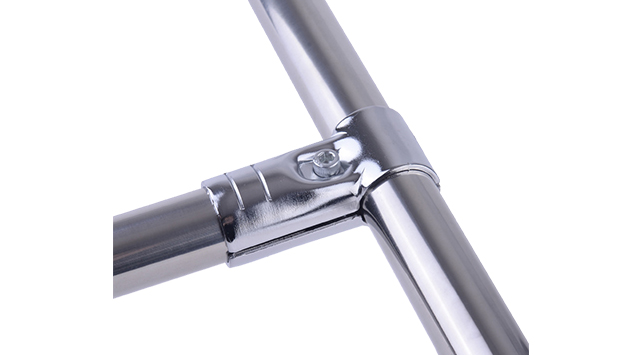
Two way lean pipe joint for 2 pcs 28MM lean pipe connection in straight angle, which used widely in workbench, flow rack, hand trolley frame connection.
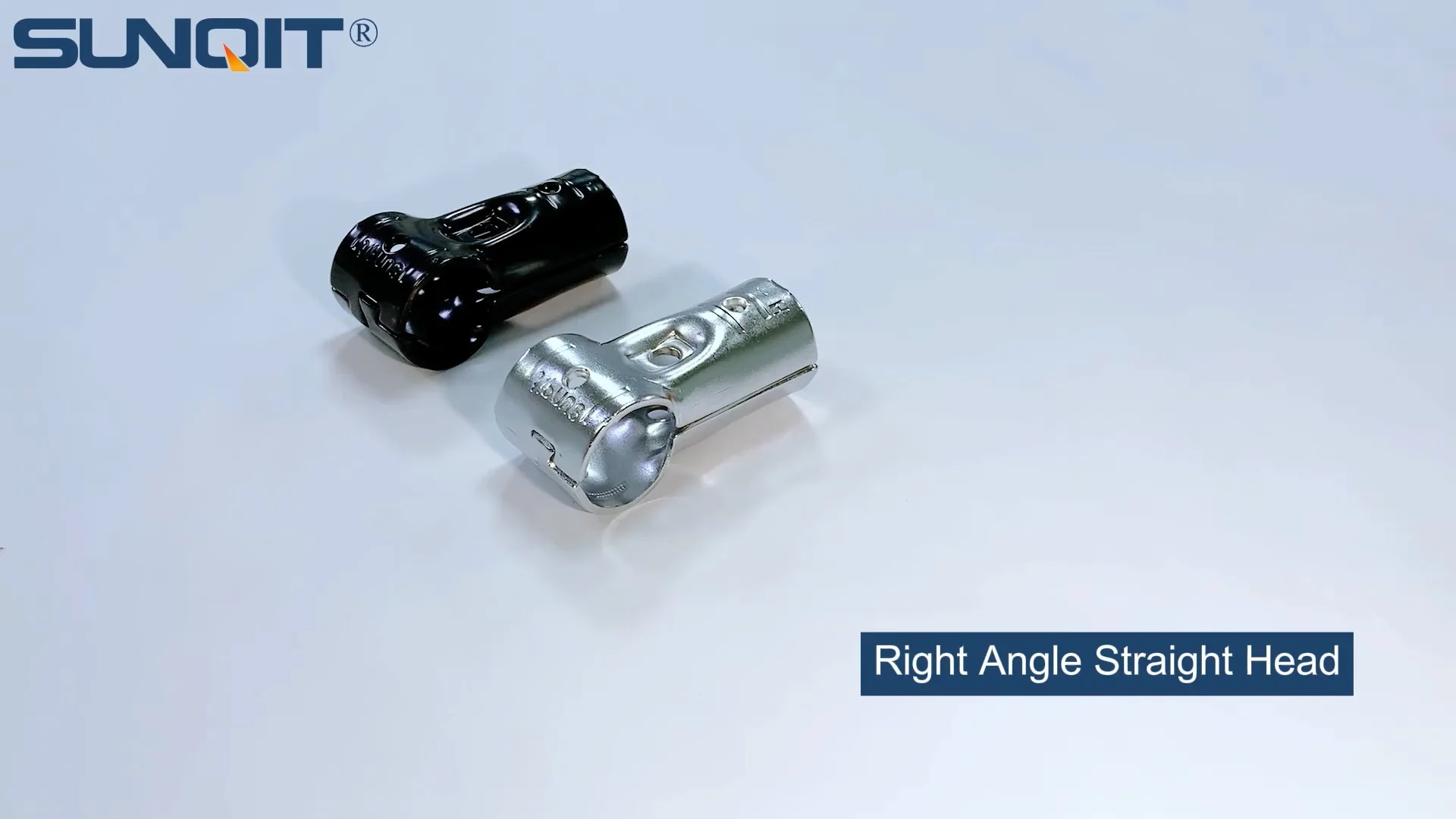
In today's fast-paced manufacturing world, the ability to adapt is everything. Whether you're running a small workshop or a large production facility, the way you set up your workspace can make or break efficiency, productivity, and even employee morale. That's where flexible workstations come in—and at the heart of many of these setups lies a humble but powerful component: the two way lean pipe joint chrome. It might not sound like the most exciting part of your assembly line, but once you understand how it works, you'll realize it's the unsung hero keeping your operations agile and responsive.
Let's start with the basics: what exactly is a flexible workstation? Simply put, it's a workspace designed to evolve with your needs. Maybe you need to reconfigure your assembly line next month to accommodate a new product. Or perhaps you want to add more storage racks without rebuilding the entire setup. Flexible workstations use modular components that can be easily adjusted, moved, or repurposed—no need for welding, heavy tools, or days of downtime. And that's where lean pipe systems, including the two way lean pipe joint chrome, shine brightest.
What Is a Two Way Lean Pipe Joint Chrome, Anyway?
If you've ever walked through a factory or warehouse, you've probably seen lean pipe structures without even realizing it. They're the metal frameworks that hold up workbenches, shelving units, flow racks, and conveyor systems—often made from coated steel pipes (called lean pipes) connected by joints. The two way lean pipe joint chrome is a specific type of connector that, as the name suggests, allows two lean pipes to join together. But it's not just any connector; its chrome plating, durable design, and unique flexibility make it a standout choice for anyone prioritizing adaptability.
At first glance, it might look like a simple metal piece with two holes, but there's more engineering here than meets the eye. Let's break it down: the "two way" part means it can connect two pipes at various angles (not just straight lines—though straight is an option too). The "chrome" finish isn't just for looks; it adds a layer of protection against rust, scratches, and wear, which is crucial in busy industrial environments where spills, humidity, or heavy use are common. And "lean pipe" refers to the compatibility with standard lean pipes, which are typically 28mm in diameter and made from steel with a plastic or epoxy coating to reduce friction and prevent damage to products.
Design That Puts Flexibility First
What really sets the two way lean pipe joint chrome apart is its design. Unlike fixed joints that lock pipes into a single position, this joint is built to adjust. Most models feature a rotating mechanism or adjustable clamps that let you tweak the angle between the two pipes—often from 0° (straight line) up to 180°, though some can go even further. This might not sound revolutionary, but in a workspace where every inch counts, being able to tilt a shelf by 15° to improve material flow or angle a workbench to better fit a corner can make a huge difference.
Let's say you're setting up a lean pipe workbench for assembling small electronics. The workbench needs a shelf above to hold tools, but your team has varying heights—some prefer the shelf higher, others lower. With a fixed joint, you'd have to drill new holes or buy a whole new shelf if someone's needs change. But with a two way lean pipe joint chrome, you can loosen a few screws, adjust the shelf height, and tighten it back up—done in minutes, no special tools required. That's the kind of flexibility that turns a static workspace into a dynamic one.
Another key design feature is the clamping system. Most two way lean pipe joints use a screw-and-nut mechanism to secure the pipes. The chrome-plated metal ensures the screws don't corrode over time, so you can adjust the joint again and again without worrying about stripped threads or stuck parts. Compare that to cheaper plastic joints, which might crack after a few adjustments, or welded connections, which are permanent. The two way lean pipe joint chrome is built for longevity and repeated use—exactly what you need in a flexible system.
Materials Matter: Why Chrome Plating Makes a Difference
You might be wondering, "Why chrome? Can't they just use plain steel or another coating?" Great question. Chrome plating isn't just about aesthetics (though it does give the joint a sleek, professional look). It's a functional choice that adds several layers of durability. Chrome is resistant to corrosion, which is essential if your workspace deals with moisture, oils, or chemicals—common in manufacturing settings. It also stands up to scratches and dents better than bare steel, so even if a heavy tool bumps into the joint, it's less likely to get damaged.
But here's the hidden benefit: chrome plating reduces friction. When you're adjusting the joint—twisting it to a new angle or sliding a pipe into place—less friction means smoother, easier adjustments. That might not seem like a big deal on day one, but over months of reconfiguring your setup, those small moments of ease add up. Your maintenance team won't dread adjusting the workstation, and your production line won't be held up by stubborn, stuck joints. It's the kind of detail that makes the daily grind a little less grinding.
Adaptability Features: What Makes This Joint a Game-Changer
Now, let's get into the good stuff: the adaptability features that make the two way lean pipe joint chrome a must-have for flexible workstations. We've touched on a few already, but let's dive deeper into why each one matters for your operation.
1. Angle Adjustability: Workspaces That Bend (But Don't Break)
Remember when we talked about adjusting the angle between pipes? Let's put that into context. Imagine you run a small bakery that packages cookies. Your current setup has a flow rack with a straight roller track that sends cookie tins from the packaging station to the shipping area. But lately, the tins are moving too fast and sometimes tip over. With a two way lean pipe joint chrome, you could slightly angle the roller track downward (maybe 5°) to slow the tins down—or upward to give them a gentle push if they're getting stuck. No need to replace the entire rack; just adjust the joints holding the roller track in place.
Or consider a lean pipe workbench in a mechanic's shop. The bench needs to hold a tool chest on one side and a laptop for diagnostics on the other. But the mechanic is left-handed, so the tool chest feels awkward on the right. With adjustable joints, you can pivot the tool chest's shelf to the left side in 10 minutes. That's adaptability that directly improves workflow and reduces frustration.
Most two way lean pipe joints can handle angles from 0° to 180°, but some advanced models offer even more range. The key is that the adjustment is incremental—you're not limited to preset angles like 90° or 45°. This "micro-adjustability" lets you fine-tune your workspace to match real-world needs, not just theoretical ideals.
2. Compatibility: Plays Well With Others
A flexible workstation is only as good as the components it can work with. The two way lean pipe joint chrome isn't a one-trick pony—it plays nicely with a wide range of other lean manufacturing parts, which is critical if you want to expand or modify your setup later. Let's list a few common partners:
- Lean pipes: Obviously, it connects to standard lean pipes (28mm diameter), but many models also work with aluminum lean pipes or even stainless steel pipes if you need extra corrosion resistance.
- Aluminum profiles: These are the slotted metal beams often used in heavier-duty structures. Some two way lean pipe joints come with adapters that let them connect to aluminum profiles, bridging the gap between lightweight lean pipe systems and sturdier aluminum setups.
- Caster wheels: Want to make your workstation mobile? Attach caster wheels to the bottom of your lean pipe frame using compatible joints. The two way joint can help stabilize the frame, ensuring the wheels roll smoothly without wobbling.
- Roller tracks: As we mentioned earlier, roller tracks for material flow often rely on lean pipe frames. The joints hold the tracks in place and let you adjust their angle or height.
This compatibility means you're not locked into a single brand or system. If you already have aluminum profile shelving, you can add a lean pipe workbench using two way joints to connect the two. If you want to swap out plastic caster wheels for heavier-duty metal ones, the joints will accommodate the change. This flexibility saves money in the long run—you don't have to replace all your components when you upgrade one part.
3. Tool-Free Assembly (Mostly): No PhD in Engineering Required
Let's be honest: not everyone on your team is a master mechanic. If setting up or adjusting your workstation requires a wrench, a drill, and a engineering degree, you're going to avoid doing it—even when you need to. The two way lean pipe joint chrome solves this with tool-free (or minimal-tool) assembly. Most models use hand-tightened screws or quick-release levers, so anyone on your team can make adjustments with just a basic Allen wrench (and maybe a little elbow grease).
Think about a small manufacturing business with a team of 10 people. The production manager used to have to call in a maintenance tech every time they wanted to reconfigure the assembly line. Now, with tool-free joints, the line workers themselves can adjust the workstations during their lunch break. That cuts down on downtime, empowers employees, and keeps the production manager from getting bogged down in small adjustments.
Even better, the joints are designed to be intuitive. You don't need a instruction manual to figure out how to loosen a screw and pivot a pipe. This simplicity reduces the risk of mistakes—no one's going to accidentally weld a pipe in the wrong place if there's no welding involved. It's assembly that feels more like building with Tinkertoys than industrial construction.
4. Load Capacity: Strong, but Not Overkill
Flexibility is great, but if a joint can't hold up the weight of your tools, products, or equipment, it's useless. The two way lean pipe joint chrome strikes a balance between flexibility and strength. Most standard models can handle loads of 50-100 kg per joint, which is more than enough for most workshop needs—think tool chests, boxes of parts, or even small machinery.
For heavier loads, there are heavy-duty versions that can support 150 kg or more. The key is that the joint's design distributes weight evenly across the connected pipes, reducing stress on any single point. Chrome plating also helps here by adding structural integrity to the joint itself—no weak spots where corrosion could eat away at the metal over time.
Let's put that load capacity into perspective. A typical lean pipe workbench might have four legs, each connected by multiple joints. If each joint can hold 80 kg, the entire bench could support hundreds of kilograms—easily enough for a laptop, tools, parts bins, and a worker leaning on it. And since the joints are modular, you can add more supports (like extra legs or cross-braces) if you need to carry heavier loads later. It's scalability built into the design.
5. Durability: Built to Last (Even in Tough Environments)
Industrial workspaces are tough on equipment. There's dust, moisture, occasional impacts, and constant use. The two way lean pipe joint chrome is built to stand up to all of that. The chrome plating, as we discussed, resists rust and scratches. The metal itself is usually made from high-grade steel or aluminum, which can handle daily wear without bending or warping. Even the screws and nuts are often made from hardened steel to prevent stripping.
We worked with a food processing plant once that used lean pipe systems to hold up conveyor belts for packaging frozen vegetables. The environment is cold, humid, and occasionally splashed with water. After three years of use, the two way lean pipe joints still looked almost new—no rust, no stuck adjustments. Compare that to plastic joints they'd used before, which cracked after six months in the cold. The chrome plating made all the difference in longevity.
Durability also means lower long-term costs. You won't have to replace joints every year, and you won't lose productivity to broken components. It's an investment that pays off in reduced maintenance and replacement expenses.
How It All Comes Together: Real-World Applications
Enough theory—let's talk about how the two way lean pipe joint chrome actually gets used in real workplaces. We'll focus on a few common scenarios where its adaptability features shine brightest.
Scenario 1: Building a Custom Lean Pipe Workbench
A small electronics manufacturer needs a workbench for assembling circuit boards. The bench must have:
- A flat surface for the circuit boards (about 120cm x 80cm).
- A shelf above for tools (screwdrivers, soldering iron, etc.).
- A lower shelf for parts bins.
- Caster wheels so the bench can be moved out of the way during deep cleaning.
Using two way lean pipe joints, here's how they'd build it:
- Start with four vertical lean pipes for the legs. Attach caster wheels to the bottom of each leg using compatible caster accessories (the joints here would be fixed, but the top of the legs will use two way joints).
- Connect the top of the legs with horizontal lean pipes to form the frame for the workbench surface. Use two way joints at each corner to secure the pipes—these joints can be adjusted to ensure the frame is perfectly square.
- Add the workbench surface (a plywood or metal top) on top of the frame.
- For the upper shelf: Attach shorter vertical pipes to the top frame using two way joints. These joints let you set the shelf height—say, 60cm above the work surface. Then connect horizontal pipes between the vertical pipes to form the shelf frame, again using two way joints for adjustability.
- Repeat the process for the lower shelf, this time setting it 30cm above the floor using the two way joints.
Six months later, the manufacturer starts assembling larger circuit boards and needs more workspace. They can use the two way joints to remove the upper shelf (or move it higher), add an extension to the workbench surface by connecting more pipes, or even split the bench into two smaller workstations if needed. No demolition, no new parts—just reconfiguring what they already have.
Scenario 2: Integrating Roller Tracks for Material Flow
A warehouse that ships small parts (like screws, nuts, and bolts) uses flow racks to organize inventory. Each flow rack has inclined roller tracks that let bins of parts slide forward as the front bin is emptied. The problem? Some bins are heavier than others, so the roller tracks need different angles to work smoothly. Heavier bins need a steeper angle to slide, lighter ones need a shallower angle to avoid sliding too fast.
By using two way lean pipe joint chrome to mount the roller tracks to the flow rack's frame, the warehouse can adjust each track's angle individually. For example:
- Heavy steel bolts: 10° angle.
- Medium plastic washers: 7° angle.
- Light aluminum screws: 5° angle.
The joints make it easy to tweak these angles over time as inventory changes. If they start stocking even heavier parts, they can increase the angle; if lighter parts come in, decrease it. This precision reduces jams, speeds up order picking, and minimizes damage to the bins (since they're moving at the right speed).
Real Story: How a Furniture Maker Saved Time and Money
A family-owned furniture manufacturer in Ohio was struggling with their assembly line. They made custom chairs, and each chair model required a slightly different setup—different tools, different parts, different workbench heights. Before using lean pipe systems, they had fixed workbenches and would spend 4-5 hours reconfiguring the line every time they switched models. That's 4-5 hours of downtime, plus the cost of labor to move heavy equipment.
They switched to a lean pipe system with two way lean pipe joint chrome. Now, when they need to switch from a dining chair to a office chair, they do the following in under an hour:
- Loosen the joints holding the tool shelves and pivot them to the new required height.
- Adjust the angle of the roller track that feeds chair legs to the assembly station.
- Move a mobile parts cart (mounted on caster wheels connected with two way joints) to the new workstation.
The result? They cut reconfiguration time by 80%, reduced labor costs, and could now produce two more chair models per day. The two way lean pipe joints were the linchpin—without their adjustability, the system would have been just as rigid as the old fixed workbenches.

Comparing Two Way Lean Pipe Joint Chrome to Other Joints
To really understand the value of the two way lean pipe joint chrome, it helps to see how it stacks up against other common lean pipe joints. Let's take a look at a comparison table:
| Feature | Two Way Lean Pipe Joint Chrome | 90° Fixed Lean Pipe Joint | Three Way Lean Pipe Joint |
|---|---|---|---|
| Flexibility (Angle Adjustment) | 0° to 180° (adjustable) | Fixed at 90° (no adjustment) | Fixed angles (e.g., 90°/90° or 45°/45°) |
| Load Capacity (Standard Model) | 50-100 kg | 80-120 kg (higher due to fixed design) | 60-90 kg |
| Installation Time | 5-10 minutes (tool-free adjustment) | 3-5 minutes (faster, but permanent) | 8-12 minutes (more connections) |
| Compatibility | Works with lean pipes, aluminum profiles, caster wheels | Only lean pipes (fixed angle limits compatibility) | Lean pipes, some aluminum profiles (limited by fixed angles) |
| Best For | Flexible workstations, adjustable racks, mobile setups | Static structures (e.g., fixed shelves, rigid frames) | Multi-directional structures (e.g., corner shelves, T-junctions) |
As you can see, the two way lean pipe joint chrome isn't the strongest or fastest to install, but its flexibility and compatibility make it ideal for dynamic workspaces. If you need a fixed structure that never changes, a 90° joint might be better. But if you want to future-proof your setup, the two way joint is worth the slightly higher installation time.
The Future of Flexible Workstations: What's Next?
As manufacturing and warehousing continue to evolve—with trends like automation, small-batch production, and remote monitoring—flexible workstations will only become more important. The two way lean pipe joint chrome is likely to evolve too. We're already seeing manufacturers experiment with:
- Smart joints: Joints with built-in sensors that monitor load capacity or alert maintenance when parts are wearing out.
- Lightweight materials: Using aluminum instead of steel for even more portability, without sacrificing strength.
- Quick-connect designs: Push-button or magnetic joints that make adjustments even faster.
But even without these advancements, the two way lean pipe joint chrome remains a cornerstone of flexible workstations. Its simplicity, durability, and adaptability are timeless qualities that will keep it relevant no matter how technology changes.
Final Thoughts: Why Adaptability Matters More Than Ever
In a world where customer demands shift overnight, supply chains are unpredictable, and competition is fierce, the ability to adapt your workspace is no longer a luxury—it's a necessity. The two way lean pipe joint chrome might seem like a small part of that puzzle, but small parts often make the biggest difference. It's the reason you can reconfigure a workbench in an hour instead of a day, adjust a roller track to prevent jams, or expand your assembly line without buying all new equipment.
At the end of the day, flexible workstations are about more than just efficiency—they're about empowering your team. When workers can adjust their workspace to fit their needs, they feel valued and in control. When managers can quickly pivot to new products or processes, they can seize opportunities instead of missing them. And when your entire operation is built on adaptability, you're ready for whatever the future throws at you.
So the next time you walk through your factory or warehouse, take a closer look at those lean pipe structures. The two way lean pipe joint chrome might be quietly holding everything together—but its real job is holding your business together, ready to adapt, grow, and thrive.