- Company Articles
- Products and Technology
- Product knowledge
- Two Way Lean Pipe Joint Chrome for Mobile Workstations: Portability Features

Two Way Lean Pipe Joint Chrome for Mobile Workstations: Portability Features
Related Product
Two Way Lean Pipe Joint Chrome
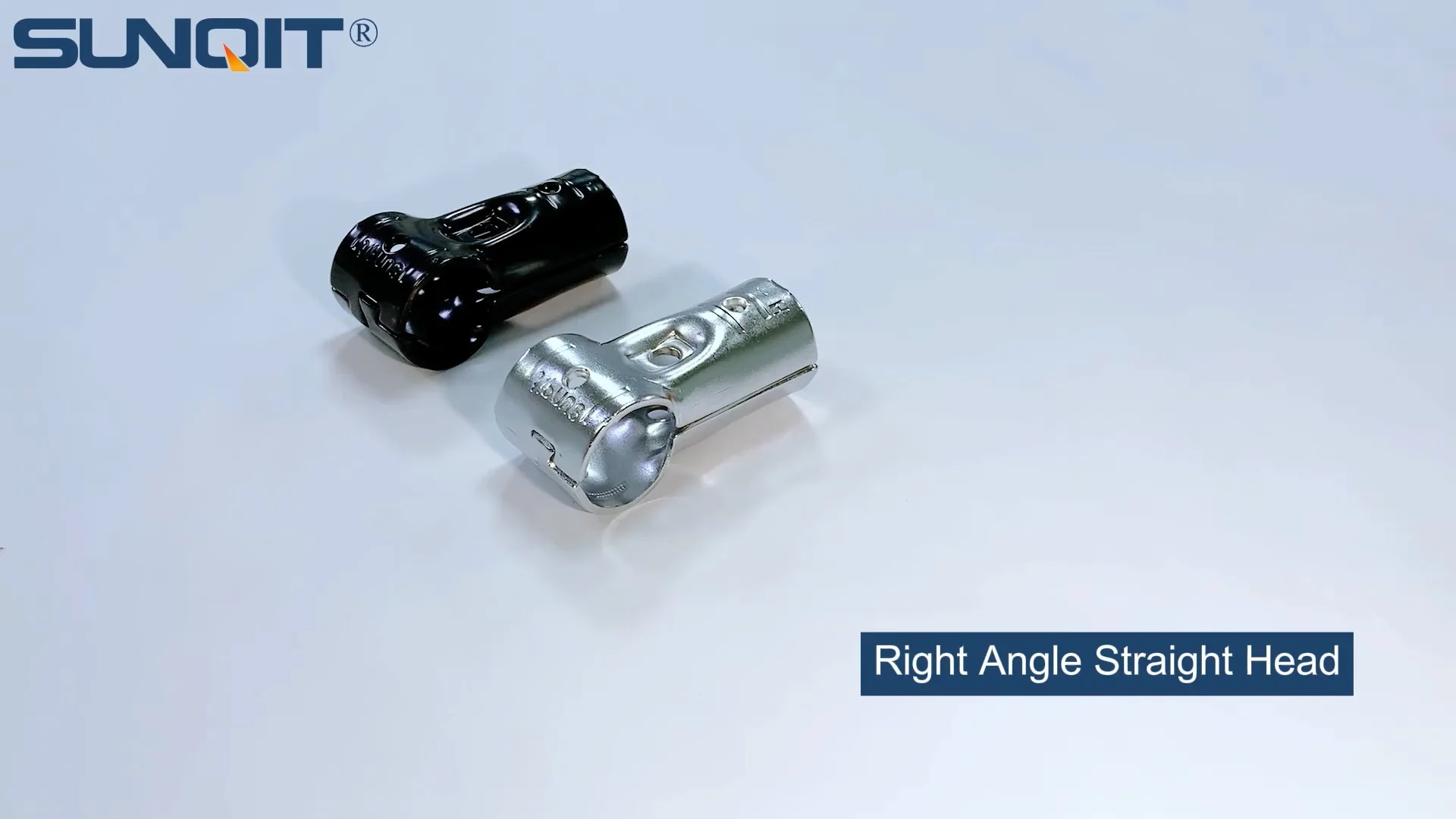
Two way lean pipe joint for 2 pcs 28MM lean pipe connection in straight angle, which used widely in workbench, flow rack, hand trolley frame connection.
Picture this: You're on a busy factory floor, surrounded by the hum of machinery and the steady rhythm of assembly lines. A team member calls out that the next batch of components needs to be assembled on the opposite side of the facility—and fast. If your workstation is bolted to the floor, you're looking at a mad dash to move tools, materials, and maybe even disassemble part of the setup. But what if that workstation could glide across the floor with ease, reconfiguring on the fly to fit the new space? That's the promise of mobile workstations, and at the heart of making that mobility possible lies a small but mighty component: the two way lean pipe joint chrome.
In today's fast-paced manufacturing and warehousing environments, flexibility isn't just a nice-to-have—it's a necessity. Static workstations tie teams down, limiting how quickly they can adapt to changing production needs, seasonal demands, or sudden shifts in workflow. Lean pipe systems have long been the go-to solution for building adaptable workspaces, but it's the details—the joints, the connectors, the little pieces that hold everything together—that truly unlock their potential. And when it comes to portability, few components work harder than the two way lean pipe joint chrome.
The Problem with Static Workstations: Why Mobility Matters
Let's start with the basics: Why does mobility even matter in a workstation? For anyone who's spent hours rearranging heavy equipment or stretching to reach tools across a fixed bench, the answer is obvious. Static workstations create bottlenecks. They force workers to adapt to the space, rather than the space adapting to them. Need to move a workstation from the morning assembly line to the afternoon packaging area? Without mobility, that means disconnecting power sources, unbolting shelves, and recruiting extra hands—wasting precious time that could be spent on actual production.
Worse, static setups often lead to inefficiencies that add up over time. A study by the Manufacturing Enterprise Solutions Association found that workers in facilities with rigid workstations spend up to 20% of their shift just moving between tools and materials. That's a full day lost every week to unnecessary motion. For small businesses and large factories alike, those losses eat into profits and slow down growth. Mobile workstations flip that script: they bring the tools to the worker, reduce physical strain, and let teams reconfigure their space in minutes, not hours.
But here's the catch: Not all mobile workstations are created equal. Many so-called "portable" setups are clunky, hard to maneuver, or lack the stability needed for heavy-duty tasks. That's where lean pipe systems shine—and why the two way lean pipe joint chrome is such a game-changer. It's the bridge between flexibility and reliability, ensuring that your workstation can move when you need it to, and stay put when you don't.
Lean Pipe Systems 101: Building Blocks of Flexible Workspaces
Before we dive into the specifics of the two way lean pipe joint chrome, let's take a quick step back to understand lean pipe systems. At their core, these systems are modular structures built from lean pipe (also called "lean tube"), joints, and accessories—think of them as the industrial equivalent of building blocks for adults. The magic lies in their simplicity: pipes and joints connect quickly, without welding or specialized tools, allowing you to build workbenches, material racks, flow racks, and yes, mobile workstations, in endless configurations.
Lean pipe itself is typically made from steel with a plastic coating (PE coated lean pipe) or aluminum, chosen for its lightweight strength and resistance to corrosion. But the real star of the show is the joints. These small connectors come in all shapes and sizes—fixed, rotating, three-way, four-way—and each serves a specific purpose. Fixed joints hold pipes at rigid angles, perfect for stable shelving. Three-way joints branch out in multiple directions, ideal for building multi-tiered racks. But when it comes to mobility, the two way lean pipe joint chrome stands out for its unique blend of adjustability and durability.
So, what makes lean pipe systems so popular? For starters, they're cost-effective. Instead of investing in custom-built, one-size-fits-all workstations that become obsolete when your needs change, you can reconfigure a lean pipe setup with new joints and pipes—saving money in the long run. They're also worker-friendly: no more struggling with heavy, immovable equipment. And because they're modular, they grow with your business. Add a new shelf, extend a workbench, or convert a static station into a mobile one—all with minimal hassle.
Meet the Two Way Lean Pipe Joint Chrome: Design That Drives Mobility
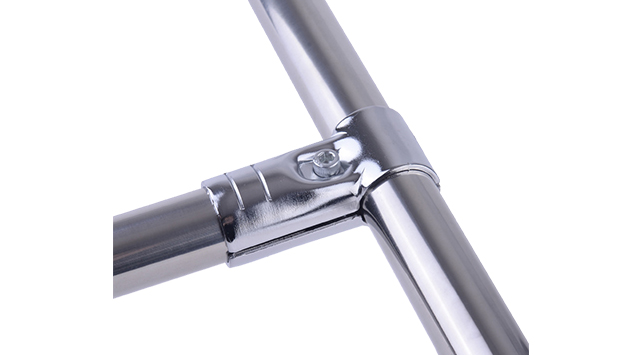
Now, let's zoom in on the star of our story: the two way lean pipe joint chrome. At first glance, it might look like just another metal connector, but its design is engineered with one goal in mind: making mobile workstations more adaptable, sturdy, and easy to use. Let's break down what makes it tick.
Two-Way Functionality: As the name suggests, this joint connects two lean pipes at a 90-degree angle (or adjustable angles, depending on the model), creating a T-shape or L-shape that forms the backbone of a workstation's frame. Unlike fixed joints, which lock pipes into a single position, many two way lean pipe joints feature internal mechanisms that allow for limited rotation or adjustment—think of it as a flexible elbow that lets you tweak the angle of a shelf or the height of a workbench without fully disassembling the structure. This adjustability is key for mobility: when you need to move a workstation through a tight doorway or around a corner, being able to slightly reposition components can mean the difference between a smooth glide and a frustrating jam.
Chrome Plating: More Than Just Shiny: The "chrome" in the name isn't just for aesthetics (though it does give the joint a sleek, professional look). Chrome plating adds a layer of protection to the underlying metal (usually steel or aluminum), making the joint resistant to rust, corrosion, and wear. In manufacturing environments—where spills, moisture, and constant use are par for the course—this durability is a lifesaver. A chrome finish also makes the joint easier to clean; a quick wipe with a damp cloth removes grease or debris, ensuring it continues to rotate smoothly and hold pipes securely over time.
Lightweight Yet Strong: Despite its robust construction, the two way lean pipe joint chrome is surprisingly lightweight. This is critical for mobile workstations, where every extra pound adds strain to caster wheels and makes maneuvering harder. By keeping the joint's weight low, manufacturers ensure that the overall workstation remains easy to push or pull, even when loaded with tools and materials. Don't let the lightness fool you, though—these joints are built to handle heavy loads. Most models can support anywhere from 50 to 150 pounds per connection, depending on the pipe diameter and material, making them suitable for everything from small electronics assembly to heavier automotive parts.
Tool-Free Assembly: Like most lean pipe components, the two way lean pipe joint chrome is designed for quick, tool-free assembly. It typically uses a set screw or clamping mechanism to secure the pipes: slide the pipe into the joint, tighten the screw by hand or with a simple hex key, and you're done. This speed is a game-changer for mobility. If you need to reconfigure your workstation on the fly—say, collapsing a shelf to fit through a narrow aisle—you can loosen the joints, adjust the pipes, and retighten in minutes. No waiting for a maintenance crew or fumbling with power tools.

How the Two Way Lean Pipe Joint Chrome Enhances Portability: A Closer Look
So, we know the two way lean pipe joint chrome is adjustable, durable, and easy to use—but how exactly does that translate to better portability? Let's connect the dots with real-world scenarios.
1. Balanced Weight Distribution: Mobile workstations live and die by how evenly their weight is distributed. If too much weight is concentrated on one side, the workstation might tip over when moving, or the caster wheels could wear unevenly. The two way lean pipe joint chrome helps solve this by allowing precise placement of pipes and shelves. For example, if you're building a mobile workbench with a tool rack on one side and a material bin on the other, the two way joints let you adjust the position of each component until the weight is balanced. This not only makes the workstation safer to move but also reduces strain on the caster wheels, extending their lifespan.
2. Quick Disassembly for Tight Spaces: Even the most mobile workstation can hit a wall—literally—when faced with narrow doorways, elevators, or crowded aisles. The two way joint's tool-free design makes it easy to partially disassemble the workstation to fit through tight spots. Need to move a workstation from the first floor to the second? Loosen a few two way joints, remove a section of pipe, and the workstation becomes compact enough to fit in an elevator. Once you're on the second floor, reassemble it just as quickly. This flexibility turns a potentially hour-long task into a 10-minute job.
3. Compatibility with Caster Wheels: What good is a lightweight, adjustable frame if it can't roll? The two way lean pipe joint chrome plays well with one of the most critical components of mobile workstations: caster wheels. Most lean pipe systems use caster mounts that attach directly to the joints, and the two way joint's sturdy construction ensures a secure connection. Whether you're using swivel casters with brakes for easy positioning or heavy-duty rigid casters for straight-line movement, the joint acts as a stable anchor, preventing the caster from wobbling or detaching during use. This compatibility is key—without a strong joint, the caster could fail, turning a mobile workstation into a immovable (and potentially dangerous) obstacle.
4. Adaptability to Changing Workflows: Portability isn't just about moving a workstation from Point A to Point B—it's about how well that workstation can adapt once it gets there. A two way lean pipe joint chrome lets teams reconfigure the workstation's layout to match the task at hand. For example, in a electronics assembly line, a mobile workstation might start the day with a flat workbench for circuit board assembly. By afternoon, the team might need to add a vertical shelf for component storage. With two way joints, they can simply adjust the existing pipes, add a new section, and tighten the joints—no need for a whole new workstation. This adaptability means the same mobile unit can serve multiple purposes, reducing the need for extra equipment and freeing up floor space.
Comparing Joints: Why Two Way Lean Pipe Joint Chrome Stands Out
To truly appreciate the two way lean pipe joint chrome, it helps to see how it stacks up against other common joint types. Let's take a look at a few popular alternatives and how they impact portability.
| Joint Type | Adjustability | Weight Capacity | Durability (Corrosion Resistance) | Impact on Portability |
|---|---|---|---|---|
| Fixed Two-Way Joint (Non-Chrome) | None—locks pipes at a fixed angle | 50–120 lbs | Moderate (prone to rust without plating) | Low—hard to reconfigure; static angles limit maneuverability |
| Three-Way Fixed Joint | None—branches pipes in three directions | 60–180 lbs | Moderate to high (varies by material) | Low to moderate—adds stability but extra weight; hard to adjust for tight spaces |
| Two Way Lean Pipe Joint Chrome | Limited rotation/adjustment (varies by model) | 50–150 lbs | High (chrome plating resists rust/corrosion) | High—lightweight, adjustable, and durable; easy to reconfigure for mobility |
| Plastic Lean Pipe Joint | Moderate (flexible but less stable) | 30–80 lbs | High (resistant to corrosion but prone to cracking under heavy loads) | Moderate—lightweight but low weight capacity limits use for heavy workstations |
As the table shows, the two way lean pipe joint chrome strikes a unique balance between adjustability, strength, and durability—all of which directly boost portability. Fixed joints, while strong, lack the flexibility to adapt to tight spaces or changing workflows. Plastic joints are lightweight but can't handle heavy loads, making them unsuitable for industrial use. Three-way joints add stability but often weigh more and complicate reconfiguration. The two way chrome joint, by contrast, gives teams the best of all worlds: the ability to adjust on the fly, support heavy tools, resist wear and tear, and keep the workstation light enough to move with ease.
Putting It All Together: Building a Mobile Workstation with Two Way Lean Pipe Joint Chrome
Let's walk through how the two way lean pipe joint chrome comes together with other components to create a fully functional mobile workstation. For this example, we'll build a basic assembly workbench—something you might find in a small electronics factory or a warehouse picking area.
Step 1: Choose Your Lean Pipe and Joints Start with the frame: 28mm diameter lean pipe (PE coated or aluminum) for the legs and crossbars. For the corners, use two way lean pipe joint chrome to connect the vertical legs to the horizontal crossbars, forming a rectangular base. Add additional two way joints along the crossbars to attach shelves or tool hooks—adjusting the height of these joints lets you customize the workspace to the user's height, reducing strain on their back and shoulders.
Step 2: Add Caster Wheels Attach caster wheels to the bottom of the vertical legs using caster mounts (another lean pipe accessory). For maximum mobility, opt for swivel caster wheels with brakes—these let the workstation rotate 360 degrees and lock in place when needed. The two way joints ensure the legs are securely connected to the base, so the wheels can support the workstation's weight without wobbling.
Step 3: Install the Workbench Top Lay a plywood or aluminum honeycomb panel across the horizontal crossbars (secured with pipe clamps or additional two way joints) to create the work surface. Some workbenches (like the "Workbench E (Single Deck-Without Caster)" mentioned in our keyword list) come pre-designed for lean pipe systems, but with two way joints, you can easily customize the size—lengthening or shortening the crossbars to fit your needs.
Step 4: Add Accessories Use extra two way joints to attach side shelves, tool holders, or even a small flow rack for materials. For example, a flow rack built with roller track and swivel roller balls can be mounted to the side of the workstation using two way joints, allowing components to slide easily to the worker. The chrome joints ensure these accessories stay secure even when the workstation is moving.
Step 5: Test and Adjust Once assembled, give the workstation a test push. If it feels unbalanced, use the two way joints to adjust the position of shelves or accessories until the weight is evenly distributed. Tighten any loose joints, lock the caster brakes, and you're ready to go. When it's time to move, unlock the brakes, and the workstation glides smoothly—thanks in large part to the lightweight, durable two way lean pipe joint chrome holding everything together.
Real-World Applications: How Teams Are Using This Joint to Boost Efficiency
Theory is one thing, but real-world results tell the true story. Let's look at how businesses across industries are leveraging the two way lean pipe joint chrome to create mobile workstations that drive efficiency.
Automotive Assembly Lines: In automotive plants, where production lines can stretch for miles, mobile workstations are a lifeline. A leading auto parts manufacturer in Michigan recently switched to lean pipe systems with two way chrome joints for their dashboard assembly stations. Previously, workers had to walk 200 feet back and forth to retrieve tools and components. Now, mobile workstations equipped with caster wheels and adjustable shelves (held together by two way joints) follow the assembly line, reducing walking time by 75%. The chrome joints have held up to daily exposure to lubricants and cleaning solutions, with zero signs of rust after two years of use.
Warehouse Picking and Packing: E-commerce warehouses thrive on speed, and static picking stations can slow teams down. A fulfillment center in Texas replaced fixed packing benches with mobile workstations built using two way lean pipe joint chrome. During peak seasons, when order volumes spike, managers can quickly reposition the workstations to form temporary packing lines in underused areas of the warehouse. The adjustable joints let teams add extra shelves for seasonal items (like holiday gifts) without building new stations, and the chrome finish makes cleaning up spills from damaged packages a breeze.
Electronics Manufacturing: Precision is key in electronics assembly, and workers need their tools within arm's reach. A smartphone manufacturer in California uses mobile workstations with two way chrome joints to build custom setups for each product model. When switching from assembling phone screens to batteries, teams loosen the joints, reposition the tool holders, and retighten—all in under five minutes. The lightweight design means even smaller team members can move the workstations without assistance, and the chrome joints' corrosion resistance ensures they remain reliable in the cleanroom environment.
Small Business Workshops: It's not just large factories that benefit. A family-owned woodworking shop in Oregon recently invested in lean pipe systems to replace their old, heavy workbenches. Using two way chrome joints, they built a mobile workstation that doubles as a cutting bench and a finishing station. The ability to move the workstation outside for staining (and then back inside for assembly) has cut down on fume exposure, and the joint's durability means it stands up to sawdust and wood glue without corroding.
Maintenance Tips: Keeping Your Two Way Lean Pipe Joint Chrome in Top Shape
Like any tool, the two way lean pipe joint chrome works best when properly maintained. Fortunately, keeping it in good condition is simple—just a few quick habits can extend its lifespan and ensure your mobile workstation remains portable for years.
1. Regular Cleaning: Wipe down the joint with a damp cloth or mild soap and water every week (or more often if it's exposed to grease, oil, or debris). This removes buildup that could gunk up the rotating parts or cause the set screw to stick. Avoid harsh chemicals, which can damage the chrome finish.
2. Check for Loose Connections: Over time, the set screw that secures the pipe in the joint can loosen from vibration or use. Give each joint a quick check every month—tighten any loose screws with a hex key (don't over-tighten, as this can strip the threads). A secure connection ensures the workstation remains stable and the joint continues to support weight properly.
3. Lubricate Moving Parts (If Applicable): Some adjustable two way joints have rotating components that benefit from occasional lubrication. Use a small amount of machine oil or silicone spray on the pivot points every 3–6 months to keep them moving smoothly. Wipe away excess oil to prevent attracting dust.
4. Inspect for Damage: Look for signs of wear, like cracks in the joint body, bent threads, or peeling chrome. If a joint is damaged, replace it immediately—using a compromised joint puts the entire workstation at risk of collapse, especially when moving. Most lean pipe suppliers offer replacement joints at affordable prices, so it's better to be safe than sorry.
5. Store Properly When Not in Use: If you disassemble a workstation for storage, keep the two way joints in a dry, clean area. Avoid stacking heavy objects on top of them, as this can warp the metal or bend the clamping mechanism. A small storage bin or drawer works well to keep joints organized and protected.
Conclusion: The Small Joint That Makes a Big Difference in Portability
In the world of manufacturing and warehousing, it's often the smallest components that have the biggest impact. The two way lean pipe joint chrome is a perfect example. It's not flashy or complex, but it solves a critical problem: how to build workstations that are both sturdy enough for heavy-duty tasks and flexible enough to move when needed.
By combining adjustability, durability, and lightweight design, this joint empowers teams to create mobile workspaces that adapt to their needs—not the other way around. It reduces wasted time, eases physical strain on workers, and helps businesses stay agile in a rapidly changing market. Whether you're running a large factory or a small workshop, investing in quality lean pipe components like the two way lean pipe joint chrome isn't just about buying a tool—it's about investing in a more efficient, more flexible, and ultimately more human-centered way of working.
So the next time you see a mobile workstation gliding across a factory floor, take a closer look at the joints holding it together. Chances are, you'll spot the sleek, chrome-plated two way joint doing the heavy lifting—quietly, reliably, and always ready to move.