- Company Articles
- Products and Technology
- Application Cases
- Two Way Lean Pipe Joint Chrome in Automotive Manufacturing: Assembly Line Uses

Two Way Lean Pipe Joint Chrome in Automotive Manufacturing: Assembly Line Uses
Related Product
Two Way Lean Pipe Joint Chrome
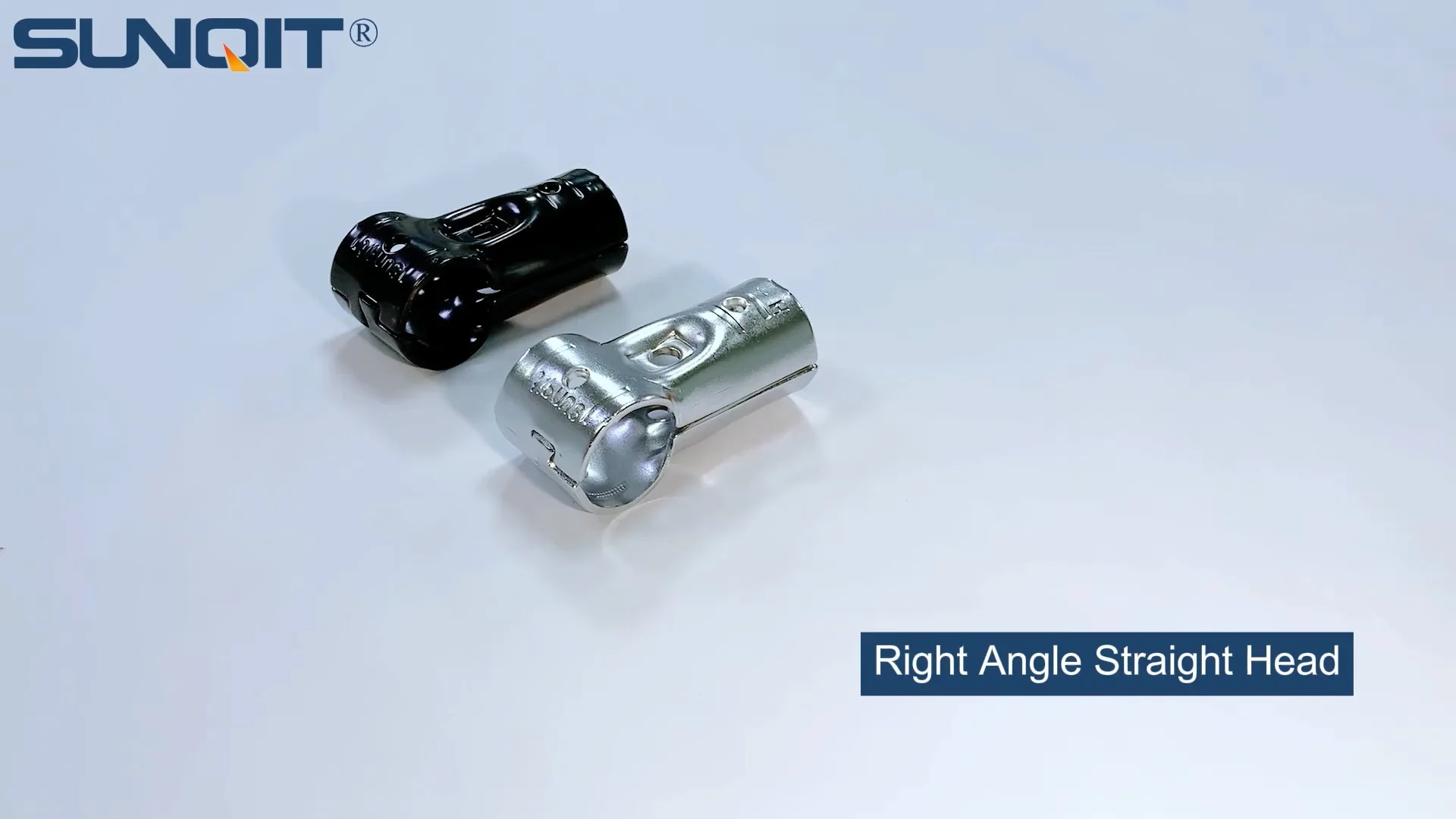
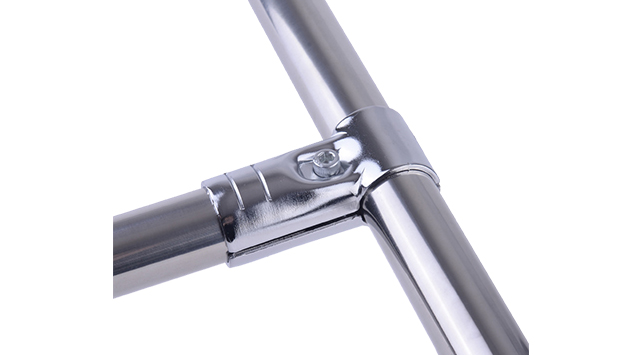
Two way lean pipe joint for 2 pcs 28MM lean pipe connection in straight angle, which used widely in workbench, flow rack, hand trolley frame connection.
In the fast-paced world of automotive manufacturing, where every second counts and efficiency is the difference between meeting production targets and falling behind, the physical infrastructure of the assembly line plays a surprisingly critical role. From the workbenches where technicians assemble intricate components to the conveyor systems that move parts across the factory floor, every piece of equipment must work in harmony to eliminate waste, reduce downtime, and keep operations running like a well-oiled machine. This is where lean manufacturing principles come into play—and at the heart of many lean-driven setups lies the humble yet indispensable lean pipe system. Among its components, the two way lean pipe joint chrome stands out as a quiet workhorse, enabling the flexibility and durability that modern automotive assembly lines demand.
The Role of Lean Manufacturing in Automotive: Beyond Theory, Into Infrastructure
Lean manufacturing, born from the Toyota Production System, is more than just a set of practices—it's a philosophy centered on minimizing waste while maximizing value. In automotive plants, this translates to everything from optimizing workflows to reducing inventory and improving ergonomics for workers. But lean principles can't be fully realized without the right tools and infrastructure. Imagine trying to implement a "just-in-time" parts delivery system if your material racks are fixed in place and can't adapt to changing part sizes. Or attempting to reconfigure a workstation for a new car model if the workbench is welded together and impossible to adjust. This is where lean pipe systems shine: they're modular, adaptable, and designed to evolve with the needs of the production line.
A typical lean pipe system consists of metal pipes (often steel or aluminum), joints, and accessories like casters, roller tracks, and workbench surfaces. These components snap together (or are secured with minimal tools) to form structures ranging from simple shelves to complex conveyor systems. And while the pipes provide the backbone, it's the joints that hold everything together—literally and figuratively. The two way lean pipe joint chrome, in particular, has become a staple in automotive settings for its unique blend of strength, versatility, and resistance to the harsh conditions of factory floors.
What Is a Two Way Lean Pipe Joint Chrome? Breaking Down Its Design
At first glance, a two way lean pipe joint chrome might seem like a small, unassuming piece of hardware. But its design is engineered for precision and practicality. Let's start with the basics: it's a connector designed to join two lean pipes at a fixed angle (typically 180 degrees, making it a "straight" joint, or 90 degrees for perpendicular connections, though some models offer limited rotation). The "chrome" in its name refers to the chrome plating that covers its surface—a key feature we'll explore later. Underneath that plating, the joint is usually made of die-cast zinc or steel, chosen for their strength and ability to withstand repeated assembly and disassembly.
The joint's structure is deceptively simple: it has two cylindrical openings (hence "two way") that fit snugly over the ends of lean pipes. Inside these openings, small set screws or clamping mechanisms secure the pipes in place, ensuring a tight, wobble-free connection. Some models also include additional holes or slots for attaching accessories like shelves, tool hooks, or roller track brackets. What sets the chrome version apart is the plating process: a thin layer of chromium is applied to the joint's surface, creating a hard, shiny finish that resists corrosion, scratches, and the buildup of oil, grease, and dirt—common nuisances in automotive factories.
But why chrome? In a factory environment, where metal components are exposed to moisture (from cleaning, coolant leaks, or humid air), rust is a constant threat. A chrome-plated joint doesn't just look better; it lasts longer. Unlike bare steel joints, which can start to corrode within months, chrome-plated joints maintain their integrity for years, even with heavy use. This durability is critical in automotive assembly lines, where equipment is rarely replaced and downtime for repairs is costly.
Applications in Automotive Assembly Lines: Where the Joint Makes Its Mark
The two way lean pipe joint chrome isn't just a theoretical solution—it's a practical one, with real-world applications that directly impact daily operations on the assembly line. Let's walk through some of the most common ways automotive plants use this joint to build, organize, and optimize their workspaces.
1. Custom Workbenches: Ergonomics Meets Adaptability
Every automotive assembly line has workstations where technicians spend hours installing components—whether it's wiring harnesses, dashboard panels, or engine parts. These workstations need to be ergonomic (to reduce worker fatigue), customizable (to fit different tasks), and durable (to withstand daily use). Enter lean pipe workbenches, often built using two way lean pipe joints chrome. For example, a workstation for assembling door handles might need a flat surface at waist height, with a shelf below for tools and a small roller track to feed parts. Using two way joints, workers or maintenance teams can connect pipes to form the frame, add a plywood or aluminum top, and attach accessories like tool hooks—all without welding or specialized tools.
What makes the two way joint essential here is its ability to create straight, stable sections. If a workbench needs to be extended by a few feet to accommodate a new tool, adding a section is as simple as cutting a pipe to length, sliding it into a two way joint, and tightening the set screws. No need to call in a contractor or shut down the line for hours. This adaptability is especially valuable in automotive plants, where workstation needs can change overnight—say, when a new car model with larger door panels requires a wider work surface.
2. Conveyor Systems: Keeping Parts Moving Smoothly
Material flow is the lifeblood of any automotive assembly line. Parts need to move from storage areas to workstations, and finished subassemblies need to move to the next stage of production—all without delays or jams. Conveyor systems, often built with lean pipe components, are the arteries that keep this flow alive. Roller tracks, in particular, are common in these systems: they use small wheels (rollers) to let parts glide along the track with minimal friction. But roller tracks need a sturdy frame to support them, and that's where two way lean pipe joints chrome come in.
Imagine a conveyor that carries engine blocks from the machining area to the assembly station. The frame of this conveyor is typically made of lean pipes connected by joints. Two way joints are used to create the straight sections of the frame, ensuring the track stays level and stable even under the weight of heavy engine parts. The chrome plating here is a bonus: engine blocks are often greasy, and oil drips onto the conveyor frame. Without corrosion resistance, the joints could weaken over time, leading to sagging tracks and jams. With chrome, the joints stay strong, and cleanup is easier—oil wipes off instead of seeping into the metal.
Another example is the "flow rack," a type of storage system where parts slide forward by gravity as the frontmost part is removed (think of a grocery store shelf for cans). Flow racks are built using angled roller tracks, and their frames rely on two way joints to maintain the precise angle needed for smooth part flow. If the angle is off by even a few degrees, parts might get stuck or slide too quickly. The two way joint's tight connection ensures the frame doesn't shift, keeping the angle consistent day in and day out.
3. Material Racks and Trolleys: Mobility and Storage in One
Automotive plants deal with a staggering variety of parts, from tiny screws to large body panels. Storing these parts efficiently—and moving them to where they're needed—requires flexible storage solutions. Lean pipe material racks and trolleys, built with two way joints, offer exactly that. A typical material rack might have multiple shelves, each adjustable in height to fit different part boxes. Two way joints connect the vertical pipes (supports) to the horizontal pipes (shelf frames), allowing workers to add or remove shelves by simply loosening the joints, repositioning the pipes, and tightening them again.
Trolleys, on the other hand, add mobility to storage. Equipped with casters (another lean pipe accessory), these trolleys can carry parts directly to the assembly line, eliminating the need for workers to walk back and forth to a fixed storage area. The frame of a trolley is often a cube or rectangular shape, held together by two way and corner joints. The chrome joints here are crucial because trolleys are frequently moved across rough factory floors, bumping into walls or other equipment. A scratch-resistant chrome finish ensures the joints don't rust even if the plating is nicked, extending the trolley's lifespan.
4. Assembly Line Flexibility: Adapting to Model Changes
One of the biggest challenges in automotive manufacturing is adapting to model changes. A plant might produce a sedan for six months, then switch to an SUV with different dimensions, requiring new workstations, conveyor paths, and storage setups. Traditional fixed infrastructure (like welded steel racks or concrete platforms) makes this transition expensive and time-consuming. Lean pipe systems with two way joints, however, turn reconfiguration into a quick, low-cost process.
For example, suppose a plant needs to reconfigure a section of the assembly line to accommodate a longer vehicle chassis. Using two way joints, the existing conveyor frame can be disassembled, the pipes cut to new lengths, and the structure reassembled in hours—without hiring welders or construction crews. The joints' compatibility with other components (like aluminum profiles or stainless steel pipes) adds even more flexibility. If a section needs extra strength, workers can swap out standard steel pipes for heavier-duty aluminum ones, using the same two way joints to connect them.

Comparing Lean Pipe Joints: Why Choose the Two Way Chrome Version?
Not all lean pipe joints are created equal. Automotive plants have dozens of joint types to choose from, each with its own strengths and weaknesses. To understand why the two way lean pipe joint chrome is so popular, let's compare it to other common options:
| Joint Type | Angle Flexibility | Load Capacity (Average) | Corrosion Resistance | Best For |
|---|---|---|---|---|
| Two Way Lean Pipe Joint Chrome | Fixed (180° or 90°) | 150–200 kg per joint | High (chrome plating) | Straight sections, conveyor frames, workbench legs |
| 90° Fixed Lean Pipe Joint (Unplated) | Fixed (90° only) | 150–200 kg per joint | Low (bare steel) | Corner connections in dry environments |
| Rotatory Two End Lean Pipe Joint | 360° rotation | 100–150 kg per joint | Medium (zinc plating) | Adjustable shelves, angled workstations |
| Three Way Lean Pipe Joint | Fixed (three pipes, e.g., T-junction) | 120–180 kg per joint | Medium (zinc plating) | Branching structures, multi-shelf racks |
As the table shows, the two way chrome joint excels in corrosion resistance—a must in automotive plants where oil, coolant, and humidity are ever-present. Its load capacity is on par with fixed unplated joints, but its chrome finish gives it a longer lifespan. While rotatory joints offer more flexibility, they can't match the stability of a fixed two way joint for heavy-duty applications like conveyor frames. For straight, high-stress sections of a lean pipe system, the two way chrome joint is often the most reliable choice.
The Bottom Line: Why Two Way Lean Pipe Joint Chrome Matters for Automotive Efficiency
In the grand scheme of automotive manufacturing, it's easy to overlook small components like lean pipe joints. But as any plant manager will tell you, the little things add up. A joint that resists corrosion reduces maintenance costs. One that's easy to assemble cuts down on setup time. And one that's compatible with multiple pipe types increases flexibility. The two way lean pipe joint chrome checks all these boxes, making it an essential part of the lean manufacturing toolkit.
Whether it's building a custom workbench for a new tool, reinforcing a conveyor system to handle heavier parts, or reconfiguring a material rack for a model change, this joint quietly enables the efficiency and adaptability that modern automotive plants need to stay competitive. It's a reminder that lean manufacturing isn't just about processes—it's about building an infrastructure that can grow, change, and thrive in an industry where the only constant is change.
So the next time you walk through an automotive assembly line, take a closer look at the metal frames, workbenches, and conveyors around you. Chances are, the two way lean pipe joint chrome is there, holding it all together—one small, shiny, and surprisingly vital piece of the manufacturing puzzle.