- Company Articles
- Products and Technology
- Product knowledge
- Two Way Lean Pipe Joint Chrome in Consumer Electronics Assembly: Precision Fit

Two Way Lean Pipe Joint Chrome in Consumer Electronics Assembly: Precision Fit
Related Product
Two Way Lean Pipe Joint Chrome
Two way lean pipe joint for 2 pcs 28MM lean pipe connection in straight angle, which used widely in workbench, flow rack, hand trolley frame connection.
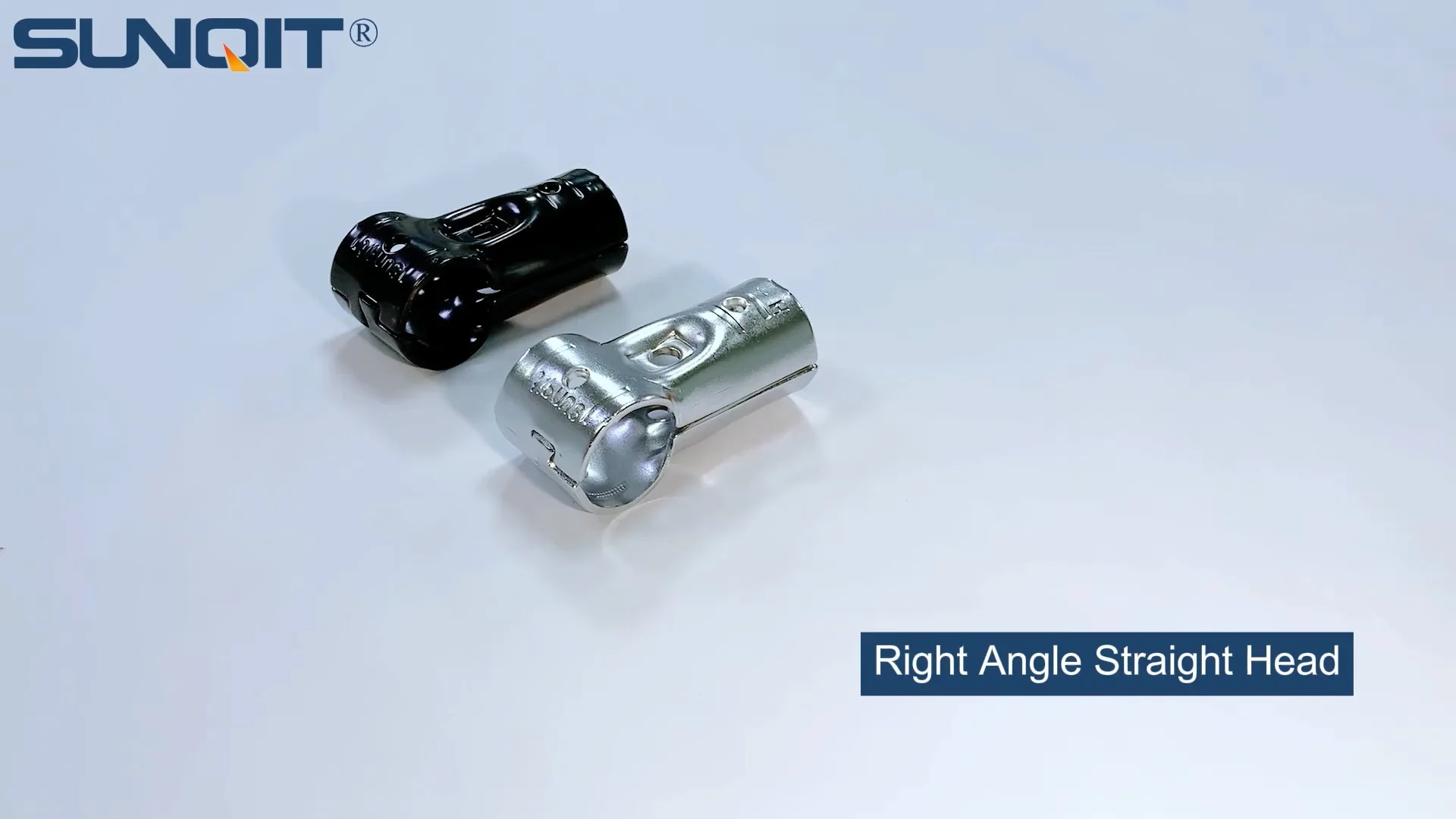
Walk into any consumer electronics factory today, and you'll be met with a symphony of precision: the soft hum of conveyors, the steady click of robotic arms placing microchips, and the focused murmurs of assemblers fitting together the sleek devices we carry in our pockets. Behind every smartphone, laptop, or smartwatch lies a complex dance of speed, accuracy, and adaptability. In an industry where product cycles shrink from years to months, assembly lines can't afford to be rigid. They need to pivot quickly—reconfiguring workstations, adjusting material flows, and scaling up for new models—without missing a beat. This is where lean systems shine, and at the heart of these systems are yet critical components like the Two Way Lean Pipe Joint Chrome . It's not just a piece of hardware; it's the quiet architect of flexible, efficient assembly lines that keep our favorite gadgets rolling off the production floor.
The Backbone of Lean Systems in Electronics Manufacturing
Lean manufacturing isn't just a buzzword in electronics—it's a survival strategy. With profit margins tight and consumer demands ever-changing, factories must eliminate waste, optimize workflows, and empower teams to adapt on the fly. Lean systems, built around modular components like lean pipe workbenches , flow racks , and conveyors, are designed to do exactly that. Unlike traditional welded steel setups, which are fixed and time-consuming to modify, lean systems use lightweight pipes, joints, and accessories to create structures that can be adjusted, expanded, or repurposed in hours, not days.
But here's the thing: the entire system is only as strong as its weakest link. If the joints connecting the pipes are flimsy, the workbench wobbles when an assembler tightens a screw. If they're hard to adjust, reconfiguring a flow rack for a new component size becomes a frustrating, time-consuming chore. This is why the choice of joint matters—and why the Two Way Lean Pipe Joint Chrome has become a staple in modern electronics plants.
Meet the Two Way Lean Pipe Joint Chrome: Small Part, Big Impact
Design That Delivers Precision
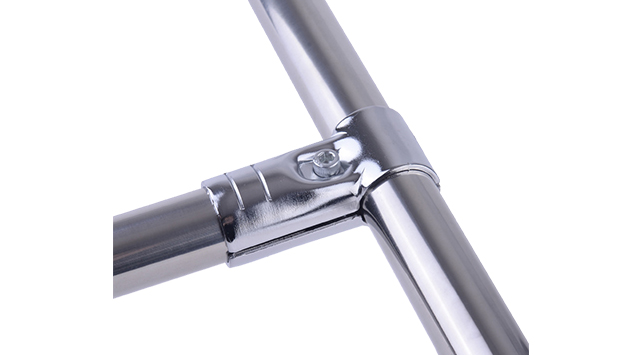
At first glance, the Two Way Lean Pipe Joint Chrome might seem simple: a small, chrome-plated connector designed to join two lean pipes at angles ranging from 90° to 180°. But look closer, and you'll see why it's a game-changer. Crafted from high-grade steel with a smooth chrome finish, it's built to withstand the daily grind of factory life—constant vibration from conveyors, the weight of heavy components, and the occasional bump from a material trolley. The chrome plating isn't just for show: it resists corrosion from humidity (critical in electronics cleanrooms) and prevents scratches that could harbor dust or damage sensitive parts like circuit boards.
What truly sets it apart, though, is its precision fit. The internal threading and clamping mechanism are machined to tight tolerances, ensuring that when you lock two pipes together, there's no wiggle room. For assemblers working with components smaller than a fingernail—like the microprocessors in smartwatches—this stability is non-negotiable. A wobbly workbench or misaligned flow rack can throw off measurements by fractions of a millimeter, leading to defective products and costly rework.
Flexibility That Keeps Pace with Innovation
Consumer electronics don't stand still, and neither should assembly lines. Last year, a leading smartphone manufacturer in South Korea launched three new models in six months—each with different screen sizes, battery configurations, and camera modules. Their old assembly line, built with fixed welded frames, required a full weekend of downtime and a team of contractors to reconfigure. Today, with lean pipe systems using Two Way Lean Pipe Joint Chrome, their in-house team can retool a workstation in under two hours. "We used to dread product launches because of the downtime," says Min-ji, a production supervisor there. "Now, we can adjust the height of a lean pipe workbench for taller screens or add a new section to a flow rack for camera parts during our lunch break. The joints just twist open and lock tight—no tools, no hassle."
Durability That Lowers Costs
In manufacturing, downtime is the enemy. A single stuck conveyor or collapsed material rack can cost thousands in lost production. The Two Way Lean Pipe Joint Chrome minimizes these risks with its robust design. Unlike plastic or low-grade steel joints that crack under stress, its steel core and chrome plating ensure a lifespan of 5+ years—even with frequent reconfigurations. This durability translates to lower costs over time: fewer replacements, less maintenance, and no emergency repairs. For factories operating 24/7, that's peace of mind you can measure in dollars and cents.
How It Works with Other Lean Components
The Two Way Lean Pipe Joint Chrome doesn't work in isolation—it's part of a ecosystem of lean components that together create seamless assembly workflows. Let's break down how it integrates with three key elements:
1. Lean Pipe Workbenches: Where Precision Meets Comfort
The lean pipe workbench is the assembler's office—a space where ergonomics and precision collide. With the Two Way Lean Pipe Joint Chrome, workbenches can be customized to fit every team member's needs: adjusting height for standing vs. sitting work, adding shelves for tools, or mounting ESD (Electrostatic Discharge) mats to protect sensitive electronics. In one Taiwanese laptop factory, assemblers reported a 20% reduction in wrist strain after reconfiguring their workbenches using these joints to angle keyboard trays and tool holders. "It's the little things," says Chen, an assembler with 8 years of experience. "Being able to tilt my workbench surface by 15° means my hands don't get tired as fast. And because the joint holds so tight, I never worry about it slipping mid-assembly."
2. Flow Racks: Keeping Materials Moving
In electronics assembly, materials need to flow to the assembler—not the other way around. Flow racks , with their gravity-fed roller tracks, ensure that components (like batteries, screens, or connectors) glide smoothly to the workstation, reducing wasted motion. The Two Way Lean Pipe Joint Chrome is critical here, too: it connects the aluminum or steel frames of the flow rack, keeping the roller tracks perfectly aligned. Misalignment can cause jams, slowing down production. In a Chinese tablet factory, switching to these joints cut flow rack jams by 80%, according to their latest efficiency report. "We used to have someone standing by the flow rack just to unstick components," says Wang, the plant manager. "Now, the joints keep the tracks straight, and the parts flow like water."
3. Conveyors: The Arteries of the Assembly Line
Conveyors move partially assembled devices from station to station—think of them as the assembly line's arteries. Their support structures, often built with lean pipes, must stay rigid to keep the conveyor belt or roller track level. The Two Way Lean Pipe Joint Chrome ensures that even under the weight of hundreds of devices per hour, the frame doesn't flex or shift. In a Vietnamese smartwatch plant, a conveyor system using these joints maintained alignment for 18 months straight, compared to the previous system's 3-month alignment checks. "It's one less thing to worry about," says Linh, the maintenance lead. "We used to spend 4 hours every month realigning the conveyor supports. Now, we check them once a quarter—and they're still perfect."

Why Chrome? Comparing Joints for the Electronics Floor
Not all lean pipe joints are created equal. To understand why the Two Way Lean Pipe Joint Chrome stands out, let's compare it to a common alternative: the 180° Fixed Lean Pipe Joint (a non-adjustable, painted steel connector).
| Feature | Two Way Lean Pipe Joint Chrome | 180° Fixed Lean Pipe Joint (Painted Steel) |
|---|---|---|
| Flexibility | Adjustable angles (90°–180°); reconfigurable in minutes | Fixed 180° angle; requires replacement to reconfigure |
| Durability | Chrome-plated steel resists corrosion, scratches, and wear; 5+ year lifespan | Painted steel prone to chipping; rusts in humid environments; 2–3 year lifespan |
| Installation Time | Tool-free (hand-tightened); 2–3 minutes per joint | Requires tools (wrench or screwdriver); 5–7 minutes per joint |
| Best For | Dynamic assembly lines with frequent reconfigurations (smartphones, wearables) | Static setups with rare changes (large appliances, heavy machinery) |
For electronics manufacturers, the choice is clear. The Two Way Lean Pipe Joint Chrome's flexibility, durability, and speed of installation make it ideal for environments where change is constant. It's not just a component—it's an investment in agility.
The Future of Lean: Where Two Way Joints Meet Smart Factories
As electronics manufacturing moves toward Industry 4.0—with IoT sensors, AI-driven analytics, and collaborative robots—lean systems are evolving, too. The Two Way Lean Pipe Joint Chrome is poised to play a role here, too. Imagine joints embedded with tiny sensors that monitor tightness and send alerts if they loosen—a feature already in testing at a Japanese electronics giant. Or joints designed to work seamlessly with aluminum profiles , creating lighter, more sustainable structures that align with eco-friendly manufacturing goals.
But even as technology advances, the core value of the Two Way Lean Pipe Joint Chrome remains the same: empowering teams to build better, faster, and more flexibly. In a world where the next big gadget is always just around the corner, that's not just an advantage—it's a necessity.
Final Thoughts: Precision That Powers Progress
The Two Way Lean Pipe Joint Chrome might not grace the cover of tech magazines, but it's the unsung hero of the consumer electronics we rely on daily. It's in the workbench where your smartphone's battery is installed, the flow rack that feeds screens to the assembly line, and the conveyor that carries your laptop to final testing. It's a reminder that in manufacturing, the smallest components often have the biggest impact.
For factory managers, assemblers, and engineers, choosing the right joint isn't just about hardware—it's about choosing progress. Progress toward faster production, better working conditions, and the ability to turn innovative ideas into tangible products. And in the fast-paced world of consumer electronics, progress waits for no one.