- Company Articles
- Products and Technology
- Product knowledge
- Two Way Lean Pipe Joint Chrome in Conveyor Systems: Stability & Durability

Two Way Lean Pipe Joint Chrome in Conveyor Systems: Stability & Durability
Related Product
Two Way Lean Pipe Joint Chrome
Two way lean pipe joint for 2 pcs 28MM lean pipe connection in straight angle, which used widely in workbench, flow rack, hand trolley frame connection.
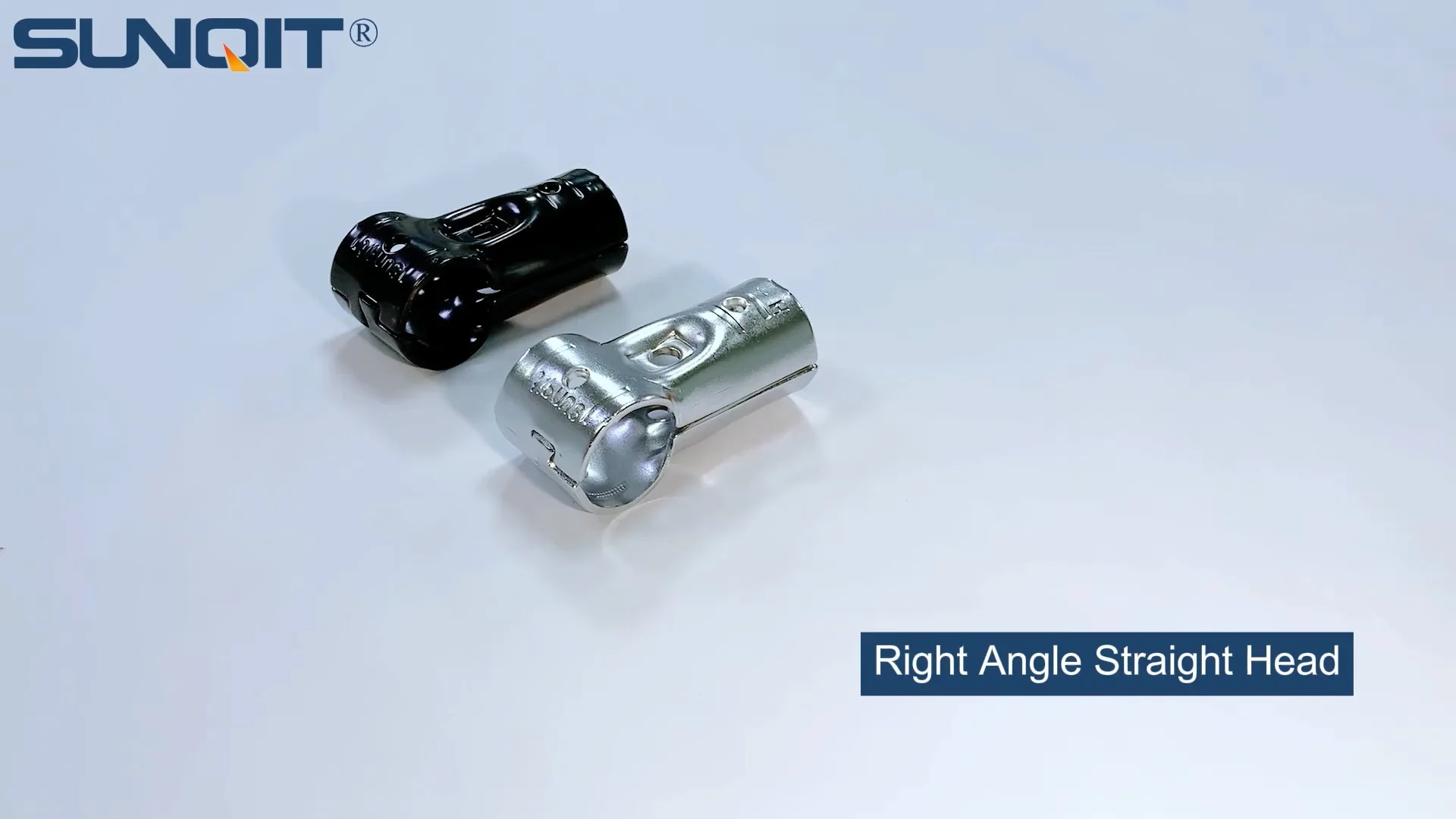
The Backbone of Efficient Material Flow: Why Joints Matter in Conveyor Systems
In the fast-paced world of manufacturing, logistics, and warehousing, conveyor systems are the unsung workhorses that keep operations moving. They're the silent force behind timely production, seamless order fulfillment, and the smooth transition of materials from one stage to the next. But for all their complexity, these systems rely on a surprisingly simple truth: every component, no matter how small, plays a critical role. Among these components, joints are the quiet heroes—connecting pipes, tracks, and structures to form a cohesive, functional network. And when it comes to ensuring that network stays strong, stable, and long-lasting, few components stand out like the Two Way Lean Pipe Joint Chrome.
Imagine a busy automotive assembly line, where hundreds of parts need to move precisely from station to station. Or a large-scale e-commerce warehouse during peak season, where packages zip along conveyor belts at speeds that leave the eye struggling to keep up. In these scenarios, even the tiniest misalignment or weak connection can lead to catastrophic slowdowns: jams, damaged goods, or worse, halted production. That's where the Two Way Lean Pipe Joint Chrome steps in. Designed to balance strength, flexibility, and durability, it's more than just a connector—it's a cornerstone of reliable conveyor systems.
What Is a Two Way Lean Pipe Joint Chrome?
At its core, a Two Way Lean Pipe Joint Chrome is a specialized connector used in lean pipe systems, which are modular structures built from pipes and joints to support various industrial applications—from workstations and material racks to, of course, conveyors. As the name suggests, it's designed to join two pipes at a fixed angle (often 90 degrees or straight, depending on the design), creating stable intersections or extensions in the system. But what truly sets it apart is its chrome plating, a finishing touch that elevates its performance in ways that unplated or standard joints simply can't match.
Lean pipe systems, rooted in the principles of lean manufacturing, prioritize efficiency, flexibility, and waste reduction. They're built to be modular, meaning they can be easily reconfigured or expanded as needs change—no need for expensive overhauls or custom fabrication. The Two Way Lean Pipe Joint Chrome fits perfectly into this ethos. Its simple, intuitive design allows for quick assembly and disassembly, making it ideal for dynamic environments where adaptability is key. But beyond flexibility, it's engineered to deliver the stability required to handle the daily rigors of industrial use.
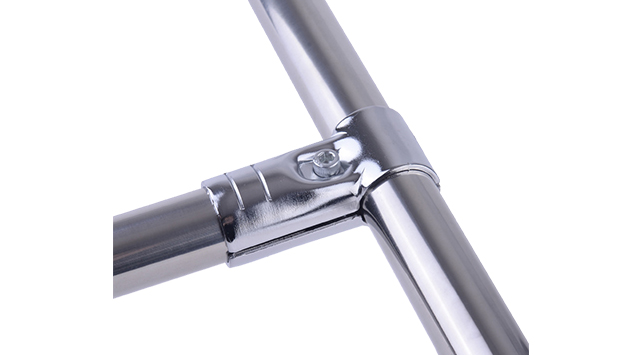
Stability: The Foundation of Uninterrupted Conveyor Performance
Why Stability Matters More Than You Think
Stability in conveyor systems isn't just about "feeling solid"—it's about precision. When materials move along a conveyor, they rely on consistent alignment to avoid jams, spills, or damage. A unstable joint can cause pipes or tracks to shift over time, creating uneven surfaces or gaps where items get stuck. In a worst-case scenario, this can lead to production delays, increased labor costs (as workers stop to fix issues), and even safety hazards. For example, in a food processing plant, a misaligned conveyor due to a weak joint could cause packaged goods to topple, contaminating products and violating hygiene standards.
The Two Way Lean Pipe Joint Chrome addresses this by prioritizing structural integrity in its design. Let's break down what makes it so stable:
- Precision Engineering: These joints are manufactured with tight tolerances, ensuring a snug, secure fit when connected to lean pipes. There's no "play" or wobble, which means once installed, the joint maintains its position even under constant vibration or varying loads.
- Load-Bearing Capacity: Built to handle the demands of industrial environments, the Two Way Lean Pipe Joint Chrome typically boasts impressive load ratings—often supporting hundreds of kilograms without bending or deforming. This makes it suitable for both light-duty applications (like moving small electronic components) and heavy-duty tasks (such as transporting metal parts or large boxes).
- Chrome-Plated Friction Reduction: The chrome finish isn't just for looks—it reduces friction between the joint and the pipes it connects. Less friction means less wear on both the joint and the pipes over time, preserving alignment and preventing loosening due to abrasion.
In practice, this stability translates to peace of mind. Workers can trust that the conveyor will keep running smoothly, managers can rely on consistent output, and maintenance teams spend less time troubleshooting avoidable issues.

Durability: Built to Last in the Toughest Environments
The Science Behind the Chrome Finish
If stability is about performance in the moment, durability is about performance over time. Industrial environments are harsh: they're filled with moisture, chemicals, dust, and constant physical stress. A joint that holds up today but corrodes, cracks, or wears out in a few months is little more than a temporary fix. The Two Way Lean Pipe Joint Chrome, however, is engineered for the long haul—and much of that longevity comes down to its chrome plating.
Chrome plating is a process where a thin layer of chromium is electroplated onto a base material (usually steel, in the case of these joints). This layer acts as a shield, protecting the underlying metal from corrosion, rust, and daily wear. Unlike paint or powder coatings, which can chip or peel, chrome plating bonds tightly to the surface, creating a barrier that stands up to even the most challenging conditions:
- Corrosion Resistance: In humid warehouses, coastal facilities, or areas with exposure to cleaning chemicals (like food processing plants), rust is a constant threat. Chrome plating resists oxidation, ensuring the joint remains strong and functional even in damp or corrosive environments.
- Scratch and Wear Resistance: Conveyor systems see a lot of action—pipes are moved, adjusted, and bumped during maintenance or reconfiguration. Chrome plating is harder than most base metals, so it resists scratches and dents, maintaining the joint's structural integrity over years of use.
- Chemical Resistance: From oil and grease in automotive plants to sanitizing agents in pharmaceutical facilities, industrial environments expose equipment to a range of chemicals. Chrome plating holds up against many common industrial substances, preventing degradation that could weaken the joint.
To put this in perspective, consider an unplated steel joint in a busy warehouse. Within a year, it might show signs of rust in humid corners, or its edges could wear down from repeated adjustments. replace that with a Two Way Lean Pipe Joint Chrome, and it's not uncommon to see it perform like new after 5+ years—even in high-traffic areas. That's durability that directly impacts the bottom line: fewer replacements, less downtime, and lower long-term costs.
Integration with the Lean Ecosystem: Working Seamlessly with Other Components
A great joint doesn't work in isolation—it needs to play well with others. The Two Way Lean Pipe Joint Chrome shines here, too, integrating seamlessly with the broader ecosystem of lean manufacturing components. Let's take a closer look at how it pairs with some key elements:
Lean System: The Bigger Picture
Lean manufacturing is all about eliminating waste and maximizing value. That means systems need to be flexible, so they can adapt to changing production needs without unnecessary cost or effort. The Two Way Lean Pipe Joint Chrome supports this by enabling modular construction. Need to extend a conveyor line? Add a few pipes and joints. Want to reconfigure a workstation to accommodate a new product? Disassemble the old setup and rebuild with minimal hassle. Its compatibility with standard lean pipes makes it a versatile tool in the lean toolkit, ensuring that systems can evolve alongside the business.
Aluminum Profile: Lightweight Strength
Modern industrial systems often rely on aluminum profiles for their combination of light weight and strength. Aluminum is easy to handle, resistant to corrosion, and ideal for applications where weight matters—like mobile workstations or overhead conveyors. The Two Way Lean Pipe Joint Chrome pairs exceptionally well with aluminum pipes and profiles. Its design allows for secure connections to aluminum, creating structures that are both strong and lightweight. For example, in a electronics manufacturing facility, where precision and cleanliness are paramount, aluminum profiles with chrome-plated joints form sleek, easy-to-clean conveyor tracks that move delicate components without risk of damage.
Roller Track: Smooth Material Flow
Roller tracks are a staple of conveyor systems, using wheels or rollers to reduce friction and allow materials to glide along the surface. To work effectively, these tracks need to be perfectly aligned and securely mounted—and that's where the Two Way Lean Pipe Joint Chrome comes in. By connecting roller track sections, the joint ensures that the track remains level and stable, even when supporting heavy loads. Imagine a distribution center using roller tracks to move large boxes: if the joints connecting the tracks are weak, the track could sag, causing boxes to get stuck. With the Two Way Lean Pipe Joint Chrome, the track stays rigid, and boxes flow smoothly—from receiving to shipping, without a hitch.
Real-World Impact: Case Studies in Stability and Durability
It's one thing to talk about specs and features, but real-world results tell the true story. Let's look at two scenarios where the Two Way Lean Pipe Joint Chrome made a measurable difference:
Case Study 1: Automotive Parts Manufacturer
A mid-sized automotive parts manufacturer was struggling with frequent conveyor jams on their assembly line. The culprit? Weak joints connecting their roller tracks, which would loosen over time, causing the tracks to misalign. This led to daily disruptions, with workers spending 1-2 hours per day fixing jams and realigning tracks. After switching to Two Way Lean Pipe Joint Chrome, the results were striking: jams decreased by 90%, and maintenance time dropped to less than 15 minutes per week. The plant manager noted, "We used to dread peak production periods because the conveyors would always act up. Now, we barely think about them—they just work."
Case Study 2: Food Processing Warehouse
A food processing warehouse in a coastal region was battling corrosion on their conveyor joints. The salty sea air was causing standard steel joints to rust within 6-8 months, leading to frequent replacements. Switching to chrome-plated joints solved the problem. After two years, the joints showed no signs of rust, and the warehouse reduced joint replacement costs by 75%. "We used to budget for new joints every quarter," said the facility director. "Now, we don't even think about it. The chrome plating has held up better than we ever expected."
Comparing the Options: How Two Way Lean Pipe Joint Chrome Stacks Up
Not all joints are created equal. To understand why the Two Way Lean Pipe Joint Chrome is a top choice, it helps to compare it to other common options. The table below breaks down key factors like material, durability, and best use cases:
| Joint Type | Base Material | Coating/Finish | Load Capacity (Approx.) | Corrosion Resistance | Best For |
|---|---|---|---|---|---|
| Two Way Lean Pipe Joint Chrome | Carbon Steel | Chrome Plated | 500-800 kg | High (resists rust, chemicals) | Heavy-duty industrial use, humid/coastal environments, frequent reconfiguration |
| Standard Two Way Lean Pipe Joint (Unplated) | Carbon Steel | None | 400-600 kg | Low (prone to rust in damp conditions) | Dry, light-duty applications with minimal exposure to elements |
| Stainless Steel Lean Pipe Joint | Stainless Steel | Natural (no plating) | 450-700 kg | Medium-High (resists rust, but less durable than chrome) | Food-grade or cleanroom environments where plating is avoided |
As the table shows, the Two Way Lean Pipe Joint Chrome outperforms unplated joints in both load capacity and corrosion resistance, and it offers better durability than stainless steel in high-wear environments. For most industrial applications, it's the clear choice for balancing performance and cost.
Maintenance Tips: Keeping Your Chrome Joints in Top Shape
While the Two Way Lean Pipe Joint Chrome is built to last, a little proactive maintenance can go a long way in extending its lifespan even further. Here are some simple tips to keep your joints performing at their best:
- Regular Inspections: Check joints monthly for signs of looseness, especially in high-vibration areas. Tighten bolts as needed—even a small amount of play can lead to increased wear over time.
- Cleaning: Wipe down joints with a damp cloth to remove dust, grease, or debris. In environments with heavy oil or chemicals, use a mild detergent to prevent buildup that could corrode the chrome (avoid abrasive cleaners, which can scratch the finish).
- Lubrication: For moving parts (like adjustable joints), apply a light machine oil to reduce friction. This is especially important if joints are frequently disassembled and reassembled.
- Address Damage Promptly: If a joint becomes bent, cracked, or the chrome plating is chipped (exposing the base metal), replace it immediately. A damaged joint is a weak link that can compromise the entire system.
These steps take minimal time but can add years to the life of your joints—and by extension, your conveyor system.
The Future of Lean Pipe Joints: Innovations on the Horizon
As manufacturing and logistics continue to evolve, so too do the components that power them. The Two Way Lean Pipe Joint Chrome is already a leader in its class, but ongoing innovations promise to make it even better. Here's what to watch for:
- Smart Joints: Integration with IoT sensors to monitor tension, vibration, and wear in real time. Imagine a joint that alerts maintenance teams before it loosens or fails—preventing downtime before it starts.
- Advanced Coatings: New plating technologies could enhance corrosion resistance even further, making joints suitable for extreme environments (like chemical plants or offshore facilities).
- Lightweight Materials: Combining chrome plating with high-strength, lightweight alloys (like titanium or advanced steels) to reduce weight without sacrificing strength—ideal for mobile or overhead conveyor systems.
These innovations will build on the foundation that the Two Way Lean Pipe Joint Chrome has already laid, ensuring it remains a critical component of efficient, reliable conveyor systems for years to come.
Conclusion: More Than a Joint—A Commitment to Reliability
In the end, the Two Way Lean Pipe Joint Chrome is more than just a connector. It's a commitment to reliability, a promise that your conveyor system will stand up to the demands of your operation, day in and day out. It's the difference between a system that requires constant attention and one that lets you focus on what matters: growing your business, serving your customers, and driving efficiency.
Whether you're building a new conveyor system, upgrading an existing one, or simply looking to reduce maintenance headaches, investing in quality joints like the Two Way Lean Pipe Joint Chrome is a decision that pays dividends. It's stable enough to keep operations running smoothly, durable enough to withstand the toughest environments, and flexible enough to adapt as your needs change. In a world where every second counts, that's not just a component—that's a competitive advantage.