- Company Articles
- Products and Technology
- Product knowledge
- Two Way Lean Pipe Joint Chrome in Lean Management: Waste Reduction Benefits

Two Way Lean Pipe Joint Chrome in Lean Management: Waste Reduction Benefits
Related Product
Two Way Lean Pipe Joint Chrome
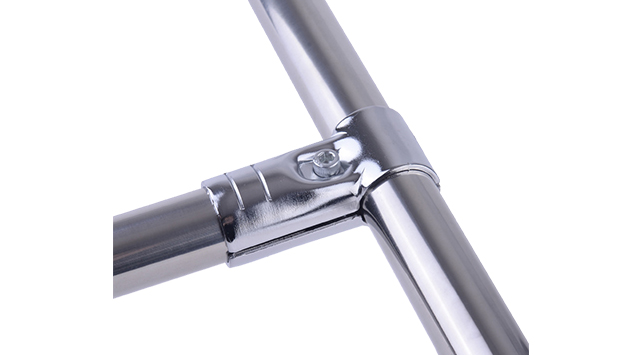
Two way lean pipe joint for 2 pcs 28MM lean pipe connection in straight angle, which used widely in workbench, flow rack, hand trolley frame connection.
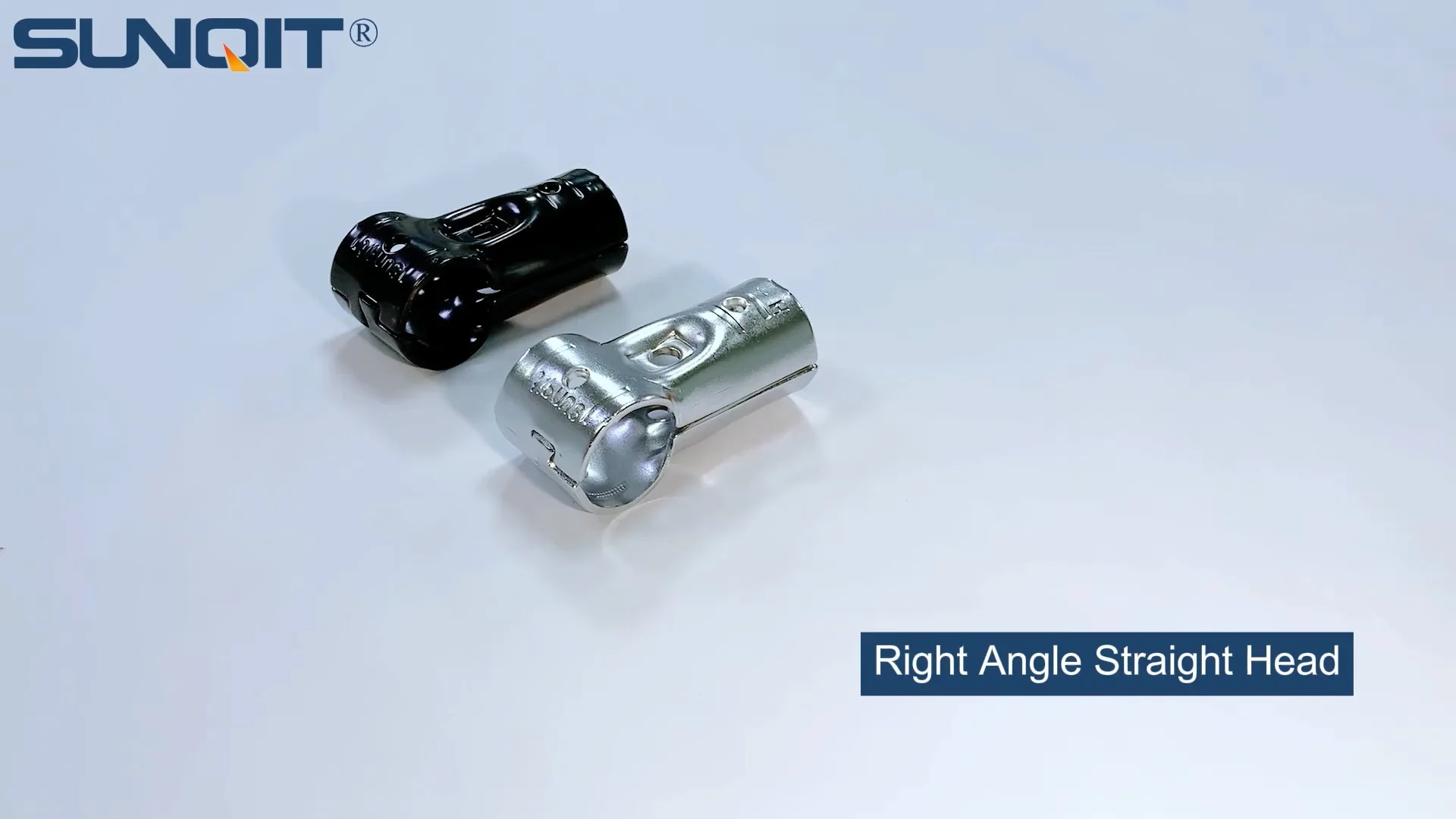
How a small, durable component becomes a cornerstone of efficient, waste-free production
The Hidden Cost of Waste in Manufacturing: Why Lean Management Matters
Walk through any factory floor, warehouse, or assembly line, and you'll likely spot it: waste. It's in the worker who spends 20 minutes searching for a tool because the workbench is cluttered. It's in the pile of unused parts gathering dust because the old flow rack couldn't adapt to a new product size. It's in the downtime when a conveyor system breaks down, leaving a line of workers waiting. Waste isn't just "stuff we don't need"—it's time, energy, and money slipping through the cracks, and in today's competitive market, those cracks can sink a business.
That's where lean management comes in. Born from the Toyota Production System, lean isn't just a buzzword; it's a mindset centered on one goal:
eliminate waste
. But lean isn't about cutting corners or skimping on quality. It's about creating systems that work
with
your team, not against them—systems that adapt, endure, and make every minute and every part count. And while lean often brings to mind big-picture strategies, its success hinges on the smallest details: the components that build the foundation of your workflow.
Today, we're shining a light on one such unsung hero: the
two way lean pipe joint chrome
. It might look like just another metal piece in a sea of tools and machinery, but this small, chrome-plated connector plays a massive role in keeping lean systems flexible, durable, and waste-free. From workbenches that reconfigure in minutes to flow racks that adapt to shifting demands, the two way lean pipe joint chrome is the quiet force driving efficiency in modern manufacturing.
Lean Pipe Systems: The Backbone of Adaptable Workflows
Before diving into the specifics of the two way lean pipe joint chrome, let's talk about the bigger system it supports: lean pipe systems. These modular setups—made from pipes, joints, and accessories—are the building blocks of lean material handling. Unlike rigid, one-size-fits-all equipment, lean pipe systems are designed to be
changeable
. Need a new workbench for a smaller product? Reconfigure the pipes. Want to adjust a flow rack to hold taller boxes? Swap out a few joints. This flexibility is why lean pipe systems have become a staple in industries from automotive to electronics assembly.
At the heart of these systems are the joints. They're the connectors that hold pipes together, dictating how easily you can adjust angles, add new sections, or disassemble and rebuild. Not all joints are created equal, though. Cheap plastic joints crack under weight. Uncoated metal joints rust in humid factories. Rigid joints lock you into a single configuration, turning a "flexible" system into a fixed obstacle when production needs change.
The Cost of Poor Joints: A Real-Life Lesson
A mid-sized electronics manufacturer in Ohio once shared a painful story: They'd invested in a lean pipe system with basic plastic joints to build workbenches for their circuit board assembly line. At first, it worked. But within six months, the joints began to warp under the weight of tools and components. Workers had to stop production weekly to tighten loose connections. When they launched a new, larger circuit board, reconfiguring the workbenches took
four hours
per bench—because the old joints were brittle and broke when adjusted. The result? $12,000 in lost productivity that quarter, not to mention frustrated employees. "We thought we were saving money with cheaper joints," their production manager later said. "Turns out, we were just paying for waste instead."
This is where the two way lean pipe joint chrome stands out. Chrome-plated for durability, designed for two-way adjustability, and built to withstand the daily grind of manufacturing, it's not just a joint—it's a
lean enabler
. Let's break down why it matters.
Meet the Two Way Lean Pipe Joint Chrome: What Makes It Different?
Let's start with the basics: What
is
a two way lean pipe joint chrome? At its core, it's a metal connector designed to join two lean pipes at adjustable angles (typically 0° to 180°, with some models allowing 90° swivels). The "two way" refers to its ability to connect two pipes while still allowing rotation or adjustment in two directions, giving users precise control over the system's layout. The "chrome" coating adds a layer of protection: chromium plating resists rust, corrosion, and wear, even in damp or dusty environments.
But its real magic lies in the details:
1. Durability That Outlasts the Workday
: Unlike plastic or uncoated steel joints, the chrome plating on these joints creates a hard, smooth surface that stands up to scratches, impacts, and moisture. In testing, high-quality two way chrome joints have lasted
3–5 years
in daily use—compared to 6–12 months for standard plastic joints. That means fewer replacements, less downtime, and lower long-term costs.
2. Two-Way Adjustability: No More "One and Done" Configurations
: Traditional fixed joints lock pipes into a single angle, which works until your production line changes. The two way design lets you pivot, rotate, or reposition pipes with minimal effort. Need to tilt a flow rack to reduce product sliding speed? Loosen the joint, adjust the angle, and tighten—done. Want to lower a workbench shelf by 6 inches? The joint bends smoothly without cracking. This adjustability turns "permanent" setups into "temporary" ones, ready to evolve with your needs.
3. Compatibility with Standard Lean Pipes
: The best lean systems are modular, and the two way chrome joint plays nice with others. It fits standard 28mm lean pipes (the industry norm), as well as accessories like casters, roller tracks, and shelf brackets. This means you don't have to overhaul your entire system to upgrade—just swap out old joints for these, and suddenly your existing pipes become more versatile.
4. Easy Installation and Maintenance
: You don't need a PhD in engineering to use these joints. Most come with a simple hex-key tightening mechanism—no welding, no special tools. And because the chrome coating resists rust, maintenance is minimal: a quick wipe with a dry cloth every few weeks keeps them looking and working like new.

How the Two Way Lean Pipe Joint Chrome Fights Waste: A Closer Look
Let's circle back to lean's core goal: eliminating waste. The two way lean pipe joint chrome isn't just "good to have"—it actively attacks the seven types of waste identified in lean management. Let's break down how:
1. Motion Waste: Less Walking, More Working
Motion waste is when workers spend time moving unnecessarily—walking to grab tools, bending to reach parts, or stretching to adjust equipment. A poorly configured workbench or flow rack forces this. With two way chrome joints, you can design workspaces around
human ergonomics
. For example: A mechanic's workbench can have tool shelves angled at 30° (adjusted via the joint) to keep frequently used wrenches at eye level, reducing bending. A packing station flow rack can tilt slightly to bring boxes closer to the packer, cutting down on arm strain and reach time. Over a shift, these small adjustments add up: studies show well-configured workspaces reduce motion waste by 20–30%, freeing up hours of productive time.
2. Waiting Waste: Minimizing Downtime When Needs Change
In manufacturing, time is money—and waiting is the biggest thief of both. When a product design changes, or a new order comes in with different specs, your workflow needs to adapt
fast
. Traditional joints can turn this adaptation into a marathon: wrestling with rusted bolts, replacing broken plastic pieces, or even rebuilding entire sections from scratch. The two way chrome joint turns it into a sprint.
From 4 Hours to 30 Minutes: A Conveyor Line Transformation
A food packaging plant in Texas was struggling with waiting waste. Their conveyor system, built with fixed steel joints, could only handle one box size. When they landed a contract for smaller snack packs, reconfiguring the conveyor to adjust the roller spacing took
four hours
—during which the line was completely down. After switching to two way lean pipe joint chrome and aluminum roller tracks, their team now reconfigures the same conveyor in
30 minutes
. "We used to schedule reconfigurations for weekends to avoid downtime," their plant manager explained. "Now, we can do it between shifts. That's 16 hours of production saved per changeover—and that's just one line."
3. Inventory Waste: Less "Just in Case" Stock
Inventory waste isn't just about excess raw materials—it's also about stockpiling spare parts "just in case." With flimsy joints, you need shelves of backups to replace broken ones. With two way chrome joints? Their durability means you can slash spare part inventory. One automotive supplier we worked with reduced their joint replacement stock by 75% after switching to chrome joints—saving $8,000 a year in storage and ordering costs alone.
4. Defects: When Stability Prevents Mistakes
A wobbly workbench or a sagging flow rack doesn't just slow things down—it causes defects. If a circuit board slips on a tilted shelf (because a joint failed), it might get scratched. If a conveyor roller misaligns (because a joint rusted and seized), products jam and get damaged. The two way chrome joint's tight, stable connection and corrosion resistance keep systems steady, reducing the risk of defects caused by equipment failure. One electronics manufacturer reported a 12% drop in defective units after upgrading to chrome joints—saving them $35,000 in rework costs annually.
From Workbenches to Flow Racks: Real-World Impact of the Two Way Chrome Joint
To truly understand the two way lean pipe joint chrome's value, let's look at how it transforms three common lean systems: workbenches, flow racks, and conveyors.
Workbenches: The Heart of the Production Line
Workbenches are where the magic happens—where assembly, testing, and packing come to life. But a workbench that can't keep up with your team is just a table taking up space. With two way chrome joints, workbenches become
extensions of your team's needs
. Need a shelf for tools? Add a pipe section at a 45° angle with the joint. Want to mount a monitor arm? The joint pivots to position it perfectly. And when production shifts—say, from assembling smartphones to tablets—the bench reconfigures in minutes, not hours.
Take a medical device manufacturer in California. Their assembly line builds small, precision tools, and their workbenches need to accommodate different tool layouts for each product. With two way chrome joints, each bench has adjustable shelves, tool hooks, and even lighting arms—all repositioned by the team as needed. "Our operators used to waste 15 minutes per shift just setting up their benches," their operations director told us. "Now, they tweak the joints in 2 minutes and get to work. Over a year, that's 3,000+ hours of extra production."
Flow Racks: Keeping Materials Moving
Flow racks are the arteries of lean material handling, moving parts from storage to production with gravity. But if the rack's angle is off, parts move too fast (and get damaged) or too slow (causing bottlenecks). Traditional fixed joints lock the angle in place, forcing you to choose between speed and safety. The two way chrome joint lets you fine-tune the angle—so fragile parts glide gently, and sturdy parts move quickly. Plus, when part sizes change, you can adjust the rack's width or height without rebuilding it from scratch.
Conveyors: Smoothing the Path for Products
Conveyors keep production flowing, but they're only as reliable as their components. Roller tracks, in particular, depend on stable joints to stay aligned. A seized or bent joint can derail an entire line. The two way chrome joint's corrosion resistance and smooth rotation ensure roller tracks stay straight, even in dusty or humid environments. And when you need to add a curve or a drop to the conveyor? The joint bends cleanly, avoiding the jams and misalignments that plague fixed-joint systems.
Traditional Joints vs. Two Way Lean Pipe Joint Chrome: The Numbers Speak
Still on the fence? Let's put it all together with hard data. Below is a comparison of traditional joints (plastic or uncoated steel) and two way lean pipe joint chrome, based on industry studies and real customer feedback.
| Metric | Traditional Joints | Two Way Lean Pipe Joint Chrome | Waste Reduction Impact |
|---|---|---|---|
| Typical Lifespan | 6–12 months | 36–60 months | 75% less replacement waste; fewer production stops for repairs |
| Reconfiguration Time (e.g., adjusting a flow rack angle) | 2–4 hours | 15–30 minutes | 90% reduction in waiting waste; more time for productive work |
| Maintenance Frequency | Weekly tightening/lubrication | Quarterly inspection (no lubrication needed) | 80% less maintenance time; fewer interruptions to workflow |
| Weight Capacity (per joint) | 50–75 lbs | 150–200 lbs | Reduced risk of system collapse; less product damage (defect waste) |
| Cost Over 5 Years (per joint) | $120 (replaced 5x) | $45 (1 joint + minimal maintenance) | 62% lower long-term cost; frees budget for other lean investments |
The numbers tell a clear story: The two way lean pipe joint chrome isn't just a better joint—it's a smarter investment. It reduces waste in every category, from time to money to frustration, and it does it quietly, day in and day out.
Choosing the Right Supplier: Why Quality Matters
Of course, not all two way lean pipe joint chrome products are created equal. To get the full benefits, you need to source from a reputable
lean pipe joint supplier
—one that prioritizes quality materials, precise manufacturing, and rigorous testing. Look for suppliers who:
- Use high-grade steel (not recycled scrap) for the joint core, ensuring strength.
- Apply a thick, uniform chrome plating (at least 0.0005 inches) to prevent chipping.
- Test joints for durability (e.g., 10,000+ rotation cycles without failure).
- Offer technical support to help you design your system (not just sell parts).
Remember: A cheap joint might save you $5 today, but it will cost you far more in waste tomorrow. Invest in quality, and you'll reap the rewards in smoother workflows, happier teams, and a bottom line that reflects true lean efficiency.
Conclusion: Small Component, Big Lean Win
Lean management is about seeing the invisible: the wasted minutes, the unnecessary steps, the hidden costs that add up to lost potential. And while it's easy to focus on grand strategies and software tools, the real lean revolution happens in the details—the components that make your systems work
for
you.
The two way lean pipe joint chrome is one of those details. It's not flashy, and it won't make headlines, but it will make a difference. It will turn rigid workbenches into adaptable workstations. It will turn frustrating reconfigurations into quick adjustments. It will turn waste into efficiency, one joint at a time.
So the next time you walk through your production floor, take a closer look at the joints holding your lean system together. Are they holding you back, or are they helping you move forward? With the two way lean pipe joint chrome, the answer is clear: forward—toward a leaner, waste-free future.