- Company Articles
- Products and Technology
- Product knowledge
- Two Way Lean Pipe Joint Chrome in Lean Manufacturing Training: Educational Uses

Two Way Lean Pipe Joint Chrome in Lean Manufacturing Training: Educational Uses
Related Product
Two Way Lean Pipe Joint Chrome
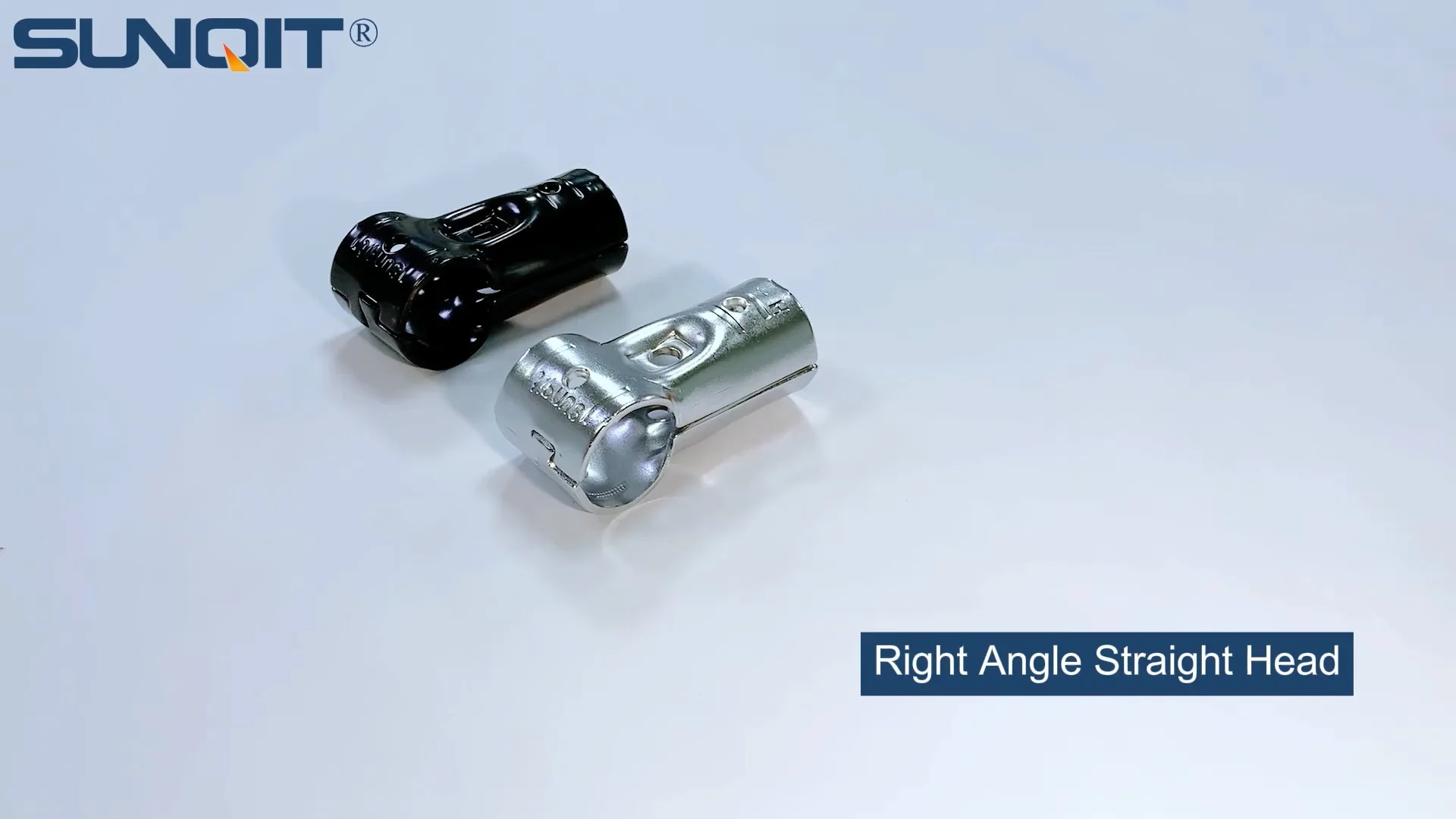
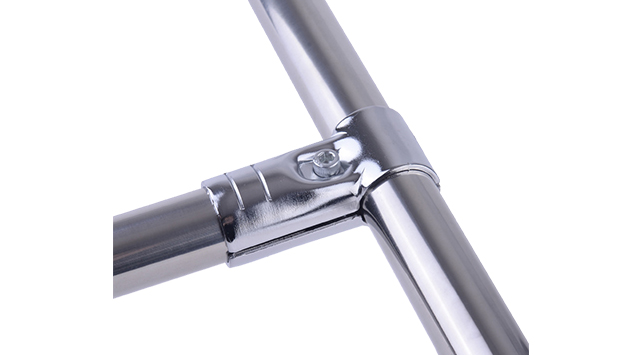
Two way lean pipe joint for 2 pcs 28MM lean pipe connection in straight angle, which used widely in workbench, flow rack, hand trolley frame connection.
How a simple, durable joint becomes the cornerstone of hands-on learning in lean principles, modular design, and production efficiency
Introduction: The Missing Link in Lean Manufacturing Training
Walk into any modern manufacturing facility, and you'll likely see the fruits of lean principles at work: streamlined assembly lines, minimized waste, and teams that move with the precision of a well-oiled machine. But behind those efficient workflows lies a critical foundation—training. Not just classroom lectures on value streams or Kanban boards, but hands-on, tactile learning that lets future manufacturers build efficiency before they run it. This is where tools like lean pipe systems shine, and at the heart of these systems? The unassuming yet indispensable two way lean pipe joint chrome.
Lean manufacturing isn't just a set of theories; it's a mindset honed through practice. Trainees need to feel how a workflow bends (or breaks) when a component is misplaced, or how a few small adjustments can turn a bottleneck into a smooth current. Traditional training tools—static diagrams, rigid mock-ups—often fall short. They don't adapt, they don't teach problem-solving in real time, and they rarely reflect the dynamic nature of actual production floors. Enter lean pipe systems: modular, flexible, and built to be reimagined. And among their many components, the two way lean pipe joint chrome stands out as a teacher's best friend. Simple enough for beginners to master, durable enough for repeated use, and versatile enough to simulate everything from a basic workbench to a complex flow rack, this joint isn't just a piece of hardware—it's a bridge between theory and practice.
In this article, we'll explore why the two way lean pipe joint chrome has become a staple in lean manufacturing training programs. We'll break down its design, its role in building functional lean systems, and how educators and trainees alike use it to unlock key lean concepts like modularity, waste reduction, and collaborative problem-solving. Whether you're training new hires, refining a curriculum, or simply curious about the tools that shape tomorrow's manufacturers, this deep dive will show you why sometimes, the smallest components make the biggest impact.
Understanding the Two Way Lean Pipe Joint Chrome: More Than Just a Connector
At first glance, a two way lean pipe joint chrome might look like little more than a metal connector. But take a closer look, and you'll see why it's a linchpin of lean training. Let's start with the basics: what is it?
A two way lean pipe joint chrome is a mechanical fastener designed to connect two lean pipes at a fixed angle (typically 90 degrees, though some variants allow for adjustment). Its name gives away its key features: "two way" because it joins two pipes, "lean pipe" because it's engineered for the lightweight, corrosion-resistant pipes used in lean systems, and "chrome" for its protective plating—a finish that adds durability, reduces friction during assembly, and gives it a sleek, professional look that holds up to the wear and tear of busy training environments.
But its design is where the magic happens. Unlike rigid, one-size-fits-all connectors, the two way joint is built for simplicity . Most models feature a threaded bolt or cam lever that tightens around the pipe, creating a secure hold without welding or specialized tools. This means trainees can assemble, disassemble, and reassemble structures in minutes—critical for learning that requires iteration. Imagine a group of students tasked with building a lean pipe workbench: with these joints, they can tweak the height, add a shelf, or reconfigure the layout in seconds, all while discussing why each change matters for ergonomics or workflow.
The chrome plating isn't just for show, either. In training settings, where components are handled, dropped, and reused daily, corrosion resistance is a must. Chrome acts as a barrier against rust and scratches, ensuring the joints stay functional semester after semester. It also reduces surface friction, making it easier for new learners to slide pipes into place or adjust angles without struggling with stuck or seized parts—small details that keep frustration low and engagement high.
Compatibility is another strength. The two way lean pipe joint chrome works seamlessly with standard lean pipes (often 28mm in diameter), as well as a range of accessories: casters for mobile workstations, roller tracks for flow racks, even aluminum profile add-ons for sturdier structures. This versatility means it can grow with trainees as their skills advance—from simple "connect the pipes" exercises to complex simulations of production assemble lines.
Why Lean Systems Matter in Training: Learning by Building, Not Just Reading
To understand the two way joint's educational value, we first need to grasp why lean systems themselves are transformative for training. Lean systems—whether they're workbenches, flow racks, or material trolleys—are designed around two core principles: modularity and adaptability. They're not fixed; they're evolvable . This mirrors the real world of manufacturing, where customer demands shift, production volumes fluctuate, and continuous improvement is the name of the game.
In a classroom, talking about "flexible workflow design" is one thing. Actually building a flow rack, then taking it apart and rebuilding it to handle a different product size? That's learning that sticks. Lean systems let trainees experience the consequences of their design choices firsthand. A wobbly workbench teaches stability; a flow rack with misaligned rollers shows why precision matters for material flow. And because these systems are built with components like the two way lean pipe joint chrome—simple, reusable, and low-cost—trainees can afford to make mistakes. After all, there's no better teacher than a joint that loosens mid-simulation, prompting a group to troubleshoot: "Did we tighten the bolt enough? Is the pipe straight? Maybe we need a three way joint here instead?"
Lean systems also bridge the gap between individual skill and team collaboration. In manufacturing, no one works in isolation, and training should reflect that. A typical exercise might split trainees into groups, each tasked with designing a section of a mini production line (a workbench for assembly, a flow rack for material storage, a trolley for transport). Each group uses two way joints to build their piece, then they come together to integrate them. Suddenly, they're not just learning about joints—they're learning about communication, standardization, and the importance of aligning individual work with the bigger picture. "Your flow rack is two inches taller than our workbench!" becomes a lesson in process synchronization, not just a measurement error.
Perhaps most importantly, lean systems make abstract lean concepts tangible. Take "waste reduction," a cornerstone of lean philosophy. Trainees might read about "motion waste" in a textbook, but until they build a workbench where tools are stored 10 inches too far from the assembly point—then rebuild it with the two way joint to fix the height—they won't truly feel the impact of unnecessary movement. The two way joint, with its quick-release design, turns these lessons into active problem-solving, not passive note-taking.

Educational Uses: How the Two Way Lean Pipe Joint Chrome Teaches Lean Principles
Now, let's zoom in on the star of the show: how exactly does the two way lean pipe joint chrome enhance learning? Its applications in training are as varied as the lean principles it teaches, but we can break them down into four key areas:
1. Teaching Modularity: The "Building Blocks" of Efficiency
Modularity is the backbone of lean systems—parts that work together but can also stand alone, allowing for endless configurations. The two way joint is the perfect metaphor for this. It connects two pipes, but those pipes can connect to other joints, which connect to more pipes, and so on. Trainees start with the basics: using two way joints to build a simple frame (a 2x2 cube, for example). Then, they add a third pipe with a three way joint, turning the cube into a shelf. Then, they attach casters, turning the shelf into a trolley. Each step reinforces the idea that efficiency starts with components that play well together.
An exercise might challenge trainees to build a lean pipe workbench with specific requirements: height-adjustable, with a shelf for tools, and a small flow rack attachment for incoming parts. With two way joints, they can prototype quickly: too short? Loosen the joints, add a longer pipe, retighten. Shelf too shallow? Swap out a 12-inch pipe for an 18-inch one. No saws, no glue, no waiting—just instant feedback. This teaches not just how to build, but how to design for change , a skill critical in manufacturing where adaptability is key.
2. Simulating Real-World Production Assemble: From Mock-Up to Muscle Memory
One of the hardest parts of training is replicating the chaos (and order) of a real production line. The two way joint, paired with lean pipes and accessories like roller tracks, makes it possible. Trainees can build mini assembly lines that mimic actual production assemble processes: parts roll down a flow rack (built with two way joints and roller tracks), are picked up at a workbench (built with two way joints and aluminum panels), and are moved to the next station via a trolley (built with two way joints and casters). Suddenly, concepts like "takt time" or "pull systems" aren't just terms—they're the rhythm of the line they built.
A common drill involves intentionally introducing a "defect" into the mock line: a misaligned roller track, a wobbly workbench, or a trolley that's too narrow for the parts. Trainees must then diagnose the issue, disassemble the problematic section (using the two way joint's quick-release feature), and fix it. This mirrors real-world troubleshooting, where downtime is costly and problem-solving speed matters. By the end, they're not just familiar with the joint—they're familiar with the pressure of keeping a line running smoothly.
3. Fostering Collaborative Problem-Solving: When "Good Enough" Isn't Enough
Lean manufacturing thrives on teams that question, iterate, and improve together. The two way joint, with its simplicity, levels the playing field, letting all trainees contribute—even those new to hands-on work. In one exercise, groups are given identical sets of materials (pipes, two way joints, a few three way joints, casters) and tasked with building a flow rack for fragile parts. There's no "right" answer, only better ones. One group might prioritize stability, using extra two way joints to reinforce corners. Another might focus on speed, using fewer joints but angling pipes for faster part flow. When they present their designs, the discussion becomes about trade-offs—stability vs. speed, cost vs. durability—and how to align those trade-offs with customer needs.
The two way joint also teaches accountability. If a structure collapses during testing, it's not a mystery—trainees can trace the failure to a loose joint, a misaligned pipe, or a miscalculation in weight distribution. "I thought I tightened that joint!" becomes a lesson in attention to detail, and "Let's check all the joints together" becomes a lesson in collective responsibility. These are the soft skills that turn trainees into leaders, and the two way joint is the unassuming tool that brings them to the surface.
4. Reinforcing Durability and Sustainability: Lean Systems That Last
Lean isn't just about efficiency—it's about longevity. A system that falls apart after a month isn't lean; it's wasteful. The two way lean pipe joint chrome, with its chrome plating and robust construction, teaches this by example. Trainees use the same joints day after day, taking them apart and rebuilding them, and through that repetition, they learn about material quality and design intent. "Why is this joint still tight after 20 uses?" becomes a conversation about chrome plating's resistance to wear, or the precision of the bolt mechanism.
Sustainability is another angle. Unlike disposable training materials (cardboard mock-ups, single-use plastic models), lean pipe systems with two way joints are built to be reused for years. Trainees see firsthand how investing in durable tools reduces waste—a lesson that extends beyond the training room to their future roles as manufacturers. "We can use these joints for next year's class" isn't just a practical observation; it's a lean mindset in action.
Comparing Lean Pipe Joints: When to Use the Two Way Chrome Joint in Training
Of course, the two way lean pipe joint chrome isn't the only joint in the lean training toolbox. There are three way joints, fixed-angle joints, rotatory joints, and more. Each has its place, but the two way chrome joint stands out for training environments. To illustrate, let's compare it to other common joints, focusing on their educational applications:
| Joint Type | Key Design Feature | Educational Strengths | Best For Teaching: | Challenges in Training |
|---|---|---|---|---|
| Two Way Lean Pipe Joint Chrome | Connects 2 pipes at 90° (fixed or adjustable); chrome-plated; quick-release bolt | Simple assembly; high durability; low cost per use; intuitive for beginners | Modularity, basic structure building, team collaboration, waste reduction (via reuse) | Limited to two-way connections (may need other joints for complex structures) |
| Three Way Lean Pipe Joint | Connects 3 pipes (e.g., 2 horizontal, 1 vertical); bulkier than two way | Teaches 3D structure design; introduces complexity in load distribution | Multi-level workflows, vertical space utilization | Steeper learning curve for beginners; heavier, harder to reconfigure quickly |
| Rotatory Lean Pipe Joint | Allows pipes to rotate 180°; moving parts (bearings, hinges) | Teaches dynamic workflows; simulates adjustable components (e.g., tilting workbenches) | Motion optimization, ergonomic design | More fragile; moving parts can jam with repeated use; higher cost |
| Fixed-Angle Lean Pipe Joint (e.g., 45°) | Non-adjustable angle; rigid connection | Teaches precision and planning (no "do-overs" on angle) | Structural engineering basics, tolerance management | Not ideal for iterative learning; limits creativity in design |
The two way chrome joint's sweet spot? It balances simplicity and functionality, making it the go-to for introductory to intermediate training. Beginners can master it in minutes, building confidence before moving to more complex joints. Educators love it because it's forgiving—trainees can make mistakes, take it apart, and try again without wasting time or materials. And because it's so widely used in real-world lean systems, the skills trainees learn with it (tightening techniques, alignment, compatibility with pipes) translate directly to on-the-job success.
Case Study: A Day in the Life of a Lean Training Session
Let's put this all into context with a real-world example. Imagine a group of 12 manufacturing trainees, halfway through a 10-week lean certification course. Today's focus: "Designing a Waste-Free Assembly Workstation." Their goal: build a lean pipe workbench with integrated flow rack using two way lean pipe joint chrome, then test it by simulating a 30-minute assembly run.
The session starts with a brief review: "What's the first step in designing a workstation?" (Understanding the task.) Trainees are given a scenario: assembling small electronic components (resistors, capacitors) onto circuit boards. They need a surface to work, storage for tools, and a way to feed parts to the workstation without bending or reaching.
Groups of 3-4 trainees huddle, sketching designs on whiteboards. They debate: "How tall should the workbench be? 36 inches for standing, 30 for sitting?" "Where should the flow rack go—left or right of the workbench?" "Do we need casters to move it, or is it stationary?" Then, they're given their materials: 10 lean pipes (28mm diameter), 8 two way lean pipe joints chrome, 2 three way joints, 4 casters, a plywood top, and a handful of roller tracks for the flow rack.
Assembly begins. One trainee tightens a two way joint to connect the legs of the workbench, while another measures the height. "Wait, the plans say 36 inches, but this pipe is only 34—we need a longer one!" They swap pipes, adjust the joint, and move on. The flow rack takes shape next: two vertical pipes, connected by horizontal pipes (using two way joints) with roller tracks attached. "The tracks are sloping the wrong way!" someone notices—parts would roll away from the workstation, not toward it. They loosen the two way joints, rotate the tracks, and retighten. Mistake fixed, lesson learned: alignment matters.
After 45 minutes, the workbench is built. Now, the test: each group runs a simulation, with one trainee assembling components, another restocking parts from the flow rack, and a third timing the process. "The tools are on the far shelf—I have to reach too far!" the assembler complains. The group huddles again, uses a two way joint to add a small shelf above the workbench, and retests. Time per unit drops by 15 seconds. "That's motion waste we just eliminated!" the instructor notes, and the group grins—they didn't just build a workbench; they improved it.
By the end of the session, the two way joint has been tightened, loosened, and repositioned dozens of times. It's covered in fingerprints, a little scuffed, but still as functional as when they started. And the trainees? They've learned more than how to connect pipes—they've learned how to think like lean manufacturers.
Beyond the Classroom: How Skills with the Two Way Joint Translate to the Factory Floor
The true measure of a training tool is how well it prepares learners for the real world, and the two way lean pipe joint chrome excels here. The skills trainees develop with it—modular thinking, iterative design, collaborative problem-solving—are exactly the skills manufacturers need.
Consider a graduate starting their first job on a production line. When their supervisor asks them to redesign a workbench to reduce errors, they don't panic—they remember how to use two way joints to prototype adjustments. When a new product requires a taller flow rack, they know which joints to use (two way for the frame, three way for the shelves) and how to ensure it's stable. When a teammate suggests moving the trolley station 6 inches to the left, they can quickly assess if the casters and joints will handle the new layout. These aren't just technical skills—they're confidence, and confidence drives innovation.
Employers notice, too. Manufacturers that invest in lean training with tools like the two way joint report faster onboarding, lower error rates, and higher employee engagement. "Our new hires don't just know lean—they live it," one plant manager told us. "They see a problem and immediately start thinking, 'How can we reconfigure this with joints and pipes to fix it?' That's the lean mindset in action, and it starts with training tools that let them practice."
Conclusion: The Two Way Joint as a Catalyst for Lean Excellence
The two way lean pipe joint chrome is easy to overlook. It's small, unflashy, and often overshadowed by more complex lean tools. But in the world of lean manufacturing training, it's nothing short of revolutionary. It turns abstract principles into tangible projects, passive learning into active problem-solving, and individuals into teams. It teaches not just how to build structures, but how to build better —more efficient, more adaptable, more human-centered—systems.
As lean manufacturing continues to evolve, so too will the tools that train its future leaders. But the two way joint's core value—simplicity, durability, and the power to connect theory to practice—will remain timeless. It's a reminder that sometimes, the most impactful innovations aren't the flashy ones. They're the ones that fit in the palm of your hand, wait quietly for the next trainee to pick them up, and whisper, "Build something better."
So, the next time you walk into a lean training room and see a pile of pipes and joints, take a closer look. That two way lean pipe joint chrome on the table isn't just a connector. It's a teacher, a collaborator, and a bridge to the efficient, waste-free future of manufacturing. And that's a lesson worth building on.