- Company Articles
- Products and Technology
- Product knowledge
- Two Way Lean Pipe Joint Chrome in Small-Batch Production: Flexibility Advantages

Two Way Lean Pipe Joint Chrome in Small-Batch Production: Flexibility Advantages
Related Product
Two Way Lean Pipe Joint Chrome
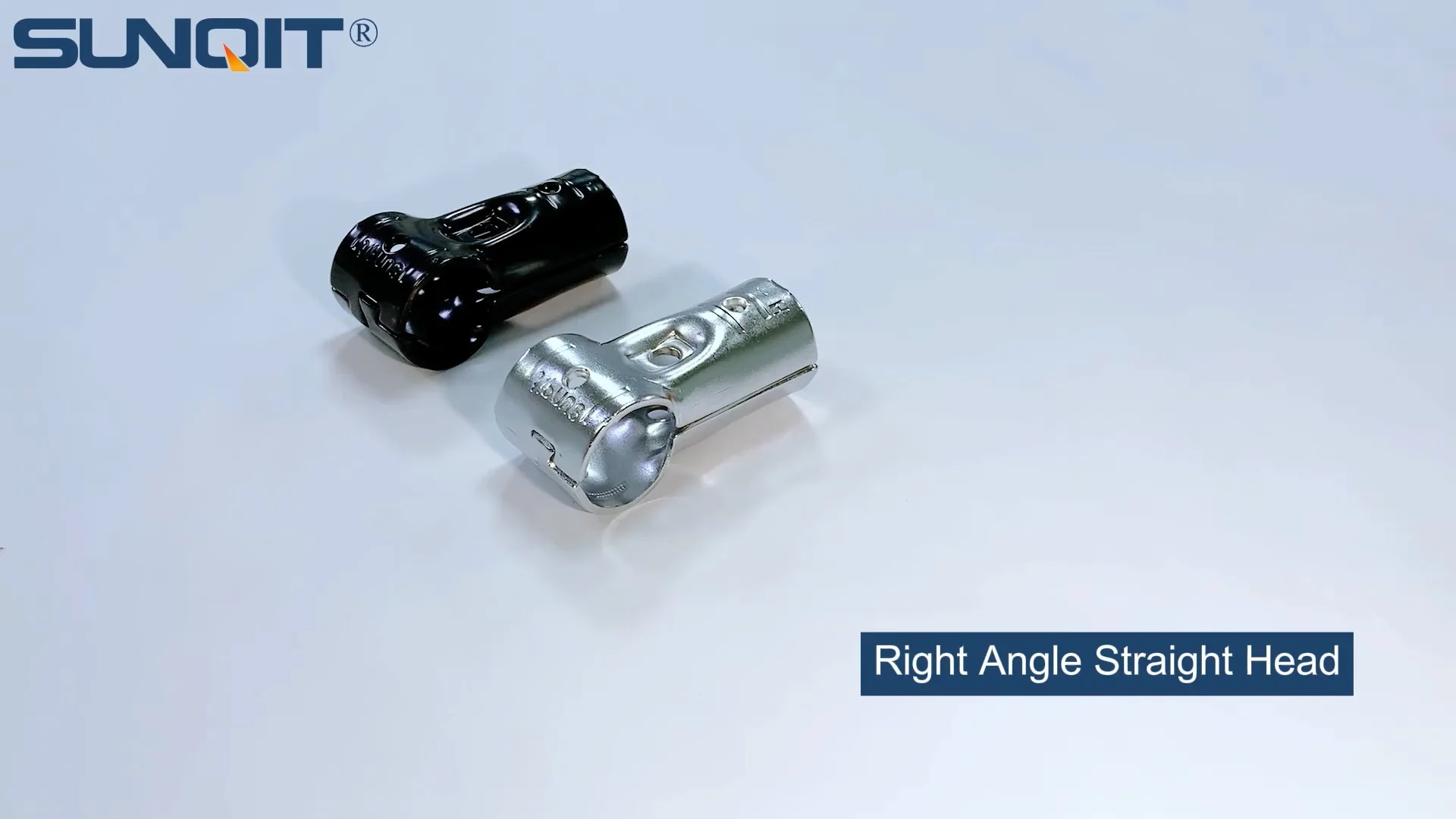
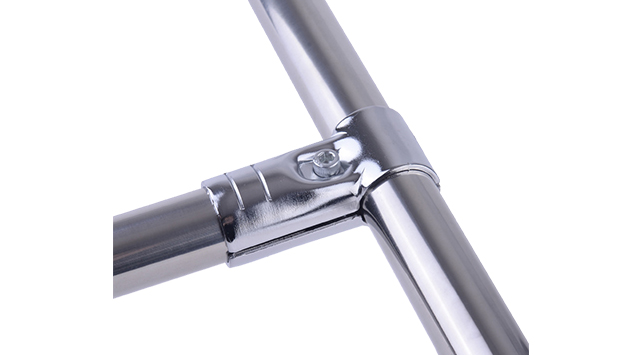
Two way lean pipe joint for 2 pcs 28MM lean pipe connection in straight angle, which used widely in workbench, flow rack, hand trolley frame connection.
The Small-Batch Production Challenge: Rigidity vs. Adaptability
In today's manufacturing landscape, small-batch production has become the norm for industries ranging from electronics assembly to custom automotive parts, and even specialized medical device manufacturing. Unlike large-scale production, where standardized processes and fixed layouts thrive, small-batch environments are defined by their variability: short production runs, frequent product changes, and the need to pivot quickly between orders. For supervisors and production managers, this variability often translates to a critical question: How do we build a production system that can keep up?
Traditional manufacturing setups—think welded steel workbenches, fixed conveyor lines, or bolted-down material racks—were designed for stability, not change. When a new product requires a taller workbench, a narrower flow rack, or a trolley with extra shelves, reconfiguring these rigid structures can take days (or even weeks), eating into production time and eroding profit margins. This is where lean manufacturing principles step in, and at the heart of lean's adaptability lies a humble but powerful component: the lean pipe system.
Traditional manufacturing setups—think welded steel workbenches, fixed conveyor lines, or bolted-down material racks—were designed for stability, not change. When a new product requires a taller workbench, a narrower flow rack, or a trolley with extra shelves, reconfiguring these rigid structures can take days (or even weeks), eating into production time and eroding profit margins. This is where lean manufacturing principles step in, and at the heart of lean's adaptability lies a humble but powerful component: the lean pipe system.
Lean Systems: The Backbone of Flexible Manufacturing
Lean manufacturing, born from the Toyota Production System, is all about eliminating waste—whether that's wasted time, materials, or space. A key pillar of lean is "flow," ensuring that materials and processes move smoothly with minimal interruptions. To achieve this in small-batch settings, lean systems rely on modular, reconfigurable components that can be adjusted on the fly. Enter the world of lean pipe and its accessories: aluminum pipes, stainless steel joints, roller tracks, and casters that come together like industrial building blocks.
At first glance, a lean pipe might look like little more than a simple metal tube, but when paired with the right joints and accessories, it transforms into a versatile toolkit. Lean pipe suppliers specialize in providing these components, from basic aluminum tubes to specialized connectors, allowing manufacturers to build everything from workbenches and flow racks to turnover trolleys and material storage systems. What makes these systems so effective for small-batch production is their inherent flexibility—and much of that flexibility hinges on the quality of the joints that hold them together.
At first glance, a lean pipe might look like little more than a simple metal tube, but when paired with the right joints and accessories, it transforms into a versatile toolkit. Lean pipe suppliers specialize in providing these components, from basic aluminum tubes to specialized connectors, allowing manufacturers to build everything from workbenches and flow racks to turnover trolleys and material storage systems. What makes these systems so effective for small-batch production is their inherent flexibility—and much of that flexibility hinges on the quality of the joints that hold them together.
Meet the Two Way Lean Pipe Joint Chrome: A Small Component with Big Impact
Among the many joints available in lean pipe systems, the two way lean pipe joint chrome stands out as a workhorse for flexibility. As the name suggests, this joint is designed to connect two lean pipes at various angles, with a chrome-plated finish that adds durability and corrosion resistance. But its real value lies in how it empowers manufacturers to adapt their setups without the hassle of welding, drilling, or specialized tools.
Let's break down its design: The two way lean pipe joint chrome typically features a central body with two threaded ports, allowing pipes to be inserted and secured with set screws. Unlike fixed-angle joints (which lock pipes at 90° or 45°), many two-way chrome joints offer limited rotation or swivel capabilities, enabling slight adjustments to pipe angles. This might sound minor, but in a small-batch workshop, those incremental adjustments can mean the difference between a workstation that fits a new product's assembly steps and one that doesn't.
The chrome plating isn't just for aesthetics, either. In environments where moisture or oils are present—common in electronics or mechanical assembly—chrome resists rust and wear, extending the joint's lifespan. This durability ensures that even after repeated disassembly and reassembly (a frequent occurrence in small-batch production), the joint maintains its grip on the pipes, preventing wobbling or instability in workbenches or flow racks.
Let's break down its design: The two way lean pipe joint chrome typically features a central body with two threaded ports, allowing pipes to be inserted and secured with set screws. Unlike fixed-angle joints (which lock pipes at 90° or 45°), many two-way chrome joints offer limited rotation or swivel capabilities, enabling slight adjustments to pipe angles. This might sound minor, but in a small-batch workshop, those incremental adjustments can mean the difference between a workstation that fits a new product's assembly steps and one that doesn't.
The chrome plating isn't just for aesthetics, either. In environments where moisture or oils are present—common in electronics or mechanical assembly—chrome resists rust and wear, extending the joint's lifespan. This durability ensures that even after repeated disassembly and reassembly (a frequent occurrence in small-batch production), the joint maintains its grip on the pipes, preventing wobbling or instability in workbenches or flow racks.

Flexibility in Action: How Two Way Chrome Joints Solve Small-Batch Pain Points
To understand why the two way lean pipe joint chrome is a game-changer for small-batch production, let's look at three critical pain points it addresses: quick reconfiguration, adaptability to diverse workflows, and cost efficiency.
1. Reconfiguration in Hours, Not Days
In traditional setups, changing a workbench's height or adding a shelf to a flow rack might require cutting new steel, welding, or hiring a contractor. With two way lean pipe joint chrome, the process is drastically simplified. A single worker with a hex key can loosen the set screws, adjust the pipes, and retighten—all in under an hour. For example, imagine a electronics manufacturer that produces both small circuit boards and larger display panels. One week, their workbench needs to sit at 36" to accommodate seated assembly; the next, they need it raised to 42" for standing work with taller panels. With chrome two-way joints, the legs of the workbench can be extended or shortened by repositioning the pipes, no new materials required.2. Adaptable to Workflows: From Workbenches to Turnover Trolleys
Small-batch production rarely relies on a single type of equipment. A typical workshop might need workbenches for assembly, flow racks for material storage, and turnover trolleys to move parts between stations. The two way lean pipe joint chrome excels here because it's compatible with nearly any lean pipe setup. Let's take a turnover trolley and rack as an example: A basic trolley frame built with aluminum pipes and two-way chrome joints can be modified by adding extra crossbars (for stability when carrying heavy loads) or removing shelves (to fit oversized parts). When the trolley isn't needed, the joints can be disassembled, and the pipes repurposed to build a temporary flow rack for incoming materials.
Real-World Example:
A custom machinery shop recently landed a contract to produce 50 units of a new gearbox, followed by 30 units of a smaller motor. Their existing flow rack, built with fixed 90° joints, was too wide for the motor's smaller components. Using two way lean pipe joint chrome, they disassembled the outer sections of the rack, reconnected the pipes at a narrower angle, and added roller tracks to the shelves. The entire process took 2 hours, and the same rack now handles both gearboxes and motors—saving them from buying a second rack.
3. Cost Efficiency Through Reusability
Small-batch production often operates on tight budgets, making capital expenditure on specialized equipment risky. The two way lean pipe joint chrome mitigates this risk by enabling component reuse. Unlike fixed joints, which are often discarded when a setup changes, chrome two-way joints can be stripped from old workbenches and reused on new projects. Over time, this reduces the need to purchase new components, lowering long-term costs. For lean pipe suppliers, this reusability is a selling point: customers know they're investing in a system that grows with their needs, not one that becomes obsolete after a few production runs.Comparing Joints: Why Two Way Chrome Beats Fixed Alternatives for Flexibility
To truly appreciate the two way lean pipe joint chrome's flexibility, it helps to compare it with fixed-angle joints—a common alternative in lean systems. The table below highlights key differences:
As the table shows, fixed joints excel in stability but fail to meet the adaptability needs of small-batch environments. The two way lean pipe joint chrome, by contrast, balances stability with flexibility, making it the go-to choice for workshops where no two production runs are the same.
| Feature | Two Way Lean Pipe Joint Chrome | Fixed 90° Lean Pipe Joint |
|---|---|---|
| Angle Adjustment | Limited swivel or variable angles (e.g., 0°–180°) | Locked at 90° only |
| Reconfiguration Time | 15–30 minutes per joint (with hex key) | Requires disassembly and replacement with new joint |
| Use Case | Workbenches, flow racks, and trolleys with frequent layout changes | Stable, long-term setups (e.g., permanent assembly lines) |
| Durability in Repeated Use | High (chrome resists wear from set screw adjustments) | High, but only for fixed positions |
| Best For Small-Batch Production? | Yes—ideal for adaptability | No—too rigid for frequent changes |
Beyond Joints: Building a Complete Lean Ecosystem
While the two way lean pipe joint chrome is a star player, its flexibility is amplified when paired with other lean pipe accessories. For example:
- Caster wheels: Adding casters to a lean pipe trolley (using caster accessories) turns a static storage rack into a mobile unit, perfect for moving small batches between workstations.
- Roller tracks: Integrating roller track and accessories with two-way joints allows flow racks to be angled for gravity-fed material movement, adjusting to different product weights.
- Aluminum profile accessories: For heavier-duty applications, combining two-way chrome joints with aluminum extrusion profiles creates sturdier workbenches that still allow height adjustments.
Conclusion: Flexibility as a Competitive Advantage
In small-batch production, flexibility isn't just a nice-to-have—it's a competitive advantage. The ability to reconfigure a workbench, adjust a flow rack, or repurpose a turnover trolley in hours instead of days means faster time-to-market, happier customers, and higher profitability. At the center of this flexibility is the two way lean pipe joint chrome: a small, unassuming component that empowers manufacturers to build systems that grow and change with their needs.
As lean manufacturing continues to evolve, the demand for modular, adaptable tools will only increase. For workshops looking to thrive in small-batch environments, investing in lean pipe systems—anchored by flexible joints like the two way lean pipe joint chrome—is more than a purchase; it's a commitment to agility. And in today's fast-paced manufacturing world, agility is the key to staying ahead.
As lean manufacturing continues to evolve, the demand for modular, adaptable tools will only increase. For workshops looking to thrive in small-batch environments, investing in lean pipe systems—anchored by flexible joints like the two way lean pipe joint chrome—is more than a purchase; it's a commitment to agility. And in today's fast-paced manufacturing world, agility is the key to staying ahead.