- Company Articles
- Products and Technology
- Product knowledge
- Two Way Lean Pipe Joint Chrome in Warehouse Logistics: Material Rack Applications

Two Way Lean Pipe Joint Chrome in Warehouse Logistics: Material Rack Applications
Related Product
Two Way Lean Pipe Joint Chrome
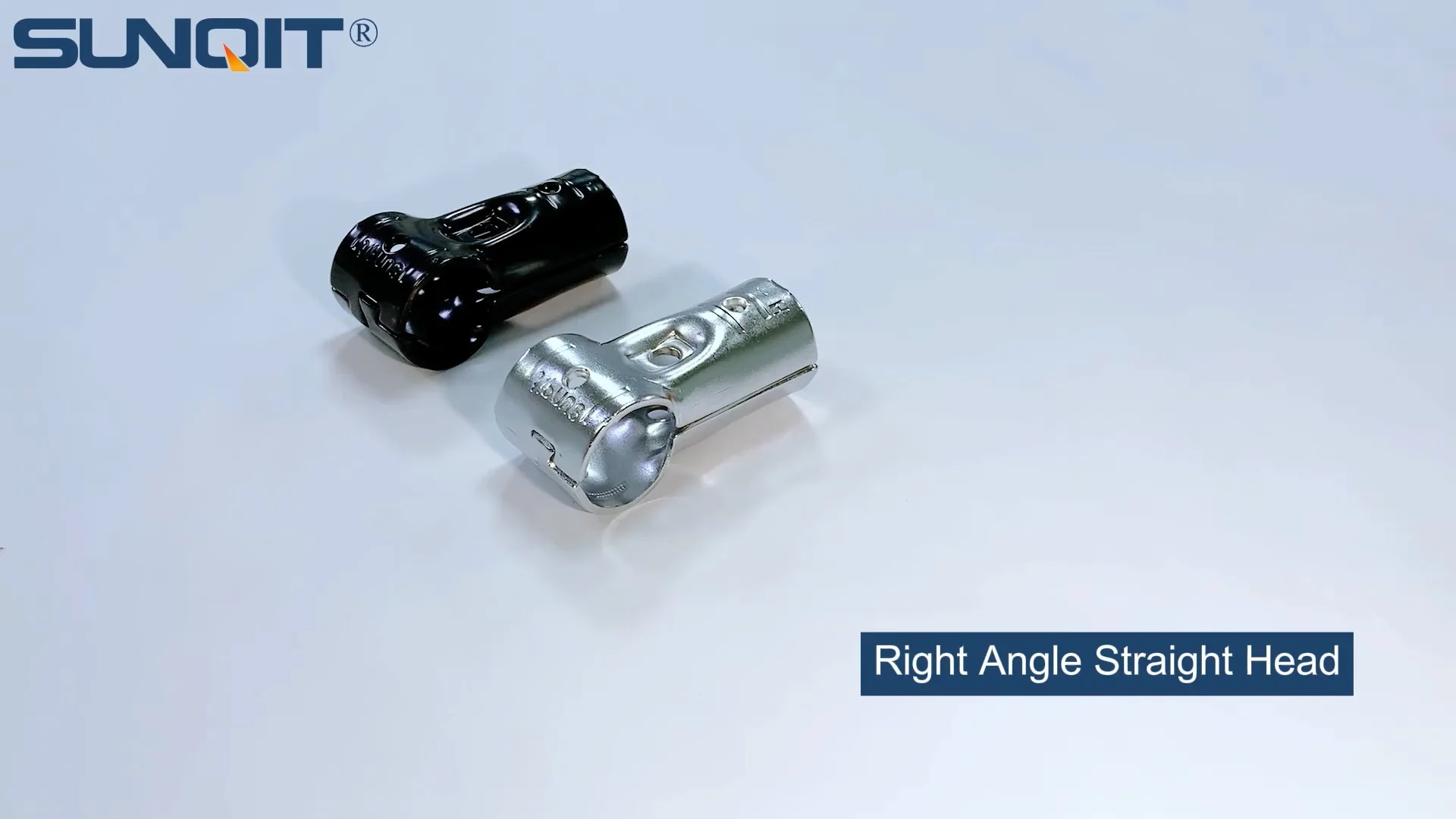
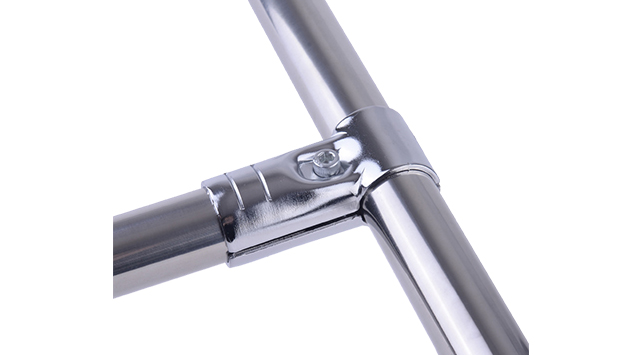
Two way lean pipe joint for 2 pcs 28MM lean pipe connection in straight angle, which used widely in workbench, flow rack, hand trolley frame connection.
Introduction: The Hidden Frustration in Warehouse Logistics
Walk into any busy warehouse, and you'll hear the hum of activity: forklifts beeping as they navigate aisles, workers calling out order numbers, the rustle of packaging as products are sorted and stacked. But beneath this orchestrated chaos lies a quiet, persistent challenge: keeping materials organized, accessible, and adaptable to ever-changing demands. For years, many warehouses relied on rigid, one-size-fits-all storage solutions—welded steel racks, fixed shelves, and bulky workbenches that seemed to fight against the very workflows they were meant to support. A sudden surge in orders, a new product line with unusual dimensions, or even a simple shift in picking priorities could turn these "permanent" structures into obstacles, leaving teams frustrated, processes delayed, and productivity stagnant.
Enter lean logistics—a philosophy built on the idea that efficiency isn't about working harder, but working smarter. At its core, lean is about eliminating waste: wasted time searching for parts, wasted effort moving materials, wasted space in underutilized racks. And while lean principles often bring to mind complex process maps or software systems, some of the most impactful lean solutions are surprisingly simple: modular, adaptable tools that grow and change with your team's needs. Among these tools, one component stands out for its quiet versatility: the two way lean pipe joint chrome. Small, unassuming, and often overlooked, this joint is the backbone of countless material racks, workbenches, and flow systems in modern warehouses. It's the reason a team can reconfigure a storage rack in an hour instead of a day, or build a custom workbench that fits a new machine like it was always meant to be there. In this article, we'll dive into how this humble joint is transforming material rack applications in warehouse logistics—making workflows smoother, teams more empowered, and operations more resilient.
Understanding Lean Pipe Systems: Beyond the Basics
Before we zoom in on the two way lean pipe joint chrome, let's take a step back to understand the system it belongs to. Lean pipe systems—also known as "flexible pipe systems"—are built around the idea of modularity. They consist of lightweight metal pipes (often steel or aluminum, coated in plastic or chrome for durability) and a variety of joints, connectors, and accessories that snap or screw together to form structures like racks, workbenches, trolleys, and flow rails. Unlike traditional welded or bolted structures, lean pipe systems require no special tools to assemble; a wrench or even just a strong hand is often enough to tighten a joint. This simplicity is by design: lean pipe systems are meant to be built, modified, and disassembled by the very workers who use them, putting control of the workspace back into the hands of the team.
At the heart of these systems are the joints. Think of them as the "building blocks" that turn pipes into purposeful structures. Joints come in all shapes and sizes—three-way, four-way, fixed-angle, rotating—to accommodate different connection needs. But among the most widely used is the two way lean pipe joint chrome. As the name suggests, this joint is designed to connect two lean pipes, typically at a 90-degree angle, though some models offer adjustable angles for added flexibility. What sets the chrome version apart? Its plating. Chrome isn't just for shine; it adds a layer of corrosion resistance, making the joint ideal for warehouses where humidity, spills, or frequent cleaning are part of the environment. A chrome finish also reduces friction during assembly, making it easier to slide pipes into place and adjust angles without damaging the joint or the pipe itself.
But why does this matter for material racks? Material racks are the unsung workhorses of the warehouse, holding everything from tiny electronic components to heavy machinery parts. A well-designed rack keeps materials visible, within arm's reach, and organized by priority or frequency of use. A poorly designed rack? It's a daily headache: parts get lost in the back, shelves sag under weight, and reorganizing feels like a Herculean task. The two way lean pipe joint chrome addresses these pain points by turning static racks into dynamic, customizable workspaces. Let's break down how.
The Two Way Lean Pipe Joint Chrome: Design, Durability, and Flexibility
Anatomy of a Workhorse: What Makes This Joint Unique
To appreciate the two way lean pipe joint chrome, let's start with its design. At first glance, it looks like a small, angular metal piece with two hollow ends—each sized to fit standard lean pipes (usually 28mm or 30mm in diameter). Inside each end, you'll find a set of internal threads or a clamping mechanism that, when tightened, grips the pipe securely. The "two way" in its name refers to its ability to connect two pipes at a right angle (90 degrees), though some manufacturers offer variations that allow for angles up to 180 degrees or even slight rotation. This basic design belies its engineering: the joint is typically made from high-grade steel, then electroplated with chrome to resist rust and wear. The result? A joint that can handle the daily bumps, loads, and adjustments of warehouse life without bending, breaking, or corroding.
But durability alone isn't enough. What truly sets this joint apart is its balance of strength and flexibility. Unlike fixed welded joints, which lock pipes into a permanent position, the two way lean pipe joint chrome is (detachable) and repositionable. Need to lower a shelf by 6 inches to fit taller boxes? Loosen the joint, slide the pipe down, retighten, and you're done. Want to add a crossbar to reinforce a wobbly section? Just insert another pipe into the joint's open end. This adjustability is a game-changer for material racks, which rarely stay the same for long. Consider a typical scenario: a warehouse receives a new product line with components that are longer than anything previously stored. With a traditional welded rack, the team would either have to squeeze the parts in (risking damage) or replace the entire rack (costing time and money). With a lean pipe rack built using two way chrome joints? They simply adjust the vertical pipes to widen the shelves, add a few extra crossbars for support, and the rack is ready—no welding, no waiting, no waste.
Chrome Plating: More Than Just Shine
You might wonder: why chrome? Why not paint, plastic coating, or bare steel? The answer lies in the warehouse environment. Warehouses are tough on equipment: humidity from refrigerated sections, oil and grease from machinery, cleaning chemicals, and even the occasional spill can take a toll on metal parts. Chrome plating acts as a barrier, preventing moisture and corrosive substances from reaching the steel underneath. This isn't just about longevity; it's about safety. A rusted joint can weaken over time, leading to sagging shelves or even collapsed racks—putting workers and products at risk. Chrome-plated joints maintain their strength and grip even in harsh conditions, ensuring racks stay stable and secure for years.
Chrome also offers practical benefits for day-to-day use. Its smooth, shiny surface is easy to clean—wiping away dust, oil, or debris with a damp cloth takes seconds, unlike painted joints that can trap grime in scratches. And for workers who handle the joints regularly, the smooth finish reduces the risk of snags or cuts, making assembly and disassembly safer and more comfortable. As one warehouse manager put it: "We used to have painted joints, and after a few months, the paint would chip, leaving sharp edges. The guys would get little cuts on their hands when adjusting racks. Since switching to chrome, those injuries have dropped to zero. It's the little things that make a big difference in morale."

Material Rack Applications: From Static Storage to Dynamic Workspaces
Material Rack B: A Case Study in Adaptability
Let's put theory into practice with a real-world example: material rack b. If you've spent time in manufacturing or distribution warehouses, you've likely seen this setup: a freestanding rack with 3 rows and 3 floors, designed to hold bins, cartons, or small parts containers. Traditional versions of material rack b are often made from welded steel or heavy-duty plastic, with fixed shelf heights and limited weight capacity. They're sturdy, but that sturdiness comes at a cost: inflexibility. If a team needs to store taller bins, they're out of luck. If a shelf starts to sag under heavy loads, reinforcing it means adding bulky brackets or replacing the entire shelf.
Now, imagine building material rack b with lean pipe and two way lean pipe joint chrome. The process starts with four vertical pipes (the "legs" of the rack), connected at the top and bottom by horizontal pipes (the "frame") using two way joints. Then, additional horizontal pipes are added at intervals to create shelves—each secured by more two way joints. The result? A rack that's just as sturdy as its welded counterpart, but infinitely more adaptable. Let's say the team needs to store taller bins on the middle shelf. They loosen the joints holding the middle shelf pipes, slide the pipes up by 8 inches, retighten the joints, and the shelf is now higher. No tools beyond a wrench, no downtime waiting for maintenance, no wasted materials.
But the benefits go beyond adjustability. Material rack b built with lean pipe and chrome joints is also lightweight compared to steel racks, making it easier to move if the warehouse layout changes. Need to shift the rack closer to the assembly line? With a few workers and a hand truck, it's possible—no forklift required. And because the joints and pipes are standardized, replacing a damaged part is simple: just order a new two way joint or a section of pipe, and the rack is back in service in minutes. Contrast that with welded racks, where a bent shelf might mean replacing the entire unit.
Integration with Flow Racks: Keeping Materials Moving
Material racks aren't just for static storage; in many warehouses, they're part of dynamic workflows, feeding materials directly to production lines or picking stations. This is where flow racks come in. Flow racks use gravity to move materials from the back (storage side) to the front (picking side), ensuring that the oldest stock is used first (FIFO—first in, first out) and reducing the need for workers to reach deep into shelves. The two way lean pipe joint chrome plays a critical role here, too, by providing the structural support needed for the rack's angled frame.
Flow racks typically consist of a sloped frame with roller tracks (another key component in lean logistics) that allow bins or cartons to glide forward as items are picked. The frame must be sturdy enough to support the weight of stacked materials while maintaining a consistent angle for smooth flow. Two way lean pipe joint chrome is ideal for this job: its 90-degree connections create rigid corners that keep the frame from wobbling, even as heavy bins slide down the rollers. And because the joints are adjustable, teams can fine-tune the slope of the rack to match the weight and size of the materials—steeper for lightweight items, gentler for heavier ones. This precision ensures that materials flow at just the right speed: not too fast (risking spills), not too slow (causing bottlenecks).
John, a production supervisor at a electronics manufacturing plant, shared how this integration transformed his team's workflow: "We used to have workers walking back and forth between the storage area and the assembly line to fetch parts—wasting 20 minutes every hour. Now, we have a flow rack built with lean pipe and chrome joints right next to the line. The rack's sloped just enough that bins glide forward as we pick parts, so the next bin is always ready. And when we switched to a smaller component last quarter, we adjusted the roller tracks and the rack's angle using the joints. The whole reconfiguration took 45 minutes, and now the line runs like clockwork. The guys on the floor joke that the rack 'feeds' them parts—no more hunting, no more delays."
Comparing Joints: Why Two Way Lean Pipe Joint Chrome Stands Out
To truly understand the value of the two way lean pipe joint chrome, it helps to compare it to other common joint types used in material rack construction. Let's take a look at how it stacks up against three way lean pipe joints, fixed lean pipe joints, and aluminum profile connectors (another popular modular system component).
| Joint Type | Design | Flexibility | Durability | Best For |
|---|---|---|---|---|
| Two Way Lean Pipe Joint Chrome | Connects 2 pipes at 90° (adjustable angles available); chrome-plated steel | High:, repositionable, minor angle adjustments | High: Resists rust, wear, and heavy loads | Material racks, flow racks, simple workbenches, T-junctions |
| Three Way Lean Pipe Joint | Connects 3 pipes (e.g., 2 horizontal, 1 vertical); often zinc-plated | Medium: but bulkier, limited angle options | High: Strong, but more complex design may have weak points | Multi-shelf racks, corner supports, complex structures |
| Fixed Lean Pipe Joint | One-piece design, locks pipes into fixed angle (no adjustment) | Low: Permanent once tightened; no repositioning | Medium: Prone to cracking if over-tightened or adjusted | Static, low-change environments (e.g., long-term storage) |
| Aluminum Profile Connector | Connects aluminum extrusion profiles (square/rectangular); uses bolts or T-slot nuts | High: Modular, but requires compatible profiles and tools | High: Lightweight but strong; corrosion-resistant | Heavy-duty workbenches, machine guards, precision structures |
As the table shows, the two way lean pipe joint chrome strikes a unique balance between flexibility, durability, and simplicity. Three way joints are great for complex structures but can be overkill for basic material racks, adding unnecessary bulk and cost. Fixed joints lack the adaptability needed in dynamic warehouses. Aluminum profile connectors offer precision but require specialized profiles and tools, making them less accessible for on-the-fly adjustments. The two way chrome joint, by contrast, is a "jack of all trades"—simple enough for new teams to master, durable enough for heavy use, and flexible enough to grow with your needs.
Another advantage? Cost. Lean pipe systems, including two way chrome joints, are typically more affordable than aluminum profile systems, especially for small to medium-sized warehouses. And because they're reusable—you can disassemble a rack and rebuild it into a workbench or trolley—they offer long-term value that fixed systems can't match. For warehouses operating on tight budgets, this combination of affordability and versatility is a game-changer.
Real-World Impact: How Teams Are Using Two Way Lean Pipe Joint Chrome
Case Study: A Small Manufacturing Plant's Transformation
Let's turn to a real example of how the two way lean pipe joint chrome has made a difference. Precision Parts Co., a small manufacturer of automotive components with 50 employees, was struggling with disorganized material storage. Their warehouse was filled with a hodgepodge of welded steel racks, wooden shelves, and plastic bins stacked haphazardly. Workers spent 15-20 minutes per hour searching for parts, and reconfiguring racks to accommodate new orders took 4-6 hours (and often required outside help). Turnover was high, with employees citing "frustration with the workspace" as a top reason for leaving.
In 2023, the plant's operations manager, Raj, decided to invest in lean pipe systems. He started small: ordering 200 feet of lean pipe, 50 two way lean pipe joint chrome, and a handful of accessories (casters, shelves, roller tracks). With the help of his team, he built 8 material racks (including 3 units of material rack b) and 2 lean pipe workbenches near the assembly lines. The results were immediate.
Within the first month, order picking time dropped by 25%—workers no longer had to search for parts, as the racks were organized by production line and labeled clearly. When a new order for a larger component came in, the team reconfigured two racks in under an hour, compared to the 6 hours it would have taken before. Perhaps most notably, employee satisfaction scores rose by 40%. "The guys love that they can adjust the racks themselves," Raj told me. "One team lead even designed a custom shelf for small parts using leftover pipes and joints. He was so proud to show it off at our monthly meeting. That sense of ownership—you can't put a price on that."
A year later, Precision Parts has expanded their lean pipe system to include flow racks, turnover trolleys, and even a modular assembly line. The two way lean pipe joint chrome remains their go-to component, with Raj estimating they've saved over $15,000 in storage costs and labor hours. "We used to buy new racks every time we launched a product," he said. "Now, we just reconfigure what we have. The chrome joints have held up perfectly—no rust, no looseness, even with daily use. Best investment we ever made."
From Frustration to Empowerment: The Human Element
Beyond the numbers, the two way lean pipe joint chrome has a profound impact on the human side of warehouse work. In traditional setups, workers often feel powerless to change their environment—if a rack is inconvenient, they either suffer through it or wait for someone else to fix it. With lean pipe systems and chrome joints, that dynamic shifts. Workers become co-creators of their workspace, able to adjust, modify, and improve their tools to fit their needs. This sense of empowerment isn't just good for morale; it's good for productivity. When employees feel their input matters, they're more engaged, more proactive, and more likely to spot opportunities for improvement.
Take Maria, a warehouse associate at a food distribution center I visited last year. Before lean pipe racks, she spent 10 minutes each morning rearranging bins on her fixed steel rack to make room for new deliveries. "It was like a puzzle, and the pieces never fit right," she said. "I'd start my shift stressed, and that stress carried through the day." After switching to a lean pipe rack with two way chrome joints, Maria and her team designed the rack to fit their specific delivery schedule: wider shelves for Monday's bulk orders, narrower shelves for smaller daily deliveries. "Now, I walk in, and everything's exactly where it should be," she said. "I feel like I own my corner of the warehouse. It sounds small, but it makes me want to come to work."
Installation Tips: Getting the Most Out of Your Two Way Lean Pipe Joint Chrome
If you're considering adding two way lean pipe joint chrome to your warehouse's material racks, here are a few practical tips to ensure success:
1. Start with a Plan (But Stay Flexible)
Before you start assembling, sketch out your material rack design. Measure the space, note the dimensions of the materials you'll store, and plan shelf heights accordingly. But remember: lean systems are all about adaptability. Leave room for adjustments—you might find that the initial design needs tweaks once you start using the rack. Raj from Precision Parts recommends building a "prototype" rack first: "We built one small rack, used it for a week, and realized the shelves were too close together. We adjusted them, and the final design was much better than our initial sketch."
2. Use the Right Tools (and Not Too Many)
Most two way lean pipe joint chrome can be tightened by hand initially, then secured with a wrench for extra stability. Avoid using power tools, which can over-tighten the joint and damage the pipe or the threads. A simple adjustable wrench or a hex key (depending on the joint design) is usually enough. Keep a small toolkit near the assembly area with these tools, so workers can make adjustments on the fly.
3. Inspect Joints Regularly
Even the most durable joints need occasional check-ups. Once a month, have your team inspect the chrome joints for looseness, rust, or damage. Tighten any loose joints, and replace any that show signs of wear (e.g., stripped threads, bent metal). This quick maintenance prevents bigger issues down the line—like a shelf collapsing under weight.
4. Train Your Team (and Encourage Creativity)
Don't assume workers will know how to use the joints right away. Hold a short training session: demonstrate how to assemble, adjust, and disassemble the joints, and let teams practice building small structures (like a simple trolley). Encourage them to experiment—some of the best rack designs come from workers who know the daily challenges best. "I let my team 'play' with the pipes and joints for an afternoon," Maria said. "By the end, they'd come up with three improvements to our initial rack design that I never would have thought of."
Conclusion: Small Joints, Big Impact
In the grand scheme of warehouse logistics, the two way lean pipe joint chrome is easy to overlook. It's small, unassuming, and rarely the star of the show. But as we've seen, its impact is anything but small. It transforms rigid, frustrating material racks into dynamic, adaptable workspaces that grow with your team. It turns hours of downtime into minutes of adjustment. It empowers workers to take ownership of their environment, turning frustration into pride and apathy into engagement.
At its core, the two way lean pipe joint chrome is a symbol of what lean logistics is all about: finding value in the details. It's not about overhauling your entire operation overnight; it's about investing in tools that make the daily, mundane tasks a little easier, a little faster, and a little more human. In a world where warehouses are under constant pressure to do more with less, this joint is a reminder that sometimes, the smallest components can deliver the biggest results.
So the next time you walk through a warehouse, take a closer look at the material racks. If they're built with lean pipe and two way lean pipe joint chrome, you'll see more than just storage—you'll see a workspace that works with the team, not against them. And that, in the end, is the true power of lean.