- Company Articles
- Products and Technology
- Product knowledge
- Two Way Lean Pipe Joint Chrome vs. Internal Rotating Joints: Use Case Differences

Two Way Lean Pipe Joint Chrome vs. Internal Rotating Joints: Use Case Differences
Related Product
Two Way Lean Pipe Joint Chrome
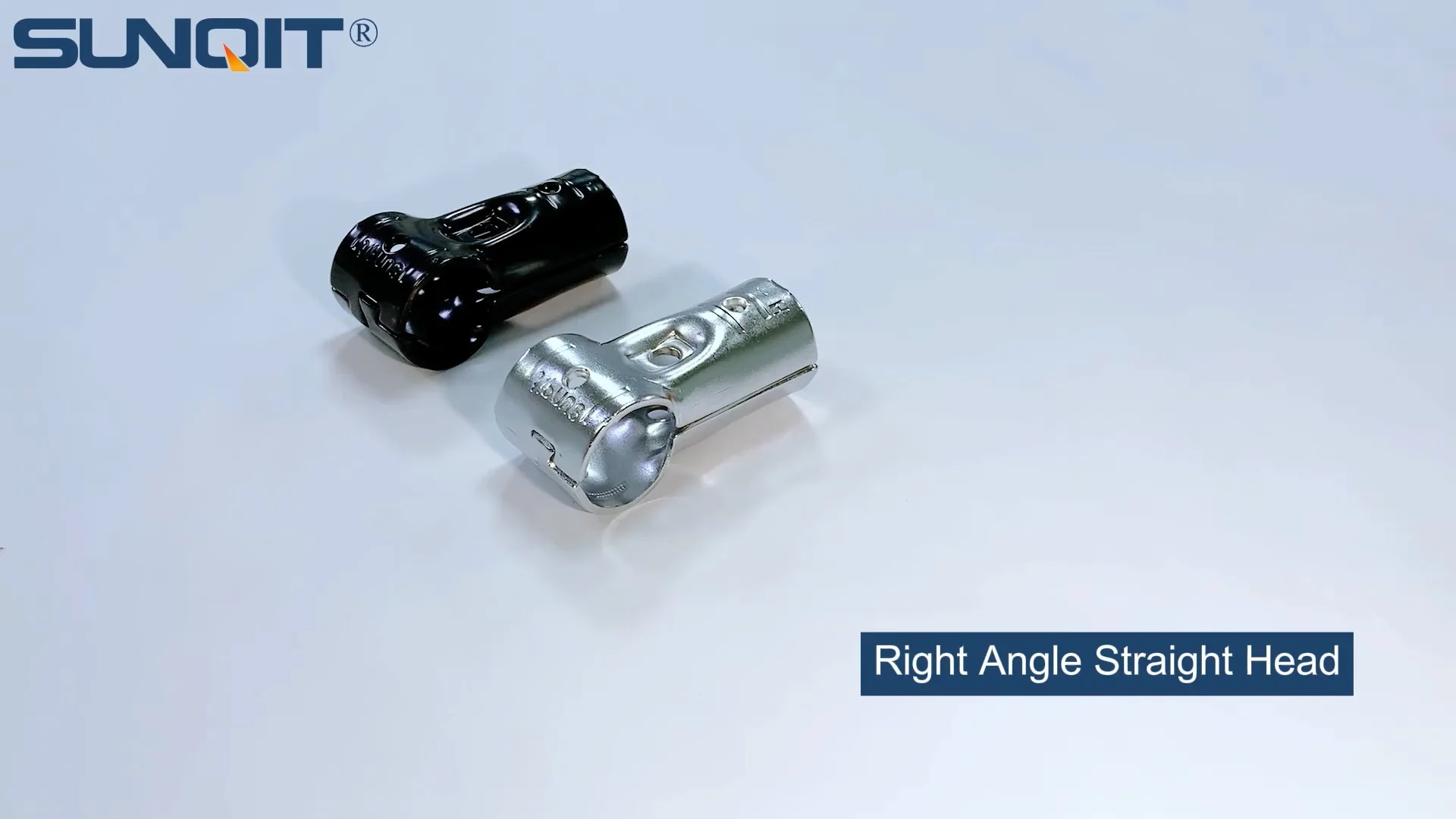
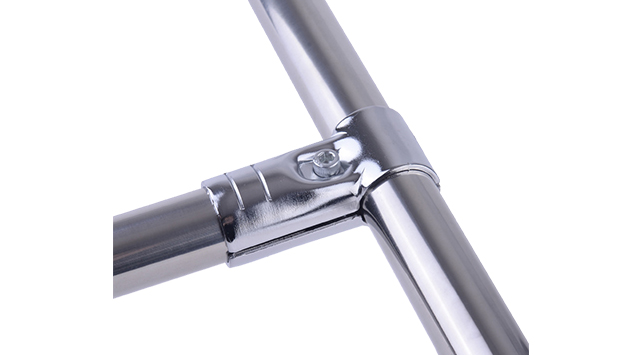
Two way lean pipe joint for 2 pcs 28MM lean pipe connection in straight angle, which used widely in workbench, flow rack, hand trolley frame connection.
In the world of lean manufacturing, where efficiency, flexibility, and adaptability are the cornerstones of success, every component in the workspace matters. From the workbench where assembly happens to the turnover trolley and rack that moves materials across the floor, the smallest parts often play the biggest roles in streamlining operations. Among these unsung heroes are lean pipe joints—simple yet critical connectors that hold together the modular systems powering modern factories, warehouses, and production lines. Today, we're diving into two popular types: the Two Way Lean Pipe Joint Chrome and Internal Rotating Joints. While they may look similar at first glance, their design, functionality, and ideal use cases set them worlds apart. Let's unpack what makes each unique, and how to choose the right one for your workflow.
Understanding Lean Pipe Joints: The Backbone of Modular Systems
Before we compare specific joint types, let's take a step back to appreciate why lean pipe joints matter. Lean pipe systems—often built with aluminum, steel, or plastic-coated pipes—are the building blocks of customizable workspaces. They allow teams to create everything from workbenches and shelving units to material racks and assembly lines, all tailored to their unique needs. Unlike fixed, one-size-fits-all furniture, these systems thrive on modularity: you can add, remove, or reconfigure components as workflows change. And at the heart of this flexibility? The joints that connect the pipes.
Lean pipe joints come in dozens of designs, each engineered for a specific purpose. Some prioritize rigidity, ensuring structures stay stable under heavy loads. Others focus on rotation, letting parts pivot or swivel to adapt to dynamic tasks. Some are built for speed, with tool-free installation, while others emphasize durability for long-term use in harsh environments. The Two Way Lean Pipe Joint Chrome and Internal Rotating Joints represent two ends of this spectrum: one optimized for static stability, the other for dynamic adjustability. Let's start by breaking down each.
Two Way Lean Pipe Joint Chrome: The Reliable Workhorse
Design & Core Features
The Two Way Lean Pipe Joint Chrome is a staple in many lean manufacturing setups, and for good reason. As the name suggests, it's a two-way connector, meaning it joins two pipes at a fixed angle—typically 90 degrees, though some variants allow for slight adjustments. What immediately stands out is its chrome plating: a thin layer of chromium applied to the base metal (usually steel) that gives it a shiny, corrosion-resistant finish. This plating isn't just for looks; it adds a layer of protection against moisture, oils, and everyday wear, making it ideal for factory floors where spills or humidity are common.
Structurally, this joint is all about simplicity and strength. It features a solid, one-piece construction with two cylindrical sockets that fit snugly over the ends of lean pipes. To secure the connection, most models use set screws—small, threaded bolts that tighten against the pipe, creating a friction fit. Some designs also include internal teeth or ridges that bite into the pipe's surface, preventing slippage even under heavy loads. Installation is straightforward: slide the pipes into the sockets, align them at the desired angle, and tighten the set screws with a hex key. No fancy tools, no complicated assembly—just a quick, secure connection.
Key Advantages
The biggest draw of the Two Way Lean Pipe Joint Chrome is its rigidity. Once installed, it locks pipes into place with minimal flex, making it perfect for structures that need to stay stable. If you're building a workbench to hold heavy machinery or a material rack stacked with metal parts, this joint won't let you down. Its load capacity is impressive too—depending on the pipe diameter and material, some models can support up to 500 kg per joint, far more than many rotating alternatives.
Durability is another strong suit. The chrome plating resists rust and scratches, so even after years of use, the joints maintain their integrity. This makes them a cost-effective choice for long-term installations where you don't plan to reconfigure the structure often. And because they're made from steel, they're less prone to cracking or warping under stress compared to plastic or lightweight aluminum joints.
Limitations to Consider
Of course, rigidity comes with a tradeoff: lack of adjustability. Once the Two Way Lean Pipe Joint Chrome is tightened, the angle between the pipes is fixed. If you need to reposition a shelf or change the height of a workbench, you'll have to loosen the set screws, adjust the pipes, and retighten—a process that takes time and may require tools. This makes it less ideal for workflows that change frequently or require on-the-fly adjustments.
Weight is another consideration. Steel is strong, but it's also heavy. If you're building a mobile structure like a turnover trolley, the added weight of chrome-plated steel joints can make the trolley harder to maneuver, especially over long distances. For static setups, this isn't an issue, but for dynamic material handling, it's worth keeping in mind.
Internal Rotating Joints: The Flexible Innovator
Design & Core Features
If the Two Way Lean Pipe Joint Chrome is the reliable workhorse, Internal Rotating Joints are the agile problem-solvers. These joints are engineered for movement: they allow connected pipes to rotate relative to each other, either 360 degrees or within a fixed range (like 180 degrees). The "internal" in their name refers to their rotating mechanism, which is housed inside the joint itself—often a set of bearings or a smooth, cylindrical sleeve that lets one part of the joint spin freely around the other.
Unlike the Two Way Chrome Joint's steel-and-chrome build, Internal Rotating Joints are often made from aluminum or lightweight alloys. Aluminum is a popular choice here because it's strong yet lightweight, making the joints easier to handle and adjust. Some models also feature plastic components in the rotating mechanism to reduce friction and noise, ensuring smooth movement even after repeated use. While they may lack the chrome plating of their fixed counterparts, many Internal Rotating Joints come with anodized finishes—an electrochemical process that adds a protective layer to aluminum, boosting corrosion resistance without adding weight.
Installation is a bit more involved than with fixed joints, but still user-friendly. Most use a combination of set screws and locking rings: you secure the non-rotating part to one pipe, the rotating part to another, and then adjust the tension of the locking ring to control how easily the joint spins. Tighter tension means more resistance (good for holding position), while looser tension allows for free movement (ideal for frequent adjustments).
Key Advantages
The star feature of Internal Rotating Joints is, of course, their rotation capability. This opens up a world of possibilities for dynamic workflows. Imagine an assembly line where workers need to pivot a component from a horizontal to vertical position—with a rotating joint, they can do this smoothly without disconnecting the pipe. Or a workbench with a shelf that swivels out of the way when not in use, maximizing space. For tasks that require ergonomic adjustments—like positioning tools at waist height for one worker and chest height for another—these joints are invaluable.
Lightweight construction is another big plus. Aluminum joints are significantly lighter than steel chrome joints, which makes them perfect for mobile structures like turnover trolleys or adjustable carts. A trolley with rotating joints is easier to push, and its shelves can be tilted to unload materials without straining workers' backs—a small change that adds up to big improvements in safety and efficiency.
Limitations to Consider
The flip side of rotation is reduced load capacity. The bearings and moving parts in Internal Rotating Joints create points of weakness compared to solid, fixed joints. While they can handle moderate loads (typically 100–300 kg, depending on the model), they're not the best choice for supporting extremely heavy equipment or stacks of dense materials. Overloading a rotating joint can cause the bearings to wear out prematurely, leading to wobbling or seized movement.
They also require more maintenance. The rotating mechanism—especially if it has bearings—needs occasional lubrication to keep moving smoothly. Dust, debris, or factory grime can get trapped inside, causing friction and reducing lifespan. In environments with high moisture or chemicals, aluminum joints (even anodized ones) may corrode faster than chrome-plated steel, so they're not always the best fit for wet or harsh conditions.

Side-by-Side: How They Stack Up
To make the differences clearer, let's put the Two Way Lean Pipe Joint Chrome and Internal Rotating Joints head-to-head in a comparison table. This will help you quickly assess which is better suited for your specific needs:
| Feature | Two Way Lean Pipe Joint Chrome | Internal Rotating Joints |
|---|---|---|
| Primary Function | Joins two pipes at a fixed angle (typically 90°) | Joins pipes with 360° or partial rotation capability |
| Rotation Capability | None (fixed angle once tightened) | Full 360° or limited (e.g., 180°) rotation |
| Material | Steel with chrome plating | Aluminum (often anodized) or aluminum alloy |
| Load Capacity | High (up to 500 kg per joint) | Moderate (100–300 kg per joint) |
| Corrosion Resistance | Excellent (chrome plating resists moisture, oils) | Good (anodized aluminum), but less than chrome steel |
| Best For | Static structures, heavy loads, harsh environments | Dynamic workflows, adjustable setups, lightweight applications |
| Installation Complexity | Simple (set screws, tool-assisted) | Slightly more complex (may require adjusting tension on rotating parts) |
| Maintenance Needs | Low (no moving parts to lubricate) | Moderate (occasional lubrication for rotating mechanism) |
| Cost | Mid-range (steel + chrome plating adds cost) | Mid-to-high (aluminum + rotating components increase complexity) |
Use Case Differences: When to Choose Which
Now that we've covered design and features, let's get practical. The best joint for your setup depends entirely on how you plan to use it. Below are five common scenarios where one joint type outperforms the other.
1. Static vs. Dynamic Workspaces
If your workspace rarely changes—think a dedicated assembly line that's been running the same process for years, or a material rack that stays in one corner of the warehouse—the Two Way Lean Pipe Joint Chrome is the way to go. Its rigidity ensures the structure stays stable over time, even with constant use. For example, a workbench built with chrome joints will maintain its level surface, critical for precision tasks like electronics assembly or tool calibration. You won't have to worry about shelves sagging or pipes shifting, which could throw off measurements or slow down work.
On the flip side, if your team frequently reconfigures the workspace—maybe you switch between producing different products weekly, or you need to rearrange stations for new hires—Internal Rotating Joints shine. Imagine a turnover trolley and rack that starts the day carrying raw materials to the assembly line and ends it transporting finished goods to shipping. With rotating joints, you can tilt the trolley's shelves to slide boxes off easily, then flatten them for storage overnight. Or a modular workbench where workers can adjust the height of tool holders based on their height, reducing strain and boosting productivity. In dynamic environments, the ability to pivot, swivel, or reposition parts without rebuilding the entire structure saves hours of downtime.
2. Heavy Loads vs. Moderate Loads
Load capacity is often the deciding factor. If you're building a structure to hold heavy equipment—like a workbench for engine parts (which can weigh 200+ kg) or a material rack stacked with metal sheets—the Two Way Lean Pipe Joint Chrome is non-negotiable. Its steel construction and fixed connection distribute weight evenly, preventing the structure from buckling. For example, an automotive factory using chrome joints in their engine assembly workbenches can trust that the bench won't wobble when mechanics torque bolts or lift heavy components. The last thing you want is a shelf collapsing under the weight of expensive tools or parts—chrome joints minimize that risk.
For lighter loads, though, Internal Rotating Joints are more than sufficient. Think of a electronics plant where workers assemble circuit boards: the components are small, and the tools (screwdrivers, soldering irons) are lightweight. A workbench with rotating joints here allows workers to swing their tool trays into reach, then out of the way when soldering or inspecting. Or a retail warehouse using adjustable shelving for clothing or small goods—rotating joints let staff angle shelves to display products better, without worrying about overloading.
3. Harsh Environments vs. Clean, Controlled Spaces
Factory floors aren't all created equal. Some are dry and clean (like electronics assembly rooms), others are wet, oily, or dusty (like automotive or machining shops). The Two Way Lean Pipe Joint Chrome thrives in harsh environments thanks to its chrome plating. In a machine shop where coolants or cutting oils splash onto workbenches, chrome resists corrosion, ensuring the joints don't rust or weaken over time. Similarly, in food processing plants (where stainless steel is common, but chrome-plated steel works too), chrome joints stand up to frequent washdowns with sanitizers. If your workspace has high moisture, chemicals, or debris, chrome's durability is a lifesaver.
Internal Rotating Joints, with their aluminum or alloy construction, are better suited for clean, controlled environments. Think pharmaceutical labs, where dust and moisture are tightly regulated, or office-like settings like tech startups using lean pipe systems for agile workstations. In these spaces, the joints won't be exposed to heavy grime or corrosive substances, so their anodized finish holds up well. Plus, their lightweight design and smooth rotation make them a better fit for collaborative workspaces where aesthetics and adjustability matter more than brute strength.
4. Ergonomics and Worker Comfort
Ergonomics is a growing priority in modern workplaces, and joints play a bigger role here than you might think. Internal Rotating Joints are a game-changer for reducing worker strain. For example, in a warehouse where employees bend, reach, or twist all day, a turnover trolley with rotating shelves lets them adjust the angle of the load to avoid awkward postures. Instead of leaning over to grab a box from the bottom of a fixed shelf, they can tilt the shelf toward them, keeping their spine straight. In assembly lines, rotating tool holders allow workers to position tools at eye level, reducing neck strain from looking down or reaching up. Over time, these small adjustments lower the risk of repetitive stress injuries, which saves on workers' compensation costs and keeps teams healthy.
Two Way Lean Pipe Joint Chrome, being fixed, can't offer this flexibility. However, they do provide stability for tasks that require precision. For example, a surgeon wouldn't want their operating table to rotate mid-procedure—and similarly, a machinist using a drill press mounted on a chrome-jointed workbench needs the table to stay perfectly still. In cases where movement could compromise accuracy (like measuring parts or aligning components), fixed joints are the safer bet.
5. Cost and Long-Term Value
Budget is always a consideration, but it's important to look beyond upfront costs. Two Way Lean Pipe Joint Chrome is often cheaper to buy initially—steel is less expensive than aluminum, and the design is simpler, so manufacturing costs are lower. They also require less maintenance: no lubrication, no cleaning of rotating parts, just an occasional tightening of set screws. Over time, this adds up to lower upkeep costs, making them a cost-effective choice for long-term, static setups.
Internal Rotating Joints, while sometimes pricier upfront, can save money in dynamic environments. The time saved by not rebuilding structures every time workflows change is invaluable. For example, a small manufacturer that switches product lines quarterly would spend hours (or days) taking apart and rebuilding fixed-joint workbenches. With rotating joints, they can reconfigure in minutes. Additionally, the ergonomic benefits—fewer injuries, higher productivity—translate to long-term savings. It's a classic case of "pay more now, save more later."
Choosing the Right Joint: A Step-by-Step Guide
Still unsure which joint to pick? Here's a simple, actionable framework to guide your decision:
- Assess your workflow variability: Do you need structures that stay the same for months/years (static) or change weekly/monthly (dynamic)? Static = Chrome Joints; Dynamic = Rotating Joints.
- Calculate your typical load: Weigh the heaviest items the structure will hold. Over 300 kg? Chrome Joints. Under 300 kg? Rotating Joints are viable.
- Evaluate your environment: Is the space wet, oily, or dusty (harsh) or clean and dry (controlled)? Harsh = Chrome Joints; Controlled = Rotating Joints.
- Consider ergonomics: Do workers need to adjust heights, angles, or positions frequently? Yes = Rotating Joints; No = Chrome Joints.
- Plan for the future: Will your needs change in 6–12 months? If yes, rotating joints offer more adaptability, even if they cost more now.
Remember, you don't have to choose one or the other! Many lean systems use a mix of joint types. For example, a workbench might have chrome joints for the base (to support heavy tools) and rotating joints for the upper shelves (to adjust for workers' heights). A turnover trolley and rack could use chrome joints for the frame (stability during transport) and rotating joints for the shelves (easy unloading). Mixing and matching lets you optimize for both strength and flexibility.
Final Thoughts: It's About Your Workflow, Not Just the Joint
At the end of the day, the "better" joint depends on your unique needs. The Two Way Lean Pipe Joint Chrome is the reliable, no-nonsense choice for static, heavy-duty, or harsh environments—it's the joint you install and forget, trusting it to hold strong for years. Internal Rotating Joints, on the other hand, are the flexible innovators, perfect for dynamic workflows, light-to-moderate loads, and spaces where adjustability and ergonomics matter most.
Whichever you choose, remember that lean manufacturing is about continuous improvement. Start with a setup that fits your current needs, but design it to evolve. If you're using chrome joints now but anticipate more dynamic workflows later, build structures with extra pipes or mounting points so you can swap in rotating joints down the line. And don't underestimate the power of small changes: swapping a few fixed joints for rotating ones on a workbench or turnover trolley and rack can transform how your team works, making them safer, faster, and happier.
In the end, lean pipe joints are more than just connectors—they're enablers. They turn simple pipes into tools that adapt to your team, not the other way around. So take the time to evaluate your needs, test both joint types if you can, and invest in the one that will grow with your business. Your workflow (and your bottom line) will thank you.