- Company Articles
- Products and Technology
- Product knowledge
- Two Way Lean Pipe Joint Chrome vs. Plastic Joints: Weight & Strength Comparison

Two Way Lean Pipe Joint Chrome vs. Plastic Joints: Weight & Strength Comparison
Related Product
Two Way Lean Pipe Joint Chrome
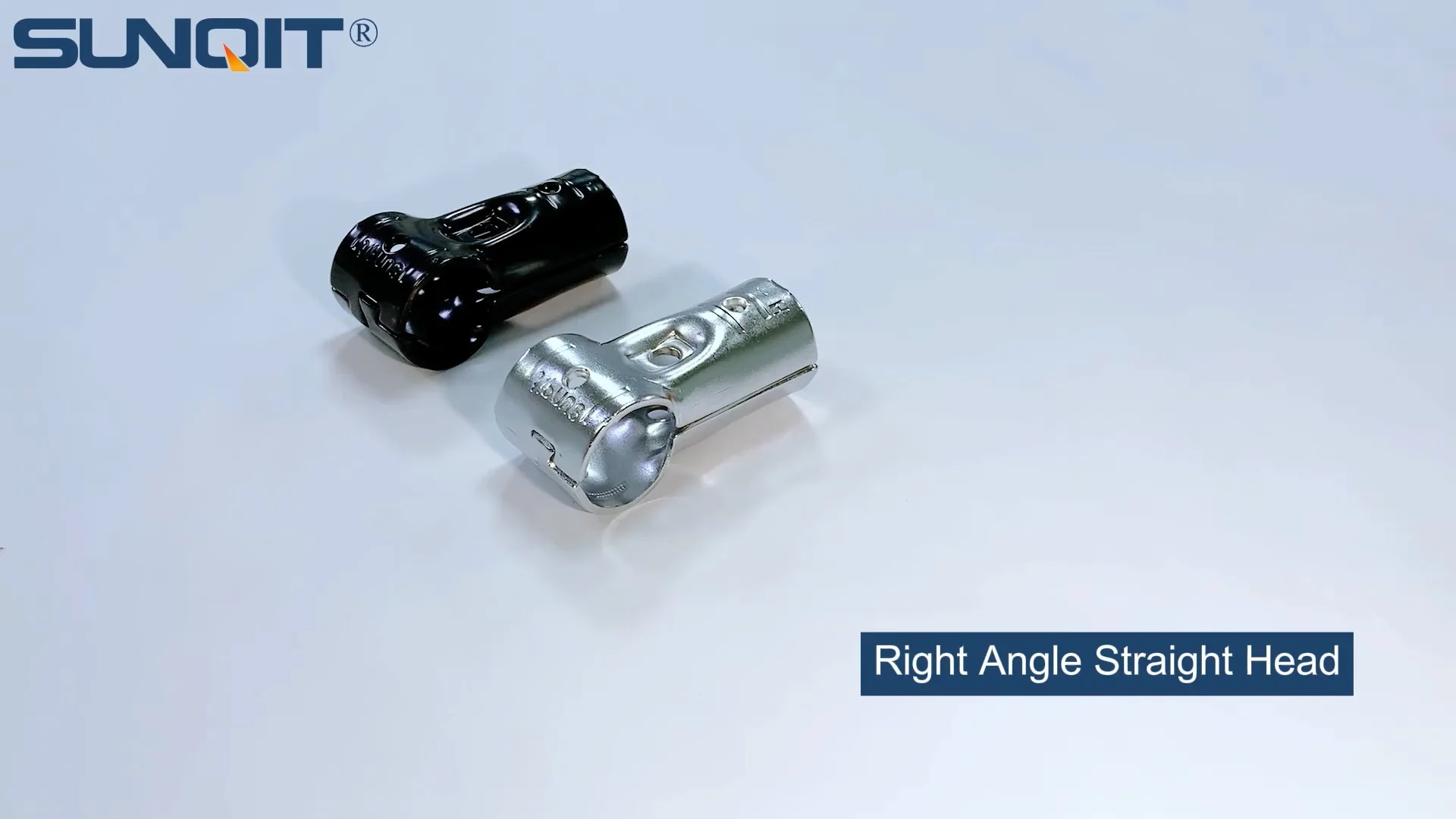
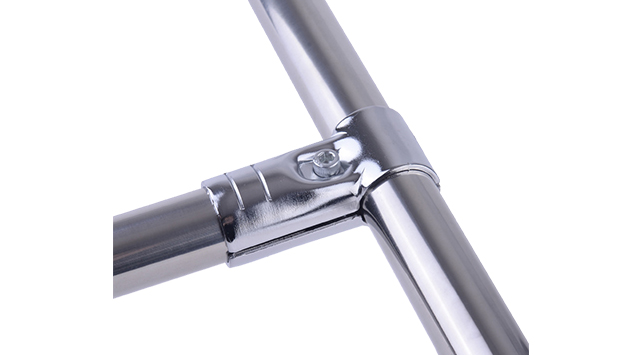
Two way lean pipe joint for 2 pcs 28MM lean pipe connection in straight angle, which used widely in workbench, flow rack, hand trolley frame connection.
Introduction: The Unsung Heroes of Lean Systems
In the world of manufacturing and assembly, where efficiency and precision reign supreme, lean systems have become the backbone of productive operations. At the heart of these systems lies a seemingly simple yet critical component: the lean pipe joint. These small but mighty connectors are the glue that holds together everything from workbenches and material racks to conveyor systems and turnover trolleys. Without reliable joints, even the sturdiest lean pipe would fail to deliver the flexibility and durability that modern factories demand.
Today, we're diving deep into a debate that's quietly shaping shop floors around the globe: chrome-plated steel two-way lean pipe joints versus their plastic counterparts. While both serve the same fundamental purpose—connecting lean pipes to build modular structures—their differences in weight and strength can have a ripple effect on everything from installation speed to long-term operational costs. Whether you're a lean system supplier looking to recommend the best components to clients or a factory manager upgrading your assembly line, understanding these differences is key to making informed decisions.
In this article, we'll break down the material science behind each joint type, compare their weight and strength head-to-head, and explore real-world scenarios where one might outperform the other. By the end, you'll have a clear picture of which joint deserves a spot in your next lean system project.
Understanding the Basics: What Are Two-Way Lean Pipe Joints?
Before we jump into comparisons, let's make sure we're on the same page about what two-way lean pipe joints actually are. As the name suggests, these are connectors designed to join two lean pipes at a fixed angle (typically 90 degrees, though some designs allow for adjustments). They're part of a broader family of lean pipe accessories that includes everything from three-way joints to clamps and end caps, all working together to create customizable structures.
Lean pipe itself—often made from steel, aluminum, or plastic-coated steel—is a hollow tube that's lightweight yet strong enough to support tools, materials, and even heavy machinery. When paired with joints, it becomes a modular building block, allowing teams to design workbenches that fit specific workflows, material racks that maximize storage space, or conveyor systems that move products seamlessly from one station to the next.
Two-way joints are particularly common in simple structures like the legs of a workbench or the sides of a small material rack. Their "two-way" design means they connect one pipe to another in a straight line or at a right angle, making them versatile for both linear and corner connections. Now, let's look at how chrome and plastic versions of these joints stack up.
Material Deep Dive: Chrome-Plated Steel vs. Plastic
Chrome-Plated Steel Joints: The Heavyweights
Chrome two-way lean pipe joints are typically made from low-carbon steel that's been coated with a thin layer of chromium. This coating serves two purposes: it adds a sleek, corrosion-resistant finish, and it enhances durability by protecting the underlying steel from rust and wear. The steel itself is known for its high tensile strength, which is the ability to resist breaking under tension—an essential trait for joints that need to support heavy loads.
The manufacturing process for chrome joints involves stamping or forging the steel into the desired shape (often a T or L design for two-way connections), then cleaning and electroplating it with chromium. This results in a dense, rigid component that feels solid in the hand and inspires confidence in its ability to hold up over time.
Plastic Joints: The Lightweights
Plastic two-way lean pipe joints, on the other hand, are usually crafted from high-density plastics like nylon, polypropylene, or ABS (acrylonitrile butadiene styrene). These materials are chosen for their lightweight nature, chemical resistance, and ability to be molded into complex shapes with precision. Unlike steel, plastic is a polymer-based material, which means it's made up of long chains of molecules that give it flexibility and impact resistance.
Manufacturers create plastic joints using injection molding, where molten plastic is forced into a mold and allowed to cool. This process allows for intricate designs, such as built-in locking mechanisms or textured grips, that might be more difficult (and expensive) to achieve with steel. Some plastic joints also include reinforcing fibers, like glass or carbon, to boost strength without adding significant weight.

Weight Comparison: Why Every Gram Matters
In lean manufacturing, every detail counts—and weight is no exception. The weight of a joint might seem trivial on its own, but when you're building a structure with dozens (or even hundreds) of joints, those grams add up. Let's break down why weight matters and how chrome and plastic joints compare.
The Case for Lightweight: Installation and Portability
Imagine assembling a workbench with 20 two-way joints. If each joint weighs 100 grams more than an alternative, that's an extra 2 kilograms (about 4.4 pounds) of weight you're lifting, positioning, and securing. For a single workbench, that might be manageable, but multiply it by 50 workbenches in a large factory, and suddenly your team is expending significantly more energy—and time—on installation.
Plastic joints shine here. Thanks to their polymer construction, they're typically 30-50% lighter than chrome steel joints of the same size. For example, a standard two-way plastic joint might weigh around 50-80 grams, while a chrome version of the same design could tip the scales at 120-180 grams. This weight difference makes plastic joints easier to handle, especially for teams installing structures overhead or in tight spaces.
Portability is another factor. Structures like turnover trolleys or mobile workbenches rely on being moved around the shop floor. Lighter joints reduce the overall weight of these structures, making them easier to push, pull, or reposition—no more straining to move a trolley loaded with tools because the joints alone add unnecessary heft.
The Case for Heavier Joints: Stability in Heavy-Duty Applications
That said, weight isn't always a drawback. In applications where stability is critical—think a workbench supporting heavy machinery or a material rack holding metal parts—heavier joints can provide a lower center of gravity, reducing the risk of tipping. Chrome joints, with their denser steel construction, add "mass" to the structure, making it feel more anchored and less prone to wobbling during use.
To put this into perspective, let's look at a direct comparison. The table below shows average weights for standard two-way lean pipe joints (fitting 28mm diameter lean pipe) from leading suppliers:
| Joint Type | Material | Average Weight (grams) | Weight Reduction (vs. Chrome) |
|---|---|---|---|
| Two-Way Chrome Lean Pipe Joint | Chrome-Plated Steel | 150g | 0% |
| Two-Way Plastic Lean Pipe Joint (Nylon) | Reinforced Nylon | 65g | 57% |
| Two-Way Plastic Lean Pipe Joint (ABS) | ABS with Glass Fiber | 80g | 47% |
As you can see, plastic joints offer significant weight savings. But weight is just one side of the coin—strength is where the real debate begins.
Strength Analysis: How Much Can Each Joint Take?
Strength is the make-or-break factor for any lean pipe joint. A joint that fails under load can lead to collapsed workbenches, damaged materials, or even workplace injuries. To evaluate strength, we'll focus on three key metrics: tensile strength (resistance to pulling forces), compressive strength (resistance to pushing forces), and shear strength (resistance to sideways forces).
Tensile Strength: Holding On When Pulled
Tensile strength is critical for joints that hold vertical structures, like the legs of a workbench or the uprights of a material rack. When you place a heavy object on a workbench, the weight pulls downward on the legs, creating tension in the joints that connect the legs to the tabletop frame. A joint with low tensile strength might stretch, bend, or even snap under this force.
Chrome steel joints excel here. Steel has a tensile strength of around 400-500 MPa (megapascals), while most plastics top out at 50-80 MPa. Even reinforced plastics, with glass or carbon fibers, rarely exceed 150 MPa. This means a chrome joint can withstand significantly more pulling force before deforming. For example, a chrome two-way joint might safely support a vertical load of 200-300 kg, while a plastic joint of the same size might max out at 80-120 kg.
Shear Strength: Resisting Sideways Pressure
Shear strength comes into play when forces act perpendicular to the joint, such as when a workbench is pushed or when materials slide across a rack. In these cases, the joint must resist "shearing" or splitting along the connection point.
Again, chrome joints have the edge. Steel's shear strength is roughly 60% of its tensile strength, so a chrome joint with 400 MPa tensile strength would have a shear strength of around 240 MPa. Plastic, on the other hand, has lower shear strength due to its more flexible molecular structure. A nylon joint might have a shear strength of 30-50 MPa, meaning it's more likely to crack or break under sideways pressure.
This is especially important in high-traffic areas. A material rack in a busy warehouse, for instance, might get bumped by forklifts or have boxes slid roughly onto its shelves. Chrome joints can absorb these impacts better, while plastic joints might start to show signs of wear—like hairline cracks—after repeated shear stress.
Compressive Strength: Standing Up to Pressure
Compressive strength is about resisting crushing forces, such as when a heavy object is placed directly on top of a joint (though in most lean structures, this is less common than tensile or shear stress). Here, both materials perform adequately, but steel still has the advantage. Chrome steel can handle compressive forces of 200-300 MPa, while plastic ranges from 80-150 MPa. For most standard applications, like supporting a workbench top, even plastic joints will hold up—but in extreme cases, like supporting a 500 kg machine, chrome is the safer bet.
Real-World Applications: When to Choose Chrome vs. Plastic
Now that we've compared weight and strength, let's explore which joint is better suited for different scenarios. There's no one-size-fits-all answer—your choice should depend on your specific needs, from load requirements to environmental conditions.
Choose Chrome Joints When:
1. You're building heavy-duty structures. If your workbench needs to support welding equipment, large toolboxes, or metal components weighing 100 kg or more, chrome joints are the way to go. Their higher tensile and shear strength ensures the structure remains stable, even with repeated use.
2. Corrosion resistance is a priority. Chrome plating protects steel from rust and moisture, making these joints ideal for factories with high humidity, exposure to oils, or outdoor storage areas. Stainless steel pipe series often pair well with chrome joints for added durability in harsh environments.
3. Longevity matters more than upfront cost. Chrome joints may cost 2-3 times more than plastic ones, but they can last 5-10 years with minimal maintenance. For permanent structures that won't be reconfigured often, this long-term durability offsets the initial expense.
Choose Plastic Joints When:
1. You need lightweight, portable structures. Turnover trolleys, mobile workbenches, or temporary material racks all benefit from plastic joints. Their lighter weight makes these structures easier to move, and the lower overall weight reduces strain on casters and wheels.
2. You're working in ESD-sensitive environments. Electronics manufacturing facilities often require ESD (electrostatic discharge) protection to avoid damaging sensitive components. Some plastic joints are made with conductive additives that dissipate static, making them safer than metal joints in these settings. They also pair well with ESD workbenches and plastic roller track guide rails, which are designed to minimize static buildup.
3. Cost and quick installation are key. Plastic joints are cheaper and faster to install, making them a great choice for startups or factories with tight budgets. They're also ideal for prototype structures or lean systems that need frequent reconfiguration—since they're lighter, disassembling and rebuilding takes less time and labor.
Durability and Maintenance: Long-Term Performance
Beyond weight and strength, durability and maintenance play a role in the total cost of ownership. Let's break down how each joint holds up over time.
Chrome Joints: With proper care, chrome joints can last a decade or more. The chrome plating resists rust, but it's not impervious—scratches or chips in the plating can expose the steel underneath, leading to corrosion. To maintain them, simply wipe away dirt and oil with a damp cloth; avoid abrasive cleaners that might damage the plating. In high-wear areas, periodic checks for loose connections are a good idea, as steel joints can loosen over time due to vibration.
Plastic Joints: Plastic joints have a shorter lifespan, typically 3-7 years, depending on usage. They're more prone to UV degradation (if used outdoors), chemical damage (from oils or solvents), and fatigue (cracking from repeated stress). However, they require almost no maintenance—just occasional cleaning with soap and water. And since they're cheaper, replacing a worn plastic joint is less of a financial hit than replacing a chrome one.
Conclusion: Balancing Weight, Strength, and Practicality
When it comes to choosing between chrome and plastic two-way lean pipe joints, the decision boils down to balancing weight, strength, and your specific application. Chrome joints offer unmatched strength and durability, making them perfect for heavy-duty, long-term structures. Plastic joints, meanwhile, are lightweight, affordable, and ideal for portable or ESD-sensitive setups.
As a lean system supplier or factory manager, the key is to assess your needs upfront: What's the maximum load your structure will support? Will it be moved frequently? Is corrosion or static a concern? Answering these questions will guide you to the right joint.
At the end of the day, both chrome and plastic joints have their place in modern lean systems. By understanding their strengths and weaknesses, you can build structures that are not only efficient and flexible but also safe and cost-effective—proving that even the smallest components can make a big difference in the world of manufacturing.