- Company Articles
- Products and Technology
- Product knowledge
- Two Way Lean Pipe Joint Cost Analysis: Initial Investment vs Long-Term Value

Two Way Lean Pipe Joint Cost Analysis: Initial Investment vs Long-Term Value
Related Product
Two Way Lean Pipe Joint
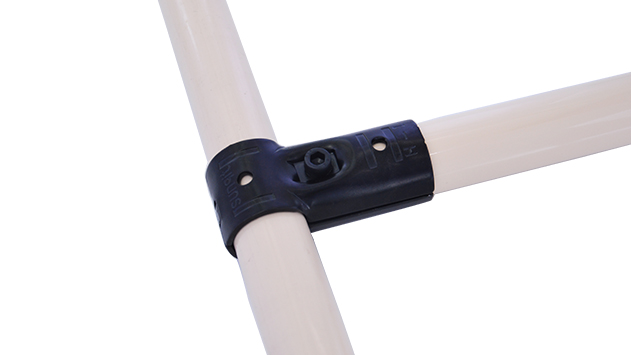
Two way lean pipe joint for 2 pcs 28MM lean pipe connection in straight angle, which used widely in workbench, flow rack, hand trolley frame connection.
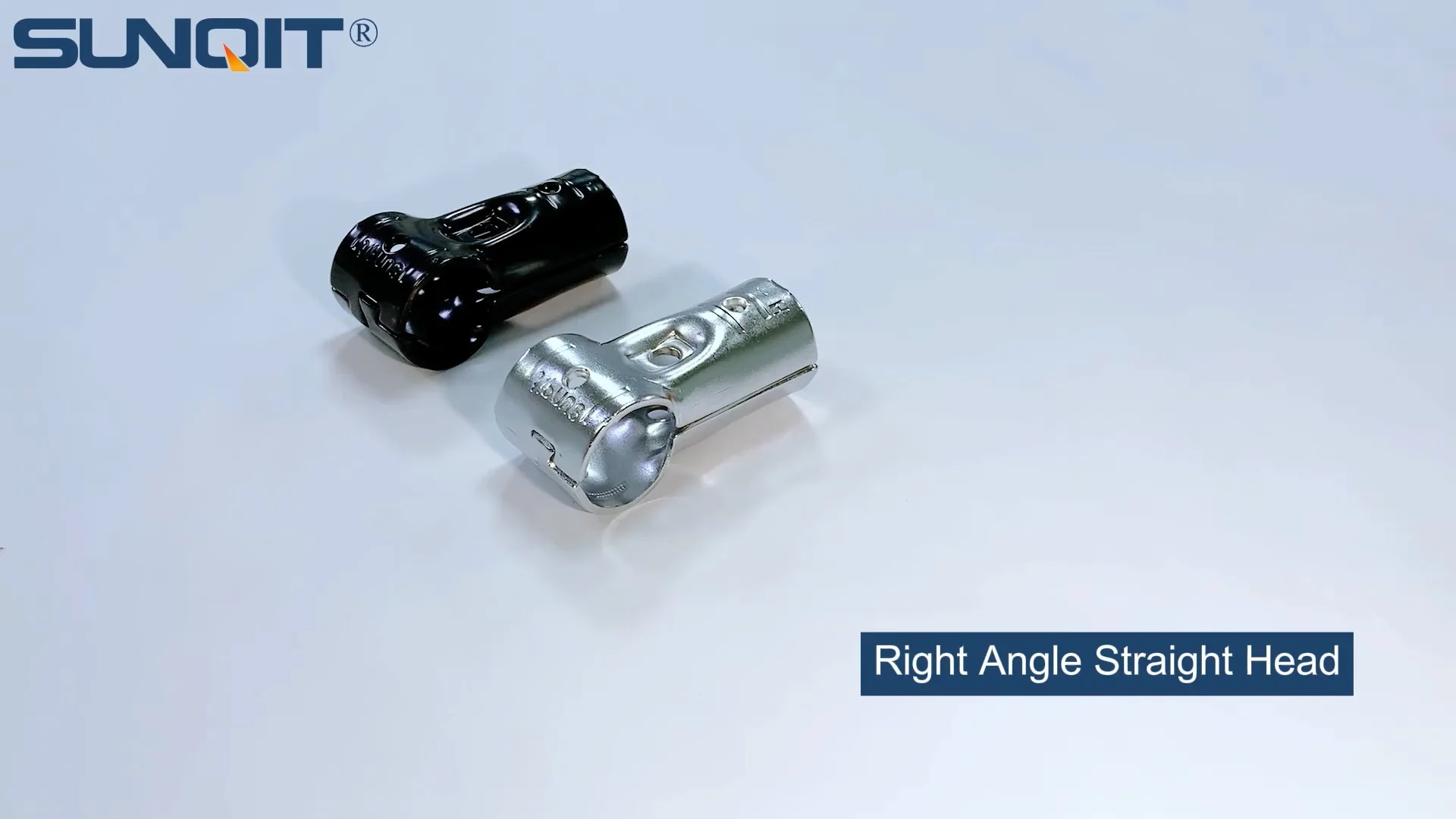
In the world of manufacturing and industrial operations, the term "lean" has become more than just a buzzword—it's a philosophy that drives efficiency, reduces waste, and ultimately shapes the bottom line. At the heart of any successful lean system lies a network of components working in harmony, each playing a small but critical role in keeping workflows smooth and adaptable. Among these components, few are as yet essential as the two way lean pipe joint. These unassuming connectors are the silent workhorses that hold together everything from workbenches and flow racks to material handling systems, making them a cornerstone of modern lean manufacturing setups.
But when it comes to investing in lean system components, the conversation often starts—and sometimes ends—with the initial price tag. Is a cheaper two way lean pipe joint really a better deal? Or does shelling out a bit more upfront lead to significant long-term savings? In this article, we'll dive deep into the cost analysis of two way lean pipe joints, breaking down the initial investment, exploring the often-overlooked long-term value, and helping you understand why these small connectors can have a big impact on your operation's efficiency and profitability over time.
Understanding Two Way Lean Pipe Joints: The Backbone of Flexible Lean Systems
Before we jump into costs, let's take a moment to understand what two way lean pipe joints are and why they matter. At their core, these joints are mechanical connectors designed to link lean pipes—typically coated steel tubes, though aluminum lean pipe and stainless steel variants are also common—in a way that allows for easy assembly, disassembly, and reconfiguration. As the name suggests, "two way" refers to their ability to connect pipes in two directions (often at 90-degree angles), providing a stable yet flexible framework for building structures like workbenches, flow racks, and even temporary production lines.
What sets two way lean pipe joints apart from rigid, fixed connectors is their versatility. Unlike welded or permanently fastened joints, these connectors use bolts, clamps, or friction-based mechanisms to secure pipes, meaning you can loosen, adjust, or repurpose them as your needs change. This flexibility is a hallmark of lean systems, where adaptability is key to responding to shifts in production demands, product designs, or workflow optimization.
When it comes to materials, two way lean pipe joints are typically made from metal alloys (like zinc-plated steel) or high-strength plastics, depending on the application. Steel joints, for example, are favored for heavy-duty use in industrial workbenches, while lighter aluminum or plastic variants might be used in lighter material handling setups. The choice of material directly impacts both the initial cost and the long-term performance of the joint, which we'll explore in detail later.
The Initial Investment: Breaking Down the Upfront Costs
Let's start with the most obvious factor: how much does a two way lean pipe joint cost to buy and install? The initial investment isn't just about the sticker price of the joint itself; it includes material costs, supplier selection, and even installation labor. Let's break it down.
Material Costs: Not All Joints Are Created Equal
The first variable in the initial cost equation is the material of the joint. As mentioned earlier, two way lean pipe joints come in several materials, each with its own price point and performance characteristics. Let's compare the most common options:
- Standard Steel Lean Pipe Joints: These are the workhorses of the industry. Made from zinc-plated or powder-coated steel, they're durable, corrosion-resistant, and widely available. A single standard two way steel joint might cost anywhere from $3 to $8, depending on the supplier and order quantity.
- Aluminum Lean Pipe Joints: Lighter than steel but still strong, aluminum joints are ideal for applications where weight matters—like mobile workbenches or temporary flow racks. They're also more resistant to rust in humid environments. Expect to pay $5 to $12 per joint for aluminum variants, as the material and manufacturing process are slightly more expensive.
- Stainless Steel Joints: Reserved for high-precision or sanitary environments (think food processing or pharmaceutical manufacturing), stainless steel joints offer superior corrosion resistance but come with a premium price tag—often $10 to $20 per joint.
For most general manufacturing operations, standard steel joints strike the best balance between cost and performance. But if your facility deals with heavy loads, frequent moisture, or strict hygiene standards, upgrading to aluminum or stainless steel might be necessary—even if it means a higher initial outlay.
Supplier Factors: The Impact of Sourcing on Initial Costs
Where you buy your two way lean pipe joints also plays a big role in the initial investment. Working with a reputable lean pipe supplier can mean higher upfront costs, but it often comes with benefits like quality assurance, bulk discounts, and reliable delivery. On the flip side, generic or off-brand joints from less established suppliers might be cheaper—$2 to $5 per joint—but they could come with hidden costs, such as inconsistent sizing (which leads to assembly headaches) or poor durability (which means early replacement).
Bulk purchasing is another key factor here. Most lean pipe suppliers offer tiered pricing: the more joints you order at once, the lower the per-unit cost. For example, a supplier might charge $6 per joint for an order of 100, but drop that to $4.50 per joint for an order of 500. If you're outfitting a new facility or planning a large-scale lean system upgrade, buying in bulk can significantly reduce your initial investment.
Installation and Setup: Labor and Tools
Even the best two way lean pipe joints won't save you money if installation is a nightmare. Fortunately, one of the perks of these joints is their simplicity—most can be assembled with basic hand tools (wrenches, hex keys) and minimal training. This keeps labor costs low compared to more complex systems (like welded steel frames, which require skilled welders).
That said, installation costs still add up. If you're building a large structure—say, a series of flow racks spanning 50 feet—you'll need time to measure, align, and tighten each joint. For a small team, this might take a day or two, depending on experience. While this labor isn't as costly as specialized installation, it's still part of the initial investment equation. Some suppliers offer pre-assembled kits or on-site installation support, but these services will bump up the upfront cost.
Long-Term Value: Looking Beyond the Price Tag
Initial costs are easy to quantify—you see the numbers on the invoice and call it a day. But when it comes to lean system components like two way lean pipe joints, the real value often reveals itself over months and years. Let's explore how these joints deliver long-term savings and efficiency gains that go far beyond their upfront price.
Durability: When "Built to Last" Translates to Savings
A cheap two way lean pipe joint might seem like a steal at $2, but if it cracks or loosens after six months of use, you're not saving money—you're throwing it away. High-quality joints, on the other hand, are designed to withstand the rigors of industrial environments: constant vibration, heavy loads, and daily wear and tear. A well-made steel joint, for example, can last 5–10 years or more with minimal maintenance, while a low-quality plastic or thin steel joint might need replacement every 1–2 years.
Consider this: If you buy 100 cheap joints at $2 each ($200 total) and replace them every 2 years, over a decade you'll spend $1,000. But if you buy 100 high-quality joints at $6 each ($600 total) and they last 10 years, you'll spend $600—saving $400 over the same period. That's a 40% savings, not to mention the time and labor saved by avoiding frequent replacements.
Flexibility: The Ability to Adapt Without Starting Over
In manufacturing, change is inevitable. Maybe your product line expands, requiring a wider workbench. Maybe a new production process demands a reconfigured flow rack. Or maybe you need to downsize a section of your facility to make room for new equipment. In each case, rigid, fixed structures lock you into a single layout—meaning you'll have to tear them down and rebuild from scratch, incurring new material and labor costs.
Two way lean pipe joints eliminate this problem. Because they're designed for easy disassembly and reconfiguration, you can take apart an old workbench, reuse the joints and pipes, and build something entirely new—without buying new components. This flexibility is a game-changer for lean systems, where the ability to adapt quickly to change directly impacts productivity and profitability.
Take, for example, a small electronics manufacturer that initially uses two way joints to build a workbench for assembling smartphones. A year later, they shift to tablets, which require a longer, wider work surface. With rigid joints, they'd need to buy new materials and build a new bench. With two way lean pipe joints, they can simply loosen the existing joints, add a few extra pipes, and reconfigure the bench in an afternoon—saving thousands in new materials and downtime.
Maintenance: Minimal Upkeep, Maximum Uptime
Industrial equipment demands maintenance, but two way lean pipe joints are refreshingly low-maintenance. Unlike welded joints (which can crack and require re-welding) or plastic joints (which can degrade in sunlight or extreme temperatures), high-quality metal joints typically only need occasional tightening (to combat vibration-induced loosening) and a quick wipe-down to prevent dust buildup. Some even come with corrosion-resistant coatings (like zinc plating) that protect against rust in humid or damp environments.
Compare this to other material handling systems. For example, wooden workbenches might need sanding and refinishing every year; plastic flow racks can warp or crack under heavy loads; and welded steel frames might require regular inspections for structural fatigue. The time and money spent on maintaining these systems add up over time, while two way lean pipe joints keep maintenance costs to a minimum—freeing up your team to focus on more critical tasks.
Productivity and Efficiency: When Joints Improve Workflow
At the end of the day, the value of two way lean pipe joints isn't just about saving money on replacements or maintenance—it's about improving productivity. A well-designed lean system, built with flexible joints, reduces waste in all its forms: wasted time (searching for tools, moving materials), wasted space (cluttered workbenches), and wasted effort (reworking flawed layouts).
Consider a flow rack in a warehouse, where boxes of components need to move smoothly from receiving to assembly. If the rack is built with rigid, fixed joints, and the layout isn't optimal (e.g., boxes get stuck, or workers have to reach awkwardly), productivity suffers. With two way lean pipe joints, you can adjust the angle of the rollers, add side guides, or even reposition the entire rack to align with the natural flow of foot traffic—making the process faster, easier, and less error-prone.
Over time, these small efficiency gains compound. A team that saves 5 minutes per hour on material handling, for example, might save 40 minutes per day per worker—adding up to over 33 hours of productive time per year. Multiply that by a team of 10 workers, and you're looking at over 330 extra hours of output—all because the flow rack was easy to reconfigure with two way joints.

Initial Investment vs. Long-Term Value: A Comparative Table
To put this all in perspective, let's look at a side-by-side comparison of initial investment and long-term value for two scenarios: buying budget two way lean pipe joints vs. investing in high-quality ones. We'll assume a mid-sized manufacturing plant that needs 500 joints to build workbenches and flow racks, with a 5-year time horizon.
| Cost Factor | Budget Joints ($3 each) | High-Quality Joints ($7 each) |
|---|---|---|
| Initial Material Cost (500 joints) | $1,500 | $3,500 |
| Replacement Cost (every 2 years) | $3,000 (2 replacements in 5 years) | $0 (no replacements needed) |
| Maintenance Labor | $1,200 (frequent tightening, repairs) | $300 (occasional tightening) |
| Reconfiguration Savings | $0 (rigid, hard to reconfigure) | $5,000 (ability to reuse joints for 3 new layouts) |
| Productivity Gains (5 years) | $0 (no workflow improvements) | $10,000 (from optimized layouts) |
| Total 5-Year Cost/Value | $5,700 (net cost) | -$11,800 (net savings/value) |
*Note: Productivity gains and reconfiguration savings are estimates based on industry averages for lean manufacturing facilities.

Real-World Example: How One Manufacturer Saved $45,000 in 3 Years
Let's take a look at a real-world example to see how this plays out. ABC Manufacturing, a producer of automotive parts in the Midwest, was struggling with outdated, rigid workbenches and flow racks that limited their ability to adapt to new production schedules. Their existing setup used welded steel frames, which were expensive to modify and prone to damage during reconfigurations. In 2020, they decided to switch to a lean system built with high-quality two way lean pipe joints, sourced from a reputable lean pipe supplier.
Initial investment: ABC needed 800 two way joints (at $6 each) and lean pipes, totaling $12,000 for materials. Installation took a team of 4 workers 3 days (at $25/hour), adding $2,400 in labor. Total initial investment: $14,400.
Over the next 3 years, here's what happened:
- Reconfiguration Savings: ABC shifted production twice—first to a new line of electric vehicle parts, then to a smaller component for a client. Instead of building new workbenches each time, they reused 70% of their existing joints and pipes, saving $18,000 in new materials.
- Maintenance Savings: The high-quality joints required only quarterly tightening, compared to the monthly repairs needed for their old welded frames. This saved 120 hours of maintenance labor, worth $3,000.
- Productivity Gains: The new, flexible flow racks reduced material handling time by 15 minutes per worker per shift. With 50 workers, this added up to 3,900 extra productive hours per year, translating to $30,000 in additional output.
- Replacement Costs: Zero—none of the joints needed replacement, even after 3 years of heavy use.
Total savings over 3 years: $18,000 (reconfiguration) + $3,000 (maintenance) + $30,000 (productivity) = $51,000. Subtracting the initial investment of $14,400, ABC Manufacturing net saved $36,600. By year 5, they project total savings to exceed $60,000—all from a relatively small upfront investment in high-quality two way lean pipe joints.
Conclusion: Investing in Value, Not Just Cost
When it comes to two way lean pipe joints, the initial price tag can be misleading. A $3 joint might seem like a good deal today, but it could cost you thousands in replacements, maintenance, and lost productivity down the line. On the other hand, spending $6–$7 on a high-quality joint might feel like a splurge upfront, but the long-term benefits—durability, flexibility, minimal maintenance, and productivity gains—make it one of the smartest investments you can make in your lean system.
The key takeaway? Lean manufacturing is about more than cutting costs—it's about creating value. And value, in this case, means choosing components that support your operation's ability to adapt, grow, and thrive over time. Two way lean pipe joints might be small, but their impact on your bottom line is anything but. So the next time you're shopping for lean system components, remember: it's not just about what you pay now—it's about what you gain for years to come.