- Company Articles
- Products and Technology
- Product knowledge
- Two Way Lean Pipe Joint for Cross-Industry Applications: From Medical to Automotive

Two Way Lean Pipe Joint for Cross-Industry Applications: From Medical to Automotive
Related Product
Two Way Lean Pipe Joint
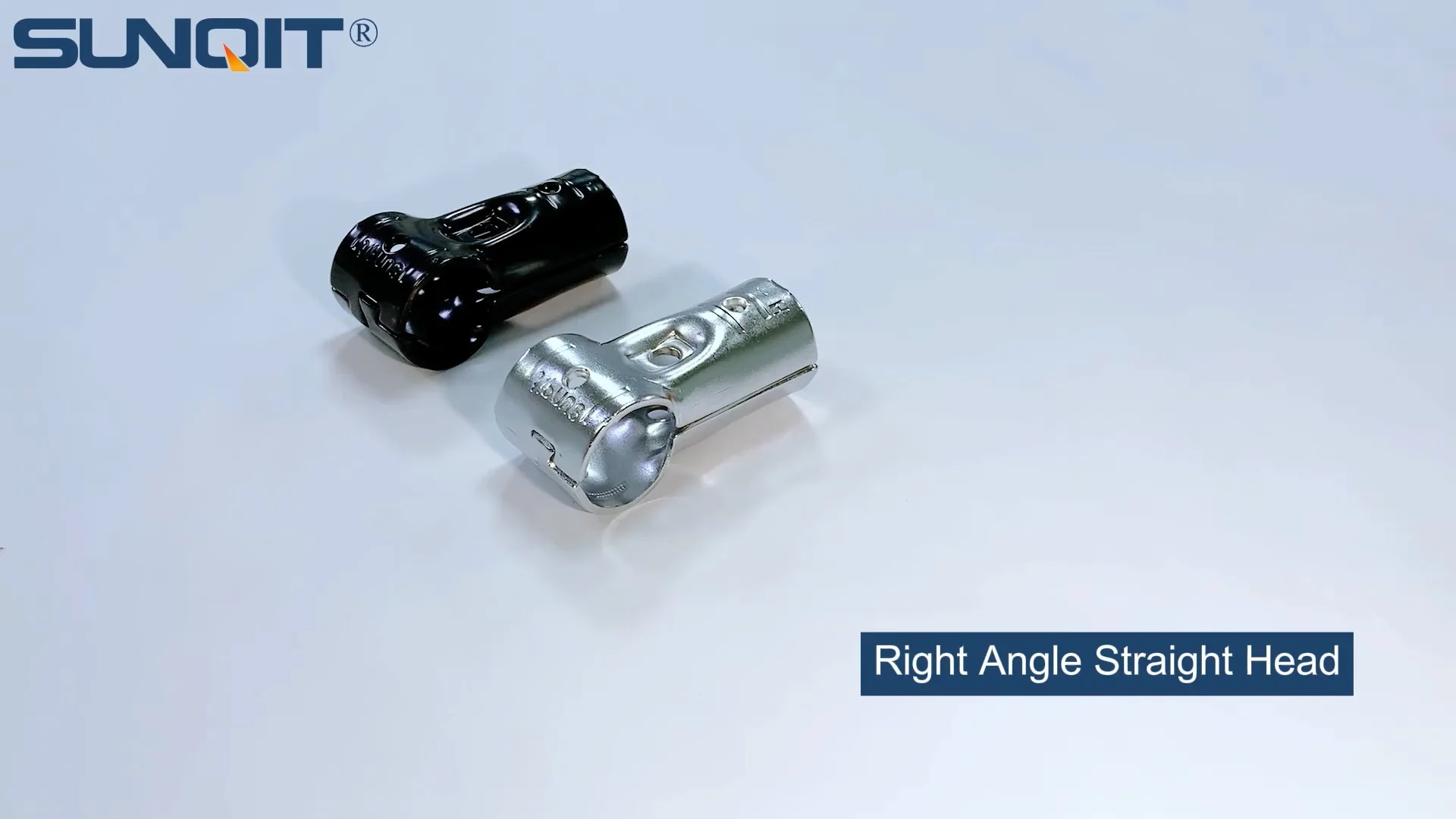
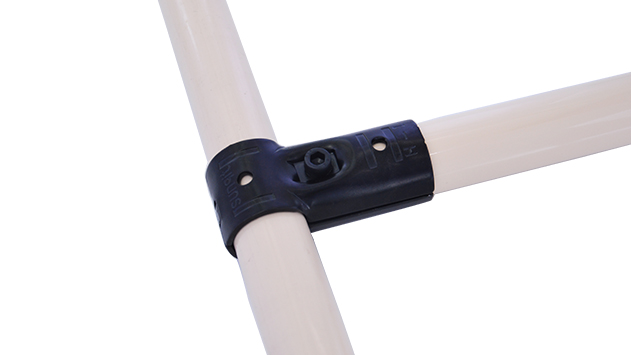
Two way lean pipe joint for 2 pcs 28MM lean pipe connection in straight angle, which used widely in workbench, flow rack, hand trolley frame connection.
The Unsung Hero of Modern Industrial Flexibility
In the fast-paced world of manufacturing, healthcare, and logistics, the ability to adapt is everything. A factory floor that can reconfigure in hours instead of weeks, a hospital lab that adjusts to new equipment without major overhauls, a warehouse that optimizes space as inventory shifts—these are the hallmarks of a modern, efficient operation. And while we often celebrate big-ticket innovations like automated robots or AI-driven software, the true workhorses of adaptability are often the smaller, more unassuming components. Enter the two way lean pipe joint : a deceptively simple connector that has quietly revolutionized how industries build, modify, and scale their workflows.
At first glance, a two way lean pipe joint might seem unremarkable—a small, often metallic or plastic component designed to connect two lean pipes at a fixed or adjustable angle. But its impact is anything but minor. By enabling the creation of modular, customizable structures—from workbenches and material racks to conveyors and assembly lines—this joint empowers businesses to move beyond rigid, one-size-fits-all setups. It's the difference between being stuck with a static workspace and having a dynamic environment that grows, changes, and evolves with your needs.
In this article, we'll explore how the two way lean pipe joint has become a cornerstone of cross-industry efficiency, with a focus on its transformative role in healthcare and automotive manufacturing. We'll dive into real-world applications, the materials that make it tick (hint: aluminum profile plays a starring role), and why it's become indispensable for everything from esd workstations in sterile labs to high-speed assembly lines in car factories. Along the way, we'll also touch on related components like lean pipe workbenches and conveyors , showing how they all come together to create seamless, adaptable workflows. Because in the end, it's not just about the joint itself—it's about the possibilities it unlocks.
What Is a Two Way Lean Pipe Joint, Anyway?
Before we jump into its applications, let's take a moment to understand the basics. A two way lean pipe joint is a modular connector designed to join two lengths of lean pipe (also known as "lean tube") at a specific angle—most commonly 90 degrees, but often adjustable to other angles like 45 or 135 degrees, depending on the design. Unlike traditional welding or permanent fasteners, these joints allow for tool-free (or minimal-tool) assembly, disassembly, and reconfiguration. This means a structure built with lean pipe joints can be taken apart, modified, and reassembled in a fraction of the time it would take to rebuild a welded frame.
But what makes these joints so versatile? Much of their appeal lies in the materials they're paired with. While early lean pipe systems often used steel pipes, modern iterations increasingly rely on aluminum profile for its winning combination of strength, lightweight, and corrosion resistance. Aluminum's malleability also makes it ideal for creating joints that are both durable and easy to adjust. For example, internal rotary aluminum joints allow pipes to rotate slightly, adding an extra layer of flexibility for structures that need to accommodate movement, like conveyors or adjustable workbenches.
Another key feature is compatibility. Two way lean pipe joints are designed to work with a range of accessories—from caster wheels for mobile structures to brackets for mounting shelves, bins, or tools. This compatibility means a single joint can be part of a lean pipe workbench one month, a material rack the next, and a conveyor guard the month after. It's this modularity that makes the joint not just a component, but a building block for endless possibilities.
Medical Industry: Precision, Sterility, and Adaptability
The healthcare industry is a masterclass in balancing rigidity and flexibility. On one hand, there are strict regulations for cleanliness, safety, and precision; on the other, medical facilities must constantly adapt to new technologies, shifting patient needs, and evolving treatment protocols. This is where the two way lean pipe joint shines—offering the sterility and precision required in medical settings, with the adaptability to keep up with change.
ESD Workstations: Protecting Sensitive Equipment
Nowhere is this balance more critical than in environments handling sensitive medical devices—think MRI machines, surgical robots, or diagnostic tools with delicate electronics. Static electricity can damage these components, making esd workstations (electrostatic discharge workstations) a necessity. These workstations are built to dissipate static, but they also need to be customizable to fit different equipment sizes and workflows. Here, the two way lean pipe joint becomes indispensable.
Using aluminum profile frames connected by two way lean pipe joints, ESD workstations can be tailored to specific tools: adding shelves for monitors, mounting arms for scopes, or even integrated cable management to reduce clutter. And because the joints allow for easy adjustments, a single workstation can be repurposed as equipment is upgraded. For example, a lab might start with a workstation for a small ultrasound machine and later expand it—using the same joints and pipes—to accommodate a larger, more advanced model. No need for a complete rebuild; just a few adjustments, and the workstation is ready for the next generation of technology.
Cleanroom Flexibility: Sterility Without Sacrifice
Cleanrooms in pharmaceutical labs or surgical suites demand even higher standards: surfaces must be non-porous, easy to sanitize, and resistant to corrosion. Traditional wooden or steel workbenches can harbor bacteria or degrade under harsh cleaning chemicals, but structures built with aluminum profile and two way lean pipe joints thrive here. Aluminum is naturally resistant to rust and easy to wipe down, while the joints—often made from stainless steel or coated plastic—don't have crevices where dirt or germs can hide.
Take a vaccine production facility, for example. During peak production, the facility might need additional material racks to store vials; during slower periods, those racks can be disassembled and stored, freeing up space. With two way lean pipe joints, workers can reconfigure the racks in minutes, using tools as simple as a hex key. This not only saves time but also reduces the risk of contamination—no need for welding torches or power tools that could introduce particles into the cleanroom air.
Patient-Centric Care: Custom Solutions for Unique Needs
Beyond labs and cleanrooms, two way lean pipe joints are making waves in direct patient care. Hospitals often need temporary or specialized structures: mobile workstations for nurses to carry meds and charts, adjustable bedsides for rehabilitation equipment, or even custom supports for patients with mobility issues. These structures must be lightweight (to move easily), sturdy (to support equipment), and customizable (to fit individual patient needs).
A rehabilitation clinic, for instance, might use lean pipe workbenches connected by two way joints to create parallel bars of varying heights, helping patients with different mobility levels practice walking. If a patient requires a wider stance, the joints can be adjusted to space the pipes further apart; if a child needs shorter bars, the height can be lowered. And when the clinic expands, new pipes and joints can be added to create longer or more complex setups—no need to purchase entirely new equipment.

Automotive Manufacturing: Speed, Durability, and Reconfiguration
If the medical industry values precision and adaptability, the automotive sector demands speed, durability, and the ability to scale—often at a moment's notice. Car manufacturers produce hundreds of vehicles daily, with assembly lines that must keep pace with tight deadlines. Yet, with consumer preferences shifting faster than ever (think electric vehicles, hybrid models, or new safety features), these lines also need to reconfigure quickly to produce new models. The two way lean pipe joint, paired with conveyors and lean pipe workbenches , has become a linchpin in meeting these dual demands.
Assembly Line Agility: From Sedans to SUVs (and Back)
Automotive assembly lines are a symphony of moving parts—literally. Components like engines, doors, and dashboards must flow seamlessly from one workstation to the next, often via conveyors. But when a manufacturer switches from producing sedans to SUVs, the size and weight of these components change, requiring conveyors that can handle heavier loads or adjust to different heights. This is where the two way lean pipe joint comes into play.
Conveyors built with aluminum profile frames and two way lean pipe joints can be modified in hours, not days. For example, if an SUV door is taller than a sedan door, workers can adjust the height of the conveyor rails by loosening the joints, adding or removing pipe sections, and retightening. Similarly, if a new component requires a 45-degree angle transfer between conveyors, a two way joint can be swapped in to redirect the flow. This agility is critical in an industry where production runs can shift quarterly—or even monthly—to meet market demand.
Worker Wellbeing: Ergonomic Workbenches That Adapt
Automotive manufacturing isn't just about machines; it's about the people operating them. Repetitive motions, awkward postures, and heavy lifting can lead to workplace injuries, which is why ergonomic workbenches are a top priority. Lean pipe workbenches, connected by two way joints, allow for precise adjustments to height, depth, and layout—ensuring each worker can customize their station to their body.
A worker assembling car seats, for example, might need the workbench surface higher to avoid bending; another assembling small electronics might need it lower for fine motor control. With two way lean pipe joints, these adjustments are simple: loosen the joints, raise or lower the frame, and lock it back in place. Some workbenches even include adjustable shelves or tool holders, also connected via joints, so tools are always within easy reach. The result? Happier, healthier workers—and fewer costly injuries.
Cost Efficiency: Reducing Waste in a High-Volume Industry
Automotive manufacturing is also notoriously cost-sensitive. Every dollar saved on materials or labor goes straight to the bottom line. Two way lean pipe joints help here by reducing waste in two key ways: first, by enabling modular construction, which means components can be reused instead of replaced; and second, by minimizing downtime during reconfigurations.
Consider a scenario where a manufacturer needs to add a new quality control station to an assembly line. With traditional steel frames, this might require ordering custom parts, waiting for delivery, and shutting down the line for installation. With two way lean pipe joints and aluminum profile, however, the station can be built on-site using existing pipes and joints, often in a single shift. When the station is no longer needed, the pipes and joints can be disassembled and used elsewhere—no waste, no waiting, no lost production time.

Beyond Medical and Automotive: A Joint for Every Industry
While medical and automotive are standout examples, the two way lean pipe joint's versatility extends far beyond these sectors. Let's take a quick tour of other industries where this humble connector is making a big impact:
- Electronics Manufacturing: Similar to medical, electronics require ESD protection and precision. Lean pipe workbenches with two way joints are used to build static-safe assembly lines for smartphones, circuit boards, and semiconductors. The joints allow for quick changes as product sizes shrink or features are added.
- Logistics and Warehousing: Material racks, picking stations, and even mobile carts are built using two way lean pipe joints. Warehouses can adjust rack heights to fit different box sizes or repurpose carts for seasonal inventory spikes—all without investing in new equipment.
- Food and Beverage: Stainless steel two way lean pipe joints are ideal here, as they resist corrosion from water and cleaning chemicals. Conveyors built with these joints transport bottles, cans, or packaging, with easy adjustments to handle different product sizes (e.g., switching from 12-oz cans to 16-oz bottles).
- Aerospace: For assembling large, lightweight components like airplane wings, aluminum profile frames connected by two way joints provide the strength needed without adding excess weight. Workers can reconfigure jigs and fixtures as aircraft models evolve.
Comparing Cross-Industry Applications: A Closer Look
To better understand how the two way lean pipe joint adapts to different industries, let's compare its use cases, key components, and benefits across medical, automotive, and electronics manufacturing:
| Industry | Primary Application | Key Components | Top Benefit | Example Use Case |
|---|---|---|---|---|
| Medical | ESD Workstations, Cleanroom Racks | Two way lean pipe joint, Aluminum profile, Stainless steel components | Sterility + Flexibility | Custom workbench for surgical tool assembly, adjusted weekly for new tool sizes |
| Automotive | Assembly Line Conveyors, Ergonomic Workbenches | Two way lean pipe joint, Aluminum profile, Conveyor rollers | Quick Reconfiguration | Conveyor adjusted in 2 hours to handle SUV doors instead of sedan doors |
| Electronics | Static-Safe Assembly Lines | Two way lean pipe joint, ESD-rated aluminum profile, Tool holders | Precision + Adaptability | Workstation reconfigured for new smartphone model with smaller components |
The Future of Lean Pipe Joints: Innovations on the Horizon
As industries continue to evolve, so too will the two way lean pipe joint. Here are a few trends shaping its future:
Smart Integration: IoT-Enabled Joints
Imagine a lean pipe joint with built-in sensors that monitor temperature, vibration, or load capacity. In a pharmaceutical lab, these sensors could alert workers if a material rack is overloaded; in an automotive plant, they could detect if a conveyor joint is loosening, preventing breakdowns before they happen. While still in early stages, IoT-enabled joints could turn passive structures into active participants in predictive maintenance.
Sustainability: Recyclable and Biodegradable Materials
With a growing focus on sustainability, manufacturers are exploring joints made from recycled aluminum or biodegradable plastics. These materials maintain strength and durability while reducing the environmental impact of production and disposal. For example, a two way lean pipe joint made from 100% recycled aluminum would appeal to eco-conscious industries like food and beverage or consumer goods.
3D Printing: On-Demand Customization
3D printing could allow businesses to print two way lean pipe joints on-site, tailored to unique angles or load requirements. Need a joint that connects three pipes at a 120-degree angle for a specialized rack? No problem—simply download the design, print it, and install it. This would reduce lead times and enable even more creative, application-specific structures.
Conclusion: Small Joint, Big Impact
In a world obsessed with innovation, it's easy to overlook the quiet components that make progress possible. The two way lean pipe joint is one such component—a small, unassuming connector that has quietly transformed how industries build, adapt, and thrive. From the sterile labs of medical facilities to the bustling assembly lines of automotive plants, from ESD workstations protecting sensitive electronics to ergonomic workbenches supporting workers, this joint has proven that flexibility doesn't have to come at the cost of strength, precision, or efficiency.
As we look to the future—with its demands for smarter, greener, and more adaptable workplaces—the two way lean pipe joint will undoubtedly play an even bigger role. Whether it's integrating IoT sensors, using recycled materials, or being 3D-printed on demand, this humble connector will continue to enable industries to do more with less: less time, less waste, less cost, and more innovation.
So the next time you walk through a factory, a hospital, or a warehouse, take a closer look at the structures around you. Chances are, you'll spot a two way lean pipe joint holding it all together—quietly, reliably, and ready for whatever comes next.