- Company Articles
- Products and Technology
- Product knowledge
- Two Way Lean Pipe Joint for Emergency Production Line Reconfigurations

Two Way Lean Pipe Joint for Emergency Production Line Reconfigurations
Related Product
Two Way Lean Pipe Joint
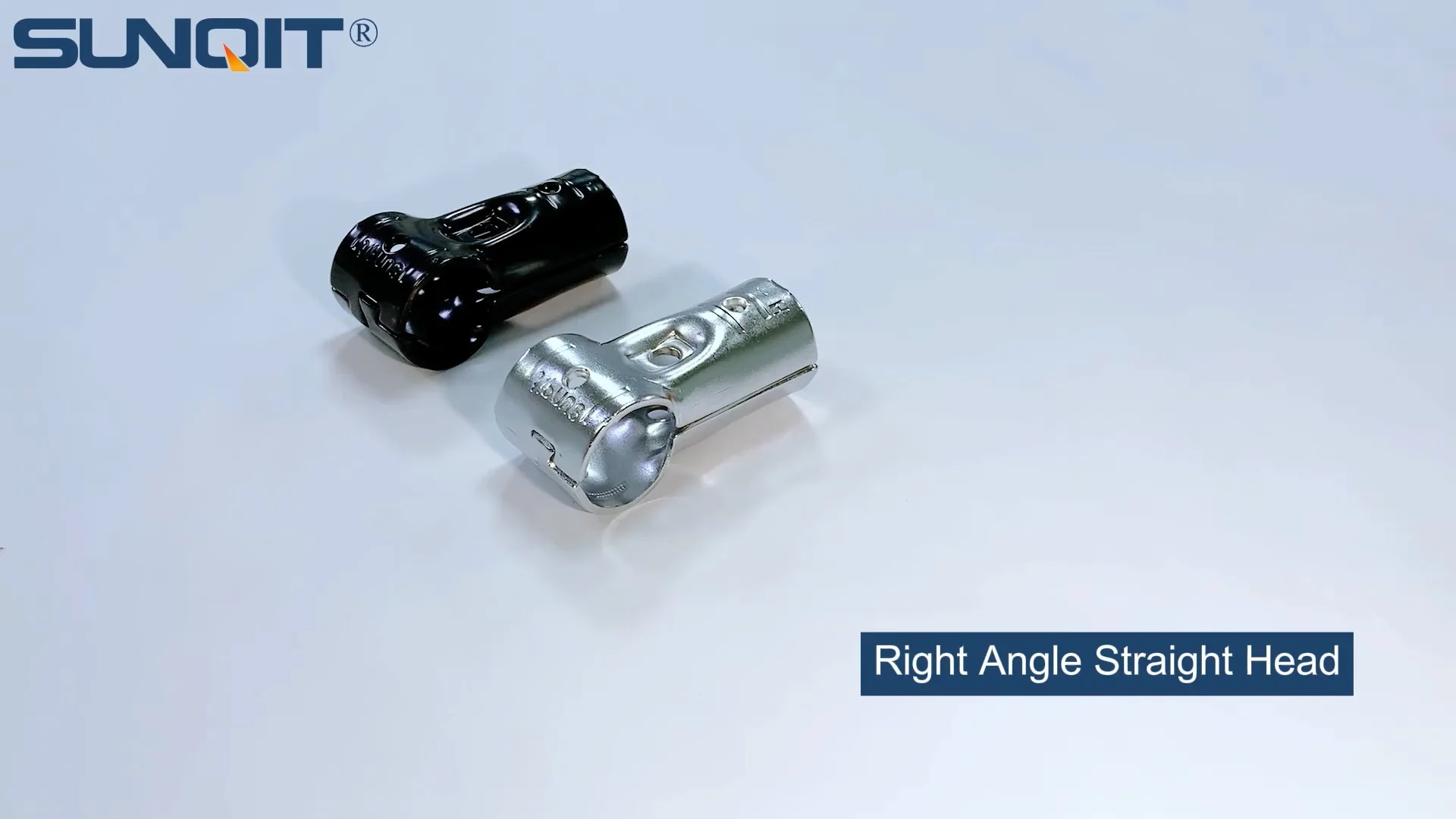
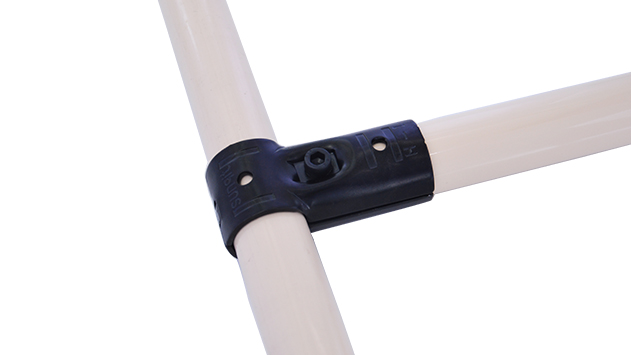
Two way lean pipe joint for 2 pcs 28MM lean pipe connection in straight angle, which used widely in workbench, flow rack, hand trolley frame connection.
It's 2:30 PM on a Tuesday, and Maria, the production manager at a mid-sized electronics assembly plant, is staring at her screen in disbelief. An urgent order just came in—5,000 units of a new sensor module, needed by the end of the week. Her current line is set up for their standard product, a process that took three days to configure last month with welded steel frames and fixed workbenches. "There's no way we can retool in time," she mutters, already dreading the call to the CEO. Then her eyes land on the corner of her office: a rack of silver lean pipe s and a box of metal connectors. "Wait—maybe we can do this."
Emergency reconfigurations are the hidden stressors of manufacturing. Whether it's a sudden order surge, a product design change, equipment breakdown, or even a last-minute shift to a new production layout, the ability to adapt quickly can mean the difference between meeting a deadline and losing a client. Traditional production setups—bolted steel, custom-welded frames, rigid conveyor systems—were never built for speed. They're sturdy, yes, but they're also slow to modify, expensive to replace, and unforgiving when plans change. That's where the unsung hero of flexible manufacturing comes in: the two way lean pipe joint .
In this article, we'll dive into why the two way lean pipe joint has become a game-changer for manufacturers facing urgent reconfiguration needs. We'll explore its design, its real-world impact, and how it transforms chaos into control when time is running out. By the end, you'll understand why this small but mighty component deserves a spot in every production manager's toolkit—and how it could be the difference between panic and progress the next time your line needs a rapid overhaul.
What Even Is a Two Way Lean Pipe Joint?
Let's start with the basics. If you're new to lean manufacturing, "lean pipe" (also called "flexible pipe" or "kitchen pipe") refers to lightweight, usually steel or aluminum tubes coated in plastic or rubber, designed to be easily assembled into structures like workbenches, flow racks, and material trolleys. Unlike traditional steel pipes, lean pipes are meant to be modular—no welding, no heavy tools, no permanent commitments. And the magic that holds them together? Joints.
Joints are the connectors that link lean pipes into shapes. There are three-way joints, four-way joints, fixed-angle joints, and swivel joints—but for emergencies, the two way lean pipe joint is king. As the name suggests, it connects two pipes at a fixed or adjustable angle (usually 90 degrees, but some models swivel) with a simple clamping mechanism. Most are made of zinc-plated steel or aluminum, with a threaded bolt or lever that tightens around the pipe, creating a secure hold without damaging the tube.
Here's what makes it special: simplicity. A typical two way joint can be attached or detached in under a minute with just a hex key or even by hand (for quick-release models). No drilling, no welding, no waiting for glue to dry. It's the manufacturing equivalent of a Lego brick—small, standardized, and infinitely reusable. And while it might look basic, its design is the result of decades of refining lean principles: eliminate waste (like time spent on custom setups), optimize flow (by making adjustments easy), and empower workers (by putting reconfiguration tools in their hands).
Take a closer look at the anatomy of a standard two way lean pipe joint. Most have a central body with two cylindrical sleeves (the "ports") where the lean pipes slide in. A metal or plastic lever or bolt on the side tightens the sleeves around the pipe, creating friction that holds the structure in place. Some models include rubber gaskets to prevent slipping, while others have serrated edges inside the sleeves for extra grip. The best ones are corrosion-resistant (important for factory environments) and rated to hold significant weight—often up to 200 lbs per joint, depending on the pipe diameter and material.
But why "two way"? Why not a three-way or four-way joint? For emergency setups, simplicity is speed. Three-way joints are great for building complex structures, but they add extra bulk and require more precise alignment. When you're racing to build a temporary workbench or reroute a material flow, the two way joint's minimalism is its strength. It's the most intuitive connector to use—even for workers who've never assembled lean structures before. You don't need to be an engineer to figure out: "Pipe A goes here, Pipe B goes here, tighten the lever." That speed of assembly is priceless when every minute of downtime costs money.
Why Emergencies Demand Two Way Lean Pipe Joints
Let's circle back to Maria's predicament. She needs to reconfigure a section of her production line to assemble 5,000 sensor modules in 72 hours. Her existing line has fixed steel workbenches with built-in tool holders—great for stability, terrible for change. To add a new station, she'd normally need to call a contractor to weld a new frame, which would take 24 hours (minimum) and cost $1,200. Then she'd have to bolt it to the floor, adjust the conveyor, and hope it lines up. With the two way lean pipe joints, though, her team could build a new workbench in under an hour. Here's how:
-
Step 1: Grab 4 lean pipes (2 for the legs, 2 for the frame) and 4 two way joints.
-
Step 2: Slide the joints onto the pipes, tighten the levers, and form a rectangle (the bench top frame).
-
Step 3: Attach four more two way joints to the corners, add vertical pipes for legs, and secure them.
-
Step 4: Add a plywood or aluminum top, and—boom—done. Total time: 45 minutes. Total cost: Under $200 for materials.
That's the power of the two way joint: it turns "impossible" into "I'll have it done by lunch." But speed is just the start. Let's break down the key benefits that make it indispensable for emergencies.
1. Speed: From Idea to Assembly in Minutes
In manufacturing, downtime is measured in dollars. A 2023 study by the Manufacturing Institute found that unplanned downtime costs the average factory $22,000 per minute. For emergency reconfigurations, every minute spent waiting for tools, contractors, or parts adds to that tab. Two way lean pipe joints eliminate that wait.
Consider this: Welding a simple steel frame for a material rack takes 2–3 hours (including setup, welding, and cooling time). Using two way joints? 15 minutes. Even if you're building something more complex—a 10-foot-long flow rack with multiple levels—you're looking at 2 hours max, compared to a full day for a welded equivalent. That's because there's no prep work: no measuring and marking steel, no setting up a welding station, no waiting for paint or coatings to dry. You just grab pipes, slide on joints, and tighten.
Mike, a production supervisor at a automotive parts plant in Ohio, recalls a time when a conveyor belt broke at 8 AM, blocking the line for a critical order. "The maintenance team said it would take 6 hours to fix the conveyor," he says. "We grabbed our lean pipe kit—two way joints, some pipes, and a few caster wheel s—and built a temporary roller track in 45 minutes. We wheeled it into place, rerouted the parts, and kept production going while they repaired the conveyor. The client never knew there was a problem."
2. Flexibility: Build, Break, Rebuild—No Regrets
Emergencies rarely come with a clear playbook. Maybe you start building a workbench and realize it needs to be 6 inches taller. Or you assemble a flow rack and discover the angle is too steep for your parts. With traditional setups, changing your mind means starting over—cutting new steel, re-welding, or scrapping the whole project. With two way lean pipe joints? Just loosen the lever, adjust the pipe, and retighten. It's that easy.
This flexibility is a lifesaver when plans evolve mid-project. Let's say Maria, from our earlier example, starts building her sensor module line and realizes the workers need more space to maneuver. She can quickly disassemble the first few sections, reposition the two way joints to widen the aisle, and keep going—no wasted materials, no delays. Even better, once the emergency is over, she can take the whole setup apart, pack the pipes and joints back into storage, and reuse them for the next crisis. There's no "sunk cost" in a modular system—every component is a future asset.
Compare that to a custom-welded frame: if it doesn't work, you've got a useless steel structure taking up space in your warehouse. With lean pipe joints, you're never stuck with a mistake. You just adapt.
3. Durability: Lightweight, but Surprisingly Tough
Skeptics often ask: "If it's that easy to assemble, is it strong enough?" The answer is a resounding yes—when used correctly. Two way lean pipe joints are designed to handle the day-to-day stresses of manufacturing. Most steel joints can support 150–300 lbs per connection, and when paired with 1.5mm or 2.0mm thick lean pipes, they're more than capable of holding tools, parts bins, and even small equipment.
Take a typical workbench built with two way joints: a 4-foot by 2-foot surface, supported by four vertical pipes, each connected with two way joints at the corners. That bench can easily hold 500+ lbs—enough for a laptop, tools, a parts bin, and a worker leaning on it. Flow racks built with two way joints (and roller tracks) can handle hundreds of pounds of materials sliding down the line. Even mobile trolleys, fitted with caster wheel s and two way joints, can carry heavy loads without wobbling or collapsing.
The secret is in the design: the joints clamp tightly around the pipes, distributing weight evenly across the structure. And because lean pipes are hollow but rigid, they bend slightly under load (absorbing stress) instead of snapping. For short-term emergency use—think 1–2 weeks—this setup is more than reliable. For longer-term use, you can reinforce joints with locking nuts or add cross-braces (using, you guessed it, more two way joints) for extra stability.
When Seconds Count: Real-World Emergency Stories
Numbers and specs tell part of the story, but real impact comes from the moments when two way lean pipe joints turned a crisis into a win. Let's look at three scenarios where they made all the difference.
Scenario 1: The Last-Minute Order Surge
A medical device manufacturer in California received a rush order for 10,000 ventilator components in response to a regional health crisis. Their existing line could produce 1,000 units per day—nowhere near enough. The production team had 5 days to double capacity. Their solution? Build a second, temporary line using lean pipes and two way joints.
"We had 12 people working in shifts," says Lisa, the plant manager. "We started with the basics: workbenches for assembly, flow racks to feed parts to each station, and mobile trolleys to move finished components to packaging. The two way joints were key—everyone on the team could use them, even the interns. We didn't need a single engineer or contractor. By the end of day 1, we had the first three workstations up. By day 3, the entire line was running. We hit the deadline with 6 hours to spare."
Scenario 2: The Equipment Breakdown
A food packaging plant in Texas relies on a custom-built robotic arm to load jars onto pallets. One morning, the arm malfunctioned, and the manufacturer quoted a 7-day lead time for repairs. With 50,000 jars waiting to be shipped, the plant needed a workaround—fast.
"We couldn't afford to stop," says Raj, the operations director. "We grabbed our lean pipe supplies and built a manual loading station: a sloped flow rack (using two way joints and roller tracks) that fed jars down to a team of workers, who then stacked them onto pallets. The whole setup took 2 hours to build. It wasn't as fast as the robot, but it kept the line moving until the arm was fixed. We even added caster wheels to the flow rack so we could move it out of the way once the robot was back online."
Scenario 3: The Design Change
A consumer electronics company in China was 2 days away from launching a new smartphone when the design team sent a last-minute update: the battery compartment was slightly larger, requiring a new assembly jig. The original jig was a custom-machined steel frame—rebuilding it would take 5 days. Instead, the production team used two way lean pipe joints to build a adjustable jig in 3 hours.
"We built a base with vertical pipes, then used two way joints to attach horizontal pipes that could slide up and down," explains Chen, the lead technician. "We added clamps to hold the phone case, and we were testing the first units by lunch. The best part? When the next design change comes (and it always does), we can just adjust the joints instead of building a new jig."

How to Actually Use Them (It's Easier Than You Think)
You might be thinking, "This sounds great, but I'm not a engineer—I don't know how to design a production structure." The beauty of two way lean pipe joints is that you don't need to be. You don't need blueprints, CAD software, or specialized training. You just need a basic idea of what you want to build, some pipes, and a handful of joints. Here's a step-by-step guide to building a simple emergency workbench (one of the most common quick-build projects) to prove it:
Step 1: Gather Your Materials
-
4 lean pipes (2 feet long, for legs)
-
4 lean pipes (4 feet long, for the frame)
-
8 two way lean pipe joints (4 for the corners, 4 for the legs)
-
1 plywood or aluminum top (4 feet by 2 feet)
-
A hex key (most joints use a standard 5mm or 6mm key)
-
(Optional) 4 caster wheels (if you want the workbench to be mobile)
Step 2: Build the Frame
Start by connecting the 4-foot pipes into a rectangle. Take two pipes and a two way joint: slide one pipe into one port of the joint, then the second pipe into the other port (at a 90-degree angle). Tighten the joint's lever or bolt until it's snug (but not so tight you strip the threads). Repeat for the other three corners, forming a rectangle. This will be the top frame of your workbench.
Step 3: Add the Legs
Take the remaining two way joints and attach one to each corner of the rectangle (on the bottom side of the frame). Slide a 2-foot pipe into each joint—these are your legs. Tighten the joints, then stand the frame upright. If it wobbles, check that the joints are tight and the legs are straight.
Step 4: Add the Top and Casters (If Needed)
Lay the plywood or aluminum top on the frame. You can secure it with zip ties (quick and temporary) or screws (more permanent). If you're using caster wheels, attach them to the bottom of the legs (most casters have a plate that fits into the end of the lean pipe, or you can use a special caster joint).
Total time: 30–45 minutes. And if you make a mistake? Just loosen the joints and adjust. It's that forgiving.
| Project Type | Materials Needed | Assembly Time (with two way joints) | Traditional Method Time |
|---|---|---|---|
| Basic Workbench (4'x2') | 8 pipes, 8 two way joints, top | 30–45 minutes | 2–3 hours (welded steel) |
| 3-Tier Flow Rack (10' long) | 12 pipes, 16 two way joints, roller track | 1–1.5 hours | 1–2 days (custom built) |
| Mobile Material Trolley | 6 pipes, 8 two way joints, caster wheels, shelf | 45 minutes | 3–4 hours (wooden or steel trolley) |
| Emergency Roller Conveyor (10' long) | 8 pipes, 10 two way joints, roller track, legs | 2 hours | 1–2 days (rented or repaired conveyor) |

Why Not Just Use… Everything Else?
You might be wondering: "Can't I use plastic pipe fittings? Or 3D-printed connectors? What about those prefab modular workbenches from the hardware store?" The short answer: maybe—but none of them combine speed, strength, and cost-effectiveness like two way lean pipe joints. Let's break down the alternatives:
Plastic Pipe Fittings
PVC pipes and fittings are cheap and easy to find, but they're not built for heavy use. They flex under load, crack in cold temperatures, and melt near heat sources (common in manufacturing). For a temporary, light-duty setup (like a parts bin), they might work—but for a workbench or flow rack holding 200+ lbs? Not a chance. Two way lean pipe joints, by contrast, are metal (or heavy-duty reinforced plastic) and designed for industrial use.
3D-Printed Connectors
3D printing is cool, but it's slow. Printing a single custom joint takes 1–2 hours, and most 3D-printed materials (PLA, ABS) aren't strong enough for industrial loads. They're great for prototyping, but not for emergencies when you need 10 joints now .
Prefab Modular Workbenches
Companies like Husky or Seville make modular workbenches with adjustable shelves—but they're expensive ($300–$500 each) and only come in fixed sizes. If you need a 5-foot bench instead of 4-foot, you're out of luck. With lean pipes and two way joints, you can build any size you want for a fraction of the cost (about $50–$100 for materials).
Welded Steel (The "Old Reliable")
Welded steel is strong, no question—but it's permanent. If you build a welded workbench and later need to move it, you'll need a forklift. If you need to adjust the height, you'll need to cut and reweld. For long-term, fixed setups, it's great. For emergencies? It's too slow and inflexible.
The two way lean pipe joint isn't just better than the alternatives—it's in a league of its own for speed, flexibility, and cost. It's the Swiss Army knife of manufacturing: simple, adaptable, and always ready when you need it.
The Future of Emergency Manufacturing (Spoiler: It's Lean)
Manufacturing is changing. Customers want customization, shorter lead times, and more frequent product updates. Factories are under pressure to be agile, not just efficient. In this environment, emergency reconfigurations won't be the exception—they'll be the norm. And as that happens, tools like the two way lean pipe joint will become even more critical.
Already, we're seeing lean pipe systems evolve to meet new needs. Aluminum lean pipes are getting lighter and stronger. Quick-release joints (no tools needed) are becoming more common. Even smart joints with built-in sensors (to track weight or vibration) are in development. But the core idea—simplicity, modularity, speed—remains the same.
For production managers, this means investing in a "lean emergency kit": a stock of lean pipes, two way joints, caster wheels, and basic tools, stored somewhere accessible. Think of it like a fire extinguisher—you hope you never need it, but you're glad it's there when you do. The cost is minimal (a basic kit with 20 pipes and 30 joints costs under $500), and the ROI is enormous when it prevents a day of downtime.
Maria, from our opening story, now keeps a lean pipe kit in the break room. "After that first emergency, I made sure every shift lead knows where it is and how to use it," she says. "Last month, we had to reconfigure three stations in a day for a new product launch. We used two way joints, built the structures, and were up and running by 3 PM. The CEO was shocked—she thought we'd need to shut down for a week. Now she's asking where we can use lean pipes permanently ."
Final Thoughts: It's Not Just a Joint—It's a Mindset
At the end of the day, the two way lean pipe joint is more than a tool. It's a symbol of a manufacturing mindset that values adaptability over rigidity, speed over perfection, and empowerment over hierarchy. It says, "We don't panic when things change—we adjust." It puts the power to solve problems in the hands of the people on the floor, not just the engineers in the office.
So the next time you're staring down an emergency reconfiguration—whether it's a broken machine, a rush order, or a last-minute design change—remember Maria. Remember Mike. Remember the teams that turned "we can't" into "we did" with a few pipes and some metal joints. And ask yourself: Is your production line built for the past, or the future? The future belongs to those who can adapt—and the two way lean pipe joint is your first step toward getting there.
Now go check your storage closet. If you don't have a box of lean pipe joints and a rack of pipes, maybe it's time to invest. You'll never regret being ready.