- Company Articles
- Products and Technology
- Product knowledge
- Two Way Lean Pipe Joint for Lean Warehousing: Optimizing Storage Racks

Two Way Lean Pipe Joint for Lean Warehousing: Optimizing Storage Racks
Related Product
Two Way Lean Pipe Joint
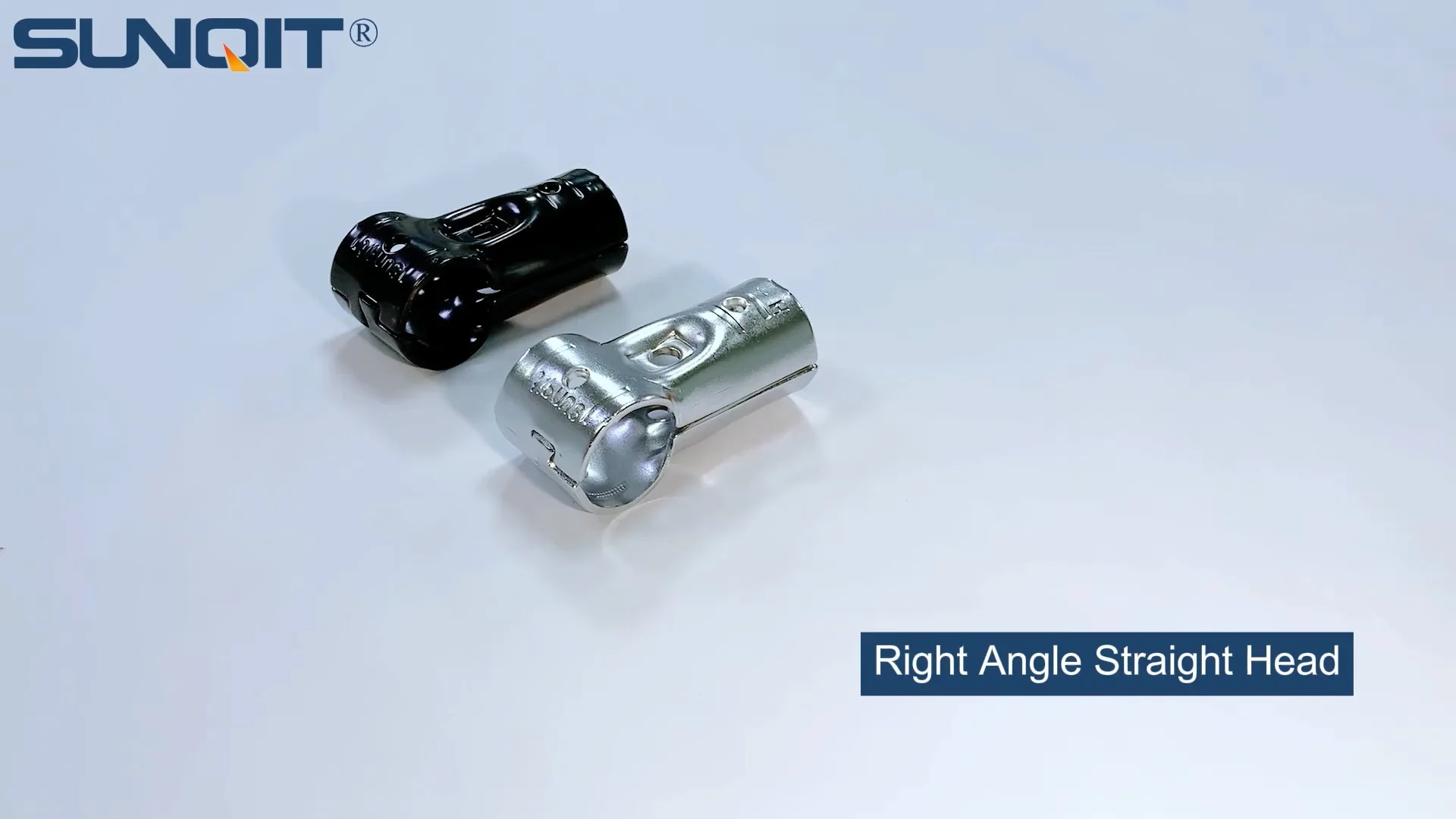
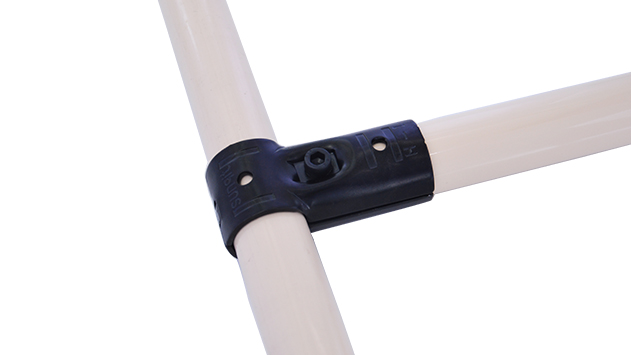
Two way lean pipe joint for 2 pcs 28MM lean pipe connection in straight angle, which used widely in workbench, flow rack, hand trolley frame connection.
The Backbone of Modern Warehousing: Why Lean Principles Matter
In the fast-paced world of supply chains, warehouses are more than just storage spaces—they're dynamic hubs where efficiency, adaptability, and cost-effectiveness can make or break a business. Today's warehouses face relentless pressure: consumer demands for faster delivery, fluctuations in inventory levels, and the need to maximize every square foot of space. This is where lean warehousing steps in, a philosophy rooted in eliminating waste, streamlining processes, and creating systems that grow and change with your needs. At the heart of lean warehousing lies the humble storage rack—but not just any rack. To truly embrace lean, storage systems must be flexible, durable, and designed for constant improvement. And that's where components like the two way lean pipe joint come into play.
Lean warehousing isn't about cutting corners; it's about smart engineering. It's about building systems that can adapt when your product line expands, shrink when demand dips, and reconfigure when a new workflow emerges. Traditional storage racks, often welded or bolted into fixed structures, stand in direct opposition to this. They're rigid, hard to modify, and all too often lead to wasted space or inefficient material flow. But imagine a storage rack that bends to your needs, not the other way around. A rack that can be adjusted in hours, not days. A rack that grows with your business without requiring a complete overhaul. This is the promise of lean pipe systems—and the two way lean pipe joint is the unsung hero making it all possible.
Storage Racks: The Silent Workhorses of Warehouse Efficiency
Before diving into the specifics of the two way lean pipe joint, let's take a moment to appreciate the role storage racks play in warehouse operations. Think of them as the skeleton of your facility—they (support) your inventory, shape your workflow, and directly impact how quickly and accurately your team can retrieve, store, and ship goods. A well-designed rack system reduces travel time for workers, minimizes errors, and ensures that even high-volume or bulky items are easily accessible. A poorly designed one? It leads to bottlenecks, wasted labor, and inventory that gets "lost" in the chaos.
In lean terms, storage racks must address three key challenges: space optimization , flexibility , and ergonomics . Space optimization means using vertical and horizontal space efficiently—no more half-empty shelves or items stacked haphazardly on the floor. Flexibility requires that racks can adapt to different item sizes, weights, and turnover rates. Ergonomics ensures that workers can reach items without straining, reducing the risk of injury and fatigue. Enter lean pipe systems, which are built around modular components that tackle all three challenges head-on. And at the core of these modular systems are the joints that hold everything together—specifically, the two way lean pipe joint.
The Two Way Lean Pipe Joint: Design, Function, and Why It Stands Out
At first glance, a lean pipe joint might seem like a simple piece of hardware. But don't let its unassuming appearance fool you. The two way lean pipe joint is a marvel of practical engineering, designed to connect lean pipes (also known as "lean tubes") in a way that balances strength, flexibility, and ease of use. Unlike traditional welded joints or permanent fasteners, this joint allows for quick assembly, disassembly, and reconfiguration—all without the need for specialized tools or heavy machinery.
Anatomy of a Two Way Lean Pipe Joint
Most two way lean pipe joints are made from durable materials like zinc-plated steel or aluminum, chosen for their strength and resistance to corrosion. The design typically features two perpendicular ports (hence "two way") that accept lean pipes, along with a locking mechanism—often a set screw or a cam lever—that secures the pipes in place. Some models include rubber or plastic gaskets to prevent slipping and reduce noise, while others are coated in chrome for added durability in high-wear environments.
What makes this joint special is its simplicity. To assemble a rack, you slide a lean pipe into each port, tighten the locking mechanism, and you're done. No welding, no drilling, no waiting for adhesives to dry. This simplicity translates to speed: a basic storage rack that might take a team of contractors a day to weld can be assembled by two warehouse staff in a couple of hours using two way lean pipe joints. And when it's time to reconfigure? Just loosen the screws, adjust the pipes, and retighten. It's that easy.
Beyond "Two Way": Versatility in Design
While the name "two way" suggests a focus on right-angle connections, modern iterations of this joint often offer more flexibility. Some models include swivel features, allowing pipes to rotate within the joint for angled configurations. Others are compatible with accessories like caster wheels, which can be attached directly to the joint to transform a static rack into a mobile trolley. This adaptability means the two way lean pipe joint isn't just for building racks—it's for building entire lean systems, from workbenches to flow racks to turnover trolleys.

How the Two Way Lean Pipe Joint Optimizes Storage Racks
Now that we understand what the two way lean pipe joint is, let's explore how it directly addresses the three key challenges of lean warehousing: space optimization, flexibility, and ergonomics. When integrated into storage rack design, this small but mighty component becomes a catalyst for efficiency, transforming ordinary racks into lean powerhouses.
1. Flexibility: Adapt to Change in Minutes, Not Months
In today's market, product lifecycles are shorter than ever. A warehouse might stock small electronics one quarter and bulky appliances the next. Traditional racks, with fixed shelf heights and widths, can't keep up. You either waste space by leaving gaps for larger items or risk damaging inventory by cramming smaller items into oversized shelves. The two way lean pipe joint solves this by making reconfiguration a breeze.
Need to raise a shelf by 6 inches to accommodate taller boxes? Loosen the joints, adjust the pipes, retighten. Switching from single-depth to double-depth racks to store seasonal inventory? Add a few extra pipes and joints. Even completely repurposing a rack—say, turning a storage rack into a picking station with a lean pipe workbench attachment—is possible with minimal effort. This flexibility ensures your storage system never becomes obsolete; it evolves with your business.
2. Space Optimization: Maximize Every Inch of Your Warehouse
Warehouse space is expensive—every square foot counts. Fixed racks often lead to "dead zones" where space is underutilized because the rack's dimensions don't align with the inventory. The two way lean pipe joint, paired with lightweight but strong materials like aluminum lean pipe, allows for precision in rack design. You can customize shelf heights to the exact dimensions of your products, eliminate unnecessary gaps, and even build racks that hug odd-shaped corners or fit into tight aisles.
For example, consider a flow rack—a type of rack where items slide forward via gravity, ideal for high-turnover inventory. Traditional flow racks are often prefabricated with fixed lane widths, limiting their use to specific item sizes. With two way lean pipe joints, you can build a flow rack with adjustable lane widths, ensuring that even small items (like electronics components) or irregularly shaped packages move smoothly without getting stuck. This level of customization means you're not just storing inventory—you're optimizing storage.
3. Durability: Built to Last, Even in High-Wear Environments
Flexibility doesn't mean sacrificing strength. Two way lean pipe joints are engineered to withstand the rigors of warehouse life, from heavy loads to constant reconfiguration. Materials like zinc-plated steel or aluminum ensure resistance to rust and corrosion, while robust locking mechanisms prevent pipes from slipping under pressure. In fact, many manufacturers test these joints to support weights of up to 500 pounds per connection—more than enough for most warehouse applications.
This durability translates to long-term cost savings. Unlike traditional racks, which might need to be replaced entirely if a weld breaks or a shelf bends, lean pipe systems allow for component-level repairs. If a joint wears out or a pipe gets dented, you can replace just that part, not the entire rack. Over time, this reduces maintenance costs and extends the lifespan of your storage system.
| Feature | Traditional Welded Racks | Lean Pipe Racks with Two Way Joints |
|---|---|---|
| Reconfiguration Time | Days to weeks (requires welding/contractors) | Hours (can be done by in-house staff) |
| Space Utilization | Fixed dimensions lead to dead zones | Customizable to product sizes, minimal waste |
| Durability | Strong but prone to irreparable damage | Component-level repairs extend lifespan |
| Initial Cost | High (custom fabrication) | Lower (modular components) |
| Adaptability | Limited to original design | Evolves with inventory and workflow changes |

Integration with Other Lean Components: A System, Not Just a Joint
The two way lean pipe joint doesn't work in isolation—it's part of a larger ecosystem of lean components that together create seamless, efficient workflows. Let's explore how it integrates with other key elements to enhance storage rack performance.
Lean Pipe Workbenches: From Storage to Workstation
Many warehouses struggle with siloed processes: storage in one area, picking in another, packing in a third. This leads to unnecessary travel time and inefficiency. By combining two way lean pipe joints with lean pipe workbenches, you can create integrated "all-in-one" stations where storage and work happen side by side. For example, a picking rack can be extended with a workbench surface using two way joints, allowing workers to retrieve items and pack them without moving to a separate area. The joints ensure the workbench is at the optimal height for ergonomics, reducing strain and boosting productivity.
Caster Wheels: Mobility for Dynamic Workflows
Not all storage needs to be static. In lean warehousing, mobility is key—think of trolleys that carry inventory directly to production lines or racks that can be moved to make space for seasonal stock. Two way lean pipe joints make this possible by integrating with caster wheels. Attach a caster wheel to the base of a lean pipe rack via a joint, and suddenly you have a mobile storage unit that can be wheeled anywhere in the facility. This is especially valuable for just-in-time (JIT) manufacturing, where materials need to be delivered exactly when and where they're needed.
Aluminum Lean Pipe: Lightweight Strength
While traditional lean pipes are often made of steel, aluminum lean pipe has emerged as a popular alternative, thanks to its lightweight nature and corrosion resistance. The two way lean pipe joint pairs perfectly with aluminum pipes, as the joint's locking mechanism can easily secure the lighter material without compromising strength. This combination is ideal for racks that need to be moved frequently (paired with caster wheels) or for use in humid environments (like food processing or cold storage), where steel might rust.
Real-World Impact: A Case Study in Lean Transformation
Let's take a look at how the two way lean pipe joint transformed the operations of a mid-sized electronics manufacturer. Prior to adopting lean pipe systems, the company relied on welded steel racks to store circuit boards, cables, and finished products. The racks were fixed in place, with shelves spaced 18 inches apart—a one-size-fits-all solution that left half-empty shelves for small components and forced larger items to be stored on the floor.
After switching to lean pipe racks with two way joints and aluminum lean pipe, the company saw immediate results. They reconfigured shelf heights to match specific component sizes, reducing wasted vertical space by 35%. By adding caster wheels to some racks, they created mobile storage units that could be rolled directly to assembly lines, cutting material retrieval time by 20%. They even built integrated lean pipe workbenches at the end of each rack, allowing workers to test components immediately after picking, eliminating a separate testing station.
The biggest surprise? The system paid for itself in just 6 months. Reduced labor costs, improved space utilization, and fewer inventory errors added up to significant savings. And when the company launched a new product line with larger packaging, they simply adjusted the rack heights using the two way joints—no need for new racks or contractors.
Why Choose Two Way Lean Pipe Joints Over Traditional Alternatives?
At this point, you might be wondering: Are two way lean pipe joints really that much better than other modular systems, like those using bolts or snap-fit connectors? The short answer is yes—and here's why:
- Faster assembly: Snap-fit connectors can be finicky and may weaken over time, while bolted systems require tools and precise alignment. Two way lean pipe joints with set screws or cam levers are quick to install and secure.
- More secure: Unlike some modular joints that rely on friction alone, the locking mechanisms in two way lean pipe joints ensure pipes stay in place even under heavy loads or constant movement.
- Easier to source: Two way lean pipe joints are a standard component in the lean manufacturing industry, meaning they're widely available from suppliers and easy to replace if needed.
- Compatible with existing systems: If you already have some lean pipe components, two way joints can often be mixed and matched with other joint types (like three-way or four-way) to create more complex structures.
Conclusion: The Two Way Lean Pipe Joint—Small Component, Big Impact
In the world of lean warehousing, success lies in the details. It's not just about big-picture strategies; it's about the components that make those strategies possible. The two way lean pipe joint is one such component—a small, unassuming piece of hardware that has the power to transform how warehouses store, retrieve, and manage inventory. By prioritizing flexibility, durability, and simplicity, this joint empowers businesses to build storage systems that adapt to change, maximize space, and reduce waste—all hallmarks of lean excellence.
Whether you're a small e-commerce warehouse looking to optimize space or a large manufacturer aiming to streamline production, the two way lean pipe joint offers a path to better efficiency. It's a reminder that in lean warehousing, the best solutions are often the most practical: designed to solve real problems, easy to use, and built to grow with your business. So the next time you walk through your warehouse, take a look at your storage racks. Are they holding you back, or are they working with you? If it's the former, maybe it's time to give the two way lean pipe joint a closer look. Your bottom line—and your team—will thank you.