- Company Articles
- Products and Technology
- Product knowledge
- Two Way Lean Pipe Joint for Small-Batch Production: Flexibility Benefits

Two Way Lean Pipe Joint for Small-Batch Production: Flexibility Benefits
Related Product
Two Way Lean Pipe Joint
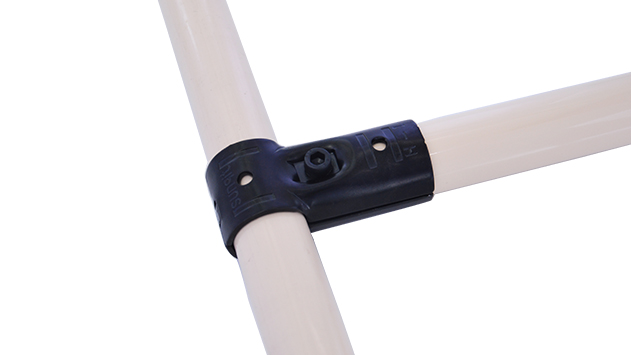
Two way lean pipe joint for 2 pcs 28MM lean pipe connection in straight angle, which used widely in workbench, flow rack, hand trolley frame connection.
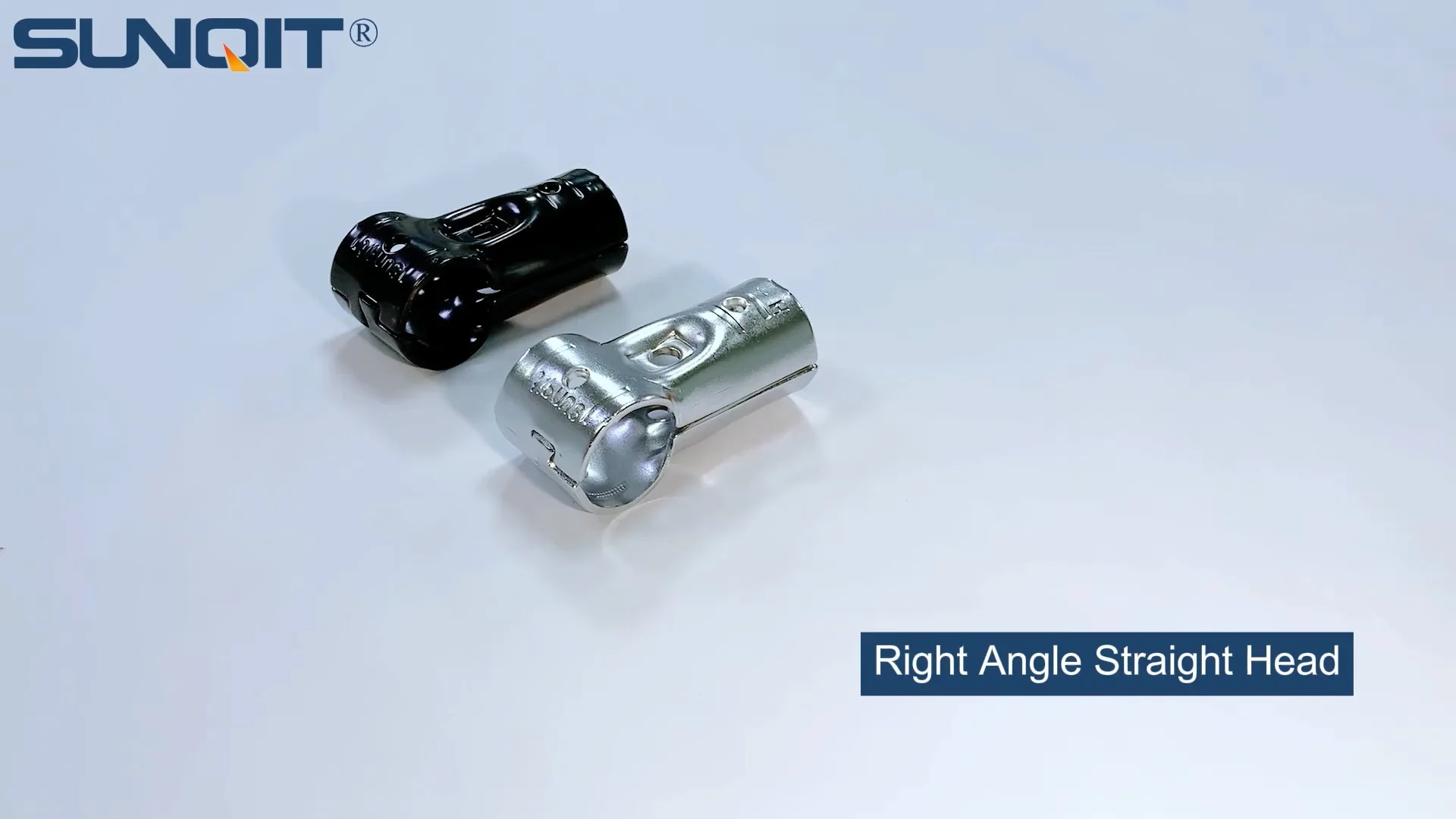
In the world of manufacturing, small-batch production has always been a balancing act. On one hand, it demands the agility to pivot between custom orders, prototype runs, and niche product lines. On the other hand, it requires the same efficiency and reliability as large-scale operations—without the luxury of massive budgets or endless floor space. For years, shop floor managers and production teams have grappled with rigid workstations, fixed material racks, and inflexible assembly lines that slow down changeovers and stifle innovation. But what if there was a simple, affordable component that could transform how small-batch setups adapt, reconfigure, and thrive? Enter the two way lean pipe joint —a humble but powerful tool that's quietly revolutionizing lean manufacturing for small-scale operations.
The Hidden Challenges of Small-Batch Production
Let's start by understanding the unique hurdles small-batch producers face. Unlike large factories churning out identical products day in and day out, small-batch lines often switch between different SKUs, custom designs, or even entirely new projects weekly—or sometimes daily. A workshop might assemble 50 units of a medical device on Monday, shift to 30 custom automotive parts on Wednesday, and prototype a consumer electronics component by Friday. Each of these tasks demands different workbench heights, material flow paths, tool placements, and even team configurations.
Traditional setups rely on fixed structures: welded steel workbenches bolted to the floor, static shelving units, and rigid conveyor systems. When a new project comes in, teams are forced to either work around these immovable obstacles or spend hours (or days) disassembling and rebuilding them. This downtime isn't just frustrating—it's costly. Every minute spent reconfiguring a workstation is a minute not spent producing. And in small-batch production, where margins are tight and lead times are short, those minutes add up fast.
Then there's the issue of space. Smaller facilities rarely have the luxury of dedicated areas for every possible task. A single corner might need to function as an assembly station in the morning, a quality inspection area in the afternoon, and a packing zone by evening. Fixed furniture and racks simply can't keep up with this kind of versatility. Add in the pressure to reduce waste—both material and time—and it's clear why so many small-batch producers feel stuck between a rock and a hard place: they need flexibility, but traditional solutions are anything but flexible.
What Is a Two Way Lean Pipe Joint, Anyway?
Before diving into its benefits, let's demystify the star of the show: the two way lean pipe joint . At its core, it's a connector designed to join lengths of lean pipe (also called "lean tube")—those lightweight, often powder-coated steel or aluminum pipes commonly used in lean manufacturing setups. What makes the two way joint special is its simplicity and adaptability. Unlike fixed welded joints or one-directional connectors, it allows two pipes to meet at a stable, secure angle (usually 90 degrees, though some designs offer adjustability) while remaining easy to assemble, disassemble, and reposition.
Picture this: a small, durable plastic or metal joint with two openings, each sized to fit standard lean pipe diameters. To use it, you simply slide the ends of two pipes into the joint and tighten a setscrew or lever—no welding, no drilling, no specialized tools required. When you need to change the setup, you loosen the screw, remove the pipes, and reuse the joint elsewhere. It's modularity at its finest, turning lean pipes from static building materials into a dynamic, reusable toolkit.
But the two way joint isn't just about connecting pipes. It's part of a broader ecosystem of lean manufacturing components, including lean pipe workbench frames, flow rack systems, and even mobile trolleys fitted with caster wheel assemblies. When paired with these elements, it becomes the backbone of a setup that can shift from an assembly line to a storage area to a testing station in hours—not days.
Flexibility Benefits: Why Small-Batch Producers Can't Afford to Ignore This Joint
Now, let's get to the heart of the matter: how does the two way lean pipe joint solve the challenges of small-batch production? Its benefits boil down to one word: flexibility. But flexibility isn't just about being able to move things around—it's about saving time, reducing costs, and empowering teams to innovate. Let's break down the key advantages:
1. Adapt to Changing Needs in Minutes, Not Days
Imagine a scenario where your team finishes assembling a batch of small electrical components at 2 PM, and the next order—for larger, bulkier parts—arrives at 2:30. With traditional fixed workbenches, you'd need to either squeeze the new parts onto the existing surface (risking clutter and inefficiency) or spend the rest of the afternoon disassembling and rebuilding a taller workstation. With two way lean pipe joints, the process is drastically simpler.
Your team could loosen the joints holding the current workbench's upper shelf, remove a few pipes, and reattach them at a higher height—all in 15 minutes. No power tools, no heavy lifting, no wasted materials. The same joint that held the shelf at 30 inches can now hold it at 45 inches, perfectly sized for the new parts. Later, if you need a lower shelf for smaller items, you can adjust it again. This kind of on-the-fly adaptability turns downtime into production time, letting you take on more orders without sacrificing speed.
2. Build (and Rebuild) Without Waste
Small-batch production thrives on minimizing waste, and the two way lean pipe joint aligns perfectly with this philosophy. Traditional setups often result in "one-and-done" structures: when a project ends, the custom-built workstation gets dismantled, and the materials (welded steel, cut lumber) end up in the scrap heap. With lean pipe joints, nothing goes to waste.
The joints themselves are reusable indefinitely, and the lean pipes can be cut to new lengths or repurposed for different structures. A workbench that's no longer needed can be taken apart, and its pipes and joints can be used to build a flow rack for material storage or a mobile trolley for transporting goods. This not only reduces material costs but also supports sustainability—a growing priority for customers and regulators alike.
3. Scale Up (or Down) Without Overspending
Small businesses rarely have the capital to invest in separate setups for every possible project. The two way lean pipe joint lets you start small and expand as needed. Maybe you begin with a single lean pipe workbench for assembly. As orders grow, you add more joints and pipes to build a second workbench, then a flow rack to feed materials between them, then a mobile cart with caster wheel attachments to move parts to shipping. If demand dips, you can scale back by disassembling excess structures and storing the components until they're needed again.
This scalability is a game-changer for startups and small manufacturers operating on tight budgets. Instead of taking out loans to buy expensive fixed equipment, you invest in a core set of joints and pipes that grow with your business. It's like having a manufacturing toolkit that adapts to your success.
4. Empower Teams to Own Their Workspace
Here's an often-overlooked benefit: the two way lean pipe joint puts control of the workspace back into the hands of the people who use it most—your production team. In traditional setups, reconfiguring a workstation might require approval from management, a work order from maintenance, and a wait time of days. With modular joints, operators can adjust their own workbenches to fit their height, rearrange tool holders for better ergonomics, or tweak a flow rack to reduce bending and reaching—all without waiting for external help.
This sense of ownership boosts morale and productivity. When employees can customize their environment to work smarter, not harder, they're more engaged, less fatigued, and more likely to spot inefficiencies. It's a small change that leads to big improvements in both output and job satisfaction.
| Feature | Traditional Fixed Joints | Two Way Lean Pipe Joints |
|---|---|---|
| Assembly Time | Hours (requires welding/drilling) | Minutes (hand-tightened screws) |
| Reconfigurability | Not possible (permanent once built) | Easy (loosen, adjust, retighten) |
| Material Waste | High (scrapped after disassembly) | Low (joints and pipes fully reusable) |
| Upfront Cost | High (specialized labor/tools) | Low (affordable components, no tools needed) |
| Team Autonomy | Low (requires maintenance/management approval) | High (operators can adjust setups independently) |

Beyond the Joint: Integrating with Other Lean Components
The two way lean pipe joint is powerful on its own, but its true potential shines when paired with other lean manufacturing components. Let's explore how it works with some key tools in the small-batch producer's toolkit:
Lean Pipe Workbench: The Foundation of Flexibility
The lean pipe workbench is perhaps the most common application for two way joints. A basic workbench frame built with lean pipes and two way joints can be customized in endless ways: add a plywood or aluminum top, attach tool hooks, mount a monitor arm for digital work instructions, or even integrate a small shelf for parts bins. When a taller or shorter surface is needed, simply adjust the height by repositioning the joints. For mobile workstations, add caster wheel assemblies to the base—another job made easy with two way joints, which secure the caster stems to the pipe legs.
One small electronics manufacturer I worked with used this approach to create "family workbenches" that could be adapted for different product lines. For smartphone repairs, they kept the surface low and added electrostatic discharge (ESD) mats (using ESD-compatible lean pipe and joints). For larger tablet assemblies, they raised the height and attached side racks for holding screens. The entire transformation took two team members less than 40 minutes.
Flow Racks: Keeping Materials Moving Smoothly
In small-batch production, material flow is everything. You need parts to arrive at the assembly station just when they're needed—not too early (cluttering the workspace) or too late (stalling production). Flow rack systems—tilted racks with rollers that let materials slide forward as items are removed—solve this problem. And two way lean pipe joints make building and adjusting these racks a breeze.
By connecting lean pipes with two way joints, you can build flow racks of any width, height, or depth. Need a three-tier rack for small components? Use joints to create vertical supports and horizontal shelves. Producing larger parts next month? Adjust the tier spacing by moving the joints up or down the vertical pipes. Some manufacturers even add swivel wheels to their flow racks (again, using two way joints to attach the caster wheel assemblies), letting them roll the entire system to the assembly line when needed and tuck it away when not in use.
Aluminum Profile: Adding Strength Without Sacrificing Versatility
While lean pipe is lightweight and affordable, some applications demand extra strength—for example, workbenches supporting heavy machinery or flow racks holding dense materials. That's where aluminum profile comes in. These extruded aluminum beams, with their T-slot design, offer rigidity and durability, and they work seamlessly with two way lean pipe joints (many manufacturers make joints compatible with both lean pipe and aluminum profile).
Mixing aluminum profile with lean pipe lets you build hybrid structures: an aluminum frame for the base (to handle weight) with lean pipe extensions for adjustable components (like shelves or tool holders). This combination gives you the best of both worlds—strength where you need it, flexibility where you don't—all connected by the same two way joints that make reconfiguration easy.

Real-World Impact: How One Small Bakery Scaled with Lean Pipe Joints
To illustrate just how transformative two way lean pipe joints can be, let's look at a real example: a small artisanal bakery that expanded from a home kitchen to a 500-square-foot commercial space. When they first moved in, they struggled with limited counter space, disorganized ingredient storage, and a chaotic packaging area. Their initial setup included a few fixed wooden tables and metal shelving units, which quickly became cluttered and inefficient.
After researching lean manufacturing, the owner invested in a starter kit: 20 feet of lean pipe, 10 two way joints, a sheet of plywood for workbench tops, and four caster wheel assemblies. In a single weekend, they built: a height-adjustable dough-prep workbench (using two way joints to set the height for their tallest and shortest bakers), a three-tier flow rack for flour, sugar, and other dry ingredients (sloped forward for easy access), and a mobile packing cart (fitted with casters) that could be rolled to the oven during peak hours and stored in the corner otherwise.
The results were immediate. Prep time for dough dropped by 25% because ingredients were within arm's reach. Packaging errors decreased because the mobile cart kept materials organized. And when the bakery landed a contract to supply a local café with custom pastries, they expanded their setup in hours by adding more pipes and joints to build a second workbench—no contractors, no downtime, no wasted materials. Today, they're planning to add a third flow rack for decorative toppings, again using the same two way joints they bought years ago.
Choosing the Right Two Way Lean Pipe Joint: What to Look For
Not all two way lean pipe joints are created equal. To get the most flexibility and durability, keep an eye out for these key features:
- Material Quality: Look for joints made from high-impact plastic (like nylon) or coated steel, which resist wear and corrosion. Avoid cheap plastic joints that crack under stress.
- Secure Grip: The joint should hold pipes tightly without slipping. Many designs use setscrews with rubber or metal teeth to bite into the pipe, ensuring stability even with heavy loads.
- Compatibility: Check that the joint fits your lean pipe diameter (common sizes are 28mm and 30mm). Some joints also work with aluminum profile , adding versatility.
- Ease of Use: Opt for joints that can be tightened and loosened by hand or with a basic hex key—no need for power tools.
It's also worth sourcing from a reputable lean pipe supplier that offers a range of joint types (two way, three way, swivel, etc.) and accessories. A good supplier will provide samples, technical support, and even design tips to help you maximize your setup's flexibility.
Final Thoughts: Flexibility Isn't a Luxury—It's a Necessity
In small-batch production, the ability to adapt isn't just a nice-to-have; it's what separates thriving businesses from those that struggle to keep up. The two way lean pipe joint may seem like a simple component, but its impact is profound. By turning rigid, one-use structures into dynamic, reusable systems, it lets small producers compete with larger operations—without the large budgets or sprawling facilities.
Whether you're building a lean pipe workbench , a flow rack , or a mobile trolley with caster wheel attachments, the two way joint is the quiet workhorse making it all possible. It reduces downtime, cuts waste, empowers teams, and scales with your business. In a world where customer demands change overnight and innovation can't wait, that's not just flexibility—that's freedom.
So, if you're stuck in the cycle of rigid setups and wasted time, consider this: the solution might be as simple as a box of joints and a few lengths of pipe. Your next big order, your most efficient workflow, or your team's next breakthrough could be just a few connections away.