- Company Articles
- Products and Technology
- Application Cases
- Two Way Lean Pipe Joint in 3C Assembly Lines: Application Case Studies

Two Way Lean Pipe Joint in 3C Assembly Lines: Application Case Studies
Related Product
Two Way Lean Pipe Joint
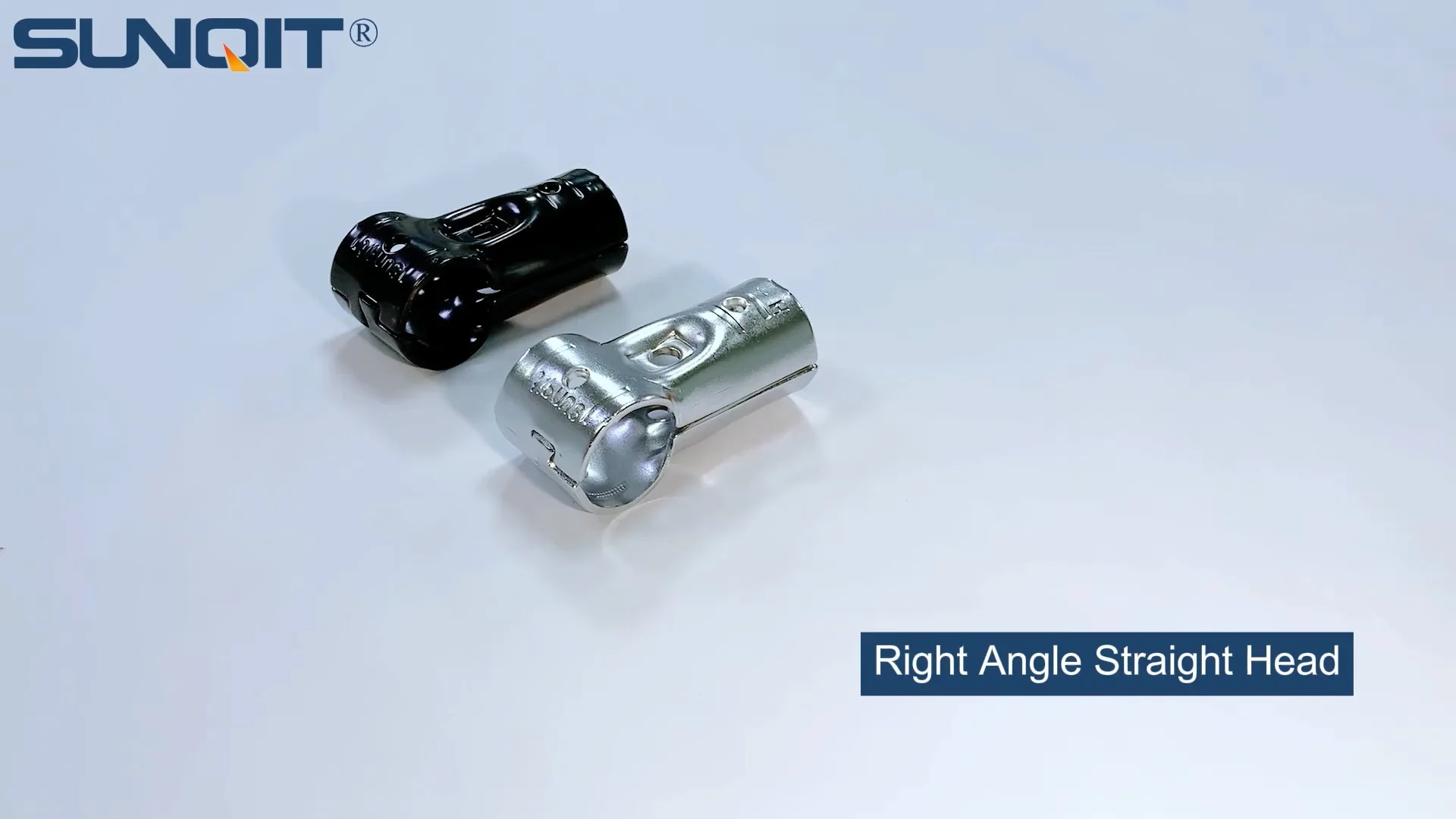
Two way lean pipe joint for 2 pcs 28MM lean pipe connection in straight angle, which used widely in workbench, flow rack, hand trolley frame connection.
The 3C industry—where computers, smartphones, and consumer electronics come to life—operates in a world of constant change. New models, updated features, and shifting consumer preferences mean assembly lines can't afford to be static. A smartphone manufacturer might switch from a 6.7-inch to a 6.9-inch screen mid-quarter; a laptop brand could introduce a lightweight chassis design overnight. These changes demand assembly systems that can pivot quickly, without halting production or blowing budgets. This is where lean manufacturing principles, and specifically lean pipe systems, have become indispensable. At the heart of these systems lies a small but mighty component: the Two Way Lean Pipe Joint. In this article, we'll explore how this unassuming connector is transforming 3C assembly lines through real-world case studies, and why it's become a go-to solution for manufacturers aiming to balance flexibility, efficiency, and cost.
The 3C Assembly Line: A Balancing Act of Speed and Flexibility
To understand the value of the Two Way Lean Pipe Joint, it's first important to grasp the unique pressures of 3C assembly. Unlike automotive or heavy machinery production, where models change annually or bi-annually, 3C products evolve in months—sometimes weeks. A typical smartphone factory, for example, might produce 5–8 different models in a single year, each with variations in camera modules, battery sizes, or display components. This "high-mix, medium-volume" environment puts immense strain on traditional assembly setups.
Traditional assembly lines often rely on fixed steel frames, welded structures, or bolted workbenches. While durable, these systems are notoriously rigid. Reconfiguring a workstation to accommodate a new component might require cutting steel, re-welding frames, or even replacing entire sections—costing hours or days of downtime. Material flow is another pain point: components like circuit boards, batteries, or screens need to move smoothly from storage to assembly stations, but fixed racks and non-adjustable conveyors often create bottlenecks, forcing operators to walk extra steps or wait for materials.
Then there's the issue of waste—one of the biggest enemies of lean manufacturing. In 3C plants, waste manifests as idle time (operators waiting for tools or materials), overproduction (stockpiling components that might not fit the next model), and unnecessary motion (reaching across cluttered workbenches). These inefficiencies eat into profit margins, especially in an industry where competition keeps prices tight and innovation cycles short.
Lean Pipe Systems: The Foundation of Adaptive 3C Manufacturing
Lean manufacturing, with its focus on eliminating waste and continuous improvement, has emerged as a lifeline for 3C manufacturers. At its core, lean is about making processes "flow" better—ensuring materials, information, and people move with minimal friction. Lean pipe systems, which use modular pipes and joints to build workbenches, racks, conveyors, and flow racks, embody this philosophy perfectly.
Unlike traditional steel structures, lean pipe systems are built from lightweight yet sturdy pipes (often steel with a plastic coating, aluminum, or stainless steel) and connectors. This modularity allows manufacturers to build, modify, and repurpose structures on the fly. Need a taller shelf for larger battery packs? Add a few pipes. Want to angle a flow rack to speed up component delivery? Adjust the joints. No welding, no heavy tools, no lengthy downtime.
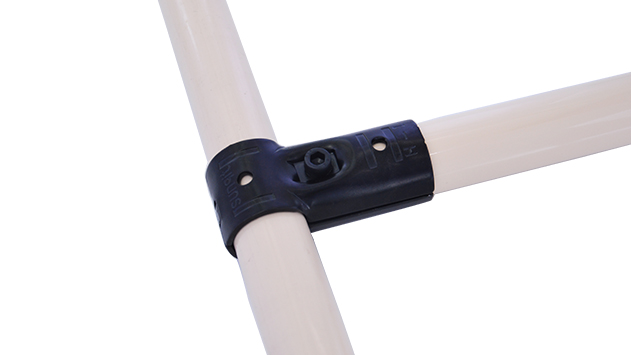
Among the many components that make up these systems, the Two Way Lean Pipe Joint stands out for its versatility. As the name suggests, this joint connects two pipes at various angles (typically 90°, 45°, or straight), forming the backbone of structures like workbenches, material racks, and even lightweight conveyors. What makes it special? Its design allows for tool-free assembly—most models twist or snap into place—and quick disassembly, making reconfiguration a breeze. It's also compatible with other lean pipe accessories: add a caster wheel, and a static workbench becomes a mobile trolley; attach a roller track, and a simple rack turns into a gravity-fed flow system.
Inside the Two Way Lean Pipe Joint: Design That Drives Flexibility
At first glance, a Two Way Lean Pipe Joint might look like a simple plastic or metal connector. But its design is engineered for the demands of 3C assembly. Most joints are made from high-strength polypropylene (for lightweight, corrosion-resistant applications) or zinc-plated steel (for heavier loads). The interior features a grippy, textured surface that holds pipes firmly in place once tightened, yet allows for easy adjustment when needed. Some models include a locking lever or hex key slot for extra stability, ensuring the joint won't loosen even under constant vibration—common in busy assembly lines.
The real magic, though, is in its adaptability. A single Two Way Lean Pipe Joint can be used to build everything from a small parts bin to a full-length assembly workbench. For example, pairing it with lean pipe workbench components (like a plywood or aluminum top) creates a custom workstation; combining it with roller track and accessories turns a basic frame into a flow rack for moving PCBs. Because it's standardized, manufacturers can mix and match components from different suppliers, avoiding vendor lock-in and keeping replacement costs low.
Cost is another key advantage. Compared to custom steel fabrication, lean pipe systems with Two Way Joints are significantly cheaper—often by 30–50% for initial setup. And because they're reusable, the long-term savings are even greater. A workbench frame built with Two Way Joints can be disassembled, moved, and reassembled into a material trolley six months later, eliminating the need to buy new equipment.

Case Study 1: Smartphone Assembly Line – Reducing Workstation Changeover Time by 60%
The Challenge: Frequent Model Switches Disrupt Production
A mid-sized Chinese smartphone manufacturer, producing 1.2 million units annually across 6 models, faced a recurring problem: workstation changeovers. Each new model required adjustments to workbench heights, shelf positions, and tool storage—tasks that ate into production time. For example, when switching from a standard to a "pro" model with a larger camera module, the team had to rebuild three assembly stations. Using traditional bolted steel workbenches, this process took 8 hours per station, resulting in a full day of downtime and missed production targets.
Operators also complained about ergonomics. Fixed-height workbenches forced some team members to hunch or stretch, leading to fatigue and slower assembly times. Material flow was another issue: components were stored on static racks 10–15 feet from assembly stations, requiring operators to walk 200–300 extra steps per shift.
The Solution: Modular Workstations with Two Way Lean Pipe Joints
Working with a lean pipe supplier, the manufacturer replaced 12 steel workbenches with modular lean pipe workbenches built using Two Way Lean Pipe Joints. The new workstations featured adjustable heights (via telescoping pipes and lockable joints), movable tool shelves, and integrated flow racks for components. Key design choices included:
- Quick-adjust shelves: Using Two Way Joints, shelves could be raised or lowered in 5-minute increments, adapting to different component sizes (e.g., larger batteries vs. slim camera modules).
- Integrated flow rails: Attached to the workbench sides, these rails—built with roller track and Two Way Joints—allowed components to slide directly to operators, reducing reach and movement.
- Caster wheels: Adding casters to the base (via caster accessories and joint mounts) let teams move workstations to new lines in minutes, rather than disassembling and rebuilding.
The Results: Faster Changeovers and Happier Operators
Within three months of implementation, the results were striking. Changeover time for workstation reconfiguration dropped from 8 hours to just 3 hours per station—a 62.5% improvement. This meant the team could switch models overnight, avoiding production delays. Operator movement decreased by 35%, as components were now within arm's reach, and ergonomic adjustments reduced reported fatigue by 40%. Most importantly, the manufacturer hit its quarterly production target for the first time in a year, with a 12% increase in units produced.

Case Study 2: Laptop Component Line – Eliminating Material Bottlenecks with Flow Racks
The Challenge: Stagnant Material Flow Slows Production
A Taiwanese laptop OEM supplying global brands struggled with material flow on its motherboard assembly line. Components like capacitors, resistors, and connectors were stored in fixed wooden racks 20 feet from the assembly stations. Operators had to pause work every 20–30 minutes to retrieve parts, leading to idle time and uneven production. The line manager estimated that 15% of each shift was lost to material handling—a significant hit for a line producing 500 motherboards per hour.
Traditional flow racks were considered, but they were expensive and non-adjustable. The OEM needed a solution that could handle varying component sizes (from tiny SMD chips to larger heat sinks) and adapt to future motherboard designs without requiring a complete overhaul.
The Solution: Gravity-Fed Flow Racks with Two Way Lean Pipe Joints
The manufacturer turned to lean pipe systems, designing custom flow racks using Two Way Lean Pipe Joints, roller track, and swivel roller balls. The racks were built in sections, with each tier angled slightly downward (adjustable via Two Way Joints) to use gravity for material flow. Key features included:
- Adjustable angle tiers: Using Two Way Joints, each rack tier could be tilted between 3°–7° to control component speed—critical for fragile items like LCD connectors.
- Swivel roller balls: 1-inch stainless steel swivel roller balls were embedded in the rack surfaces, allowing operators to slide component trays forward with minimal effort.
- Modular sections: Racks were built in 4-foot sections connected by Two Way Joints, making it easy to add or remove tiers as component needs changed.
The racks were positioned directly beside assembly stations, with clear labeling for each component. When stock ran low, a material handler could refill the rear of the rack without interrupting operators at the front.
The Results: 22% Increase in Line Efficiency
After installing 18 flow racks, the line saw immediate improvements. Idle time dropped by 65%, as operators no longer needed to leave their stations for materials. Component retrieval time fell from 45 seconds to 10 seconds per part, and the line consistently hit its 500-motherboard-per-hour target. Over six months, the OEM calculated a 22% increase in line efficiency, translating to an additional 80,000 motherboards produced—all without adding shifts or operators.
Case Study 3: Smartwatch Production – ESD Safety Meets Flexibility
The Challenge: ESD Risks and Small-Batch Production
A European smartwatch brand specializing in luxury models faced two unique challenges: electrostatic discharge (ESD) protection and small-batch production. Smartwatch components, like OLED screens and microprocessors, are highly sensitive to static electricity, which can damage circuits and cause defects. The brand also produced limited runs (5,000–10,000 units per model), meaning assembly lines needed to switch between designs frequently—sometimes monthly.
Traditional ESD workstations were available, but they were fixed and expensive. A single ESD-safe steel workbench cost €1,200 and couldn't be reconfigured without replacing parts. With 12 workstations, the brand was looking at €14,400 in new equipment for each model change—an unsustainable cost.
The Solution: ESD Workstations with Two Way Lean Pipe Joints
The brand partnered with a lean pipe supplier to design ESD-safe workstations using Two Way Lean Pipe Joints, aluminum lean pipe, and ESD-compliant accessories. The key innovations included:
- ESD grounding: Aluminum lean pipe (conductive by nature) was used for the frame, with copper wires running through the Two Way Joints to ground the entire structure. ESD mats on workbench tops completed the protection system.
- Tool-free adjustments: Two Way Joints allowed operators to reposition shelves, tool hooks, and component bins in minutes. For example, switching from a 42mm to a 46mm watch case required only adjusting the shelf height and repositioning the ESD mat—no tools needed.
- Lightweight design: Aluminum lean pipe reduced workstation weight by 40% compared to steel, making it easy to move stations between production cells.
The Results: Zero ESD Defects and 40% Lower Setup Costs
The new workstations proved transformative. ESD-related defects dropped from 1.2% to 0%—a critical win for a luxury brand where quality is paramount. Setup costs for new models fell by 40%, as the team reused existing frames and only replaced accessories like bins or mats. Operators also reported better workflow, with adjustable shelves reducing neck and shoulder strain. "We used to dread model changes," said one production supervisor. "Now, we can reconfigure the line in a morning and start production by lunch."
Traditional vs. Lean Pipe Systems: A Comparative Look
| Aspect | Traditional Steel/Bolted Systems | Lean Pipe with Two Way Joints |
|---|---|---|
| Changeover Time | 8–12 hours per workstation | 1–3 hours per workstation |
| Initial Cost | High (€800–€1,500 per workstation) | Low (€300–€600 per workstation) |
| Reusability | Low (90% of materials end up as waste) | High (95% reusable for new structures) |
| ESD Compatibility | Yes, but fixed and expensive | Yes, with ESD pipes/joints (adjustable) |
| Operator Ergonomics | Poor (fixed heights/shelves) | Excellent (quick height/shelf adjustments) |
| Material Flow Integration | Limited (fixed racks/conveyors) | High (easily adds roller tracks/flow racks) |
The Future: Two Way Lean Pipe Joints and Industry 4.0
As 3C manufacturers embrace Industry 4.0—with IoT sensors, data analytics, and automation—lean pipe systems with Two Way Joints are evolving to keep pace. Suppliers are now integrating smart features: for example, aluminum lean pipe with embedded RFID tags to track component locations, or joints with pressure sensors that alert managers when a workstation is overloaded. Some are even developing "digital twin" tools, where manufacturers can design lean pipe structures in 3D software, test configurations virtually, and then assemble them using Two Way Joints—reducing trial-and-error on the factory floor.
Material innovations are also on the horizon. Aluminum lean pipe, already popular for its lightweight and corrosion resistance, is being paired with carbon fiber additives to increase strength while keeping weight low. Biodegradable plastic joints, made from plant-based polymers, are emerging for eco-conscious manufacturers aiming to reduce their carbon footprint.
Perhaps most importantly, the Two Way Lean Pipe Joint is becoming a cornerstone of "lean automation." In smart factories, collaborative robots ("cobots") work alongside humans, and lean pipe structures with adjustable heights (via Two Way Joints) can be positioned to optimize cobot-to-operator workflows. For example, a cobot placing circuit boards onto a conveyor can have its feeding rack adjusted in minutes using Two Way Joints, ensuring alignment with the robot's arm reach.
Conclusion: The Two Way Joint – Small Component, Big Impact
In the fast-paced world of 3C manufacturing, success hinges on the ability to adapt. The Two Way Lean Pipe Joint, though small, delivers exactly that: adaptability without compromise. Through the case studies above—from smartphone assembly lines cutting changeover time to luxury smartwatch brands slashing ESD risks—it's clear that this humble connector is more than just a part of a workbench or rack. It's a catalyst for leaner, more efficient, and more resilient production.
For manufacturers still relying on rigid, fixed assembly systems, the message is clear: the future of 3C production isn't about bigger machines or faster robots alone. It's about building systems that can change as quickly as your products do. And with the Two Way Lean Pipe Joint, that future is already here.