- Company Articles
- Products and Technology
- Product knowledge
- Two Way Lean Pipe Joint in Aerospace Manufacturing: Precision and Durability

Two Way Lean Pipe Joint in Aerospace Manufacturing: Precision and Durability
Related Product
Two Way Lean Pipe Joint
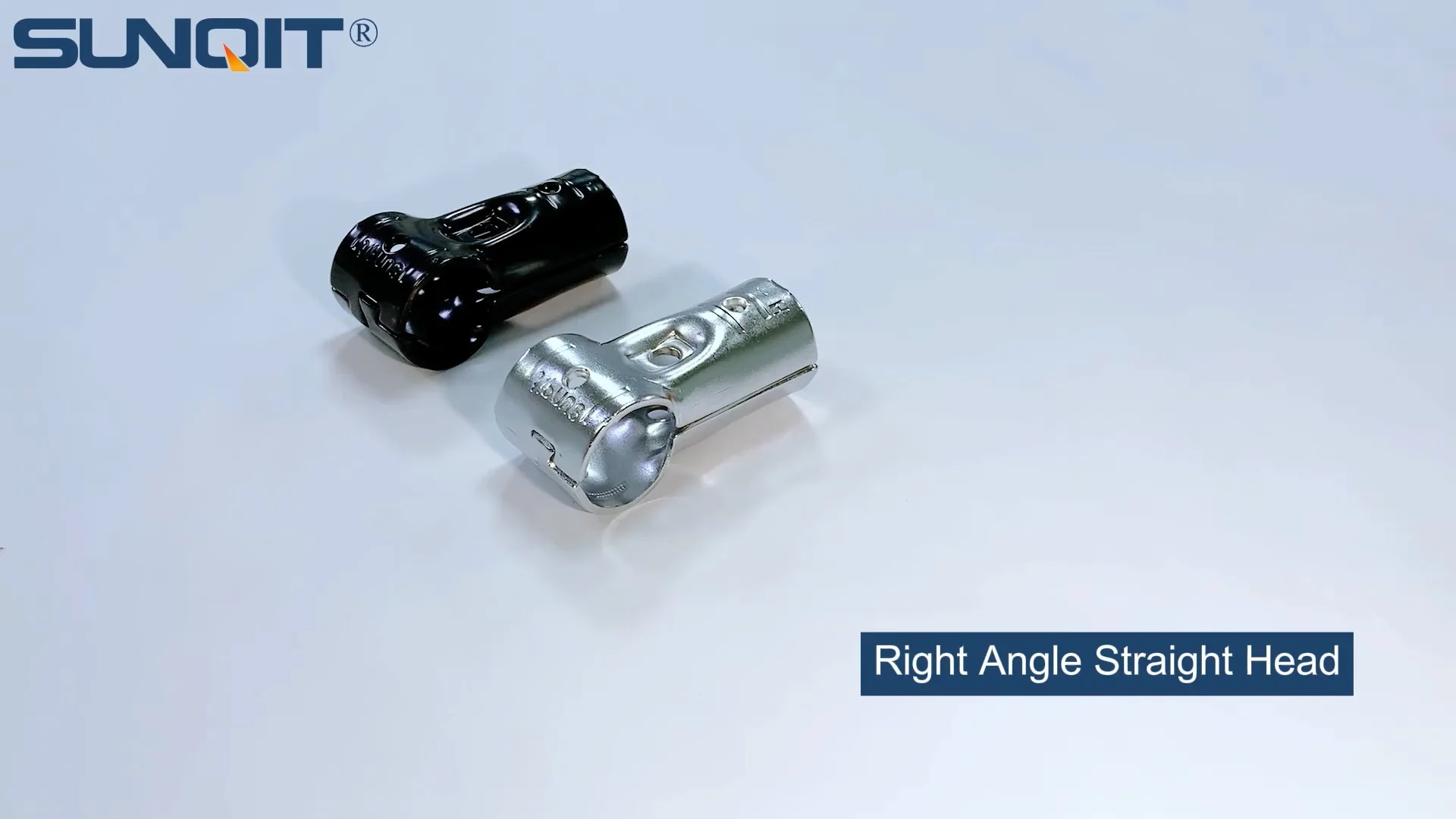
Two way lean pipe joint for 2 pcs 28MM lean pipe connection in straight angle, which used widely in workbench, flow rack, hand trolley frame connection.
Walk into any aerospace manufacturing facility, and you'll feel it immediately—the hum of purpose, the quiet intensity of teams working toward a singular goal: building machines that defy gravity. In these spaces, precision isn't just a buzzword; it's the difference between success and catastrophic failure. Every bolt, every wire, every component must perform flawlessly, often under extreme conditions. But behind the scenes, there's an unsung hero keeping these operations running smoothly: the lean system. And at the heart of that system, quietly holding everything together, is a component so essential yet so unassuming—the two way lean pipe joint.
Aerospace manufacturing is a dance of complexity and control. From crafting turbine blades that withstand thousands of degrees to assembling avionics systems with microscopic tolerances, every step demands reliability, flexibility, and unwavering accuracy. Traditional manufacturing setups, with their rigid, one-size-fits-all structures, often struggle to keep pace. That's where lean systems come in, offering modular, adaptable solutions that grow and change with the needs of the industry. And when it comes to building these lean systems—whether it's a custom workbench for assembling delicate sensors or a roller track for moving heavy engine parts—the two way lean pipe joint is the linchpin that makes it all possible.
The Demands of Aerospace Manufacturing: Why Precision and Durability Matter
To understand the role of the two way lean pipe joint, we first need to grasp the unique challenges of aerospace manufacturing. Unlike consumer goods, where minor defects might lead to returns, in aerospace, a single miscalculation can have life-or-death consequences. Consider the process of assembling a commercial airliner: each wing panel, each hydraulic line, each electronic connector must align with sub-millimeter precision. The tools and workspaces used to build these components must be equally precise—no wobbling workbenches, no sagging material racks, no loose connections.
Durability is just as critical. Aerospace production lines run around the clock, with components and tools subjected to constant use. A workbench that supports a 500-pound engine part today must do the same tomorrow, next month, and next year. Environmental factors add another layer: factories may use coolants, lubricants, or cleaning agents that can corrode lesser materials. In some cases, components might even need to withstand temperature fluctuations or exposure to moisture. Simply put, aerospace manufacturing demands systems that don't just work—they endure.
Lean Systems: The Backbone of Modern Aerospace Production
Enter lean systems—a philosophy turned practical solution that prioritizes efficiency, adaptability, and waste reduction. In aerospace, where production runs are often small-batch and highly customized, lean systems shine. Unlike traditional fixed assembly lines, lean systems are built from modular components that can be reconfigured in hours, not weeks. Need to shift from assembling a fighter jet's landing gear to a satellite's solar panel array? A lean system can adapt. This flexibility is a game-changer in an industry where project timelines shift, designs evolve, and innovation never stops.
At the core of these lean systems are aluminum profiles, roller tracks, and—you guessed it—lean pipe joints. These components work together to create everything from workbenches and material racks to flow lines and turnover trolleys. But if the aluminum profile is the "bones" of the system, the two way lean pipe joint is the "joint" that connects them, allowing for movement, adjustment, and stability all at once.
Two Way Lean Pipe Joint: The Unsung Hero of Lean Systems
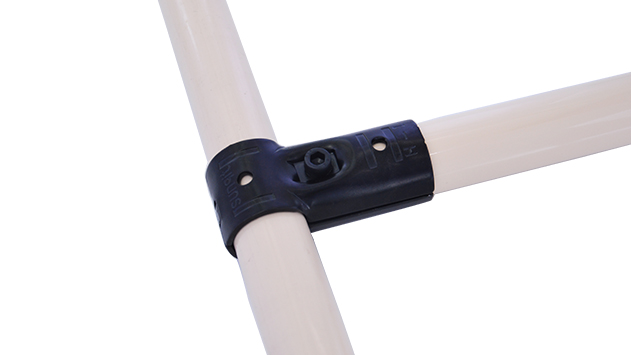
So, what exactly is a two way lean pipe joint? In simplest terms, it's a connector designed to join two lean pipes (or aluminum profiles) at a fixed or adjustable angle, creating stable, load-bearing structures. But to call it just a "connector" is to undersell its importance. Think of it as a Swiss Army knife for manufacturing: compact, versatile, and surprisingly powerful.
Design That Prioritizes Precision
The magic of the two way lean pipe joint lies in its design. Most are made from high-grade aluminum or stainless steel, chosen for their strength-to-weight ratio and resistance to corrosion. The joint itself features precision-machined threads or locking mechanisms that ensure a tight, rattle-free connection. When you tighten a two way joint onto a lean pipe, there's no play—no wiggle room that could throw off measurements on a workbench or cause a roller track to misalign.
This precision is intentional. Aerospace workbenches, for example, often require flat, stable surfaces for tasks like wiring harness assembly or sensor calibration. A two way joint ensures that the aluminum profile legs of the workbench remain perfectly vertical, and the tabletop stays level, even when loaded with heavy tools. Similarly, when building a roller track for moving engine components, the joint keeps the track aligned, so parts glide smoothly without jamming or shifting—critical when even a small misalignment could scratch a $10,000 part.
Durability Built to Last
Aerospace manufacturing doesn't just need precision for a day; it needs precision for years. That's why two way lean pipe joints are built to withstand the test of time. Take material selection: many joints use aluminum alloy, which resists rust and corrosion even when exposed to industrial chemicals. Others opt for stainless steel, adding an extra layer of durability for high-moisture environments. The locking mechanisms—whether they're bolts, clips, or friction-fit designs—are engineered to maintain tension, even after thousands of adjustments. You won't find cheap plastic parts here; these joints are made to be tightened, loosened, and re-tightened without degrading.
Consider a typical scenario: a lean pipe workbench used to assemble aircraft interior panels. Over the course of a year, it might be reconfigured a dozen times—lowered for seated work, raised for standing tasks, or expanded to accommodate larger panels. Each adjustment involves loosening and re-tightening the two way joints. A lesser joint might strip, bend, or wear out after a few uses, but a quality two way lean pipe joint? It'll keep going, maintaining its grip and precision through every change.

Beyond the Joint: How Lean Systems Come Together
The two way lean pipe joint doesn't work alone. It's part of a ecosystem of components that, when combined, create the lean systems aerospace manufacturers rely on. Let's break down how these pieces fit together:
Aluminum Profile: The Foundation
Aluminum profile is the "building block" of lean systems. Lightweight yet incredibly strong, it comes in various shapes and sizes—from basic tubes to T-slot profiles that allow for easy attachment of accessories. The two way lean pipe joint is designed to pair seamlessly with these profiles, creating rigid structures that can be customized to any need. For example, a workbench might use 40mm x 40mm aluminum profile for the frame, connected by two way joints, with a honeycomb panel top for stability. The result is a workspace that's both sturdy and lightweight enough to move (with casters, of course) when needed.
Roller Track: Keeping Materials Moving
In aerospace, moving parts efficiently is half the battle. Roller tracks—another key component of lean systems—solve this by using gravity or gentle force to slide materials from one workstation to the next. But roller tracks don't just appear out of nowhere; they're built using aluminum profile, roller wheels, and yes, two way lean pipe joints. The joints connect the track sections, ensuring they're aligned at the perfect angle for smooth flow. Whether it's moving a fuel pump housing from assembly to testing or transporting a circuit board to quality control, the joint keeps the track stable, preventing jams and ensuring parts arrive intact.
Workbench: Where Precision Meets Productivity
The workbench is the heart of any manufacturing operation, and in aerospace, it's where precision truly shines. Lean pipe workbenches, built with two way joints and aluminum profile, are customizable to the nth degree. Need a shelf for tools? Add a crossbar with a two way joint. Want to mount a monitor arm? Drill a hole in the profile (thanks to T-slot design) and secure it with a bracket. The joint ensures that every addition—whether it's a light, a clamp, or a storage bin—stays firmly in place, so workers can focus on their tasks without worrying about their workspace.

Traditional vs. Lean: A Comparison
To truly appreciate the impact of two way lean pipe joints and lean systems, let's compare them to traditional manufacturing setups. The table below highlights key differences:
| Feature | Traditional Manufacturing Systems | Lean Systems with Two Way Lean Pipe Joints |
|---|---|---|
| Flexibility | Rigid, fixed structures; reconfiguration takes weeks/months. | Modular; reconfigured in hours using joints and profiles. |
| Precision | Prone to wear over time; joints loosen, leading to misalignment. | Precision-machined joints maintain alignment even after repeated use. |
| Durability | Often made with low-grade steel; prone to rust and corrosion. | Aluminum/stainless steel construction resists wear, rust, and chemicals. |
| Cost Efficiency | High upfront costs; expensive to modify or replace. | Lower upfront costs; easy to repair/reconfigure, reducing long-term expenses. |
| Adaptability | Designed for single products; struggles with design changes. | Easily adjusts to new products, processes, or workflow changes. |
Real-World Impact: How Two Way Lean Pipe Joints Transform Aerospace Operations
It's one thing to talk about features; it's another to see them in action. Let's look at a hypothetical (but realistic) example of how two way lean pipe joints improved operations at an aerospace manufacturer:
ABC Aerospace, a mid-sized manufacturer, was struggling to keep up with demand for a new satellite component. Their traditional workbenches were fixed, so when the component design changed (requiring more workspace for testing), they had to wait weeks for a custom solution. Material handling was also a headache—parts were moved manually, leading to delays and occasional drops. The team was frustrated, and deadlines were slipping.
Then, ABC invested in a lean system built around two way lean pipe joints, aluminum profile, and roller tracks. They replaced their old workbenches with modular ones that could be reconfigured in hours: adding shelves, adjusting height, or even splitting into smaller workstations as needed. A roller track, built with joints to ensure alignment, was installed to move parts from machining to assembly, cutting manual handling time by 40%. Within three months, setup time for new projects dropped by 60%, and the number of damaged parts fell by 75%.
The secret? The two way lean pipe joint. It allowed ABC to adapt quickly, maintain precision in their work, and build a system that could grow with their needs. As one production manager put it: "We used to work around our tools. Now, our tools work around us."
Future-Proofing Aerospace: The Role of Lean Systems
As aerospace manufacturing evolves—with trends like electric aircraft, reusable rockets, and AI-driven production—lean systems will only grow more important. These innovations demand even greater flexibility and precision, and the two way lean pipe joint is ready to rise to the challenge. Imagine a future where workbenches automatically adjust to a worker's height using smart actuators, all while maintaining stability via reinforced joints. Or roller tracks that use sensors to detect part weight and adjust speed, with joints that self-tighten if they sense looseness. These aren't science fiction; they're logical extensions of the lean systems we use today, with the two way joint as a critical component.
Sustainability is another trend driving change. Lean systems, with their modular design, reduce waste by allowing components to be reused and repurposed instead of thrown away. A two way lean pipe joint that's been used on a workbench for five years can be unscrewed, cleaned, and used on a new roller track tomorrow—no need for new materials. In an industry under pressure to reduce its carbon footprint, this kind of circularity is invaluable.
Conclusion: The Joint That Keeps Aerospace Flying
In the grand scheme of aerospace manufacturing, the two way lean pipe joint may seem small—a humble connector in a world of high-tech marvels. But as we've explored, its impact is anything but minor. It's the precision that ensures workbenches stay level, the durability that keeps roller tracks aligned, and the flexibility that lets manufacturers adapt to change. It's the reason lean systems work, and why aerospace operations can meet the industry's relentless demands for accuracy and reliability.
So the next time you look up at a plane soaring overhead or read about a new rocket launch, take a moment to appreciate the unseen heroes on the ground. The engineers, the technicians, and yes, the two way lean pipe joint—quietly holding it all together, one precise, durable connection at a time.