- Company Articles
- Products and Technology
- Product knowledge
- Two Way Lean Pipe Joint in Computer Peripheral Manufacturing Lines

Two Way Lean Pipe Joint in Computer Peripheral Manufacturing Lines
Related Product
Two Way Lean Pipe Joint
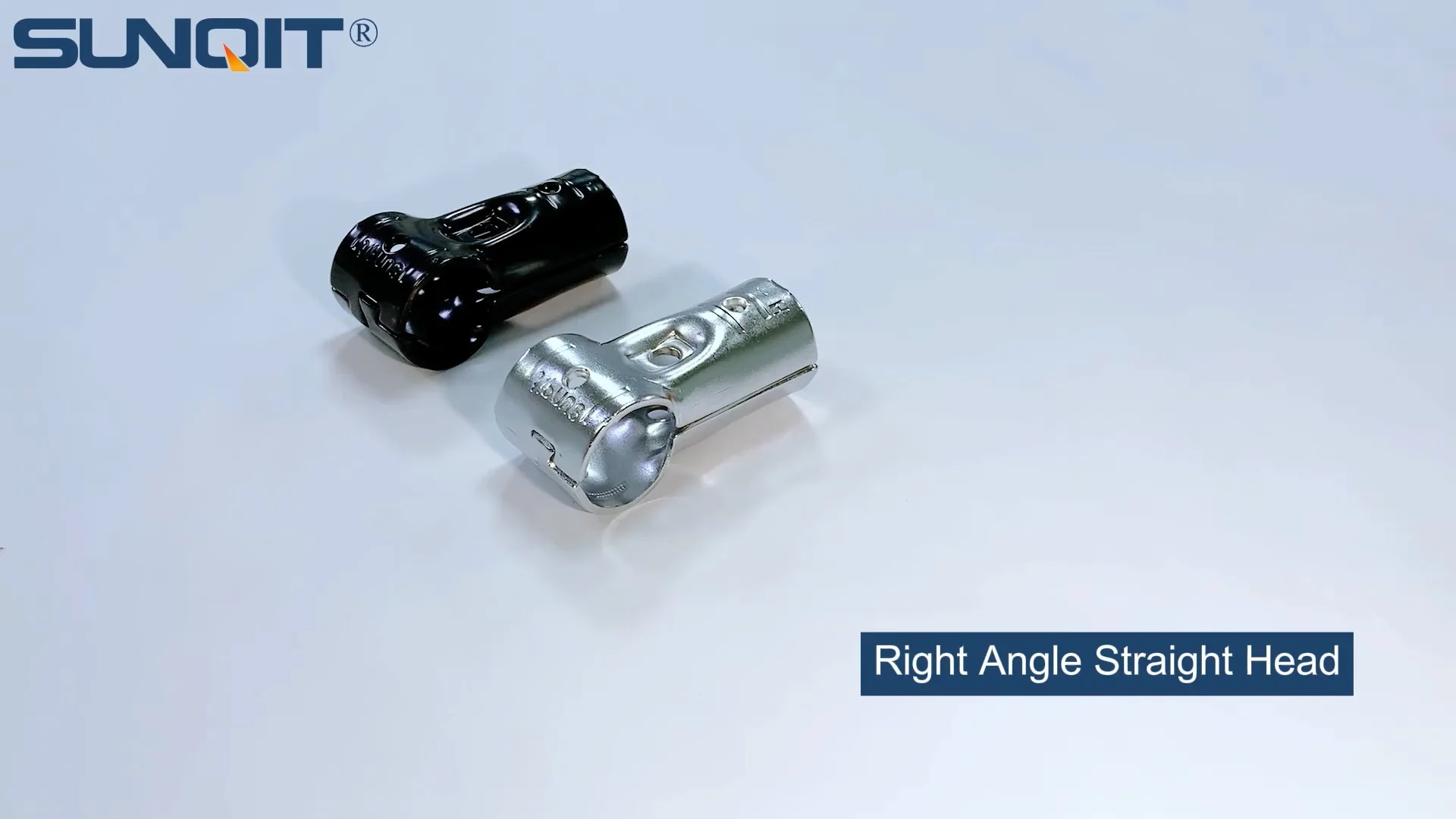
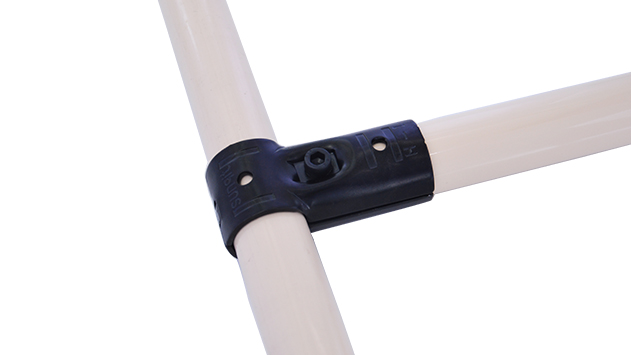
Two way lean pipe joint for 2 pcs 28MM lean pipe connection in straight angle, which used widely in workbench, flow rack, hand trolley frame connection.
Walk into any modern computer peripheral factory, and you'll likely be struck by the rhythm of it all: the steady hum of conveyors, the precise movements of assembly workers, and the seamless flow of components—from tiny circuit boards to sleek plastic casings—moving from station to station. Behind this orchestration of efficiency lies a quiet hero: the lean system. And within that system, one component stands out for its ability to turn rigidity into flexibility, chaos into order: the two way lean pipe joint. In this article, we'll explore how this unassuming piece of hardware has become the backbone of computer peripheral manufacturing, making production lines smarter, more adaptable, and ultimately, more human-centered.
What is a Lean System, Anyway?
Before diving into the specifics of the two way lean pipe joint, let's take a step back to understand the bigger picture: lean systems. At its core, lean manufacturing is about eliminating waste —whether that's wasted time, wasted materials, or wasted effort—while maximizing value for the customer. It's not just a set of tools; it's a mindset that prioritizes continuous improvement. Think of it as the difference between a cluttered desk where you spend 10 minutes hunting for a pen and a well-organized workspace where everything has its place. For computer peripheral manufacturers, where product cycles are short (new mouse models, keyboard designs, or monitor sizes seem to launch every few months), a lean system isn't a luxury—it's survival.
But lean systems don't run on good intentions alone. They rely on physical infrastructure that can keep up with the demands of constant change. Enter lean pipes: lightweight, durable tubes (often made of steel with a plastic coating, or more recently, aluminum) that form the skeleton of workbenches, flow racks, conveyors, and other production tools. And if lean pipes are the bones, then lean pipe joints are the joints—connecting, supporting, and allowing movement where needed. Among these joints, the two way lean pipe joint is the most versatile, acting as the "Swiss Army knife" of the production line.
The Backbone: Lean Pipes and Their Unsung Components
Lean pipes themselves are unassuming. They're typically 28mm in diameter (though sizes can vary), lightweight enough to be moved by hand, yet strong enough to support heavy equipment or boxes of components. What makes them special is their modularity. Unlike fixed metal structures welded into place, lean pipes can be assembled and reassembled in hours, not days. But without the right joints, that modularity would be useless. Imagine trying to build a LEGO castle with only one type of brick—it might stand, but it won't be very interesting (or functional). Joints are the connectors that turn pipes into workbenches, racks, and conveyors.
Joints come in all shapes and sizes: three way, four way, rotating, fixed. But for most computer peripheral lines, the two way lean pipe joint is the workhorse. Why? Because computer peripherals—think wireless mice, mechanical keyboards, or slim monitors—are often small, delicate, and require precision in assembly. Production lines need to be able to adjust quickly: raising a workbench by a few inches to accommodate a taller worker, angling a conveyor to feed components into a new testing station, or reconfiguring a flow rack to hold a new batch of keyboard shells. The two way joint makes all of this possible, and it does so without the need for welding, specialized tools, or a team of engineers.
Spotlight: The Two Way Lean Pipe Joint
Let's get up close with the two way lean pipe joint. At first glance, it looks simple: a small, often metal or plastic connector with two openings designed to fit snugly over lean pipes. But its simplicity is its strength. Most two way joints are adjustable, allowing pipes to connect at 90-degree angles (for building vertical supports or horizontal shelves), 45-degree angles (for sloped conveyors or angled work surfaces), or even straight lines (for extending a rack or workbench). Some models come with locking mechanisms—like set screws or quick-release levers—to ensure stability once positioned, while others allow for easy rotation, making on-the-fly adjustments a breeze.
Take, for example, a basic two way joint made of zinc-plated steel with a PE coating. It's corrosion-resistant (important in factories where humidity or occasional spills are common), lightweight, and designed to grip pipes tightly without damaging them. Installing it is straightforward: slide the joint onto the end of one pipe, position the second pipe at your desired angle, and tighten the screws. No welding, no drilling, no waiting for glue to dry. A single worker can assemble a small workbench in under an hour using nothing but lean pipes and two way joints.
Why It Matters in Computer Peripheral Manufacturing
Computer peripheral manufacturing is a world of small changes with big impacts . Let's say a factory produces three models of wireless mice: a budget version, a gaming model with extra buttons, and a premium ergonomic design. Each has slightly different components, different assembly steps, and different packaging. If the production line is fixed—with welded steel workbenches and permanent conveyors—switching between models would mean shutting down the line for hours (or even days) to retool. That's expensive, and in an industry where customers demand new features yesterday, it's a recipe for falling behind.
The two way lean pipe joint solves this problem by making reconfiguration fast and cheap . Let's walk through a scenario: Monday morning, the line is assembling the budget mouse. Workers stand at lean pipe workbenches, each equipped with a small conveyor (built from lean pipes and roller tracks) feeding circuit boards into their stations. By Tuesday afternoon, the order comes in: switch to the gaming mouse, which requires an extra sensor and a different button layout. With two way joints, the team can:
- Adjust the height of the workbench shelves to make room for the larger sensor components.
- Reposition the conveyor at a steeper angle to feed the new button assemblies into place.
- Add a small side rack (using two way joints) to hold the specialized tools needed for the gaming mouse's extra buttons.
Total time? Maybe two hours. Compare that to the two days it would take to modify a fixed steel line, and the value of the two way joint becomes clear. It's not just about saving time—it's about empowering workers to adapt on their own, without waiting for maintenance crews or external contractors. That sense of ownership? It's a game-changer for morale, too. When workers can tweak their stations to fit their needs (adjusting a workbench height to avoid back strain, for example), they're happier, more productive, and less likely to burn out.

Real-World Application: A Day in the Life of a Mouse Production Line
To make this tangible, let's follow a typical day at "TechFlow Peripherals," a fictional but realistic factory producing wireless mice. The line starts at 7 AM, and the first order of business is assembling the "EcoClick," a budget mouse with a 6-month battery life. Here's how two way lean pipe joints keep things running smoothly:
7:00 AM: Component Delivery – Pallets of plastic mouse shells, circuit boards, and batteries arrive via forklift and are unloaded onto a flow rack built with lean pipes and two way joints. The rack has three levels, each angled slightly downward (thanks to adjustable two way joints) so that boxes slide forward as the top layer is emptied—no more bending over to reach the bottom of a stack.
8:00 AM: Assembly Stations – Workers at Station 1 (lean pipe workbench) attach the circuit board to the mouse shell. The workbench, built with two way joints, has a height-adjustable shelf holding a magnifying lamp (positioned at 45 degrees using a two way joint) and a small bin for screws (hung from the side via a joint). Maria, who's 5'10", raised her workbench by 3 inches last week using the joints—no tools needed, just a quick twist of the locking lever.
10:30 AM: Mid-Morning Adjustment – The circuit boards for the EcoClick are slightly thicker today, causing them to get stuck on the conveyor feeding into Station 1. Instead of stopping the line, supervisor Raj walks over, loosens the two way joints holding the conveyor's side rails, adjusts the width by 5mm, and tightens them back up. Total downtime? 2 minutes.
1:00 PM: Switching to Gaming Mice – After lunch, the line switches to the "ProGrip X," the gaming model. The team needs to add a testing station for the extra sensor. Using spare lean pipes and two way joints, they build a small platform next to Station 3 in 45 minutes. The platform's height matches the existing workbench, thanks to the joints' angle markers, so workers don't have to stretch or bend.
4:00 PM: Quality Check – The day's production is nearly done, and the final step is packaging. The packaging conveyor, built with lean pipes and two way joints, is angled to feed boxes into a labeling machine. Earlier, the angle was too steep, causing boxes to tip. Now, it's adjusted to 15 degrees—stable, but still fast enough to keep up with output.
This isn't just a hypothetical day—it's the reality in factories that embrace lean systems and modular components like the two way lean pipe joint. It's a world where problems are solved quickly, workers feel empowered, and the line adapts to the work, not the other way around.

Comparing Joints: Two Way vs. the Rest
Of course, the two way lean pipe joint isn't the only player in the game. There are three way joints (for branching pipes into three directions), four way joints (for complex structures like multi-tiered racks), and even rotating joints (for parts that need to swivel, like tool holders). So why is the two way joint so popular in computer peripheral manufacturing? Let's break it down with a quick comparison:
| Joint Type | Flexibility | Load Capacity (Average) | Installation Time | Best For |
|---|---|---|---|---|
| Two Way Lean Pipe Joint | High (adjusts to 0°, 45°, 90° angles) | Up to 220 lbs per joint | 2–5 minutes | Workbenches, conveyors, simple racks, quick reconfigurations |
| Three Way Lean Pipe Joint | Medium (branches into three directions) | Up to 330 lbs per joint | 5–8 minutes | Multi-tiered flow racks, corner supports |
| Four Way Lean Pipe Joint | Low (fixed 90° angles in four directions) | Up to 440 lbs per joint | 8–12 minutes | Heavy-duty shelving, structural supports |
In computer peripheral lines, where most structures are lightweight (holding circuit boards, small tools, or plastic parts) and changes are frequent, the two way joint's speed and flexibility win out. Three way and four way joints have their place—for example, in heavy-duty flow racks storing bulk components—but they're overkill for the day-to-day adjustments that keep the line moving. The two way joint is the Goldilocks of the group: not too simple, not too complex, just right for the job.
Beyond Joints: Integrating with Lean Pipe Workbenches and Conveyors
The two way lean pipe joint rarely works alone. Its true power shines when paired with other lean components, like lean pipe workbenches and conveyors. Let's take lean pipe workbenches first. These are the workhorses of the assembly line, where workers spend most of their day. A well-designed workbench can reduce fatigue, speed up tasks, and even improve product quality. With two way joints, workbenches become customizable: add a shelf for tools, a bin for scrap materials, or a monitor arm for digital work instructions—all in minutes.
Consider the example of a lean pipe workbench at TechFlow Peripherals. The main frame is built with lean pipes and two way joints, creating a sturdy, rectangular base. The top is a wooden or metal panel, but the real magic is in the accessories: a small conveyor (built with roller tracks and more two way joints) feeds components onto the bench, while a hanging tool rack (suspended from the back using—you guessed it—two way joints) keeps screwdrivers and pliers within arm's reach. When a new worker joins the line, the bench can be adjusted in height by loosening the joints and sliding the pipes up or down. No more one-size-fits-all workstations; instead, each bench fits the person using it.
Conveyors are another area where two way joints excel. In computer peripheral manufacturing, conveyors need to be nimble—moving small components from station to station without jamming or damaging delicate parts. Lean pipe conveyors, built with roller tracks and two way joints, can be angled, extended, or shortened as needed. For example, a conveyor feeding keyboard assemblies into a testing station might need to be 10 feet long on Monday (for the standard keyboard) but 8 feet long on Tuesday (for the compact model). With two way joints, the team can disassemble the extra section in 15 minutes, no heavy lifting required.
Maintenance and Longevity: Built to Last (and Adapt)
One of the biggest myths about modular systems is that they're "flimsy" compared to fixed structures. But anyone who's worked with lean pipes and two way joints knows that's not true. Modern two way joints are built to withstand the rigors of factory life: zinc-plated steel resists rust, plastic coatings prevent scratches on pipes, and locking mechanisms (like hex screws or cam levers) ensure a tight fit that won't loosen over time. In fact, a well-maintained two way joint can last for years, even in high-traffic areas.
Maintenance is also a breeze. Unlike welded joints, which require grinders or torches to repair, two way joints can be fixed with a simple wrench or screwdriver. If a joint wears out (say, the threads on a set screw get stripped), it can be replaced in 5 minutes for a few dollars—no need to replace the entire workbench or conveyor. This not only saves money but also reduces downtime, keeping the line running smoothly.
Future Innovations: What's Next for Lean Pipes and Joints?
As computer peripheral manufacturing continues to evolve—with more automation, smaller components, and even faster product cycles—the demand for flexible infrastructure will only grow. So what's next for the two way lean pipe joint? One trend is the shift toward aluminum lean pipes, which are lighter than steel but just as strong. Aluminum joints are also emerging, with smoother finishes and even quicker release mechanisms, making adjustments faster than ever. Imagine a joint that can be locked or unlocked with a single push of a button—no tools required. That's not science fiction; it's already in prototype stages.
Another innovation is smart joints. Picture a two way joint embedded with a small sensor that monitors load capacity. If a shelf starts to carry more weight than it's designed for, the sensor sends an alert to the supervisor's tablet, preventing a collapse. Or joints with built-in QR codes that link to digital assembly guides, so new workers can scan and learn how to adjust a workbench in seconds. These small tech upgrades could make lean systems even more intuitive and efficient.
Conclusion: The Little Joint That Changed Manufacturing
At the end of the day, the two way lean pipe joint is more than just a piece of hardware. It's a symbol of how manufacturing is evolving—away from rigid, top-down systems and toward flexible, human-centered ones. In computer peripheral factories, where change is constant and precision is key, this joint turns production lines into living, breathing entities that adapt to the people using them, not the other way around.
So the next time you unbox a new wireless mouse or type on a mechanical keyboard, take a moment to appreciate the invisible work happening behind the scenes. Chances are, somewhere in that factory, a two way lean pipe joint played a role in getting that product into your hands—quietly, reliably, and with a little help from the workers who built it.
In the world of lean manufacturing, the smallest components often make the biggest difference. And the two way lean pipe joint? It's proof that sometimes, the best innovations are the ones that let us work with the system, not against it.