- Company Articles
- Products and Technology
- Application Cases
- Two Way Lean Pipe Joint in Mechanical Manufacturing: Assembly Line Applications

Two Way Lean Pipe Joint in Mechanical Manufacturing: Assembly Line Applications
Related Product
Two Way Lean Pipe Joint
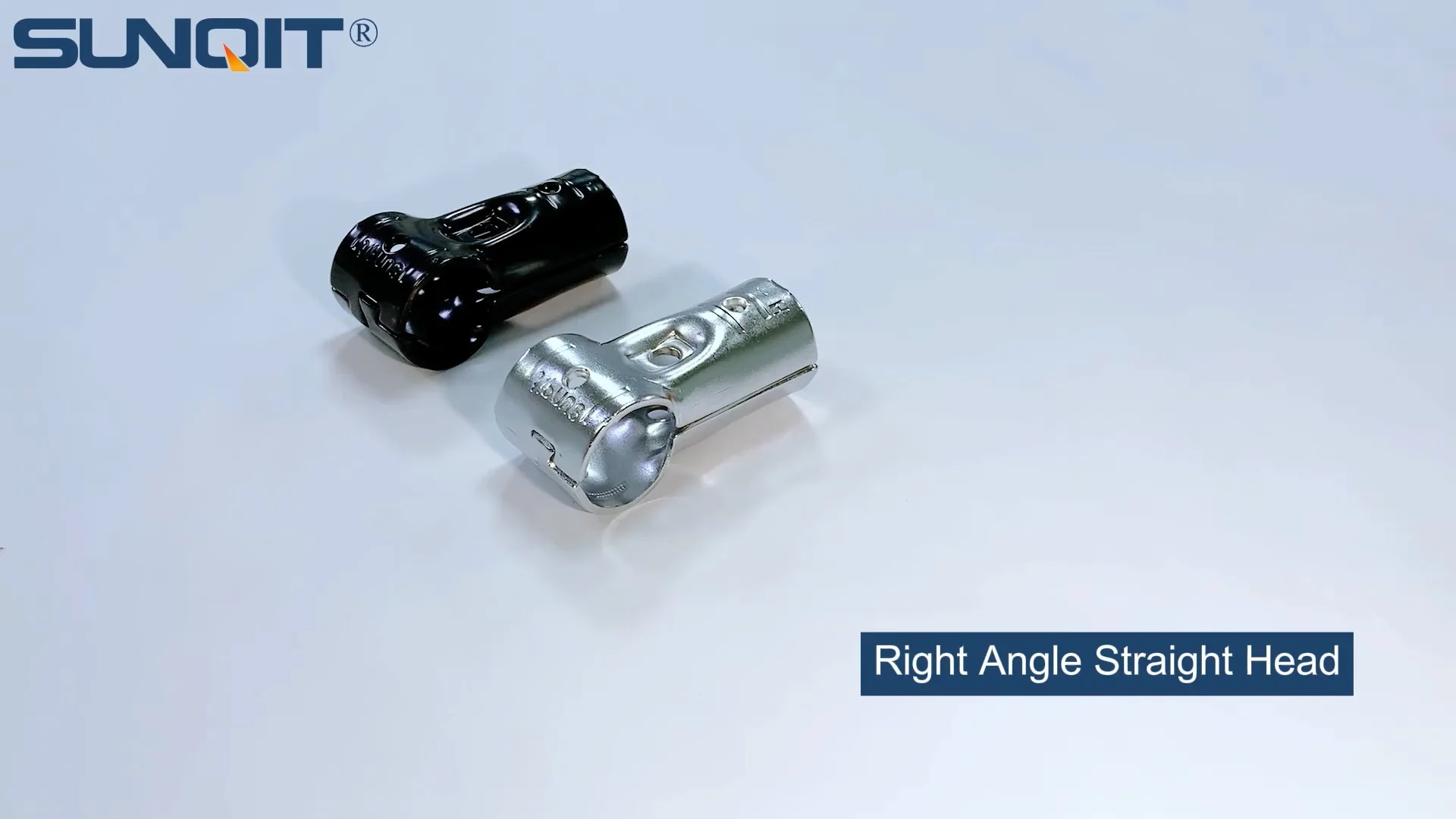
Two way lean pipe joint for 2 pcs 28MM lean pipe connection in straight angle, which used widely in workbench, flow rack, hand trolley frame connection.
How a small component is revolutionizing flexibility, efficiency, and adaptability on the factory floor
The Unsung Hero of Modern Assembly Lines
Walk into any bustling manufacturing plant today, and you'll notice a silent revolution unfolding. Gone are the days of rigid, one-size-fits-all production setups that take weeks to reconfigure and cost a fortune to modify. Instead, you'll find modular workstations, adjustable material racks, and nimble conveyor systems that adapt as quickly as production demands change. At the heart of this transformation? The humble yet powerful two way lean pipe joint.
For plant managers, engineers, and frontline workers alike, the ability to tweak a workbench height, reposition a flow rack, or reroute a conveyor line without calling in specialized contractors or halting production for days is nothing short of a game-changer. And it's the two way lean pipe joint that makes this flexibility possible. In this article, we'll dive deep into how this unassuming component is reshaping assembly lines, why it's become a staple in lean manufacturing, and how it integrates with critical tools like lean pipe workbenches, flow racks, and conveyors to drive efficiency.
What Exactly is a Two Way Lean Pipe Joint?
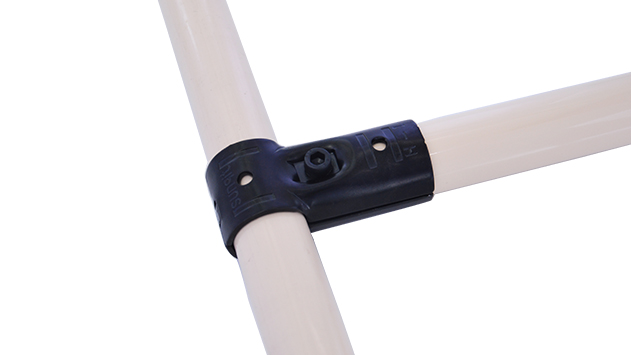
Let's start with the basics. A two way lean pipe joint is a mechanical connector designed to join two lengths of lean pipe (also known as "lean tube") at a fixed or adjustable angle. Think of it as the "elbow" or "T-junction" of the manufacturing world, but with a twist: it's built for quick assembly, disassembly, and reconfiguration. Unlike traditional welded or bolted connections, these joints require no specialized tools—often just a hex key or even a gloved hand—to tighten or loosen, making them ideal for dynamic production environments.
Most two way lean pipe joints are made from high-grade steel, coated with a durable finish (like chrome or zinc) to resist corrosion and wear. Some manufacturers also offer aluminum versions, which are lighter and ideal for applications where weight is a concern, such as mobile workstations or temporary setups. The design is deceptively simple: a cylindrical body with two or more ports (for the pipes) and an internal clamping mechanism that grips the pipe securely when tightened. This ensures a snug fit that can withstand the daily rigors of a factory floor—from the vibrations of heavy machinery to the constant loading and unloading of materials.
But what truly sets the two way lean pipe joint apart is its versatility. While the name suggests it connects two pipes, many models allow for angle adjustments (typically 0° to 90°) or even rotation, giving teams the freedom to build structures that fit their exact needs. Need a workbench with a 45° shelf for tools? A flow rack with a gentle incline to let parts slide smoothly? A conveyor support frame that bends around a corner? The two way joint makes it possible—no custom fabrication required.
Why Lean Manufacturing Can't Live Without It
Lean manufacturing, at its core, is about eliminating waste—whether that's wasted time, materials, or effort—and creating systems that deliver value with maximum efficiency. And few tools embody this philosophy better than the two way lean pipe joint. Here's why:
Flexibility to Adapt: In lean manufacturing, "continuous improvement" isn't just a buzzword—it's a daily practice. Production runs change, new products are introduced, and customer demands shift. A two way lean pipe joint lets teams reconfigure their workspace overnight instead of over weeks. For example, if a electronics manufacturer suddenly needs to switch from assembling smartphones to tablets, they can quickly adjust their lean pipe workbenches to accommodate larger components without buying new furniture.
Modularity to Reduce Waste: Traditional manufacturing setups often involve custom-built, one-off structures that become obsolete when production needs change. These end up in landfills or storage, wasting resources and money. Two way lean pipe joints, by contrast, are part of a modular system. Pipes and joints can be disassembled, rearranged, and reused to build new structures. A flow rack that once held automotive parts can be broken down and reassembled as a conveyor support frame for medical devices—no waste, no extra cost.
Speed to Respond: In today's fast-paced market, downtime is the enemy. When a production line needs to be modified, every minute counts. Two way lean pipe joints eliminate the need for welding, drilling, or painting, cutting reconfiguration time from days to hours. A recent study by the Manufacturing Excellence Association found that plants using modular lean systems (with two way joints at their core) reduced setup time for new production lines by an average of 62% compared to those using traditional fixed structures.

Real-World Applications: From Workbenches to Conveyors
The true value of the two way lean pipe joint shines when you see it in action. Let's explore four key applications where it's making a tangible difference on the assembly line:
1. Lean Pipe Workbenches: The Foundation of Efficient Assembly
The assembly workbench is where the magic happens—where workers spend hours piecing together products, from circuit boards to engine parts. A poorly designed workbench can lead to fatigue, errors, and slowdowns. That's where two way lean pipe joints come in. By connecting lean pipes with these joints, teams can build workbenches tailored to their specific tasks: adjustable heights to suit different workers, integrated tool racks at arm's reach, and even built-in bins for parts and supplies.
Take, for example, a team assembling small appliances. They might need a workbench with a flat top for the main assembly, a tilted shelf above for instruction manuals, and a lower shelf for bins of screws and wires. Using two way joints, they can adjust each component's position until it feels intuitive. If a new worker joins the team who prefers a higher bench, a quick adjustment to the leg joints is all it takes—no need to replace the entire workstation.
Many manufacturers also pair these workbenches with casters (another key accessory in the lean toolkit) to create mobile stations. A two way joint at the base of the workbench legs allows for easy attachment of caster wheels, turning a static setup into a movable one that can be rolled to where it's needed most—whether that's next to a conveyor line during peak production or into a storage area during maintenance.
2. Flow Racks: Streamlining Material Handling
In any manufacturing process, getting the right materials to the right workers at the right time is critical. Delays in material delivery can bring an entire line to a halt. Flow racks—tilted racks with roller tracks that let materials slide forward as items are removed—solve this problem by keeping parts organized and accessible. And two way lean pipe joints are the backbone of these racks.
A typical flow rack consists of a frame built from lean pipes connected by two way (and sometimes three way) joints, with roller tracks mounted on an incline. The joints allow for precise adjustment of the incline angle—too steep, and parts might slide too quickly; too shallow, and they might get stuck. By tweaking the joint positions, engineers can find the perfect angle for different part sizes and weights, from small plastic components to heavier metal parts.
One automotive parts supplier we worked with recently used two way lean pipe joints to build a custom flow rack for brake calipers. The rack had three levels, each with roller tracks angled at 5°, and was designed to hold 50 calipers per level. When the supplier introduced a new, slightly larger caliper model, they simply adjusted the joint positions to widen the track spacing—no need to buy a new rack. The whole process took two workers less than an hour, and production resumed without a hitch.
3. Conveyors: Keeping Parts Moving Smoothly
Conveyors are the arteries of the assembly line, carrying parts from one station to the next. But not all conveyors are created equal. Rigid, fixed conveyors work well for long, straight production runs, but they're useless when a line needs to be rerouted or extended. That's where modular conveyors—built with lean pipes and two way joints—excel.
Two way lean pipe joints are used to construct the support frames for conveyor systems, allowing for easy adjustments to height, width, and direction. For example, a roller conveyor (which uses rotating rollers to move parts) might need to be raised 12 inches to align with a workbench. By adjusting the joint positions on the support legs, the frame can be lifted to the exact height needed. If the conveyor needs to turn a 90° corner, two way joints can connect the straight sections at the correct angle, with roller track connectors ensuring a smooth transition for parts.
In one electronics manufacturing plant in Texas, the team used two way lean pipe joints to build a modular conveyor system that snakes around existing machinery. When they added a new testing station, they simply extended the conveyor by adding a few more pipes and joints—no need to dig up the floor or install permanent supports. The entire extension took a day to complete, and the line was back up and running by the next shift.

The Benefits That Add Up: Why Manufacturers Can't Get Enough
By now, it's clear that two way lean pipe joints are versatile—but what makes them worth investing in? Let's break down the benefits that have made them a staple in factories worldwide:
Cost Savings That Grow Over Time
At first glance, modular lean systems might seem more expensive than traditionally built structures. After all, a set of pipes and joints costs more upfront than a few sheets of plywood and some 2x4s. But the long-term savings tell a different story. Traditional setups are fixed: if you need to change them, you either have to rebuild from scratch or live with inefficiencies. Two way lean pipe joints, by contrast, let you reuse components indefinitely. A $50 joint today might help build a workbench this month, a flow rack next quarter, and a conveyor frame next year—saving you thousands in replacement costs over time.
Ease of Use for Everyone on the Floor
You don't need to be an engineer to work with two way lean pipe joints. Most can be tightened or loosened with a basic hex key, and many manufacturers provide color-coded or numbered joints to simplify assembly. This empowers frontline workers to make small adjustments themselves, without waiting for maintenance or engineering teams. For example, if a worker notices a flow rack is tilted too steeply, they can grab a hex key, loosen the joints, adjust the angle, and retighten—all in five minutes. This "do-it-yourself" ethos not only speeds up problem-solving but also fosters a sense of ownership among employees.
Durability That Withstands the Grind
Factory floors are tough environments: heavy loads, constant movement, and exposure to dust, oil, and moisture. Two way lean pipe joints are built to handle this abuse. High-quality steel joints can support hundreds of pounds per connection, and their corrosion-resistant coatings ensure they'll look and perform like new for years. Even in applications with frequent reconfiguration—like seasonal production lines that change every few months—the joints hold up, with no degradation in grip or stability.
Two Way vs. Other Lean Pipe Joints: Which Should You Choose?
Two way lean pipe joints are versatile, but they're not the only option. Let's compare them to other common joint types to help you decide when to use each:
| Joint Type | Best For | Flexibility | Load Capacity | Typical Applications |
|---|---|---|---|---|
| Two Way Lean Pipe Joint | Connecting two pipes at angles (0°–90°) | High (adjustable angles, easy reconfiguration) | Medium to High (up to 500 lbs per joint) | Workbench frames, flow rack sides, conveyor supports |
| Three Way Lean Pipe Joint | Connecting three pipes (e.g., T-junctions) | Medium (fixed or limited angle adjustment) | Medium (up to 400 lbs per joint) | Multi-level racks, corner supports |
| Fixed Angle Joint | Permanent, non-adjustable connections | Low (fixed at 90° or 45°) | High (up to 600 lbs per joint) | Heavy-duty shelving, stationary workbenches |
| Rotary Joint | Connections that need to swivel or rotate | Very High (360° rotation) | Low to Medium (up to 300 lbs per joint) | Adjustable tool holders, rotating work surfaces |
As a general rule, two way lean pipe joints are your best bet for most modular, adaptable setups. They strike the perfect balance between flexibility, load capacity, and ease of use. If you need to connect more than two pipes (like in a multi-level rack), pair them with three way joints. For permanent structures that won't need reconfiguration, fixed angle joints might be more cost-effective. But for the dynamic, ever-changing needs of modern manufacturing, two way joints are the clear winner.
Case Study: How a Auto Parts Plant Cut Costs by 35% with Two Way Joints
The Challenge
A mid-sized auto parts manufacturer in Ohio was struggling with inefficiencies in their brake assembly line. Their workbenches were fixed-height, leading to worker fatigue and errors. Material racks were bulky and hard to reconfigure, so they often ran out of space for new part models. And conveyor supports were welded in place, making it impossible to adjust the line layout when demand spiked.
The Solution
The plant's engineering team decided to overhaul their setup using lean pipe systems with two way joints. They replaced fixed workbenches with modular ones, allowing height adjustments for each worker. They built new flow racks with adjustable angles to accommodate different brake caliper sizes. And they reconfigured their conveyor supports to be modular, so sections could be added or removed as needed.
The Results
Within six months, the changes paid off: Worker fatigue-related errors dropped by 40%, material retrieval time decreased by 25%, and the plant was able to add two new production runs without expanding their floor space. Best of all, the total cost of the overhaul was recouped in less than a year, thanks to reduced downtime and increased productivity. "The two way joints were the star of the show," said the plant manager. "We can tweak any part of the line in hours, not weeks. It's like having a factory that can rearrange itself."
The Future of Two Way Lean Pipe Joints: What's Next?
As manufacturing continues to evolve—with trends like Industry 4.0, automation, and sustainability taking center stage—the two way lean pipe joint is evolving too. Here's what to watch for in the coming years:
Smart Joints with IoT Integration: Imagine a two way joint with built-in sensors that monitor load capacity, vibration, or temperature. If a joint is overloaded or loosening, it could send an alert to maintenance teams before it fails. Early prototypes of these "smart joints" are already in testing, and they could revolutionize predictive maintenance.
Eco-Friendly Materials: With sustainability becoming a priority, manufacturers are exploring joints made from recycled steel or biodegradable coatings. Some are even experimenting with carbon fiber joints, which are lighter and stronger than steel, reducing energy use during transportation and installation.
3D-Printed Customization: For niche applications, 3D printing could allow for on-demand, custom two way joints tailored to unique pipe sizes or angles. This would eliminate the need for large inventories of standard joints and make modular systems even more adaptable.
Final Thoughts: The Joint That Keeps Manufacturing Moving
In the grand scheme of manufacturing, the two way lean pipe joint might seem small. But as we've explored, its impact is anything but. It's the component that turns rigid production lines into adaptable ecosystems, empowers workers to shape their own workspaces, and helps manufacturers stay competitive in a world where change is the only constant.
Whether you're building a lean pipe workbench for a small workshop or overhauling an entire factory's conveyor system, the two way lean pipe joint is more than just a connector—it's a tool for innovation. It reminds us that sometimes, the most powerful solutions are the ones that let us adapt, reuse, and improve—one joint at a time.