- Company Articles
- Products and Technology
- Product knowledge
- Two Way Lean Pipe Joint Load Testing: Ensuring Safety in Heavy-Duty Applications

Two Way Lean Pipe Joint Load Testing: Ensuring Safety in Heavy-Duty Applications
Related Product
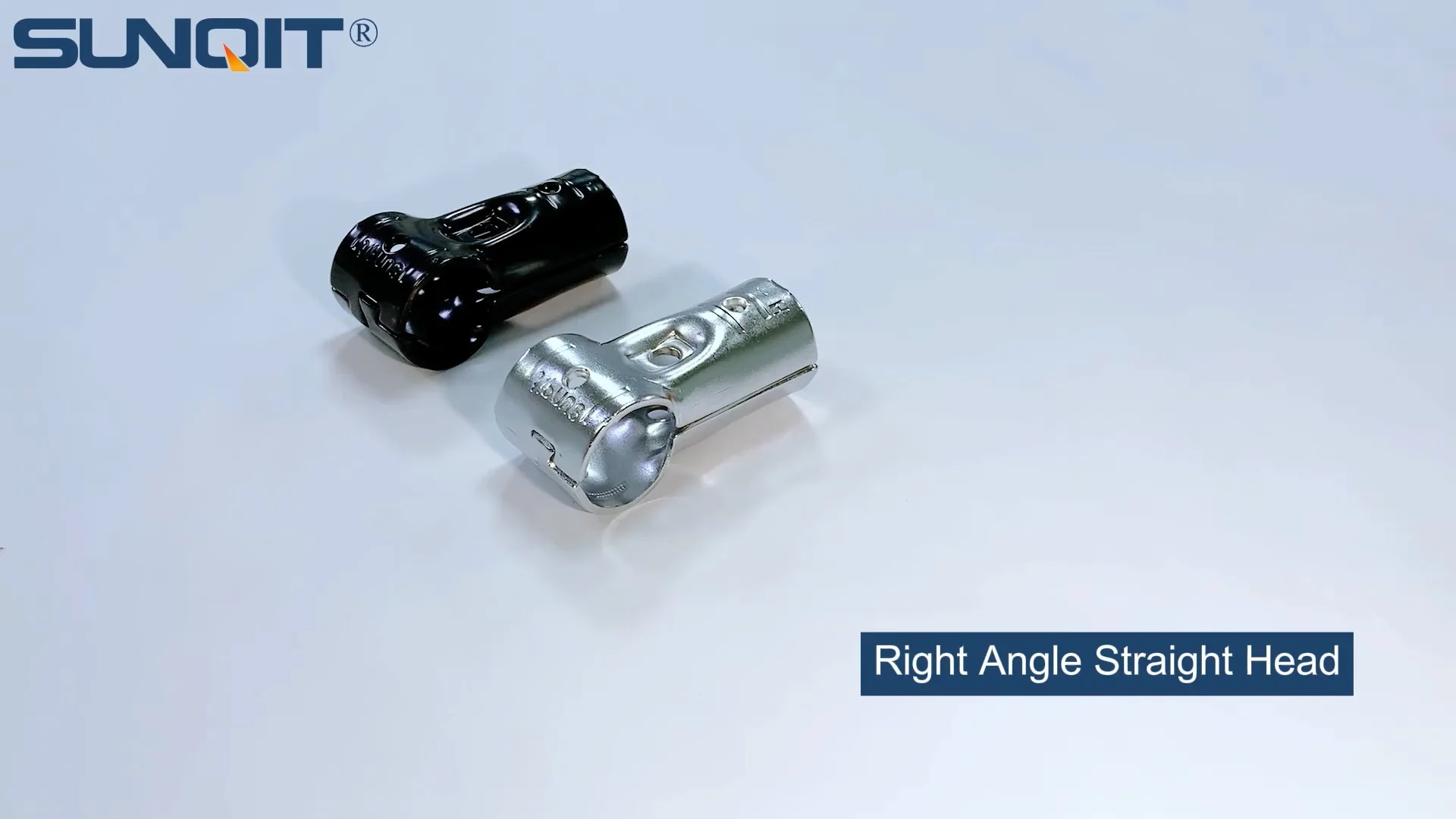
Two Way Lean Pipe Joint
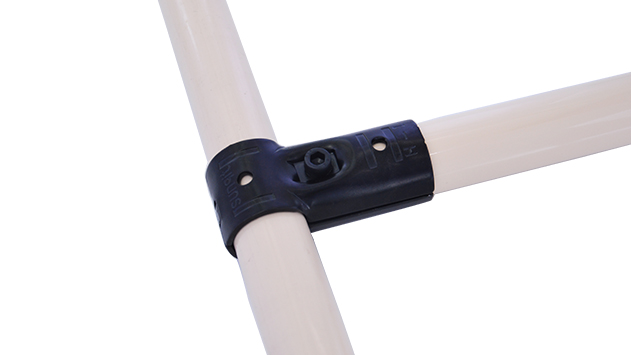
Two way lean pipe joint for 2 pcs 28MM lean pipe connection in straight angle, which used widely in workbench, flow rack, hand trolley frame connection.
In the fast-paced world of manufacturing and logistics, efficiency and safety go hand in hand. Every piece of equipment, no matter how small, plays a role in keeping operations running smoothly—and when it comes to lean pipe systems, few components are as critical as the two-way lean pipe joint. These unassuming connectors are the backbone of structures like workbenches, flow racks, and conveyors, silently supporting the weight of tools, materials, and products day in and day out. But what happens when a joint fails? The consequences can range from costly downtime to serious workplace accidents. That's where load testing comes in. In this article, we'll dive deep into the world of two-way lean pipe joint load testing, exploring why it matters, how it's done, and the real-world impact it has on keeping heavy-duty applications safe and reliable.
Understanding the Two-Way Lean Pipe Joint: A Small Part with a Big Job
Before we jump into load testing, let's take a moment to appreciate what a two-way lean pipe joint actually is. If you've ever walked through a warehouse or manufacturing plant, you've probably seen lean pipe systems without even realizing it. They're the modular structures made from lightweight yet durable pipes and joints, designed to be flexible, easy to assemble, and adaptable to changing needs. Think of the workbench where an assembler puts together electronics, the flow rack that feeds parts to an assembly line, or the conveyor that moves boxes from one end of a facility to the other—all of these rely on lean pipe joints to hold their shape and support their loads.
The two-way lean pipe joint, as the name suggests, is a connector that joins two lean pipes at a fixed angle (usually 90 degrees, though some designs allow for adjustments). Made from materials like steel, aluminum, or high-strength plastic, these joints are engineered to distribute weight evenly across the connected pipes, ensuring the entire structure remains stable. What makes them so valuable is their simplicity: no welding or complex tools required—just a quick twist or bolt to secure the pipes in place. But don't let their simplicity fool you. When a workbench is loaded with 50kg of tools, or a flow rack is stacked with heavy components, the two-way joint is under constant stress, and its ability to withstand that stress is non-negotiable.
To put it in perspective, consider a typical automotive manufacturing plant. The assembly line workbenches here often hold power tools, diagnostic equipment, and partially assembled car parts—easily weighing 100kg or more. If a two-way joint on one of these workbenches were to fail, the tools could crash to the floor, damaging equipment and potentially injuring workers. Worse, the entire assembly line might grind to a halt while the structure is repaired, costing the plant thousands of dollars in lost productivity. That's why understanding the load capacity of these joints isn't just a matter of compliance—it's a matter of protecting people and profits.
Why Load Testing Matters: Safety, Compliance, and Peace of Mind
Load testing is exactly what it sounds like: the process of applying controlled amounts of weight to a component (in this case, a two-way lean pipe joint) to determine how much it can safely handle before deforming or failing. But it's more than just "how much weight can it hold?" Load testing also reveals how the joint behaves under stress—does it bend slightly but return to shape, or does it crack under pressure? Does it hold up under static loads (weight that stays in place) or dynamic loads (weight that moves, like products sliding down a flow rack)? These insights are critical for ensuring that lean pipe systems perform as expected in real-world conditions.
Let's start with safety. Workplace safety regulations, such as those set by OSHA in the U.S. or the EU-OSHA in Europe, require employers to maintain a safe working environment. This includes ensuring that all equipment, including lean pipe structures, is fit for purpose. Load testing provides concrete data to prove that a two-way lean pipe joint can handle the maximum load it will encounter on the job. Without this data, companies are essentially guessing—and guesswork is a recipe for disaster. For example, if a flow rack is rated to hold 200kg but the two-way joints can only safely support 150kg, overloading the rack could lead to a collapse, putting workers in harm's way.
Compliance is another key factor. Many industries, from aerospace to pharmaceuticals, have strict quality standards that require documentation of component testing. Load test reports serve as evidence that a two-way lean pipe joint meets these standards, helping companies avoid fines and legal issues. Even in industries with less stringent regulations, load testing is a mark of professionalism. It shows customers and stakeholders that a company takes safety seriously, which can boost trust and reputation.
Finally, load testing saves money in the long run. While it might seem like an extra expense upfront, the cost of testing is minimal compared to the cost of a joint failure. Think about it: replacing a failed joint, repairing damaged equipment, and covering lost productivity adds up quickly. Load testing helps identify weak joints before they're installed, preventing these costly issues from ever occurring. It also allows companies to optimize their lean pipe systems—if a joint can safely handle more weight than initially thought, they might be able to design more efficient structures, reducing the number of joints and pipes needed.
The Load Testing Process: From Planning to Results
Load testing a two-way lean pipe joint isn't as simple as stacking weights on it until it breaks. It's a systematic process that involves careful planning, precise execution, and detailed analysis. Let's walk through the steps to see how it all comes together.
Step 1: Define the Test Parameters
Before any testing begins, engineers need to define what they're testing for. This starts with understanding the intended use of the joint. Will it be used in a static application, like a workbench that holds tools in place, or a dynamic application, like a conveyor where products are constantly moving? Static loads are easier to test—they involve applying a constant weight and measuring how the joint responds over time. Dynamic loads, on the other hand, require simulating movement, which might involve oscillating weights or sudden impacts (to mimic products dropping onto a flow rack, for example).
Next, engineers set the maximum expected load. This is based on the application: a workbench might need to support 150kg, while a flow rack could require 200kg. They also determine the safety factor—a buffer above the expected load to account for unexpected stress. Most industries use a safety factor of 2:1, meaning the joint should withstand twice the maximum expected load without failing. So, for a workbench with a 150kg load, the joint would need to pass a test of 300kg.
Step 2: Prepare the Test Setup
Once the parameters are defined, it's time to set up the test. This involves mounting the two-way lean pipe joint in a configuration that mimics real-world use. For example, if the joint will be used to connect two horizontal pipes on a workbench, the test setup would use the same pipe material (lean pipe, aluminum, or steel), length, and mounting method (bolted, clamped, etc.). The joint is then secured to a rigid frame to prevent movement during testing.
To measure the joint's performance, engineers use specialized equipment. Load cells are attached to the joint to measure the amount of force being applied, while strain gauges monitor how much the joint deforms under load. In some cases, high-speed cameras or laser sensors are used to track minute movements that the naked eye might miss. All of this data is fed into a computer for real-time analysis, ensuring that engineers can stop the test immediately if something unexpected happens (like a sudden crack in the joint).
Step 3: Conduct the Test
With the setup ready, the testing begins. For static load testing, the weight is applied gradually—starting at 25% of the target load, then 50%, 75%, and finally 100% (plus the safety factor). At each stage, the joint is held under load for a set period (usually 10–30 minutes) to check for creep, which is the slow deformation that occurs over time under constant stress. If the joint deforms more than allowed (typically 0.1mm per kg of load), it fails the test.
Dynamic load testing is more complex. Instead of a constant weight, the joint is subjected to repeated or varying loads. For example, a conveyor joint might be tested with a weight that slides back and forth across the connected pipes, simulating the movement of products. Engineers measure how many cycles the joint can withstand before showing signs of fatigue (like cracks or loosening). The number of cycles depends on the application—some joints might need to handle millions of cycles over their lifetime, while others might only need to endure a few thousand.
Step 4: Analyze the Results
After the test is complete, the data is analyzed to determine if the joint meets the required standards. Engineers look at metrics like maximum load capacity, deformation under load, and fatigue life. If the joint passes, it's certified for use in the intended application. If it fails, the team investigates why—was the material too weak? Was the design flawed? This feedback is then used to improve the joint's design, whether by using a stronger material, adjusting the joint's geometry, or adding reinforcements.

Load Test Standards: Ensuring Consistency Across Industries
Load testing isn't a one-size-fits-all process. Different industries have different standards, and adhering to these standards is crucial for ensuring consistency and safety. Let's take a look at some of the most common standards that govern two-way lean pipe joint load testing.
One of the most widely recognized standards is ISO 898-1, which covers the mechanical properties of fasteners (including the bolts and screws used in some lean pipe joints). While not specific to lean pipe joints, ISO 898-1 sets guidelines for how much force a fastener can withstand before breaking, which is critical for joints that rely on bolts to secure pipes.
For lean pipe systems specifically, many manufacturers follow guidelines set by the Lean Manufacturing Institute (LMI), which recommends minimum load capacities for common lean pipe components. For example, LMI suggests that a standard steel two-way lean pipe joint should be able to support at least 200kg in static applications and 150kg in dynamic applications, with a safety factor of 2:1. These guidelines are based on years of industry research and real-world testing, making them a trusted resource for manufacturers and facility managers.
In Europe, the EN 1090 standard is also relevant, as it covers the execution of steel and aluminum structures. While EN 1090 is more focused on large-scale structures like bridges and buildings, its requirements for material testing and load capacity verification can be applied to smaller components like lean pipe joints. Companies that sell lean pipe systems in Europe often need to comply with EN 1090 to ensure their products meet strict safety and quality standards.
To illustrate how these standards translate to real-world testing, let's look at a comparison table of load test results for two common types of two-way lean pipe joints: steel and aluminum. This table shows the maximum load each joint can withstand under static and dynamic conditions, along with deformation and pass/fail status based on LMI guidelines.
| Joint Material | Test Type | Maximum Load Before Failure (kg) | Deformation at 50% Load (mm) | Pass/Fail (LMI Standard) |
|---|---|---|---|---|
| Steel (1.5mm thickness) | Static | 450 | 0.05 | Pass (≥200kg required) |
| Steel (1.5mm thickness) | Dynamic (10,000 cycles) | 350 | 0.08 | Pass (≥150kg required) |
| Aluminum (2.0mm thickness) | Static | 320 | 0.07 | Pass (≥200kg required) |
| Aluminum (2.0mm thickness) | Dynamic (10,000 cycles) | 250 | 0.10 | Pass (≥150kg required) |
| Plastic (Reinforced Nylon) | Static | 180 | 0.20 | Fail (≥200kg required) |
As the table shows, both steel and aluminum two-way lean pipe joints easily exceed the LMI static and dynamic load requirements, while the plastic joint falls short in static testing. This is why plastic joints are typically used in light-duty applications (like small storage racks) rather than heavy-duty workbenches or conveyors.

Real-World Applications: How Load Testing Prevents Disasters
To truly understand the impact of load testing, let's look at some real-world examples of how it has prevented failures and kept workplaces safe. These case studies highlight the importance of rigorous testing in different industries.
Case Study 1: Automotive Assembly Plant Workbench
A major automotive manufacturer in the U.S. was in the process of upgrading its assembly line workbenches to lean pipe systems. The workbenches would need to hold heavy power tools, including impact wrenches and torque guns, totaling around 120kg per bench. The manufacturer ordered steel two-way lean pipe joints from a new supplier, assuming they would meet the required load capacity.
Before installing the workbenches, the plant's safety team insisted on load testing a sample joint. To their surprise, the joint failed at just 180kg during static testing—well below the 240kg needed (120kg load + 2:1 safety factor). Further investigation revealed that the supplier had used a lower-grade steel than specified, weakening the joint. Thanks to the load test, the manufacturer rejected the batch of joints, avoiding a potential disaster on the assembly line. They switched to a trusted supplier with certified load test results, and the new workbenches have been operating safely ever since.
Case Study 2: E-Commerce Warehouse Flow Rack
An e-commerce giant was expanding its warehouse to handle increased holiday demand. As part of the expansion, they installed new flow racks to store and distribute small packages. The flow racks used aluminum two-way lean pipe joints, chosen for their lightweight design and corrosion resistance. The supplier provided load test data claiming the joints could handle 150kg dynamically (the weight of packages sliding down the rack).
During a routine safety audit, the warehouse manager noticed that some of the joints were starting to bend slightly, even though the racks weren't overloaded. Concerned, the manager ordered additional load testing on the joints. The test revealed that the dynamic load capacity was actually only 120kg—not 150kg. The supplier had miscalculated the safety factor, leading to undersized joints. The warehouse quickly replaced the joints with higher-capacity models, preventing the racks from collapsing under the weight of holiday packages. The incident also prompted the company to implement mandatory third-party load testing for all new equipment suppliers.
Case Study 3: Food Processing Conveyor System
A food processing plant relied on a lean pipe conveyor system to move heavy crates of raw materials from the loading dock to the production line. The conveyor used steel two-way joints, which had passed load testing when installed five years earlier. However, over time, the joints had been exposed to moisture and cleaning chemicals, leading to rust and corrosion.
As part of the plant's preventive maintenance program, the maintenance team decided to retest a sample joint. To their alarm, the rusted joint failed at just 100kg—down from its original 350kg capacity. The team immediately inspected all conveyor joints, replacing any that showed signs of corrosion. By proactively load testing old joints, they avoided a catastrophic failure that could have contaminated food products and injured workers.
Challenges in Load Testing: Overcoming Obstacles
While load testing is essential, it's not without its challenges. From environmental factors to material variations, engineers and safety professionals must navigate a range of obstacles to ensure accurate and reliable results.
One of the biggest challenges is environmental conditions. Load testing is typically done in controlled lab settings, but real-world environments are far from controlled. Temperature, humidity, and even altitude can affect a joint's performance. For example, aluminum joints become more brittle in cold temperatures, while plastic joints can soften in high heat. To address this, some load tests are conducted in environmental chambers that simulate extreme conditions, ensuring the joint will perform reliably no matter where it's used.
Material variations are another issue. Even within the same batch of joints, slight differences in material composition or manufacturing can lead to variations in load capacity. A joint made from steel with a slightly higher carbon content might be stronger than one with lower carbon content, even if they look identical. To mitigate this, manufacturers often test multiple samples from each batch, ensuring that the average load capacity meets standards—not just the strongest one.
Long-term durability testing is also a challenge. While static and dynamic tests can simulate years of use in a matter of hours, they can't perfectly replicate the wear and tear a joint experiences over decades. Factors like vibration, repeated assembly/disassembly, and exposure to chemicals can all weaken joints over time. To address this, some companies use accelerated aging tests, where joints are subjected to extreme conditions for extended periods to predict their long-term performance.
Innovations in Joint Design and Testing: The Future of Lean Pipe Safety
As technology advances, so too do the tools and techniques used in two-way lean pipe joint design and load testing. Let's take a look at some of the latest innovations that are making these joints safer, stronger, and more reliable than ever before.
One of the most exciting developments is the use of computer-aided design (CAD) and finite element analysis (FEA) to simulate load testing before a physical prototype is even built. FEA software allows engineers to create 3D models of joints and apply virtual loads, predicting how the joint will deform and where stress concentrations might occur. This saves time and money by identifying design flaws early in the process, reducing the need for multiple physical prototypes.
New materials are also playing a role. Aluminum lean pipe joints, for example, are becoming increasingly popular due to their lightweight and corrosion-resistant properties. Advanced alloys have made aluminum joints nearly as strong as steel ones, while still being easier to handle and install. Composite materials, like carbon fiber-reinforced plastic, are another emerging option—these joints are extremely strong, lightweight, and resistant to chemicals, making them ideal for harsh environments like food processing plants or chemical facilities.
On the testing side, smart sensors are revolutionizing how data is collected. Wireless strain gauges and IoT-enabled load cells can transmit real-time data to a cloud-based platform, allowing engineers to monitor tests remotely and analyze results in real time. This not only speeds up the testing process but also makes it easier to track performance over time—some companies are even installing these sensors on in-service joints, allowing them to monitor load conditions and predict failures before they happen.
Conclusion: Load Testing as a Foundation for Safety
At the end of the day, two-way lean pipe joint load testing is about more than just numbers on a spreadsheet. It's about protecting the workers who rely on these structures every day, ensuring that the products we use are manufactured safely, and keeping businesses running smoothly. From the steel joints in automotive plants to the aluminum joints in e-commerce warehouses, load testing is the unsung hero that ensures these small but critical components do their job—no matter how heavy the load.
As we've seen, load testing isn't a one-time event. It's a continuous process that starts with design and ends with ongoing maintenance. By investing in rigorous load testing, companies can build lean pipe systems that are not only efficient and flexible but also safe and reliable. And in an industry where every second counts, that's an investment that pays off—for workers, for businesses, and for the communities they serve.
So the next time you walk through a warehouse or manufacturing plant, take a moment to look at the lean pipe structures around you. Behind every workbench, flow rack, and conveyor is a two-way joint that's passed the test—literally. And that's something worth celebrating.