- Company Articles
- Products and Technology
- Product knowledge
- Two Way Lean Pipe Joint vs One Way: Manufacturing Application Scenario Comparison

Two Way Lean Pipe Joint vs One Way: Manufacturing Application Scenario Comparison
Related Product
Two Way Lean Pipe Joint
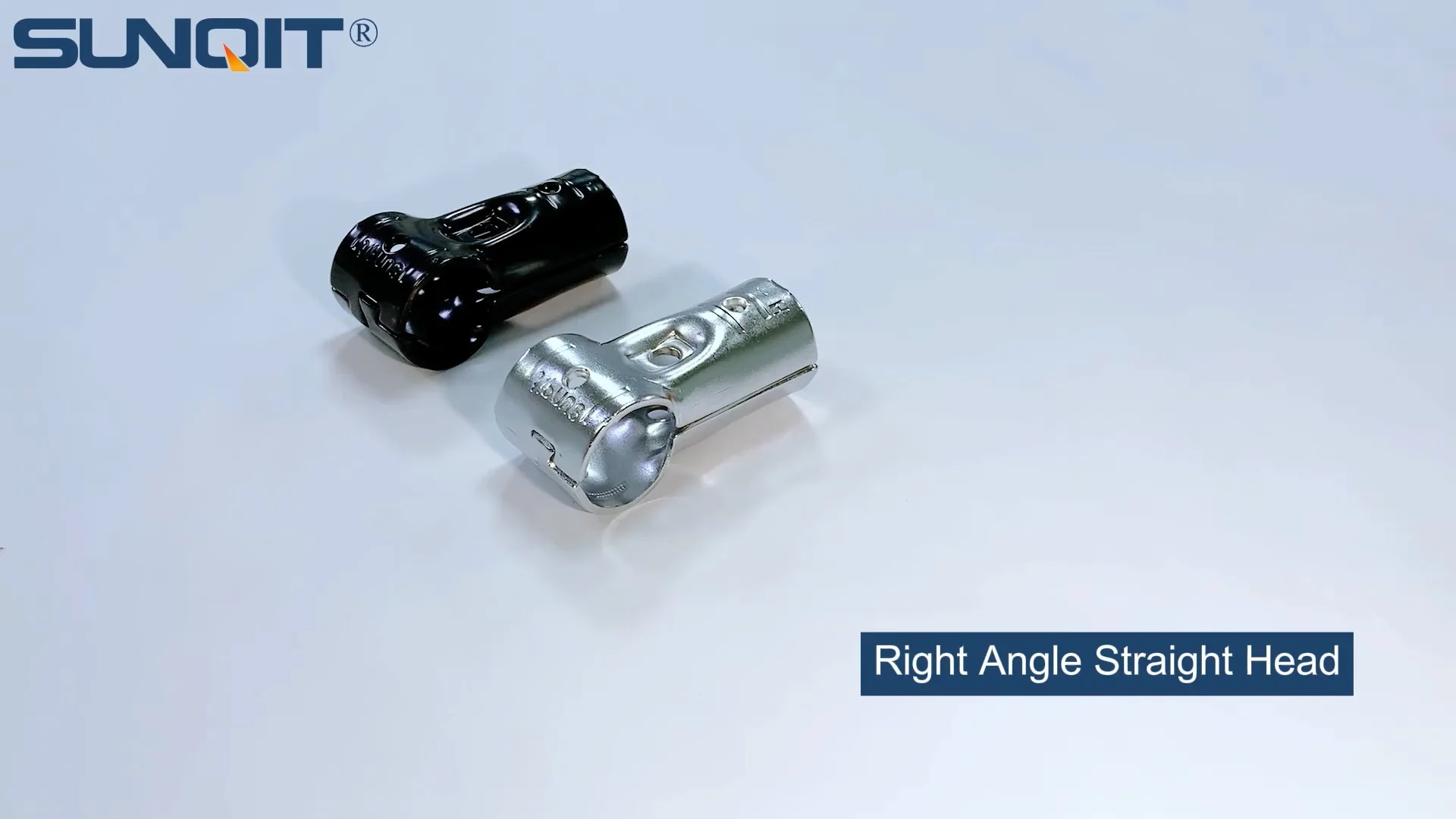
Two way lean pipe joint for 2 pcs 28MM lean pipe connection in straight angle, which used widely in workbench, flow rack, hand trolley frame connection.
In the fast-paced world of manufacturing, where every second and every square foot of space counts, the difference between a smooth, efficient workflow and a clunky, wasteful one often comes down to the smallest components. Lean manufacturing isn't just a philosophy—it's a physical ecosystem of tools, structures, and systems designed to eliminate waste, boost productivity, and adapt to change. At the heart of this ecosystem lies the humble yet critical lean pipe joint : the unsung hero that holds together modular workbenches, flow racks, conveyors, and material handling systems. Today, we're diving deep into two of the most common types of these joints—two-way and one-way lean pipe joints—to explore how their design, functionality, and application scenarios shape the efficiency of modern manufacturing floors.
Understanding Lean Pipe Joints: The Building Blocks of Modular Systems
Before we compare two-way and one-way joints, let's take a step back to appreciate what lean pipe joints are and why they matter. In lean manufacturing, flexibility is king. Traditional fixed structures—welded steel racks, immovable workbenches—lock manufacturers into rigid layouts that struggle to adapt to new products, higher volumes, or changing workflows. Lean pipe systems, by contrast, are built on modularity: lightweight pipes (often steel, aluminum, or stainless steel) connected by joints that allow for quick assembly, disassembly, and reconfiguration. And at the center of this modularity? The lean pipe joint.
Think of lean pipe joints as the "glue" that turns individual pipes into functional structures. They come in various designs, each engineered to solve specific problems: connecting pipes at angles, supporting vertical loads, enabling rotation, or fixing direction. Whether you're building a workbench for assembly line workers, a flow rack for parts storage, or a conveyor for material transport, the joints you choose will determine how sturdy, flexible, and adaptable that structure is. In short, they're not just connectors—they're the enablers of lean principles like continuous improvement and waste reduction.
Two-Way Lean Pipe Joints: Flexibility Meets Stability
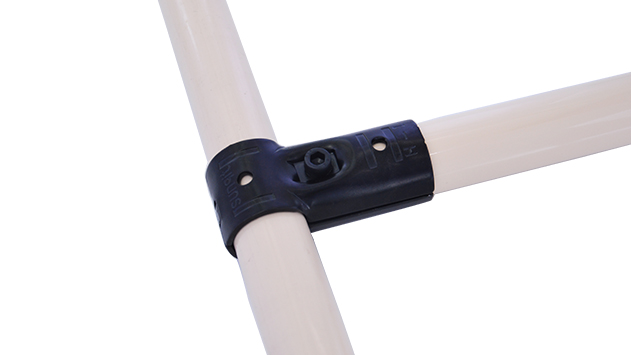
Let's start with two-way lean pipe joints. As the name suggests, these joints are designed to connect two pipes at a specific angle (most commonly 90°, though some are adjustable to 45° or 135°). Imagine a T-shape or L-shape connector: one end anchors to a vertical pipe, and the other extends horizontally, allowing a second pipe to attach perpendicular or at an angle. This design makes two-way joints ideal for creating corners, branches, or multi-directional structures where movement or access isn't limited to a single path.
Key Features of Two-Way Joints:
- Multi-Directional Connectivity: The defining trait—they link two pipes in different directions, enabling the creation of "branches" in a structure. For example, a vertical support pipe can use a two-way joint to add a horizontal shelf arm on one side and a tool holder arm on the other.
- Stability Under Load: Most two-way joints are engineered with reinforced bases or locking mechanisms (like set screws or clamp-on designs) to prevent wobbling when supporting weight. This makes them reliable for structures that hold tools, parts bins, or even heavy workpieces.
- Adjustability: Many modern two-way joints allow for minor angle adjustments (e.g., from 85° to 95°) after installation, letting workers fine-tune the position of shelves or arms to match ergonomic needs or workflow changes.
- Material Versatility: Available in materials like stainless steel (for corrosion resistance in humid environments) or aluminum (for lighter, more portable structures), two-way joints can be paired with different pipe types to suit specific manufacturing conditions.
So, where do two-way joints shine? Any scenario that demands flexibility in structure design. Let's say you're building a workbench for electronics assembly: workers need tools within arm's reach on both sides, and parts bins stacked above the work surface. A two-way joint can connect the bench's vertical legs to horizontal crossbars, which then support shelves on either side and a overhead bin rack. If the assembly process changes next month, you can loosen the joints, reposition the shelves, and tighten them back—no welding or new parts needed.
One-Way Lean Pipe Joints: Simplicity for Linear Workflows
Now, let's turn to one-way lean pipe joints. These are the "straight shooters" of the joint world: they connect pipes in a single, fixed direction, typically along a straight line or a rigid angle with no branching. Picture a simple coupler that slides over the end of one pipe and locks into another, extending the length of a structure without adding side branches. Or a fixed-angle joint that connects two pipes in a straight line (e.g., 180°) or a strict 90° angle with no option for a second branch.
At first glance, one-way joints might seem limiting—after all, they can't create branches. But that simplicity is their greatest strength. By focusing on linear or single-direction connectivity, they excel in scenarios where consistency, low cost, and ease of installation are priorities.
Key Features of One-Way Joints:
- Linear Focus: Designed for straight-line extension or fixed, non-branching angles. They're perfect for creating long, continuous structures like conveyors or straight material racks.
- Quick Installation: With fewer moving parts (often just a clamp or set screw), one-way joints are faster to assemble than their two-way counterparts. This speeds up the initial setup of structures like roller tracks or temporary storage racks.
- Cost-Effective: Their simpler design means lower manufacturing costs, making them a budget-friendly choice for large-scale installations where branching isn't needed.
- Consistent Alignment: By limiting movement to one direction, one-way joints reduce the risk of misalignment in linear systems. For example, a conveyor using one-way joints will stay straight and level, minimizing jams or product damage during transport.
One-way joints are the workhorses of linear workflows. Imagine a food packaging plant where products move from filling machines to labeling stations in a straight line. A conveyor built with one-way joints ensures the belt stays aligned, and since there are no branches to complicate the path, operators can quickly troubleshoot issues (like a stuck package) without navigating a maze of pipes. Similarly, a flow rack designed for first-in, first-out (FIFO) material handling might use one-way joints to create straight, sloped lanes—no need for branches when parts only need to move from the back to the front.

Two-Way vs. One-Way: A Head-to-Head Comparison
To truly understand when to choose two-way or one-way joints, let's break down their differences across key categories. The table below compares their design, functionality, and practical use cases:
| Category | Two-Way Lean Pipe Joints | One-Way Lean Pipe Joints |
|---|---|---|
| Design Focus | Multi-directional connectivity (branches, corners) | Linear or single-direction connectivity (straight lines, fixed angles with no branches) |
| Load Capacity | Higher (reinforced design supports vertical and horizontal loads) | Moderate (best for evenly distributed linear loads) |
| Flexibility | High (easily reconfigured to add/remove branches or adjust angles) | Low (fixed direction; reconfiguration often requires replacement) |
| Installation Complexity | Moderate (may require tools to tighten set screws or align angles) | Low (simple slide-on or clamp design; quick to assemble) |
| Cost | Higher (complex design = higher manufacturing costs) | Lower (simpler design = budget-friendly for large scales) |
| Best For | Workbenches, multi-access flow racks, ergonomic tool stations, structures needing branches | Conveyors, linear roller tracks, FIFO flow racks, temporary straight-line storage |

Real-World Applications: When to Choose Which Joint?
The best way to grasp the impact of joint selection is to look at real manufacturing scenarios. Let's explore two case studies where choosing between two-way and one-way joints directly influenced efficiency, cost, and adaptability.
Case Study 1: Automotive Assembly Workbench with Two-Way Joints
A mid-sized automotive parts manufacturer was struggling with a common problem: their assembly workbenches were fixed, built with welded steel frames. When they introduced a new line of smaller, more complex parts, the old workbenches became a bottleneck. Workers needed more tool storage, but the fixed shelves couldn't be adjusted; ergonomic heights varied between operators, leading to fatigue; and reconfiguring the benches for new part sizes took days (and a team of welders).
The solution? They partnered with a lean pipe supplier to replace the fixed benches with modular lean pipe workbenches using two-way joints. Here's what changed:
- Tool and Shelf Flexibility: Two-way joints allowed workers to add side-mounted tool holders on both sides of the bench and adjust shelf heights by simply loosening set screws, repositioning the joint, and tightening. No more waiting for welders—reconfigurations took 30 minutes instead of 3 days.
- Ergonomic Gains: One operator, who was 5'2", could lower her main work surface by 6 inches using two-way joints on the bench legs, reducing back strain. A taller colleague, 6'4", raised his by 4 inches—no two benches were identical, but all were optimized for their users.
- Cost Savings: While the initial investment in two-way joints was higher than welded steel, the ability to reuse the same pipes and joints for future product lines eliminated the need to buy new benches. Over two years, they saved 40% on workbench costs.
The takeaway? For workbenches and multi-functional stations where adaptability and ergonomics are critical, two-way joints turn static structures into dynamic tools that grow with the business.
Case Study 2: Electronics Conveyor System with One-Way Joints
A contract electronics manufacturer specializing in circuit boards needed to build a 50-foot conveyor system to move PCBs from soldering stations to quality control (QC) inspection. The workflow was strictly linear: PCBs exited the soldering machine, traveled straight to a cooling zone, then to QC, with no branches or side paths. The goal was to minimize jams, ensure consistent speed, and keep costs low for a project with tight margins.
Their lean pipe supplier recommended a conveyor built with one-way joints. Here's why it worked:
- Linear Stability: One-way joints kept the conveyor frame perfectly straight, even when supporting the weight of the belt and PCBs. This eliminated "wobble" that could cause PCBs to slide off or get stuck between rollers.
- Fast Installation: The team assembled the 50-foot conveyor in a single day, thanks to the simple slide-on design of one-way joints. With no angles or branches to align, they just connected pipe after pipe, secured the joints with set screws, and mounted the rollers.
- Low Maintenance: Since there were no complex angles or adjustable parts, there were fewer points of failure. Over six months of operation, the conveyor required only minor adjustments (tightening a few loose screws), compared to the manufacturer's previous welded conveyor, which needed monthly realignment.
- Cost Efficiency: One-way joints cost 30% less per unit than two-way joints, and since they needed 120 joints for the system, the total savings on materials alone justified the choice. The linear design also reduced the number of rollers needed, cutting costs further.
In this case, one-way joints were the clear winner: their simplicity, cost-effectiveness, and focus on linear stability made them the perfect fit for a workflow with no need for branching.
Common Mistakes to Avoid When Choosing Joints
Even with a clear understanding of two-way and one-way joints, manufacturers sometimes make missteps that lead to inefficiency, added costs, or safety risks. Here are three common pitfalls to watch for:
Mistake 1: Overlooking Future Reconfiguration Needs
A factory might install a flow rack with one-way joints to save money, assuming their workflow will always be linear. But six months later, they add a second production line and need to branch the flow rack to feed both lines. Suddenly, those one-way joints are useless—they have to replace the entire rack or kludge together a solution with duct tape and zip ties (not ideal for lean manufacturing). Always ask: Will this structure need to grow, shrink, or change shape in the next 1–3 years? If yes, two-way joints (or a mix of both) might be worth the upfront cost.
Mistake 2: Overestimating Load Capacity
Two-way joints are strong, but they're not indestructible. A warehouse might use lightweight aluminum two-way joints to build a flow rack, then stack 50-pound parts bins on every shelf. Over time, the joints bend under the weight, causing the rack to lean and parts to fall. Always check the load rating provided by your lean pipe supplier and test joints under realistic conditions. When in doubt, opt for heavier-duty stainless steel joints or add reinforcement (like extra vertical supports) to distribute weight.
Mistake 3: Ignoring Environmental Conditions
A food processing plant might use standard steel one-way joints in a refrigerated area, not realizing that moisture will cause rust. The rust weakens the joints, leading to sudden failures. In humid, wet, or corrosive environments, choose stainless steel joints or aluminum joints with anti-corrosion coatings. It's a small detail that prevents big headaches (and safety hazards) down the line.
Best Practices for Choosing the Right Joint
To avoid these mistakes and make the best choice for your facility, follow these best practices:
- Map Your Workflow First: Draw a diagram of how materials, workers, and tools move through the space. Do parts need to go in straight lines (one-way territory) or change direction, access shelves from multiple sides, or adjust for different tasks (two-way territory)?
- Consult Your Lean Pipe Supplier: A reputable supplier won't just sell you joints—they'll help you test configurations. Ask for samples, and simulate real-world loads (e.g., stack actual parts bins on a test rack) to see how the joints perform.
- Balance Flexibility and Cost: You don't need two-way joints everywhere. A hybrid approach works: use two-way joints for workbenches and multi-access flow racks, and one-way joints for conveyors and linear storage. This optimizes both flexibility and budget.
- Train Your Team: Even the best joints are useless if workers don't know how to adjust them safely. Train maintenance staff and operators on how to loosen/tighten joints, check for wear, and recognize signs of overloading (like bent pipes or loose screws).
The Future of Lean Pipe Joints: Smart, Sustainable, and More Connected
As manufacturing evolves, so too will lean pipe joints. Here are two trends to watch:
- Smart Joints with IoT Integration: Imagine joints embedded with tiny sensors that monitor load, vibration, and temperature. If a joint on a conveyor starts to loosen, it sends an alert to maintenance before it fails. This predictive maintenance could reduce downtime by 50% or more.
- Sustainable Materials: With a focus on green manufacturing, suppliers are developing joints made from recycled aluminum or biodegradable plastics (for light-load applications). Some are even designing joints that can be disassembled and recycled at the end of their life, reducing waste.
Conclusion: Small Joints, Big Impact
Two-way and one-way lean pipe joints might not grab headlines, but they're the backbone of efficient, adaptable manufacturing systems. Two-way joints empower flexibility, turning static workbenches and flow racks into tools that grow with your business and keep workers comfortable. One-way joints excel in linear workflows, ensuring stability, speed, and cost savings where branching isn't needed. The key isn't choosing one over the other—it's understanding your workflow, balancing flexibility and cost, and partnering with a lean pipe supplier who can guide you to the right mix.
In the end, lean manufacturing is about eliminating waste—and the biggest waste of all is investing in structures that can't keep up with your team's needs. Whether you're building a workbench, a conveyor, or a flow rack, the right joint choice ensures your system doesn't just support your operations today—it adapts, evolves, and keeps your manufacturing floor lean for years to come.