- Company Articles
- Products and Technology
- Product knowledge
- Types of Saddle Pipe Clamps: Fixed, Adjustable & Quick-Release Varieties

Types of Saddle Pipe Clamps: Fixed, Adjustable & Quick-Release Varieties
Related Product
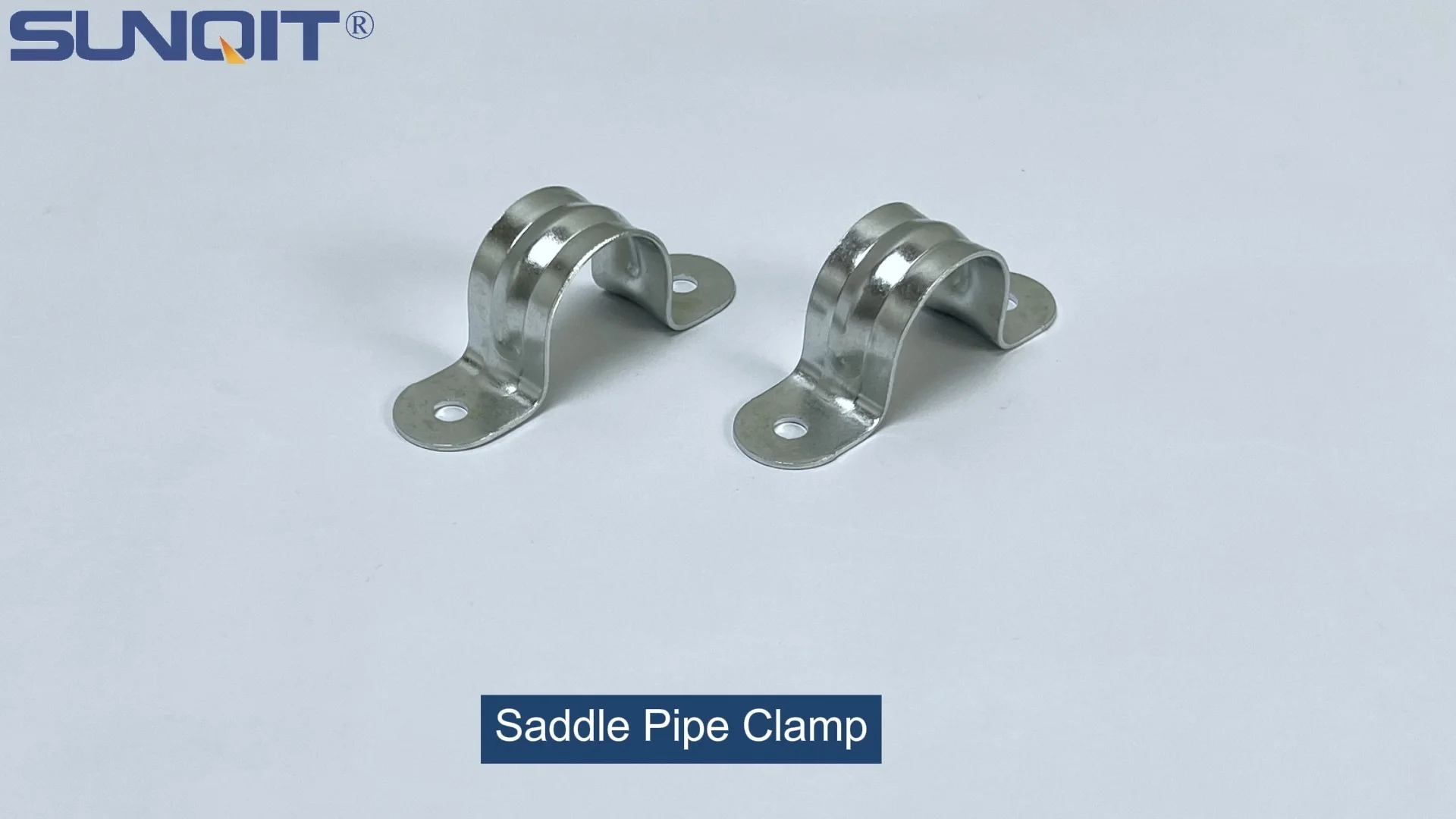
Saddle Pipe Clamp
Saddle pipe clamp, used for board connect with pipe, usually for table top installation.
Walk into any busy manufacturing plant, warehouse, or assembly line, and you'll spot them—quietly holding everything together, yet rarely getting the spotlight. We're talking about saddle pipe clamps : those unassuming components that turn a jumble of pipes, profiles, and frames into structured, functional systems. Whether it's a lean pipe workbench where workers assemble electronics, a flow rack shuttling materials across the floor, or a conveyor belt keeping production moving, saddle pipe clamps are the unsung heroes ensuring stability, safety, and efficiency.
But not all clamps are created equal. Just as a carpenter wouldn't use a hammer to screw in a nail, choosing the right saddle pipe clamp depends on the job at hand. Fixed clamps for permanent setups, adjustable clamps for evolving layouts, quick-release clamps for fast-paced reconfigurations—each type has its unique role in building robust, adaptable workspaces. In this guide, we'll dive into the world of saddle pipe clamps, breaking down their designs, materials, and best uses. By the end, you'll know exactly which clamp to reach for the next time you're building, repairing, or upgrading your facility's infrastructure.
What Are Saddle Pipe Clamps, Anyway?
Before we jump into types, let's get clear on what a saddle pipe clamp actually is. At its core, it's a device designed to secure a pipe (or tube) to a surface, frame, or another pipe. Think of it as a "hug" for pipes—tight enough to prevent slipping or shaking, but designed to fit specific pipe diameters and materials. Most clamps consist of two main parts: a curved "saddle" that conforms to the pipe's shape, and a base or bracket that attaches to the supporting structure (like an aluminum profile or a steel frame). They're typically fastened with bolts, screws, or levers, depending on the design.
Saddle pipe clamps are everywhere in industrial settings, but their versatility extends beyond factories. You might find them in labs securing gas lines, in retail backrooms holding up shelving, or even in workshops organizing tools. What makes them so indispensable? Unlike rigid welding or glue, clamps offer a balance of strength and flexibility—they hold pipes firmly but can be removed or adjusted when needs change. Plus, they're compatible with a wide range of materials: steel, aluminum, plastic, and even stainless steel (a staple in the stainless steel pipe series for corrosion-resistant setups).
Type 1: Fixed Saddle Pipe Clamps—Stability You Can Rely On
Design & How They Work
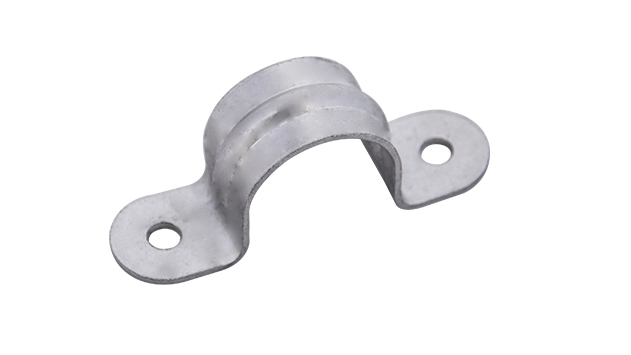
Fixed saddle pipe clamps are the "set-it-and-forget-it" option. Once installed, they lock the pipe in place with little to no room for movement. Their design is straightforward: a one-piece or two-piece saddle with pre-drilled holes for bolts, and a flat base that mounts to a surface (like a workbench frame or a wall). The saddle itself is curved to match a specific pipe diameter (e.g., 1-inch, 0.5-inch), ensuring a snug fit. When tightened, the bolts compress the saddle around the pipe, creating a rigid connection that won't shift under vibration, weight, or time.
Many fixed clamps are made from heavy-duty materials like stainless steel (ideal for high-stress environments) or aluminum (lighter, but still strong for medium loads). For example, a stainless steel fixed clamp from the stainless steel pipe series is perfect for outdoor use or areas with moisture, as it resists rust and corrosion. Aluminum fixed clamps, on the other hand, are popular in cleanrooms or electronics manufacturing, where lightweight, non-magnetic tools are preferred.
Best For: Permanent, High-Stress Setups
Fixed clamps shine in scenarios where the pipe's position won't change. Think: a lean pipe workbench that's been optimized for a specific assembly task and will stay that way for months (or years). Or a material rack in a warehouse that holds heavy boxes—you don't want those pipes shifting and risking a collapse. Fixed clamps are also a top choice for overhead installations, like ceiling-mounted conveyor tracks, where any movement could be dangerous.
Another scenario? When you need to minimize costs. Fixed clamps are often cheaper than adjustable or quick-release models because they have fewer moving parts. If you're building a static structure and don't anticipate needing to reposition pipes, fixed clamps are the most economical, durable choice.
Pro Tip: Measure Twice, Clamp Once
The biggest mistake people make with fixed clamps is choosing the wrong size. A clamp that's too loose will let the pipe wiggle; too tight, and you risk damaging the pipe (especially if it's a lightweight aluminum or plastic tube). Always check the pipe's outer diameter (OD) before buying, and match it to the clamp's specified size. For example, a 1-inch stainless steel pipe from the stainless steel pipe series needs a clamp rated for 1-inch OD—no exceptions.
Type 2: Adjustable Saddle Pipe Clamps—Flexibility for Evolving Spaces
Design & How They Work
If fixed clamps are the "permanent residents," adjustable clamps are the "long-term renters" of the clamp world. They're built to hold pipes securely but allow for minor tweaks in position—no need to drill new holes or replace the clamp entirely. How? Most adjustable clamps feature slotted holes in the base or saddle, letting you slide the clamp left, right, up, or down before tightening. Some even have swiveling saddles that pivot to accommodate pipes at slight angles (useful for uneven surfaces or sloped frames).
Materials here vary, but aluminum pipe clamp models are particularly popular for adjustable setups. Aluminum is lightweight, making it easy to loosen, reposition, and retighten without straining. It's also resistant to corrosion, so you won't have to worry about rust locking the adjustment slots over time. For heavier loads, you'll find adjustable clamps in steel or stainless steel, often with rubberized saddles to protect the pipe and reduce vibration.
Best For: Semi-Permanent Layouts That Change (A Little)
Adjustable clamps are your go-to when your workspace isn't set in stone. Let's say you run a small manufacturing shop that produces seasonal products: in Q1, you're assembling holiday gadgets, and in Q3, you switch to back-to-school gear. Your assembly line layout might need minor tweaks—maybe a conveyor needs to shift 6 inches to the left, or a workbench's material rack needs to angle slightly to reduce worker strain. Adjustable clamps let you make these changes without rebuilding the entire structure.
They're also ideal for prototyping. If you're testing a new lean pipe system design, adjustable clamps let you experiment with pipe positions, tighten them temporarily, and see how the workflow feels. Once you're happy, you can either keep the adjustable clamps (for future tweaks) or swap them out for fixed clamps for a permanent setup.
Pro Tip: Don't Over-Tighten (Yes, Really)
It's tempting to cranking the bolts on an adjustable clamp until they're "good and tight," but resist the urge! Over-tightening can strip the threads in the adjustment slots, turning a flexible clamp into a stuck one. Instead, tighten until the pipe doesn't move when gently wiggled—you'll still have enough grip, and you'll preserve the clamp's adjustability for next time.

Type 3: Quick-Release Saddle Pipe Clamps—Speed for Fast-Paced Environments
Design & How They Work
Now, let's talk about the speed demons of the clamp world: quick-release saddle pipe clamps. These are built for one thing: getting pipes on and off in seconds, no tools required. Instead of bolts, they use levers, cams, or spring-loaded mechanisms to lock the saddle in place. Flip a lever, slide the pipe out, reposition, and flip the lever back—done. It's like the difference between using a screw-top jar and a jar with a clamp lid: both seal tightly, but one is way faster to open.
Quick-release clamps are often made with a mix of materials: aluminum or plastic for the body (to keep weight down), and steel for the locking mechanism (to ensure strength). Some models even have rubber or foam padding on the saddle to protect delicate pipes, like the ones used in ESD workstations where static-sensitive components are handled.
Best For: Frequent Reconfigurations & Rapid Repairs
If your facility thrives on agility—think: a contract manufacturer that switches between client projects weekly, or a warehouse with daily order spikes—quick-release clamps are a game-changer. For example, a turnover trolley used to transport materials between stations might need its pipe rails adjusted to fit different-sized bins. With quick-release clamps, a worker can reconfigure the trolley in 2 minutes instead of 20, keeping the line moving.
They're also lifesavers during breakdowns. Imagine a conveyor belt jams, and a pipe has bent slightly. With a fixed clamp, you'd need a wrench to remove it, slowing down repairs. With a quick-release clamp? Pop it open, replace the pipe, and you're back up and running before the line supervisor even notices the delay.
Pro Tip: Balance Speed with Security
Quick-release clamps are fast, but they're not always the best for heavy loads. The lever or cam mechanism, while convenient, can loosen under constant vibration (like a conveyor running 24/7). If you're using quick-release clamps for heavy pipes, look for models with a secondary locking feature—like a small bolt that tightens after flipping the lever—to add an extra layer of security.

Fixed vs. Adjustable vs. Quick-Release: A Side-by-Side Comparison
| Feature | Fixed Saddle Pipe Clamp | Adjustable Saddle Pipe Clamp | Quick-Release Saddle Pipe Clamp |
|---|---|---|---|
| Design | One-piece or two-piece saddle; fixed bolt holes; no moving parts. | Slotted holes or swiveling saddle; allows minor position tweaks. | Lever/cam/spring mechanism; tool-free operation. |
| Best Materials | Stainless steel (stainless steel pipe series), steel. | Aluminum (aluminum pipe clamp), steel with rubber padding. | Aluminum, plastic, steel (with lightweight body). |
| Installation Time | 5–10 minutes (requires tools). | 5–15 minutes (tools needed for initial setup; tweaks take 1–2 minutes). | 30 seconds–2 minutes (no tools). |
| Best For | Permanent setups (lean pipe workbenches, fixed racks). | Semi-permanent layouts (seasonal production lines, prototyping). | Frequent changes (turnover trolleys, rapid repairs). |
| Weight Capacity | High (up to 500+ lbs per clamp). | Medium to high (up to 300–400 lbs per clamp). | Medium (up to 200–300 lbs per clamp; lower for plastic models). |
| Cost | Lowest (fewer parts). | Moderate (extra machining for slots). | Highest (complex locking mechanisms). |
Materials Matter: Choosing the Right Clamp for Your Environment
Now that you know the types, let's talk materials. The metal (or plastic) your saddle pipe clamp is made from affects its durability, weight, and performance. Here's how to choose:
Stainless Steel: For Tough, Corrosive Environments
If your workspace deals with moisture, chemicals, or extreme temperatures, stainless steel clamps (from the stainless steel pipe series ) are your best bet. They resist rust, won't corrode when exposed to cleaning agents (common in food processing or pharmaceuticals), and stand up to heavy loads. The downside? They're heavier than aluminum, so they're not ideal for portable setups like lightweight trolleys.
Aluminum: Lightweight & Rust-Resistant
Aluminum pipe clamp models are perfect for indoor, dry environments where weight matters. They're easy to handle, won't scratch delicate pipes (like anodized aluminum profiles), and are naturally rust-resistant (though not as tough as stainless steel in wet conditions). Use them for workbenches, material racks, or any structure that needs to be moved occasionally.
Plastic: For Delicate Pipes & Low Loads
Plastic clamps are rare, but they have their place. They're non-conductive (great for electronics manufacturing), won't mar soft pipes (like PVC or plastic tubing), and are super lightweight. Stick to light loads, though—plastic can warp under heavy weight or high heat.
Beyond Clamps: How Saddle Pipe Clamps Work with Other Components
Saddle pipe clamps don't work alone—they're part of a larger ecosystem of components that build functional workspaces. One key partner? The lean pipe joint . While clamps secure pipes to surfaces, lean pipe joints connect pipes to each other at angles (90 degrees, 45 degrees, etc.). Together, clamps and joints let you build everything from simple shelving to complex conveyor systems.
For example, to build a lean pipe workbench : you'd use lean pipe joints to connect vertical pipes (legs) to horizontal pipes (the frame), then use saddle pipe clamps to secure a wooden or metal top to the frame. If the workbench needs a material rack above it, you'd add more joints to extend vertical pipes upward, then use clamps to hold the rack's horizontal pipes in place. It's a modular system where each part plays a role.
Other accessories to consider: plastic pipe end caps (to cover sharp pipe edges and prevent debris buildup), rubber gaskets (to reduce vibration between the clamp and pipe), and locking washers (to keep bolts from loosening over time). These small additions can extend the life of your clamps and make your setup safer and more efficient.
Final Thoughts: The Right Clamp Makes All the Difference
Saddle pipe clamps may be small, but their impact on your facility's efficiency, safety, and adaptability is huge. Whether you're securing a permanent workbench with fixed clamps, tweaking a semi-permanent line with adjustable clamps, or reconfiguring a trolley in minutes with quick-release clamps, choosing the right type ensures your setup works for you—not against you.
Remember: it's not about picking the "best" clamp, but the best clamp for the job . A quick-release clamp might seem flashy, but if you're building a static rack, a fixed clamp will serve you better (and save you money). An adjustable clamp is perfect for a changing line, but don't skimp on material—aluminum for light loads, stainless steel for heavy, wet ones.
So next time you're in the workshop, take a second to appreciate those saddle pipe clamps. They may not get the glory, but they're the reason your pipes stay put, your workers stay safe, and your operation stays on track. And when it's time to upgrade or expand? You'll know exactly which clamp to grab.