- Company Articles
- Products and Technology
- Product knowledge
- Types of Swivel Stem Caster Wheels: Material Differences (Rubber vs Polyurethane)

Types of Swivel Stem Caster Wheels: Material Differences (Rubber vs Polyurethane)
Related Product
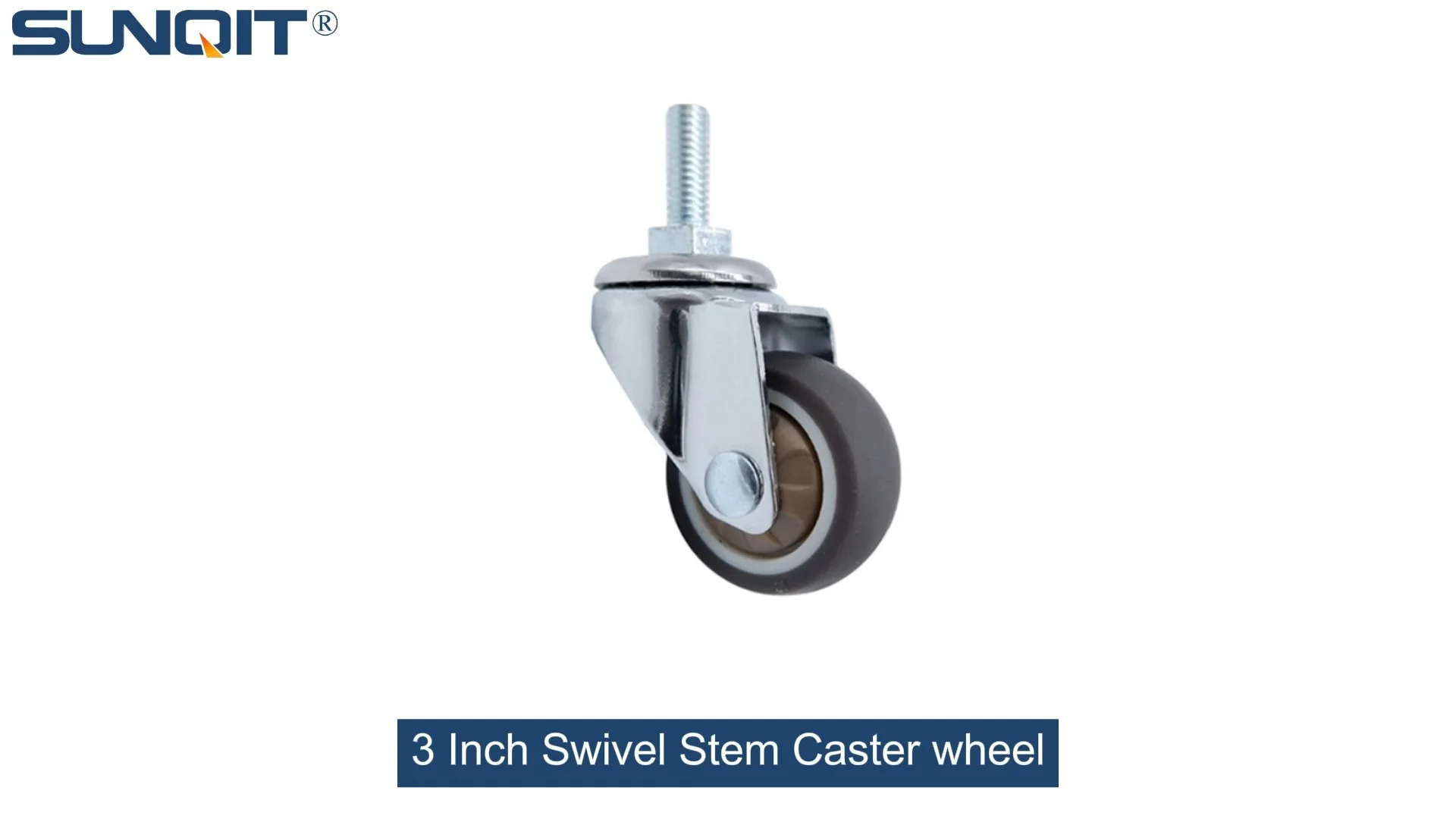
Swivel Stem Caster wheel
360 Degree Swivel Stem Caster. Threaded-post mount design, castors diameter 3 inch.Each swivel caster wheels loading 70KGS. Heavy enough and widely suit for carts, chairs, cabinet, flow rack, workbench, turnover rolley.
Walk into any busy warehouse, manufacturing plant, or even a bustling restaurant kitchen, and you'll notice something but crucial: the wheels on carts, workbenches, and equipment. These aren't just any wheels—many are swivel stem caster wheels, the unsung heroes that keep operations rolling smoothly. From moving heavy loads in a factory to positioning a medical cart beside a patient's bed, these wheels play a vital role in daily efficiency. But not all caster wheels are created equal, and one of the biggest factors that set them apart is the material they're made of. Today, we're diving deep into two of the most popular options: rubber and polyurethane. By the end, you'll understand how each material performs, where they excel, and how to choose the right one for your needs—plus, we'll touch on key accessories that can elevate their performance.
Understanding Swivel Stem Caster Wheels: More Than Just "Wheels"
Before we jump into materials, let's take a moment to appreciate what makes a swivel stem caster wheel unique. Unlike fixed wheels that only roll forward and backward, swivel stem casters are designed to rotate 360 degrees, allowing the equipment they're attached to move in any direction with minimal effort. This flexibility is a game-changer in tight spaces—think navigating a loaded cart through narrow warehouse aisles or positioning a workbench exactly where it's needed on the production floor.
A typical swivel stem caster wheel has four main components: the stem, the swivel head, the wheel itself, and (often) a brake mechanism. The stem is the part that attaches the caster to the equipment—usually a threaded rod or a smooth shaft that fits into a mounting hole. The swivel head is the "joint" that allows rotation, containing bearings to reduce friction and ensure smooth movement. The wheel, of course, is the part that touches the floor, and its material is what we'll focus on today. And for added safety, many models come with a swivel stem caster wheel with brake , which can lock the wheel in place to prevent accidental movement—critical in settings like hospitals or loading docks where stability is non-negotiable.
These wheels come in all shapes and sizes, but their performance hinges largely on the wheel material. Whether you're hauling 500 pounds of raw materials or pushing a lightweight tool cart, the right material can mean the difference between smooth, quiet operation and frequent breakdowns, floor damage, or frustratingly stiff movement.
Why Material Matters: The Foundation of Caster Performance
Imagine using a rubber-soled shoe on a slippery floor versus a polyurethane-soled one—the difference in grip, durability, and comfort is obvious. The same logic applies to caster wheels. The material determines how well the wheel handles weight, interacts with different floor surfaces, resists wear and tear, and even how much noise it makes. Choose the wrong material, and you might end up with scratched floors, squeaky wheels that disrupt the workplace, or frequent replacements that eat into your budget. Choose the right one, and your caster wheels will become nearly invisible—quietly supporting your operations for years.
While there are other materials like nylon, steel, and rubber-polyurethane blends, rubber and polyurethane are the workhorses of the industry. Let's break down each one, starting with rubber.

Rubber Swivel Stem Caster Wheels: The Soft, Quiet Performer
What Is Rubber, Anyway?
Rubber caster wheels are typically made from either natural rubber (derived from rubber trees) or synthetic rubber (like styrene-butadiene rubber, or SBR). Natural rubber is prized for its elasticity and flexibility, while synthetic rubber is often more resistant to oil, heat, and aging. Many rubber wheels are also blended with additives to enhance specific properties—like carbon black for durability or plasticizers to keep them soft in cold temperatures.
The Pros of Rubber: When Softness Shines
One of rubber's biggest advantages is its inherent grip . Think of a rubber tire on a car—it sticks to the road, even in wet conditions. Similarly, rubber caster wheels excel on smooth floors like tile, hardwood, or polished concrete, providing traction that reduces slipping. This makes them ideal for environments where stability is key, such as hospitals (where medical carts need to stay put when parked) or retail stores (where display racks shouldn't slide unexpectedly).
Rubber is also incredibly quiet . Unlike harder materials that clatter on concrete, rubber absorbs vibrations and muffles sound, making it a top choice for noise-sensitive settings. Imagine a busy office with rolling file cabinets—rubber wheels would glide silently, while harder materials might echo through the workspace. In healthcare, where patients need rest, or schools where classrooms need to stay calm, this quiet operation is priceless.
Another standout feature of rubber is its floor protection . The soft, non-abrasive surface of rubber wheels is gentle on delicate floors, reducing the risk of scratches, scuffs, or indentations. This is a big plus for facilities with expensive flooring, like museums, high-end retail stores, or residential care homes. Even in industrial settings, rubber can protect polished concrete from daily wear and tear.
Finally, rubber is cost-effective . Compared to polyurethane, rubber wheels are often more affordable upfront, making them a popular choice for budget-conscious buyers or applications where the wheels won't be under heavy stress—think lightweight utility carts in offices or small warehouses.
The Cons of Rubber: Where Softness Becomes a Liability
While rubber has many strengths, it's not perfect. Its softness, which makes it great for grip and quietness, also means it's less durable under heavy loads or rough conditions . Over time, rubber wheels can develop flat spots, cracks, or chunking—especially if they're used to haul heavy weights or roll over debris like gravel or metal shavings. In high-temperature environments (above 180°F), rubber can also harden or melt, losing its elasticity and grip.
Rubber is also susceptible to chemicals . Oils, solvents, and even some cleaning agents can break down rubber, causing it to swell, crack, or degrade. This makes it a poor choice for automotive shops, factories with chemical exposure, or kitchens where oil spills are common. Additionally, rubber wheels can leave marks on floors if they're low-quality or if debris gets trapped in the tread—though this is less common with premium rubber blends.
Best Applications for Rubber Swivel Stem Caster Wheels
Rubber wheels shine in environments where noise, floor protection, and moderate loads are priorities. Examples include:
- Healthcare: Medical carts, IV stands, and patient transport beds (paired with a swivel stem caster wheel with brake for safety).
- Offices and Schools: File cabinets, AV carts, and mobile whiteboards.
- Retail: Display racks, stock carts, and checkout counters.
- Light Manufacturing: Tool carts and small parts bins where loads are under 300 pounds.

Polyurethane Swivel Stem Caster Wheels: The Heavy-Duty Hard Worker
What Is Polyurethane? The "Tough Yet Flexible" Contender
Polyurethane (often abbreviated as PU) is a synthetic material that sits somewhere between rubber and plastic in terms of hardness and flexibility. It's created by reacting two chemicals—diisocyanates and polyols—to form a polymer that can be tailored to specific properties. Many polyurethane caster wheels are actually "dual-density," meaning they have a hard inner core (usually rubber or metal) for strength and a polyurethane outer layer for grip and durability. This combination gives them the best of both worlds: the toughness to handle heavy loads and the flexibility to absorb shocks.
The Pros of Polyurethane: Built for Durability and Performance
If rubber is the "gentle giant," polyurethane is the "workhorse." Its biggest claim to fame is unmatched durability . Polyurethane wheels resist abrasion, impact, and wear, making them ideal for heavy-duty applications. Unlike rubber, they don't develop flat spots even when left under constant pressure, and they can handle loads ranging from 300 to 2,000 pounds per wheel—perfect for industrial carts, assembly line workbenches, and warehouse pallet jacks.
Polyurethane also boasts excellent chemical resistance . It stands up to oils, greases, solvents, and most cleaning agents, making it a staple in automotive shops, manufacturing plants, and commercial kitchens. Spills that would destroy rubber wheels barely faze polyurethane, which means less downtime for replacements and repairs.
Another advantage is temperature tolerance . Polyurethane wheels perform well in a wider range of temperatures, from -20°F to 200°F, making them suitable for cold storage facilities, bakeries, and outdoor use (though extreme heat can still cause issues over time). This versatility sets them apart from rubber, which struggles in high heat.
Despite being harder than rubber, polyurethane still offers good floor protection . It's softer than steel or nylon, so it won't scratch or dent floors as easily, and its non-marking properties mean it won't leave unsightly streaks on polished surfaces. This makes it a great middle ground for facilities that need durability without sacrificing floor care.
The Cons of Polyurethane: When Toughness Comes at a Cost
Polyurethane isn't without drawbacks, starting with cost . Upfront, polyurethane wheels are pricier than rubber—sometimes twice as much. While they often last longer, making them more cost-effective in the long run, the initial investment can be a barrier for small businesses or applications with light loads.
They're also noisier than rubber . While not as loud as steel or nylon, polyurethane wheels can produce a higher-pitched hum on hard floors like concrete, especially at high speeds. This might not matter in a noisy factory, but it could be a problem in quiet offices or hospitals.
Finally, polyurethane has less shock absorption than rubber . On rough or uneven floors, this can make for a bumpier ride, which might jostle delicate items or fatigue workers pushing heavy carts. Some manufacturers address this with softer polyurethane blends, but these are often less durable than standard formulations.
Best Applications for Polyurethane Swivel Stem Caster Wheels
Polyurethane wheels are the go-to choice for heavy-duty, high-wear environments. Examples include:
- Warehousing and Logistics: Pallet jacks, material handling carts, and loading dock equipment.
- Manufacturing: Assembly line workbenches, tool carts, and parts bins with heavy loads.
- Automotive Shops: Service carts, toolboxes, and equipment stands (resistant to oil and grease).
- Commercial Kitchens: Food service carts and storage racks (handles heat and occasional spills).

Rubber vs. Polyurethane: A Head-to-Head Comparison
To help you visualize the differences, let's put rubber and polyurethane side by side in a comparison table. This will highlight their key strengths and weaknesses across critical performance metrics:
| Performance Metric | Rubber Swivel Stem Caster Wheels | Polyurethane Swivel Stem Caster Wheels |
|---|---|---|
| Load Capacity | Best for light to moderate loads (100–500 lbs per wheel) | Best for heavy loads (300–2,000+ lbs per wheel) |
| Durability | Moderate; prone to wear, cracks, and flat spots under heavy use (6–12 months lifespan in industrial settings) | High; resists abrasion and impact (1–3 years lifespan in industrial settings) |
| Floor Protection | Excellent; soft and non-marking, ideal for hardwood, tile, and polished concrete | Very good; softer than metal/nylon, non-marking, but harder than rubber (less risk of indentation than rubber) |
| Noise Level | Quiet; absorbs vibrations, minimal rolling noise | Moderate; louder than rubber on hard floors but quieter than steel/nylon |
| Chemical Resistance | Poor; damaged by oils, solvents, and harsh chemicals | Good; resists oils, greases, and most common chemicals |
| Temperature Range | -40°F to 180°F (struggles above 180°F) | -20°F to 200°F (more versatile across extremes) |
| Cost | Lower upfront cost ($5–$15 per wheel on average) | Higher upfront cost ($10–$30+ per wheel on average) |
| Best For | Hospitals, offices, schools, retail (quiet, light loads, floor protection) | Warehouses, manufacturing, automotive shops, kitchens (heavy loads, durability, chemical resistance) |
Beyond the Wheel: How Caster Accessories Elevate Performance
While the wheel material is critical, caster accessories can take your swivel stem caster wheels from "good" to "great." These add-ons enhance safety, durability, and functionality, ensuring your casters perform at their best for longer. Let's explore a few key ones:
Brakes: Safety First with Swivel Stem Caster Wheels with Brake
We've already mentioned the swivel stem caster wheel with brake , but it's worth emphasizing how important this accessory is. Brakes come in two main types: wheel brakes (which lock the wheel from rotating) and swivel locks (which prevent the caster from turning). Some models combine both for maximum stability. In settings like hospitals, where a patient lift cart must stay stationary during transfers, or on loading docks with inclines, a reliable brake can prevent accidents and injuries. Even in offices, brakes on file cabinets prevent them from rolling away when drawers are opened.
Bearings: The Secret to Smooth Swiveling
The swivel head's bearings might be hidden, but they're essential for easy rotation. High-quality ball bearings or roller bearings reduce friction, making it easier to push heavy loads—especially important for polyurethane wheels, which often carry more weight. Sealed bearings are also a must, as they keep out dirt and debris that can gum up the works, extending the caster's lifespan.
Stem Adapters and Extenders: Versatility in Mounting
Not all equipment has the same mounting holes, which is where stem adapters and extenders come in. These accessories let you use the same caster wheel on different types of equipment, saving you from buying new casters every time you upgrade a cart or workbench. For example, a threaded stem adapter can convert a smooth-stem caster to fit a threaded mounting hole.
Maintenance Kits: Prolonging Lifespan
Regular maintenance is key to keeping caster wheels rolling smoothly, and maintenance kits—including lubricants, cleaning brushes, and bearing pullers—make this easy. Silicone-based lubricants keep swivel heads and bearings moving freely, while cleaning tools remove hair, dirt, and debris that can cause uneven wear. Investing in these kits can double the lifespan of your casters, whether they're rubber or polyurethane.
Choosing the Right Material: A Step-by-Step Guide
Now that you understand the pros and cons of rubber and polyurethane, how do you decide which is right for your needs? Here's a simple checklist to guide you:
1. Start with Load Capacity
How much weight will the caster need to support? If you're moving 200-pound loads or less, rubber might be sufficient. For anything heavier—especially 500+ pounds—polyurethane is the safer bet. Remember to factor in the total weight of the equipment plus its contents, then divide by the number of casters to get the per-wheel load.
2. Consider Your Floor Type
Do you have hardwood, tile, or polished concrete floors that need protection? Rubber is gentler. If you're on rough concrete or asphalt, polyurethane's durability will shine. For outdoor use, polyurethane also holds up better against debris and weather.
3. Evaluate the Environment
Are there chemicals, oils, or extreme temperatures involved? Polyurethane resists chemicals and handles temperature swings better. In noise-sensitive areas like offices or hospitals, rubber's quiet operation is a must. For loud industrial settings, polyurethane's noise is less of a concern.
4. Think About Long-Term Costs
While rubber is cheaper upfront, polyurethane often lasts longer. If you'll be using the casters daily in a heavy-duty setting, the higher initial cost of polyurethane will pay off in fewer replacements. For light, occasional use, rubber might be the more economical choice.
5. Don't Forget Accessories
Even the best wheel material can underperform without the right accessories. A swivel stem caster wheel with brake adds safety, while high-quality bearings ensure smooth movement. Factor these into your decision—they're often worth the extra cost.
Final Thoughts: Let the Application Guide You
At the end of the day, there's no "better" material—only the right material for the job. Rubber swivel stem caster wheels are the quiet, gentle option, perfect for light loads, noise-sensitive environments, and floor protection. Polyurethane wheels are the tough, long-lasting workhorses, ideal for heavy loads, chemical exposure, and high-wear settings. And with the right caster accessories —like brakes, bearings, and maintenance kits—you can maximize performance no matter which material you choose.
So the next time you're shopping for casters, take a moment to think beyond the price tag. Consider the daily grind they'll endure: the floors they'll roll over, the weight they'll carry, the noise they'll make. By matching the material to the application, you'll ensure that your swivel stem caster wheels don't just roll—they roll smarter, safer, and longer. After all, in the world of material handling, the right wheels aren't just accessories—they're the foundation of efficiency.