- Company Articles
- Products and Technology
- Product knowledge
- Understanding 3060 Aluminum Angle Yards: Key Specifications & Dimensions

Understanding 3060 Aluminum Angle Yards: Key Specifications & Dimensions
Related Product
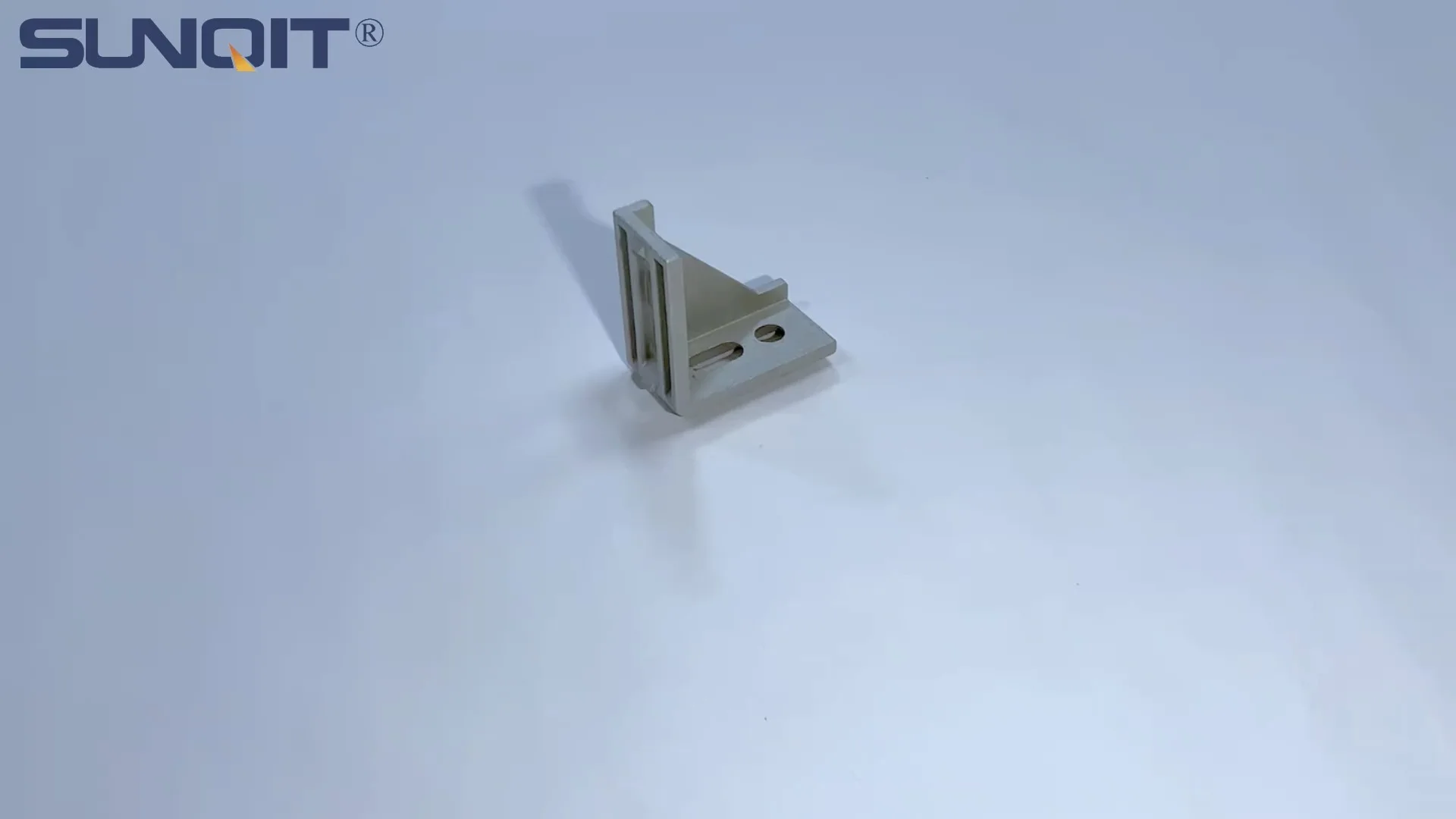
3060 Aluminum Angle Yards
It used for 90° flat connection for 20 series aluminum profile.
Introduction: The Backbone of Modern Workspace Design
Walk into any modern factory, workshop, or even a tech startup's office, and you'll notice a common thread in how spaces are organized: flexibility. From adjustable workbenches to modular storage racks, the ability to adapt to changing needs is no longer a luxury—it's a necessity. At the heart of this flexibility lies a humble yet powerful component: the
aluminum extrusion profile
. These metal frameworks, shaped through a precise manufacturing process, have revolutionized how we build, modify, and optimize workspaces. Among the countless profiles available, one stands out for its versatility and strength: the 3060 aluminum angle yard.
Whether you're a small business owner setting up your first assembly line, a warehouse manager looking to streamline material flow, or a DIY enthusiast building a custom workstation, understanding the ins and outs of 3060 aluminum angle yards can save you time, money, and headaches. In this article, we'll dive deep into what makes these profiles unique, their key specifications, critical dimensions, and how they work with aluminum profile accessories to create durable, flexible structures. By the end, you'll not only recognize a 3060 angle yard when you see one but also know exactly how to leverage its potential in your next project.
Whether you're a small business owner setting up your first assembly line, a warehouse manager looking to streamline material flow, or a DIY enthusiast building a custom workstation, understanding the ins and outs of 3060 aluminum angle yards can save you time, money, and headaches. In this article, we'll dive deep into what makes these profiles unique, their key specifications, critical dimensions, and how they work with aluminum profile accessories to create durable, flexible structures. By the end, you'll not only recognize a 3060 angle yard when you see one but also know exactly how to leverage its potential in your next project.
What Are 3060 Aluminum Angle Yards, Exactly?
Let's start with the basics: What defines a 3060 aluminum angle yard? At its core, it's a type of
aluminum profile
—a length of aluminum shaped into a specific cross-section through the extrusion process. The "3060" in its name refers to its primary dimensions: 30 millimeters (mm) in one leg of the angle and 60mm in the other. The "angle yard" part describes its shape: a right angle (90 degrees) with two perpendicular legs, resembling an "L" when viewed from the end.
But there's more to it than just size and shape. Unlike generic aluminum bars, 3060 angle yards are engineered with precision. During extrusion, molten aluminum is forced through a die (a custom metal mold) under high pressure, resulting in a consistent, uniform cross-section along the entire length of the profile. This process allows for intricate details, like T-slots—longitudinal grooves running along the legs—that are critical for attaching accessories. These T-slots are what make 3060 angle yards so adaptable: they let you bolt on brackets, shelves, wheels, or other components without welding or drilling, turning a simple metal bar into a building block for endless configurations.
Why choose an angle shape, though? Angles are inherently strong. The 90-degree bend distributes weight and stress evenly across both legs, making the profile resistant to bending or twisting. This strength-to-weight ratio is a game-changer. Aluminum is already lighter than steel, so a 3060 angle yard offers the structural integrity needed for heavy-duty applications (like supporting a workbench loaded with tools) without the bulk of traditional materials. It's no wonder these profiles are a staple in lean manufacturing systems, where efficiency and adaptability are paramount.
But there's more to it than just size and shape. Unlike generic aluminum bars, 3060 angle yards are engineered with precision. During extrusion, molten aluminum is forced through a die (a custom metal mold) under high pressure, resulting in a consistent, uniform cross-section along the entire length of the profile. This process allows for intricate details, like T-slots—longitudinal grooves running along the legs—that are critical for attaching accessories. These T-slots are what make 3060 angle yards so adaptable: they let you bolt on brackets, shelves, wheels, or other components without welding or drilling, turning a simple metal bar into a building block for endless configurations.
Why choose an angle shape, though? Angles are inherently strong. The 90-degree bend distributes weight and stress evenly across both legs, making the profile resistant to bending or twisting. This strength-to-weight ratio is a game-changer. Aluminum is already lighter than steel, so a 3060 angle yard offers the structural integrity needed for heavy-duty applications (like supporting a workbench loaded with tools) without the bulk of traditional materials. It's no wonder these profiles are a staple in lean manufacturing systems, where efficiency and adaptability are paramount.

Key Specifications: The Details That Matter
When selecting a 3060 aluminum angle yard for your project, it's easy to get fixated on dimensions alone—but the specifications go far beyond width and height. Let's break down the critical details that determine performance, durability, and compatibility.
Material Composition: The Alloy Story
Not all aluminum is created equal. Most 3060 angle yards are made from 6061-T6 aluminum alloy, a popular choice for structural applications. Why 6061-T6? Let's unpack the numbers: "6061" refers to the alloy's composition, which includes magnesium and silicon as the primary alloying elements. This blend gives the aluminum excellent corrosion resistance (important for workshops with humidity or chemical exposure) and good weldability (though, with T-slots, welding is rarely necessary). The "T6" denotes the temper, or heat treatment process: the aluminum is solution-heat-treated and then artificially aged to increase its strength. The result? A profile with a tensile strength of around 310 MPa (megapascals) and a yield strength of 276 MPa—strong enough to support heavy loads without permanent deformation.
Wall Thickness: Balancing Strength and Weight
The thickness of the angle yard's walls is another crucial spec. Most 3060 angle yards have a wall thickness of 1.5mm to 3mm, with 2mm being the industry standard for general-purpose use. Thicker walls (3mm) are better for high-load applications, like supporting a workbench in an automotive repair shop, while thinner walls (1.5mm) are lighter and more cost-effective for lighter tasks, such as building a shelving unit for small parts. It's a balancing act: thicker walls mean more strength but also more weight and higher cost, so choosing the right thickness depends on your project's specific needs.
Surface Treatment: Protection and Aesthetics
Aluminum naturally forms a thin oxide layer that resists corrosion, but manufacturers often enhance this protection with surface treatments. The most common is anodizing—a process where the profile is submerged in an electrolyte solution and subjected to an electric current, thickening the oxide layer. Anodized 3060 angle yards have a matte, uniform finish (usually clear, silver, or black) that's scratch-resistant and easy to clean. Some suppliers also offer powder coating, where a dry powder is electrostatically applied and baked onto the surface, adding color options (like blue, red, or yellow) for better visibility or branding. Both treatments extend the profile's lifespan, making it suitable for indoor and outdoor use (though anodizing is more common for industrial settings).
Tolerance: Precision in Every Millimeter
Tolerance refers to how much the actual dimensions of the profile can deviate from the specified measurements. For 3060 angle yards, tight tolerances are critical—especially if you're using accessories like brackets or connectors that rely on precise fits. Industry standards typically specify a tolerance of ±0.1mm for width and height, and ±0.05mm for wall thickness. Why does this matter? Imagine trying to slide a T-slot nut into a slot that's slightly narrower than expected—it would jam, slowing down assembly. Reputable manufacturers invest in high-quality dies and strict quality control to ensure their profiles meet these tolerances, so always check a supplier's specs before buying.
Material Composition: The Alloy Story
Not all aluminum is created equal. Most 3060 angle yards are made from 6061-T6 aluminum alloy, a popular choice for structural applications. Why 6061-T6? Let's unpack the numbers: "6061" refers to the alloy's composition, which includes magnesium and silicon as the primary alloying elements. This blend gives the aluminum excellent corrosion resistance (important for workshops with humidity or chemical exposure) and good weldability (though, with T-slots, welding is rarely necessary). The "T6" denotes the temper, or heat treatment process: the aluminum is solution-heat-treated and then artificially aged to increase its strength. The result? A profile with a tensile strength of around 310 MPa (megapascals) and a yield strength of 276 MPa—strong enough to support heavy loads without permanent deformation.
Wall Thickness: Balancing Strength and Weight
The thickness of the angle yard's walls is another crucial spec. Most 3060 angle yards have a wall thickness of 1.5mm to 3mm, with 2mm being the industry standard for general-purpose use. Thicker walls (3mm) are better for high-load applications, like supporting a workbench in an automotive repair shop, while thinner walls (1.5mm) are lighter and more cost-effective for lighter tasks, such as building a shelving unit for small parts. It's a balancing act: thicker walls mean more strength but also more weight and higher cost, so choosing the right thickness depends on your project's specific needs.
Surface Treatment: Protection and Aesthetics
Aluminum naturally forms a thin oxide layer that resists corrosion, but manufacturers often enhance this protection with surface treatments. The most common is anodizing—a process where the profile is submerged in an electrolyte solution and subjected to an electric current, thickening the oxide layer. Anodized 3060 angle yards have a matte, uniform finish (usually clear, silver, or black) that's scratch-resistant and easy to clean. Some suppliers also offer powder coating, where a dry powder is electrostatically applied and baked onto the surface, adding color options (like blue, red, or yellow) for better visibility or branding. Both treatments extend the profile's lifespan, making it suitable for indoor and outdoor use (though anodizing is more common for industrial settings).
Tolerance: Precision in Every Millimeter
Tolerance refers to how much the actual dimensions of the profile can deviate from the specified measurements. For 3060 angle yards, tight tolerances are critical—especially if you're using accessories like brackets or connectors that rely on precise fits. Industry standards typically specify a tolerance of ±0.1mm for width and height, and ±0.05mm for wall thickness. Why does this matter? Imagine trying to slide a T-slot nut into a slot that's slightly narrower than expected—it would jam, slowing down assembly. Reputable manufacturers invest in high-quality dies and strict quality control to ensure their profiles meet these tolerances, so always check a supplier's specs before buying.

Dimensions Explained: A Closer Look at the 3060 Profile
Now, let's get to the heart of the matter: the dimensions of a 3060 aluminum angle yard. While "3060" gives a quick overview (30mm x 60mm legs), there's more to the cross-section that impacts how the profile performs and connects with accessories. Below is a detailed breakdown, including a table of key measurements.
Let's unpack these dimensions with an example. The short leg (30mm) and long leg (60mm) are the most visible features, but the T-slot is where the magic happens. Most 3060 angle yards have one T-slot along each leg, though some designs include two slots on the longer leg for added flexibility. The slot width (8mm) is standard for M5 or M6 T-slot nuts—common sizes for accessories like brackets, hinges, or shelf supports. The depth (10mm) ensures the nut sits securely, preventing it from pulling out under load.
The inner radius (1.5mm) is a small detail with a big impact. Without this curve, the corner would be a sharp right angle, creating a stress concentration point where the profile is more likely to crack under heavy loads. The outer radius (2.5mm) is equally important for safety: it smooths out sharp edges, reducing the risk of cuts when handling the profile. Anyone who's ever bumped into a raw steel angle knows how painful sharp corners can be—aluminum profiles eliminate that hazard.
Weight per meter is another key consideration, especially for projects where portability matters (like a mobile workbench ). A 3060 angle yard with 2.0mm walls weighs about 1.5 kg per meter, so a 2-meter length would be 3 kg—light enough for one person to carry but sturdy enough to support hundreds of kilograms when properly braced. Compare that to a steel angle of the same dimensions, which would weigh over 4 kg per meter, and the advantage of aluminum becomes clear: easier to handle, cheaper to ship, and gentler on floors when moved.
| Dimension | Standard Measurement | Tolerance | Notes |
|---|---|---|---|
| Short Leg Width (A) | 30mm | ±0.1mm | Distance from the outer edge of the short leg to the inner corner |
| Long Leg Width (B) | 60mm | ±0.1mm | Distance from the outer edge of the long leg to the inner corner |
| Wall Thickness (t) | 2.0mm (standard) | ±0.05mm | Thickness of the material in both legs; may vary (1.5mm–3mm) |
| T-Slot Width (C) | 8mm | ±0.05mm | Width of the groove for T-slot nuts/accessories; common sizes: 6mm, 8mm, 10mm |
| T-Slot Depth (D) | 10mm | ±0.1mm | Depth of the T-slot from the outer surface to the base of the groove |
| Inner Radius (r) | 1.5mm | ±0.2mm | Radius of the curve at the inner corner (reduces stress concentration) |
| Outer Radius (R) | 2.5mm | ±0.2mm | Radius of the curve at the outer corner (improves safety by reducing sharp edges) |
| Weight per Meter | 1.2–1.8 kg/m | ±0.1 kg/m | Varies with wall thickness; 2.0mm walls typically weigh ~1.5 kg/m |
Let's unpack these dimensions with an example. The short leg (30mm) and long leg (60mm) are the most visible features, but the T-slot is where the magic happens. Most 3060 angle yards have one T-slot along each leg, though some designs include two slots on the longer leg for added flexibility. The slot width (8mm) is standard for M5 or M6 T-slot nuts—common sizes for accessories like brackets, hinges, or shelf supports. The depth (10mm) ensures the nut sits securely, preventing it from pulling out under load.
The inner radius (1.5mm) is a small detail with a big impact. Without this curve, the corner would be a sharp right angle, creating a stress concentration point where the profile is more likely to crack under heavy loads. The outer radius (2.5mm) is equally important for safety: it smooths out sharp edges, reducing the risk of cuts when handling the profile. Anyone who's ever bumped into a raw steel angle knows how painful sharp corners can be—aluminum profiles eliminate that hazard.
Weight per meter is another key consideration, especially for projects where portability matters (like a mobile workbench ). A 3060 angle yard with 2.0mm walls weighs about 1.5 kg per meter, so a 2-meter length would be 3 kg—light enough for one person to carry but sturdy enough to support hundreds of kilograms when properly braced. Compare that to a steel angle of the same dimensions, which would weigh over 4 kg per meter, and the advantage of aluminum becomes clear: easier to handle, cheaper to ship, and gentler on floors when moved.

Applications: Where 3060 Angle Yards Shine
Now that we understand the specs and dimensions, let's explore how 3060 aluminum angle yards are actually used in the real world. Their versatility makes them suitable for a wide range of applications, from industrial workspaces to DIY projects. Here are some of the most common uses:
Workbenches and Assembly Stations
A sturdy, adjustable workbench is the cornerstone of any productive workspace, and 3060 angle yards are ideal for building them. The angle shape provides a stable frame, while the T-slots let you attach accessories like:
Material Racks and Storage Systems
Warehouses and workshops rely on efficient storage to keep materials organized and accessible. 3060 angle yards excel here, too. They're often used to build heavy-duty material racks, where the angle legs support horizontal shelves or crossbars. The T-slots make it easy to adjust shelf heights as inventory changes—no more cutting new holes or buying new brackets. For example, a 3-row, 3-floor material rack (similar to "Material Rack B" in some supplier catalogs) can be built using 3060 angle yards for the uprights and crossbeams, with accessories like shelf brackets and diagonal braces for stability. The lightweight nature of aluminum also makes these racks easier to relocate if the warehouse layout needs to shift.
Lean Manufacturing Systems
Lean manufacturing is all about eliminating waste and streamlining processes, and 3060 angle yards are a favorite among lean system designers. They're used to build flow racks, conveyor supports, and work-in-progress (WIP) stations that keep materials moving smoothly through the production line. For instance, a flow rack with roller tracks (another common accessory) can be framed with 3060 angle yards, allowing parts to slide from the back to the front as they're needed—reducing the time workers spend fetching materials. The T-slots make it easy to adjust the angle of the rack for optimal flow, ensuring gravity does the work instead of employees.
DIY and Custom Projects
It's not just big industries that benefit from 3060 angle yards. DIY enthusiasts love them for everything from custom garage storage to home workshop benches. Their modularity means you don't need advanced tools or welding skills—just a few T-slot nuts, bolts, and a hex key. For example, a hobbyist building a drone repair station could use 3060 angle yards to create a frame with adjustable shelves, a tool pegboard, and even a small vice mount—all tailored to their specific needs. And if they get into 3D printing later, they can easily add a shelf for the printer without rebuilding the entire station.
Workbenches and Assembly Stations
A sturdy, adjustable workbench is the cornerstone of any productive workspace, and 3060 angle yards are ideal for building them. The angle shape provides a stable frame, while the T-slots let you attach accessories like:
- Shelves for tools or parts storage
- LED light bars for better visibility
- Power strips or cable management clips
- Drawers or bins for organizing small components
Material Racks and Storage Systems
Warehouses and workshops rely on efficient storage to keep materials organized and accessible. 3060 angle yards excel here, too. They're often used to build heavy-duty material racks, where the angle legs support horizontal shelves or crossbars. The T-slots make it easy to adjust shelf heights as inventory changes—no more cutting new holes or buying new brackets. For example, a 3-row, 3-floor material rack (similar to "Material Rack B" in some supplier catalogs) can be built using 3060 angle yards for the uprights and crossbeams, with accessories like shelf brackets and diagonal braces for stability. The lightweight nature of aluminum also makes these racks easier to relocate if the warehouse layout needs to shift.
Lean Manufacturing Systems
Lean manufacturing is all about eliminating waste and streamlining processes, and 3060 angle yards are a favorite among lean system designers. They're used to build flow racks, conveyor supports, and work-in-progress (WIP) stations that keep materials moving smoothly through the production line. For instance, a flow rack with roller tracks (another common accessory) can be framed with 3060 angle yards, allowing parts to slide from the back to the front as they're needed—reducing the time workers spend fetching materials. The T-slots make it easy to adjust the angle of the rack for optimal flow, ensuring gravity does the work instead of employees.
DIY and Custom Projects
It's not just big industries that benefit from 3060 angle yards. DIY enthusiasts love them for everything from custom garage storage to home workshop benches. Their modularity means you don't need advanced tools or welding skills—just a few T-slot nuts, bolts, and a hex key. For example, a hobbyist building a drone repair station could use 3060 angle yards to create a frame with adjustable shelves, a tool pegboard, and even a small vice mount—all tailored to their specific needs. And if they get into 3D printing later, they can easily add a shelf for the printer without rebuilding the entire station.
Working with Aluminum Profile Accessories: Turning Parts into Systems
A 3060 aluminum angle yard is powerful on its own, but it's the
aluminum profile accessories
that unlock its full potential. These small, specialized components turn individual profiles into complete systems, and understanding how they work together is key to successful project design. Let's explore the most common accessories and how they pair with 3060 angle yards.
T-Slot Nuts and Bolts: The Foundation of Connection
T-slot nuts are the unsung heroes of aluminum profile assembly. These small, usually square or cylindrical nuts have a flange that fits into the T-slot, allowing them to slide along the groove until they're in the desired position. Once aligned, a bolt is threaded into the nut, clamping the accessory (like a bracket) securely to the profile. For 3060 angle yards with 8mm slots, M5 or M6 T-slot nuts are standard. Some nuts have spring-loaded balls or friction pads to keep them from sliding while you tighten the bolt—a small feature that saves huge amounts of frustration during assembly.
Brackets and Connectors: Joining Profiles with Precision
Brackets and connectors are used to join two or more profiles at angles. For 3060 angle yards, the most common types include:
End Caps and Covers: Finishing Touches with Purpose
End caps are small plastic or aluminum plugs that fit into the ends of the profile, covering the open cavity. They serve two main purposes: aesthetics (hiding the rough, cut end of the profile) and safety (preventing debris from entering the profile and reducing the risk of cuts). Some end caps also have holes for mounting, turning the end of the profile into a base or foot. T-slot covers are another useful accessory: they snap into the T-slots when they're not in use, keeping out dust and debris and giving the profile a cleaner look.
Casters and Leveling Feet: Mobility and Stability
For mobile structures like rolling workbenches or carts, casters are a must. 3060 angle yards can support caster mounts that bolt into the T-slots, allowing you to add wheels with brakes for easy movement and secure positioning. For stationary structures, leveling feet are critical—they adjust to uneven floors, ensuring the workbench or rack sits flat and stable. Many leveling feet thread into a bracket that fits into the T-slot, making height adjustments simple with a wrench.
The beauty of these accessories is their interoperability. Most are designed to work with any aluminum profile that has standard T-slots, so you can mix and match 3060 angle yards with other profiles (like 2020 or 4040) to create hybrid structures. For example, you might use 3060 angle yards for the heavy-duty frame of a workbench and 2020 profiles for lighter-duty shelves—all connected with the same T-slot nuts and brackets.
T-Slot Nuts and Bolts: The Foundation of Connection
T-slot nuts are the unsung heroes of aluminum profile assembly. These small, usually square or cylindrical nuts have a flange that fits into the T-slot, allowing them to slide along the groove until they're in the desired position. Once aligned, a bolt is threaded into the nut, clamping the accessory (like a bracket) securely to the profile. For 3060 angle yards with 8mm slots, M5 or M6 T-slot nuts are standard. Some nuts have spring-loaded balls or friction pads to keep them from sliding while you tighten the bolt—a small feature that saves huge amounts of frustration during assembly.
Brackets and Connectors: Joining Profiles with Precision
Brackets and connectors are used to join two or more profiles at angles. For 3060 angle yards, the most common types include:
- 90° Angle Brackets: Used to join profiles at right angles (e.g., connecting the vertical legs of a workbench to the horizontal crossbars). They typically have holes that align with the T-slots, making installation a breeze.
- Corner Connectors: These fit inside the profile's T-slots, creating a flush, low-profile joint. They're ideal for applications where a clean look is important, like a display shelf in a retail space.
- Flange Connectors: Used to join profiles end-to-end, extending their length. They're often reinforced with gussets for added strength in long spans (like the crossbars of a material rack).
End Caps and Covers: Finishing Touches with Purpose
End caps are small plastic or aluminum plugs that fit into the ends of the profile, covering the open cavity. They serve two main purposes: aesthetics (hiding the rough, cut end of the profile) and safety (preventing debris from entering the profile and reducing the risk of cuts). Some end caps also have holes for mounting, turning the end of the profile into a base or foot. T-slot covers are another useful accessory: they snap into the T-slots when they're not in use, keeping out dust and debris and giving the profile a cleaner look.
Casters and Leveling Feet: Mobility and Stability
For mobile structures like rolling workbenches or carts, casters are a must. 3060 angle yards can support caster mounts that bolt into the T-slots, allowing you to add wheels with brakes for easy movement and secure positioning. For stationary structures, leveling feet are critical—they adjust to uneven floors, ensuring the workbench or rack sits flat and stable. Many leveling feet thread into a bracket that fits into the T-slot, making height adjustments simple with a wrench.
The beauty of these accessories is their interoperability. Most are designed to work with any aluminum profile that has standard T-slots, so you can mix and match 3060 angle yards with other profiles (like 2020 or 4040) to create hybrid structures. For example, you might use 3060 angle yards for the heavy-duty frame of a workbench and 2020 profiles for lighter-duty shelves—all connected with the same T-slot nuts and brackets.
Choosing the Right Supplier: Quality Matters
Now that you know what to look for in a 3060 aluminum angle yard, the next step is finding a reliable supplier. With so many options available, from big industrial distributors to small online retailers, how do you ensure you're getting a quality product? Here are a few key factors to consider.
Material Certification: Know What You're Buying
Always ask for material certification. Reputable suppliers will provide a certificate of analysis (COA) that confirms the alloy composition (e.g., 6061-T6) and mechanical properties (tensile strength, yield strength). This isn't just paperwork—it's proof that the profile meets industry standards and will perform as expected. Avoid suppliers who can't provide a COA; they may be using lower-grade aluminum or cutting corners in manufacturing.
Extrusion Quality: Consistency is Key
The extrusion process is only as good as the die and the equipment. High-quality profiles have smooth surfaces, uniform wall thickness, and clean T-slots with no burrs or defects. Ask for a sample before placing a large order—run your finger along the T-slot to check for roughness, and measure the dimensions with a caliper to ensure they meet the tolerances listed. Inconsistent profiles can lead to assembly headaches, like accessories that don't fit or structures that wobble.
Accessory Compatibility: A One-Stop Shop
While you can mix and match accessories from different suppliers, it's often easier to buy both profiles and accessories from the same company. This ensures compatibility—no more discovering that the T-slot nuts you ordered are slightly too wide for the profile's slots. Many lean system suppliers specialize in aluminum profiles and offer a full range of accessories, making them a one-stop shop for your project. They can also provide technical support, helping you choose the right combination of profiles and accessories for your specific needs.
Customer Reviews and Support: Learn from Others' Experiences
Finally, check customer reviews and ask about support services. A supplier with positive reviews is more likely to deliver on time and stand behind their products if issues arise. Look for comments about consistency, shipping times, and how the supplier handled problems (e.g., replacing a damaged profile). Good customer support is especially important if you're new to aluminum profiles—suppliers who offer design advice or assembly tips can save you from costly mistakes.
Material Certification: Know What You're Buying
Always ask for material certification. Reputable suppliers will provide a certificate of analysis (COA) that confirms the alloy composition (e.g., 6061-T6) and mechanical properties (tensile strength, yield strength). This isn't just paperwork—it's proof that the profile meets industry standards and will perform as expected. Avoid suppliers who can't provide a COA; they may be using lower-grade aluminum or cutting corners in manufacturing.
Extrusion Quality: Consistency is Key
The extrusion process is only as good as the die and the equipment. High-quality profiles have smooth surfaces, uniform wall thickness, and clean T-slots with no burrs or defects. Ask for a sample before placing a large order—run your finger along the T-slot to check for roughness, and measure the dimensions with a caliper to ensure they meet the tolerances listed. Inconsistent profiles can lead to assembly headaches, like accessories that don't fit or structures that wobble.
Accessory Compatibility: A One-Stop Shop
While you can mix and match accessories from different suppliers, it's often easier to buy both profiles and accessories from the same company. This ensures compatibility—no more discovering that the T-slot nuts you ordered are slightly too wide for the profile's slots. Many lean system suppliers specialize in aluminum profiles and offer a full range of accessories, making them a one-stop shop for your project. They can also provide technical support, helping you choose the right combination of profiles and accessories for your specific needs.
Customer Reviews and Support: Learn from Others' Experiences
Finally, check customer reviews and ask about support services. A supplier with positive reviews is more likely to deliver on time and stand behind their products if issues arise. Look for comments about consistency, shipping times, and how the supplier handled problems (e.g., replacing a damaged profile). Good customer support is especially important if you're new to aluminum profiles—suppliers who offer design advice or assembly tips can save you from costly mistakes.
Conclusion: Building the Future, One Profile at a Time
3060 aluminum angle yards are more than just metal bars—they're the building blocks of flexible, efficient workspaces. From their precise dimensions and durable alloy composition to their compatibility with a wide range of accessories, these profiles empower businesses and individuals to create custom solutions that adapt to changing needs. Whether you're building a workbench, a material rack, or a lean manufacturing system, understanding the specs and dimensions of 3060 angle yards ensures your project is strong, safe, and built to last.
As you embark on your next project, remember that the best structures start with quality components. By choosing a reputable supplier, paying attention to specifications like alloy and tolerance, and leveraging the right accessories, you'll transform simple aluminum profiles into systems that boost productivity, reduce waste, and grow with your needs. The next time you walk into a workshop or warehouse, take a closer look—chances are, the flexible, sturdy structures you see are built on the foundation of 3060 aluminum angle yards. And now, you'll know exactly what goes into making them work.
As you embark on your next project, remember that the best structures start with quality components. By choosing a reputable supplier, paying attention to specifications like alloy and tolerance, and leveraging the right accessories, you'll transform simple aluminum profiles into systems that boost productivity, reduce waste, and grow with your needs. The next time you walk into a workshop or warehouse, take a closer look—chances are, the flexible, sturdy structures you see are built on the foundation of 3060 aluminum angle yards. And now, you'll know exactly what goes into making them work.