- Company Articles
- Products and Technology
- Product knowledge
- Understanding Aluminum Workbench B: Definition, Functions, and Lean Principles

Understanding Aluminum Workbench B: Definition, Functions, and Lean Principles
Related Product
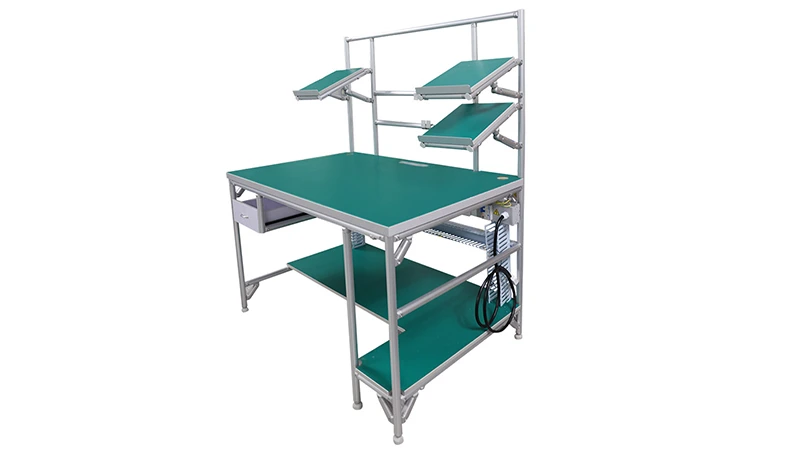
Aluminum Workbench B
Aluminum tube workbench is more flexible and durable, compared with traditional PE/ABS coated steel tube. It is easy to assemble, anti corrosion, rust protection, and recycle use after disassemble.
Introduction: The Backbone of Modern Manufacturing
In the fast-paced world of manufacturing, where efficiency, adaptability, and precision are not just goals but requirements, the tools and equipment that form the foundation of production lines play a critical role. Among these, workbenches stand out as unsung heroes—silent partners that support assembly, testing, packaging, and countless other tasks. Yet, not all workbenches are created equal. As industries evolve, so too do the demands placed on these essential workspaces. Enter the aluminum workbench B: a modern solution designed to align with the principles of lean manufacturing, built with durability and customization in mind. In this article, we'll dive deep into what aluminum workbench B is, its core functions, how it integrates with lean systems, and why it's becoming a staple in forward-thinking factories worldwide.
What is Aluminum Workbench B? A Closer Look at Its Definition
At its core, aluminum workbench B is a specialized workstation crafted from high-quality aluminum profile andaluminum pipe accessories, engineered to meet the rigorous demands of industrial environments. Unlike generic workbenches made from wood or steel, aluminum workbench B is designed with a specific purpose: to enhance workflow efficiency while maintaining flexibility. Let's break down its key characteristics:
Material: The Power of Aluminum Profile
The "aluminum" in aluminum workbench B is no accident. Aluminum profile—extruded aluminum with a T-slot design—forms the structural backbone of the workbench. This material choice offers a unique blend of strength and lightness: aluminum is roughly one-third the weight of steel, making the workbench easy to reposition (when needed) without sacrificing durability. Its resistance to corrosion also ensures longevity, even in environments where moisture or chemicals are present. The T-slot design of the aluminum profile is particularly ingenious: it allows for quick and tool-free attachment of accessories like shelves, tool holders, and bins, turning the workbench into a highly customizable hub.
Design: Tailored for Functionality
Aluminum workbench B is often described as a "single deck-without caster" model (though casters can be added as accessories for mobility). This design prioritizes stability, making it ideal for tasks that require precision, such as electronics assembly or quality inspection. The single deck provides a flat, sturdy surface—typically made from aluminum honeycomb panel or a reinforced composite—capable of supporting heavy loads without warping. The absence of built-in casters also lowers the workbench's height slightly, improving ergonomics for workers who stand for extended periods.
Integration: Part of a Larger Lean Ecosystem
Perhaps most importantly, aluminum workbench B is not a standalone piece of equipment. It's designed to integrate seamlessly with other lean system components, such as flow racks, conveyors, and turnover trolleys. This interconnectedness ensures that materials move smoothly from one workstation to the next, minimizing bottlenecks and reducing the time wasted on unnecessary movement—two key pillars of lean manufacturing.

Core Functions of Aluminum Workbench B: Beyond Just a "Table"
To truly appreciate aluminum workbench B, we need to look beyond its basic role as a surface to place tools. Its functions are multifaceted, addressing the needs of both workers and the production process as a whole. Let's explore these functions in detail.
1. Organizing Workspace for Maximum Efficiency
A cluttered workspace is a productivity killer. Aluminum workbench B combats this by offering built-in organization solutions, all made possible by its aluminum profile and aluminum pipe accessories. For example, T-slot channels along the edges of the workbench can hold tool hooks, allowing workers to keep frequently used tools within arm's reach. Shelves mounted above or below the deck provide storage for raw materials or finished products, reducing the need to walk to a separate storage area. Bins attached to the side can sort small parts, eliminating the chaos of loose screws or components. The result? A workspace where everything has a place, and workers spend less time searching and more time producing.
2. Supporting Ergonomic Work Practices
Ergonomics is a critical factor in manufacturing, as it directly impacts worker health and productivity. Aluminum workbench B is designed with this in mind. Its height is typically set to a standard 36 inches (adjustable via aluminum pipe accessories like leveling feet), aligning with the average waist height of standing workers to reduce strain on the back and shoulders. The flat, smooth surface minimizes the need for awkward reaching, and the option to add anti-fatigue mats beneath the workbench further enhances comfort. Over time, these small ergonomic touches translate to fewer injuries, lower absenteeism, and higher morale—all of which boost overall efficiency.
3. Enabling Quick Adaptation to Changing Needs
In today's manufacturing landscape, product lines change frequently. A workbench that works for one product may not work for the next. Aluminum workbench B solves this problem with its modular design. Thanks to the aluminum profile's T-slot system, accessories can be added, removed, or repositioned in minutes. Need an extra shelf for a new component? Simply slide a bracket into the T-slot and secure it. Switching from assembly to testing? Remove the tool holder and attach a power strip. This adaptability means the workbench can evolve with the production line, eliminating the need to invest in new equipment for every change—a significant cost saver in the long run.
4. Enhancing Safety and Compliance
Safety is non-negotiable in manufacturing, and aluminum workbench B takes this seriously. The aluminum profile edges are often rounded to prevent cuts, and the materials used are non-toxic and fire-resistant. For environments where electrostatic discharge (ESD) is a risk (such as electronics manufacturing), the workbench can be equipped with ESD-safe accessories, including conductive mats and grounding straps. This attention to safety not only protects workers but also ensures compliance with industry regulations, avoiding costly fines or production halts.

How Aluminum Workbench B Aligns with Lean Principles
Lean manufacturing is more than a buzzword; it's a philosophy centered on eliminating waste ("muda") and creating value for the customer. Aluminum workbench B is not just a tool—it's a physical manifestation of lean principles. Let's explore how it supports each of the core lean pillars.
1. Eliminating Waste: The "5S" Connection
The 5S methodology—Sort, Set in Order, Shine, Standardize, Sustain—is a cornerstone of lean systems. Aluminum workbench B excels at supporting 5S:
Sort:
The workbench's organization tools (bins, shelves, tool holders) make it easy to separate necessary tools from unnecessary clutter.
Set in Order:
With designated spots for every item (thanks to customizable accessories), tools and materials are always "set in order," reducing search time.
Shine:
The smooth aluminum surface is easy to clean, encouraging regular "shine" (cleaning) to maintain a hygienic workspace.
Standardize:
Because aluminum workbenches B are modular and consistent, processes can be standardized across multiple workstations, ensuring every worker follows the same efficient steps.
Sustain:
The workbench's durability and adaptability make it easy to sustain 5S practices over time—no more reverting to chaos after a few weeks.
2. Continuous Improvement: A Workbench That Grows with You
Lean is about continuous improvement ("kaizen"), and aluminum workbench B is built to facilitate this. Its modular design allows teams to experiment with new layouts or accessories to find better ways of working. For example, if a team notices that workers are reaching too far for a particular tool, they can quickly add a side-mounted holder to the aluminum profile. This ability to iterate and improve without major overhauls keeps the production line evolving toward greater efficiency.
3. Value Stream Mapping: Reducing Non-Value-Added Activities
Value stream mapping (VSM) identifies all activities in a process, separating those that add value (e.g., assembling a part) from those that don't (e.g., walking to retrieve a tool). Aluminum workbench B reduces non-value-added activities by bringing tools and materials to the worker, rather than the other way around. When everything a worker needs is within arm's reach, steps like "walk to storage" or "search for a screwdriver" are eliminated. This not only speeds up production but also frees workers to focus on tasks that directly add value to the product.
4. Just-In-Time (JIT) Production: Supporting a Smooth Flow
JIT production aims to deliver materials exactly when they're needed, minimizing inventory and storage costs. Aluminum workbench B, when paired with flow racks or conveyors (key components of a lean system), creates a smooth material flow. For example, a material rack B (3 row and 3 floor) placed next to the workbench can hold just enough components for the next hour of production, ensuring workers never run out of parts but also don't have excess inventory cluttering the workspace. This alignment with JIT reduces waste from overproduction and storage, two major lean targets.
Key Components: Aluminum Profile and Accessories That Make It Work
Aluminum workbench B is only as good as its components. Let's take a closer look at the aluminum profile and aluminum pipe accessories that transform it from a simple table into a lean powerhouse.
Aluminum Profile: The Structural Heart
The aluminum profile used in workbench B is typically an extruded aluminum extrusion profile with a rectangular or square cross-section. Common sizes include 2020, 3030, or 4040 (referring to width and height in millimeters). The T-slots run along the length of the profile, allowing accessories to be attached using bolts, nuts, or specialized brackets. What makes this profile special is its precision: extruded aluminum profiles have consistent dimensions, ensuring compatibility across all accessories and making replacement parts easy to source.
Aluminum Pipe Accessories: The Customization Toolkit
Aluminum pipe accessories are the "building blocks" of the workbench's customization. Here are a few essential ones:
Internal Rotary Aluminum Joints:
These joints allow pipes or profiles to be connected at various angles (90°, 45°, etc.), enabling the creation of shelves or overhead racks.
Adjustable Leveling Feet:
These ensure the workbench remains stable on uneven floors, improving safety and precision.
Tool Racks and Bins:
Designed to fit into T-slots, these keep tools and small parts organized and accessible.
Power Strip Holders:
Attach to the profile to keep power cords tidy and prevent tripping hazards.
Each accessory is designed to be lightweight, durable, and easy to install—no welding or drilling required. This means workers themselves can reconfigure the workbench, empowering them to take ownership of their workspace.
| Accessory | Function | Lean Benefit |
|---|---|---|
| Internal Rotary Aluminum Joint | Connects profiles at adjustable angles | Enables custom shelf heights/layouts, reducing waste from unused space |
| Adjustable Leveling Feet | Stabilizes workbench on uneven floors | Improves precision, reducing errors (waste from defects) |
| Tool Racks | Holds tools within arm's reach | Reduces search time (non-value-added activity) |
Practical Applications: Where Aluminum Workbench B Shines
Aluminum workbench B is versatile, finding a home in a wide range of industries. Let's explore a few real-world scenarios where it makes a tangible difference.
Electronics Manufacturing: Precision and ESD Safety
In electronics manufacturing, where components are small and sensitive to ESD, aluminum workbench B is a game-changer. Equipped with ESD-safe mats and grounding straps (accessories that attach via T-slots), the workbench protects delicate circuit boards from damage. The flat, stable surface ensures precise soldering or assembly, while tool holders keep tiny screws and resistors organized—no more losing parts or making costly mistakes.
Automotive Assembly: Durability and Adaptability
Automotive plants are fast-paced and often require workbenches that can handle heavy tools and parts. Aluminum workbench B's sturdy aluminum profile and high-weight capacity make it ideal for this environment. When production switches from one car model to another, the workbench can be reconfigured in minutes with new accessories (e.g., larger bins for bigger parts), avoiding downtime and keeping the assembly line moving.
Medical Device Production: Cleanliness and Compliance
Medical device manufacturing demands strict cleanliness and compliance with regulations like ISO 13485. Aluminum workbench B's corrosion-resistant surface is easy to sanitize, and its modular design allows for the integration of HEPA filters or cleanroom-compatible accessories. This ensures the workbench meets the highest standards for hygiene, reducing the risk of contamination and ensuring compliance.
Benefits Over Traditional Workbenches: Why Make the Switch?
If your facility is still using traditional steel or wooden workbenches, you might be wondering: why switch to aluminum workbench B? The answer lies in its unique combination of benefits, which traditional models simply can't match.
| Feature | Traditional Steel Workbench | Aluminum Workbench B |
|---|---|---|
| Weight | Heavy (hard to reposition) | Lightweight (easier to move when needed) |
| Customization | Limited (requires drilling/welding) | High (tool-free T-slot accessories) |
| Durability | Prone to rust/corrosion | Corrosion-resistant, long lifespan |
| Lean Alignment | Minimal (static design) | High (supports 5S, kaizen, JIT) |
| Cost Over Time | Higher (needs replacement sooner) | Lower (durable, adaptable, no frequent replacement) |
Maintenance and Care: Keeping Your Workbench in Top Shape
To maximize the lifespan and efficiency of your aluminum workbench B, regular maintenance is key. Fortunately, its design makes upkeep simple:
Cleaning
Wipe the aluminum surface with a damp cloth and mild detergent regularly to remove dust, grease, or debris. Avoid abrasive cleaners, which can scratch the finish. For ESD-safe surfaces, use specialized ESD cleaners to maintain conductivity.
Checking Accessories
Periodically inspect T-slot accessories (joints, shelves, tool holders) to ensure they're tight and secure. Loose accessories can wobble, reducing stability and creating safety hazards. Tighten any loose bolts or brackets as needed—this takes only a few minutes with a hex key.
Preventing Corrosion
While aluminum is corrosion-resistant, it's not immune. If the workbench is used in a humid or chemical-heavy environment, apply a thin coat of aluminum protectant annually to maintain its finish. Avoid leaving standing water on the surface for extended periods.
Conclusion: Aluminum Workbench B—A Lean Investment in Your Future
Aluminum workbench B is more than just a place to work—it's a strategic investment in efficiency, adaptability, and lean manufacturing. By combining the strength of aluminum profile with the flexibility of aluminum pipe accessories, it transforms the traditional workbench into a dynamic tool that supports 5S, continuous improvement, and just-in-time production. Its lightweight design, durability, and customization options make it a superior choice over traditional steel or wooden models, delivering long-term value that goes far beyond the initial cost.
In a manufacturing landscape where every second and every dollar counts, aluminum workbench B stands out as a solution that doesn't just keep up with change—it enables it. Whether you're assembling electronics, building cars, or producing medical devices, this workbench is designed to grow with your needs, support your team, and help you achieve the lean, efficient operation you've been striving for. So why wait? It's time to upgrade your workspace—and your results—with aluminum workbench B.