- Company Articles
- Products and Technology
- Product knowledge
- Understanding Gusset Alp 3030: Functions & Structural Role in Modular Systems

Understanding Gusset Alp 3030: Functions & Structural Role in Modular Systems
Related Product
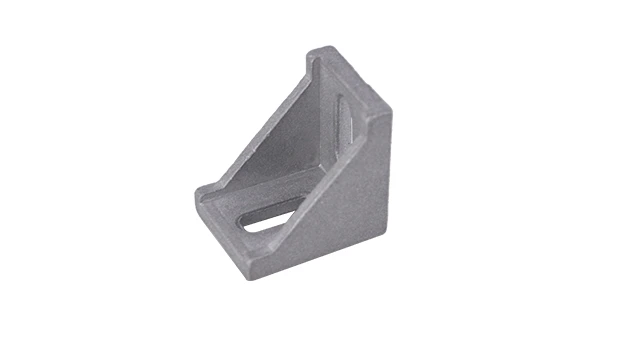
Gusset ALP 3030
The 3030 bracket/Gusset is an external fastening method that creates a 90 degree connection. 3030 means this size is used for 30 series aluminum profile with a quick connection by bolt and nut.
Walk into any modern manufacturing facility, warehouse, or even a tech startup's workshop, and you'll likely spot something remarkable: workbenches that seem to adapt on the fly, material racks that reconfigure with minimal effort, and assembly lines that shift layouts as production needs change. These aren't just random pieces of equipment—they're modular systems, the unsung heroes of flexible industrial design. At the heart of many of these systems lies a small but mighty component: the Gusset Alp 3030. It's not the flashiest part of the setup, but without it, those sleek, adaptable workstations and racks might just collapse under pressure. Let's take a deep dive into what makes Gusset Alp 3030 so crucial, how it functions, and why it's become a cornerstone of modular design in industries worldwide.
What Exactly is Gusset Alp 3030?
First things first: let's demystify the name. "Gusset" refers to a structural component used to reinforce joints, typically a flat or angled piece of metal that adds strength where two parts meet. "Alp" likely stands for "aluminum profile," pointing to its material and application context. The "3030"? That's a nod to its dimensions, specifically designed to pair with 3030 aluminum profiles—the workhorses of modular systems, named for their 30mm x 30mm cross-section. So, in plain terms, Gusset Alp 3030 is an aluminum reinforcement bracket built to strengthen connections between 3030 aluminum profiles, ensuring the entire structure stays stable, even when put to the test.
But it's more than just a metal bracket. Gusset Alp 3030 is engineered with precision, often made from high-grade aluminum alloy to balance strength and lightweight properties. Its design is sleek, with pre-drilled holes that align perfectly with the T-slots of 3030 aluminum profiles—a feature that makes installation a breeze and ensures a secure fit. Unlike bulky steel gussets of the past, this aluminum variant adds minimal weight to the system, making the entire modular setup easier to assemble, reconfigure, and transport.
Core Functions: More Than Just a Reinforcement
At first glance, you might think Gusset Alp 3030's only job is to "hold things together," but its role in modular systems is surprisingly multi-faceted. Let's break down its key functions:
1. Structural Reinforcement at Joints
The most obvious function is reinforcing the corners where two or more aluminum profiles meet. In modular systems—whether it's a workbench, a material rack, or an assembly line—joints are the weakest points. Without proper reinforcement, repeated use, heavy loads, or even minor vibrations can loosen connections, leading to wobbling, instability, or worse, structural failure. Gusset Alp 3030 acts as a bridge between these joints, distributing stress evenly across the profile and preventing the kind of flexing that weakens connections over time.
For example, imagine a simple workbench made with 3030 aluminum profiles. The vertical legs meet the horizontal frame at 90-degree angles. Without a gusset, the weight of tools, materials, or even an operator leaning on the bench could cause the legs to splay outward. But with Gusset Alp 3030 bolted to both the leg and the frame, that joint becomes rigid, capable of supporting hundreds of pounds without so much as a creak.
2. Load Distribution Across the System
Beyond reinforcing individual joints, Gusset Alp 3030 plays a critical role in distributing weight across the entire modular structure. When you place a heavy load on a shelf or a work surface, that weight doesn't just sit in one spot—it travels through the profiles to the joints. A well-placed gusset ensures that load is spread evenly, rather than concentrating at a single weak point. This is especially important in dynamic environments, like factories where materials are constantly being loaded, unloaded, and moved around. By preventing stress concentration, Gusset Alp 3030 extends the lifespan of the entire system, reducing the need for frequent repairs or replacements.
3. Enhancing Stability in Dynamic Environments
Modular systems aren't static. They're designed to be reconfigured as needs change—maybe a workbench is lengthened, a material rack is expanded, or a production line is rearranged. Each time you modify the structure, you introduce new variables that can affect stability. Gusset Alp 3030 provides a consistent level of rigidity, even after reconfigurations. Its standardized design means that whether you're building a small cart or a large assembly station, you can trust the gusset to maintain stability, no matter how the system evolves.
4. Compatibility with Aluminum Profile Accessories
One of the unsung benefits of Gusset Alp 3030 is its seamless compatibility with other aluminum profile accessories. From 3030 aluminum profile end caps that protect exposed edges to T-slot nuts and bolts that secure components, the gusset fits into the broader ecosystem of modular parts. This compatibility means you don't have to source specialty hardware; everything works together, simplifying the (procurement) process and reducing downtime during assembly or repairs.

The Structural Role: How Gusset Alp 3030 Shapes Modular Systems
To truly understand Gusset Alp 3030's importance, it helps to think of modular systems as a network of interconnected parts, where each component relies on the others to function. In this network, Gusset Alp 3030 is the "enforcer" that ensures the system behaves as a single, cohesive unit rather than a collection of loose parts. Let's explore this role in more detail.
A Foundation for Versatility
Modular systems are prized for their versatility—they can be customized to fit almost any need. But versatility without stability is useless. Gusset Alp 3030 gives designers the freedom to get creative with configurations because they know the gusset will back up those designs with strength. Want to build a workbench with a cantilevered shelf? Add Gusset Alp 3030 to the supporting joints, and suddenly that shelf can hold tools, materials, or even a small printer without sagging. Need a material rack with adjustable heights? The gusset ensures that each level, even when loaded unevenly, stays level and secure.
Resisting Torque and Shear Forces
In engineering terms, two of the biggest threats to structural integrity are torque (twisting forces) and shear (sideways forces). In a modular system, these forces are common: a worker pushing a loaded trolley, a machine vibrating on a workbench, or a sudden impact from a dropped tool. Gusset Alp 3030 is designed to resist both. Its triangular shape (a common design for gussets) is inherently stable, as triangles distribute forces more efficiently than squares or rectangles. When bolted to two profiles, the gusset creates a rigid triangle at the joint, turning a potentially weak point into one that can withstand torque and shear without deforming.
Supporting Modular Growth
Many businesses start small with modular systems, adding components as they expand. A startup might begin with a single workbench, then add a material rack, then an assembly line. As the system grows, so does the need for consistent structural support. Gusset Alp 3030 scales with this growth. Since it's compatible with all standard 3030 aluminum profiles, businesses can add new sections without worrying about mismatched reinforcement. This scalability is a huge cost-saver, as it eliminates the need to replace entire systems when expanding—you just add more profiles and gussets as needed.

Gusset Alp 3030 vs. Other Gusset Types: A Quick Comparison
Not all gussets are created equal. While Gusset Alp 3030 is designed for 3030 aluminum profiles, there are similar products for other profile sizes, like Gusset Alp 2020 (for 20mm x 20mm profiles) and Gusset Alp 4040 (for 40mm x 40mm profiles). Let's see how they stack up:
| Feature | Gusset Alp 2020 | Gusset Alp 3030 | Gusset Alp 4040 |
|---|---|---|---|
| Material | Aluminum Alloy | Aluminum Alloy (Higher Grade) | Aluminum Alloy (Heavy-Duty) |
| Dimensions (mm) | 20 x 20 x 3 | 30 x 30 x 4 | 40 x 40 x 5 |
| Max Load Capacity (kg per Joint) | 150-200 | 300-400 | 500-600 |
| Compatible Profiles | 2020 Aluminum Profiles | 3030 Aluminum Profiles | 4040 Aluminum Profiles |
| Typical Applications | Small Carts, Light Shelving | Workbenches, Material Racks, Assembly Lines | Heavy-Duty Racks, Machine Frames |
*Load capacities are approximate and depend on installation quality and profile thickness.
Real-World Applications: Where Gusset Alp 3030 Shines
To bring this all to life, let's look at some common scenarios where Gusset Alp 3030 is indispensable. These examples show just how integral it is to everyday operations in various industries.
1. Manufacturing Workbenches
In factories, workbenches are the hub of production. They hold tools, parts, assembly jigs, and sometimes even small machines. A typical workbench might have a wooden or aluminum top supported by 3030 aluminum legs and frame. Without Gusset Alp 3030 at the corners where the legs meet the frame, the bench would wobble under the weight of equipment or when an operator leans on it. With the gusset, the bench becomes a rock-solid platform, ensuring precision in tasks like electronics assembly, where even a slight shake can ruin a delicate component.
2. Material Racks and Storage Systems
Material racks, like the "Material Rack B (3 row and 3 floor)" mentioned in the keyword list, are another common application. These racks hold everything from raw materials to finished products, and they need to withstand not just the weight of the items but also the stress of loading and unloading. Gusset Alp 3030 is used at the joints where the vertical posts meet the horizontal shelves, ensuring that each shelf stays level and doesn't bow under heavy boxes or pallets. This is especially important in warehouses where safety is paramount—unstable racks can lead to collapsed loads and workplace accidents.
3. Automated Assembly Lines
Modern assembly lines often use modular components to adapt to changing production needs. Conveyors, robotic arms, and inspection stations are all mounted on aluminum profile frames. Gusset Alp 3030 reinforces the joints of these frames, ensuring they can handle the constant motion and vibration of automated equipment. For example, a roller conveyor mounted on a 3030 frame relies on gussets to keep the conveyor level, preventing products from jamming or falling off as they move down the line.
4. Mobile Trolleys and Carts
Mobile trolleys, like "Hand Trolley A" or "Turnover Trolley and Rack," are workhorses in warehouses and factories, used to transport materials from one station to another. These trolleys need to be both lightweight and sturdy—lightweight enough for workers to push, sturdy enough to carry heavy loads. Gusset Alp 3030 helps achieve this balance by reinforcing the trolley's frame without adding excess weight. Whether it's a small parts cart or a heavy-duty trolley carrying tools, the gusset ensures the frame doesn't twist or bend when moving over uneven floors.
Installation Tips: Getting the Most Out of Gusset Alp 3030
Even the best components perform poorly if installed incorrectly. Here are some tips to ensure your Gusset Alp 3030 works as hard as it should:
1. Use the Right Fasteners
Gusset Alp 3030 is designed to be bolted into the T-slots of 3030 aluminum profiles. Use high-quality T-slot nuts and bolts that match the profile's slot size (typically M5 or M6 for 3030 profiles). Avoid over-tightening, as this can strip the threads or warp the gusset—snug is usually enough, as the T-slot design creates a secure grip.
2. Align Holes Precisely
Most Gusset Alp 3030 brackets come with pre-drilled holes that align with standard T-slot spacing. Take the time to line up these holes with the slots on the profiles before tightening. Misalignment can create uneven stress on the joint, reducing the gusset's effectiveness.
3. Don't Skip Complementary Components
While Gusset Alp 3030 is strong on its own, it works best with other aluminum profile accessories. For example, adding a 3030 aluminum profile end cap to the top of a vertical leg prevents the gusset from catching on clothing or materials. Similarly, using washers under bolt heads can distribute pressure and prevent damage to the gusset's surface.
4. Inspect Regularly
Over time, vibrations and heavy use can loosen bolts. Make it a habit to inspect gusset joints monthly, tightening any loose fasteners. This simple maintenance step can extend the life of your modular system and prevent unexpected failures.
Advantages Over Traditional Solutions
Before modular aluminum systems became popular, manufacturers relied on steel frames with welded joints or bulky steel gussets. Gusset Alp 3030 offers several advantages over these traditional solutions:
1. Lightweight Without Sacrificing Strength
Aluminum is about one-third the weight of steel, so Gusset Alp 3030 adds minimal weight to the system. This makes modular setups easier to move, reconfigure, and install—no need for heavy machinery or multiple workers to shift a workbench or rack.
2. Corrosion Resistance
Aluminum naturally forms a protective oxide layer, making it resistant to rust and corrosion. This is a huge advantage in environments with moisture, chemicals, or high humidity—think food processing plants, laboratories, or outdoor workshops. Traditional steel gussets, on the other hand, require painting or coating to prevent rust, adding maintenance costs.
3. No Welding Required
Welded steel joints are strong but permanent. If you need to reconfigure a welded system, you have to cut the welds, grind them down, and re-weld—a time-consuming and expensive process. Gusset Alp 3030 bolts on, so reconfigurations take minutes, not hours. This flexibility is a game-changer for businesses that need to adapt quickly to market changes.
4. Cost-Effective in the Long Run
While aluminum components may have a higher upfront cost than steel, they save money over time. Their lightweight nature reduces shipping costs, their corrosion resistance cuts down on maintenance, and their reusability means you can repurpose them when your needs change. Traditional steel systems often end up in landfills when reconfigured, making them less eco-friendly and more costly in the long term.
Future Trends: What's Next for Gusset Alp 3030 and Modular Systems?
As industries continue to embrace automation, sustainability, and customization, modular systems are poised to become even more important. Here's how Gusset Alp 3030 might evolve to meet these trends:
1. Integration with Smart Manufacturing
Smart factories use sensors and IoT (Internet of Things) devices to monitor equipment performance., we might see Gusset Alp 3030 with built-in sensors that detect stress, vibration, or loose bolts, sending alerts to maintenance teams before a failure occurs. This predictive maintenance could reduce downtime and extend system lifespans even further.
2. More Sustainable Materials
Aluminum is already highly recyclable, but manufacturers are exploring ways to make it even more eco-friendly., Gusset Alp 3030 might be made from recycled aluminum with the same strength and durability as virgin material, reducing its carbon footprint. Additionally, lighter-weight designs could further improve energy efficiency during shipping and installation.
3. Customizable Designs for Niche Applications
While standardization is key for modular systems, there's growing demand for gussets tailored to specific industries. For example, the medical industry might need gussets with smooth, easy-to-clean surfaces, while the automotive industry might require higher load capacities. Manufacturers are likely to respond with specialized Gusset Alp 3030 variants that meet these niche needs without sacrificing compatibility.
Conclusion: The Unsung Hero of Modular Systems
Gusset Alp 3030 may not be the most glamorous component in a modular system, but it's undoubtedly one of the most important. By reinforcing joints, distributing loads, and enabling versatility, it turns a collection of aluminum profiles into a robust, adaptable structure that can keep up with the demands of modern industry. Whether you're building a simple workbench or a complex assembly line, this small but mighty gusset ensures your system is strong, stable, and ready to evolve.
As businesses continue to prioritize flexibility, sustainability, and efficiency, modular systems will only grow in popularity. And at the heart of those systems? Gusset Alp 3030—quietly doing the hard work that makes it all possible.