- Company Articles
- Products and Technology
- Product knowledge
- Understanding Lean Pipe Clamp B Chrome: Material Composition & Durability Factors

Understanding Lean Pipe Clamp B Chrome: Material Composition & Durability Factors
Related Product
Lean Pipe Clamp B Chrome
Lean pipe clamp is used for turnover trolley, workbench, flowrack adjust the frame or fix some accessory.
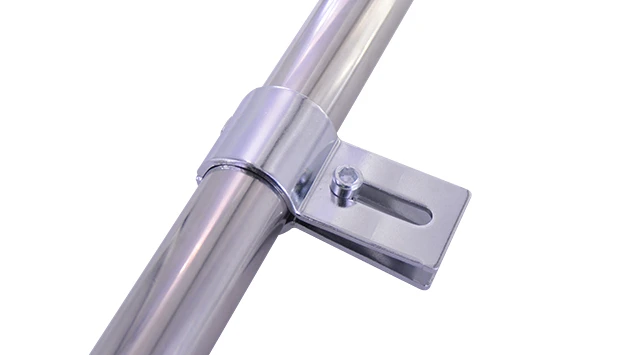
In the world of manufacturing, where efficiency and reliability are the cornerstones of success, even the smallest components play a pivotal role. Walk through any lean production facility, and you'll notice a network of structures—workbenches, flow racks, material trolleys—that keep operations running like a well-oiled machine. These structures aren't just assembled by chance; they're built with precision, using components designed to withstand the daily grind of industrial environments. One such component, often overlooked but critical to structural integrity, is the lean pipe clamp. Today, we're zeroing in on a standout in this category: the Lean Pipe Clamp B Chrome. In this article, we'll unpack its material makeup, explore what makes it durable, and why it's a staple in lean systems worldwide.
The Role of Lean Pipe Clamps in Modern Manufacturing
Before diving into the specifics of the Lean Pipe Clamp B Chrome, let's set the stage: what exactly is a lean pipe clamp, and why does it matter? Lean manufacturing, at its core, is about minimizing waste—whether that's time, materials, or space. To achieve this, facilities rely on flexible, modular structures that can adapt to changing production needs. These structures are typically built using lean pipes (hollow tubes) and a variety of connectors, with clamps serving as the "glue" that holds everything together.
A lean pipe clamp, in simplest terms, is a fastening device that secures pipes to joints, frames, or other components. It ensures that the structure remains stable under load, resists vibration, and maintains alignment—all while allowing for easy disassembly and reconfiguration (a key tenet of lean flexibility). Among the many types of clamps available, the Lean Pipe Clamp B Chrome stands out for its balance of strength, corrosion resistance, and versatility. It's a favorite in industries ranging from automotive assembly to electronics manufacturing, where precision and durability are non-negotiable.
Material Composition: What Makes Lean Pipe Clamp B Chrome Tick?
Base Material: The Foundation of Strength
At the heart of the Lean Pipe Clamp B Chrome is its base material. Unlike generic clamps that might cut corners with low-grade steel, this clamp starts with a high-quality carbon steel core. Carbon steel is chosen for its exceptional tensile strength—the ability to resist breaking under tension—and its affordability compared to more exotic alloys. The specific grade of carbon steel used here typically has a carbon content between 0.2% and 0.3%, striking a balance between hardness (which prevents deformation) and ductility (which allows for slight flexibility under stress). This ensures the clamp can handle heavy loads without cracking, even in dynamic environments where structures might shift slightly during operation.
Chrome Plating: More Than Just Shine
The "chrome" in Lean Pipe Clamp B Chrome isn't just for aesthetics (though its sleek, silver finish certainly adds a professional look to any structure). Chrome plating is a electrochemical process that deposits a thin layer of chromium onto the steel surface, and it serves two critical functions: corrosion resistance and wear resistance.
First, corrosion resistance. In manufacturing settings, clamps are often exposed to moisture (from cleaning fluids, humidity, or even accidental spills), chemicals, and airborne contaminants. Without protection, steel would rust, weakening the clamp and compromising the structure. Chromium, however, forms a passive oxide layer when exposed to air—a thin, invisible barrier that prevents oxygen and water from reaching the underlying steel. This makes the clamp highly resistant to rust and tarnish, even in damp or semi-outdoor environments.
Second, wear resistance. Clamps are frequently adjusted, tightened, or repositioned as production needs change. Over time, metal-on-metal friction can wear down uncoated surfaces, leading to loose connections. Chrome plating is extremely hard—harder than most steels—and has a low coefficient of friction, meaning it resists abrasion and sliding wear. This ensures the clamp maintains its grip and structural integrity even after repeated use.
Undercoating: Ensuring Long-Lasting Adhesion
A lesser-known but equally important part of the Lean Pipe Clamp B Chrome's composition is its undercoating. Before chrome is applied, the steel surface undergoes a multi-step preparation process: cleaning to remove oils and debris, etching to create a rough texture (which helps the plating adhere), and then applying a thin layer of nickel. Nickel acts as a bridge between the steel and chromium, improving adhesion and preventing "peeling" of the chrome layer over time. This undercoating also adds an extra layer of corrosion protection—if the chrome layer is ever scratched (a rare occurrence, given its hardness), the nickel acts as a backup barrier, slowing down rust formation.
Durability Factors: Why Lean Pipe Clamp B Chrome Stands the Test of Time
Durability isn't just about what a clamp is made of—it's about how those materials perform under real-world conditions. Let's break down the key factors that make the Lean Pipe Clamp B Chrome a long-lasting choice for lean systems.
Load-Bearing Capacity: Handling the Weight of Production
In manufacturing, structures like workbenches and material racks often support heavy loads—think toolboxes, batches of components, or even machinery parts. The Lean Pipe Clamp B Chrome is engineered to handle these demands. Thanks to its carbon steel core, it boasts a tensile strength of approximately 450-500 MPa (megapascals), which translates to a maximum static load capacity of around 500 kg per clamp (depending on the pipe diameter and joint configuration). To put that in perspective: a single clamp could theoretically support the weight of five average adult humans without deforming. In practice, of course, clamps are used in pairs or groups, distributing the load even further and ensuring safety margins are well exceeded.
But static load capacity is just part of the story. Dynamic loads—those caused by movement, vibration, or sudden impacts—are equally challenging. For example, a turnover trolley equipped with Lean Pipe Clamp B Chrome might jostle as it's pushed across a factory floor, or a flow rack might experience sudden weight shifts as materials are loaded or unloaded. The clamp's ductile carbon steel core absorbs these shocks, preventing brittle failure, while the tight grip of the chrome-plated jaws ensures pipes don't slip or loosen over time.
Resistance to Environmental Stressors
Manufacturing environments are rarely "ideal." Some facilities are hot and humid (think food processing), others are exposed to coolants or lubricants (automotive assembly), and still others might have high levels of dust or airborne particles (metal fabrication). The Lean Pipe Clamp B Chrome is designed to thrive in these varied conditions.
Humidity and moisture are perhaps the biggest enemies of metal components, but as we discussed earlier, the chrome-nickel plating system provides robust corrosion resistance. Tests show that this clamp can withstand 500+ hours of salt spray testing (per ASTM B117 standards) without showing signs of red rust—a benchmark that exceeds the requirements of most industrial applications. For facilities with particularly harsh conditions (e.g., coastal areas with salt air), some manufacturers even offer an extra-thick chrome layer or additional passivation treatments to further boost longevity.
Temperature extremes are another consideration. The carbon steel core remains stable in temperatures ranging from -20°C to 120°C (-4°F to 248°F), making the clamp suitable for use in cold storage facilities or near heat sources like ovens or welding stations. Chrome plating, too, is heat-resistant, though prolonged exposure to temperatures above 200°C (392°F) can cause the plating to discolor slightly—an aesthetic issue, not a structural one.
Ease of Maintenance: Keeping Clamps in Top Shape
A durable component is only as good as its maintenance requirements. Fortunately, the Lean Pipe Clamp B Chrome is low-maintenance by design. Unlike painted or powder-coated clamps, which can chip and require touch-ups, chrome plating is easy to clean and resistant to stains. A quick wipe with a damp cloth is usually enough to remove dust, grease, or minor spills. For more stubborn grime, a mild detergent (avoiding abrasive cleaners that could scratch the chrome) works well. This simplicity reduces downtime and ensures the clamp remains functional for years with minimal effort.
Lean Pipe Clamp B Chrome vs. Alternatives: How It Compares
To truly appreciate the value of the Lean Pipe Clamp B Chrome, it helps to compare it to other common clamp types. Let's take a look at how it stacks up against two alternatives: standard unplated steel clamps and aluminum profile clamps.
| Feature | Lean Pipe Clamp B Chrome | Standard Unplated Steel Clamp | Aluminum Profile Clamp |
|---|---|---|---|
| Base Material | High-carbon steel (0.2-0.3% carbon) | Low-carbon steel (0.1-0.2% carbon) | Aluminum alloy (6061-T6) |
| Surface Treatment | Chrome plating with nickel undercoating | None (or basic paint/powder coat) | Anodized or powder-coated |
| Corrosion Resistance | Excellent (500+ hours salt spray) | Poor (rusts easily in moist environments) | Good (anodization resists corrosion) |
| Load Capacity (per clamp) | Up to 500 kg (static) | Up to 350 kg (static) | Up to 300 kg (static) |
| Wear Resistance | High (hard chrome layer resists abrasion) | Low (unplated steel wears quickly) | Moderate (aluminum is softer than steel) |
| Cost (Relative) | Moderate (higher than unplated steel, lower than stainless steel) | Low | High (aluminum alloys are pricier) |
As the table shows, the Lean Pipe Clamp B Chrome offers a sweet spot between strength, durability, and cost. It outperforms standard steel clamps in corrosion and wear resistance while offering higher load capacity than aluminum profile clamps—all at a price point that won't break the bank for lean system managers.
Applications: Where Lean Pipe Clamp B Chrome Shines
Now that we understand the "what" and "why" of the Lean Pipe Clamp B Chrome, let's explore the "where." This versatile clamp finds use in a wide range of lean structures, each benefiting from its unique properties.
Workbenches and Assembly Stations
Workbenches are the workhorses of manufacturing, supporting tools, components, and workers throughout the day. A sturdy workbench needs to stay level, stable, and vibration-free—qualities the Lean Pipe Clamp B Chrome delivers. When paired with steel or aluminum lean pipes, these clamps create a rigid frame that resists wobbling, even when workers apply force (e.g., tightening bolts or assembling parts). The chrome plating ensures the workbench remains rust-free, even in environments where spills (of oil, coolant, or cleaning solutions) are common.
Flow Racks and Material Handling Systems
Flow racks, which use gravity to move materials from one end to the other, rely on precise alignment to ensure smooth operation. Misaligned pipes can cause jams, slowing down production. The Lean Pipe Clamp B Chrome's tight grip keeps pipes securely in place, maintaining the rack's angle and preventing shifts over time. Its corrosion resistance is also a boon here, as flow racks often hold materials like cardboard boxes or plastic bins that can trap moisture.
Turnover Trolleys and Mobile Carts
Mobile structures like turnover trolleys face unique challenges: constant movement, vibrations from uneven floors, and occasional impacts (e.g., bumping into walls or other trolleys). The Lean Pipe Clamp B Chrome's carbon steel core absorbs these shocks, while its chrome plating resists scratches from daily use. Trolleys built with these clamps stay sturdy for years, reducing the need for frequent repairs or replacements.
Choosing a Lean System Supplier: What to Look for in Clamp Quality
Not all Lean Pipe Clamp B Chrome products are created equal. To ensure you're getting a clamp that lives up to the durability claims we've discussed, it's critical to choose a reputable lean system supplier. Here are key factors to consider when evaluating suppliers:
Material Certifications
A trustworthy supplier will provide material certifications for their clamps, including details on the carbon steel grade, plating thickness (chrome should be at least 5 microns thick), and salt spray test results. Look for suppliers who comply with international standards like ISO 9001 (quality management) or RoHS (restriction of hazardous substances), as these indicate a commitment to consistent quality and safety.
Manufacturing Process Transparency
Ask suppliers about their manufacturing process. Do they control the entire production chain (from steel sourcing to plating), or do they outsource steps? In-house production often leads to better quality control. For example, suppliers that handle their own chrome plating can ensure the nickel undercoating is applied correctly and the chrome layer is uniform—critical for corrosion resistance.
Customer Support and Testing
A good supplier stands behind their products. Look for those that offer warranties (typically 1-3 years for clamps) and are willing to provide test samples for evaluation. Some suppliers even offer custom solutions, such as clamps with thicker plating or modified designs for specific applications—an added benefit for facilities with unique needs.
Conclusion: The Unsung Hero of Lean Manufacturing
In the grand scheme of manufacturing, the Lean Pipe Clamp B Chrome might seem like a small component. But as we've explored, its impact is anything but minor. From its high-carbon steel core to its corrosion-resistant chrome plating, every aspect of its design is engineered to support the efficiency, flexibility, and durability that lean systems demand. It's a testament to the idea that great productivity starts with great components—components that work quietly, reliably, and tirelessly behind the scenes.
Whether you're building a new lean system or upgrading an existing one, choosing the right clamp matters. The Lean Pipe Clamp B Chrome isn't just a fastener; it's an investment in long-term productivity, reducing downtime, minimizing maintenance costs, and ensuring your structures can adapt and grow with your business. So the next time you walk through a manufacturing facility, take a moment to appreciate the quiet strength of the clamps holding it all together—chances are, many of them are Lean Pipe Clamp B Chrome, doing what they do best: keeping lean systems lean.