- Company Articles
- Products and Technology
- Product knowledge
- Understanding the Cross-Section: Engineering of Single Side Aluminum Pipe

Understanding the Cross-Section: Engineering of Single Side Aluminum Pipe
Related Product
Single Side Aluminum Pipe
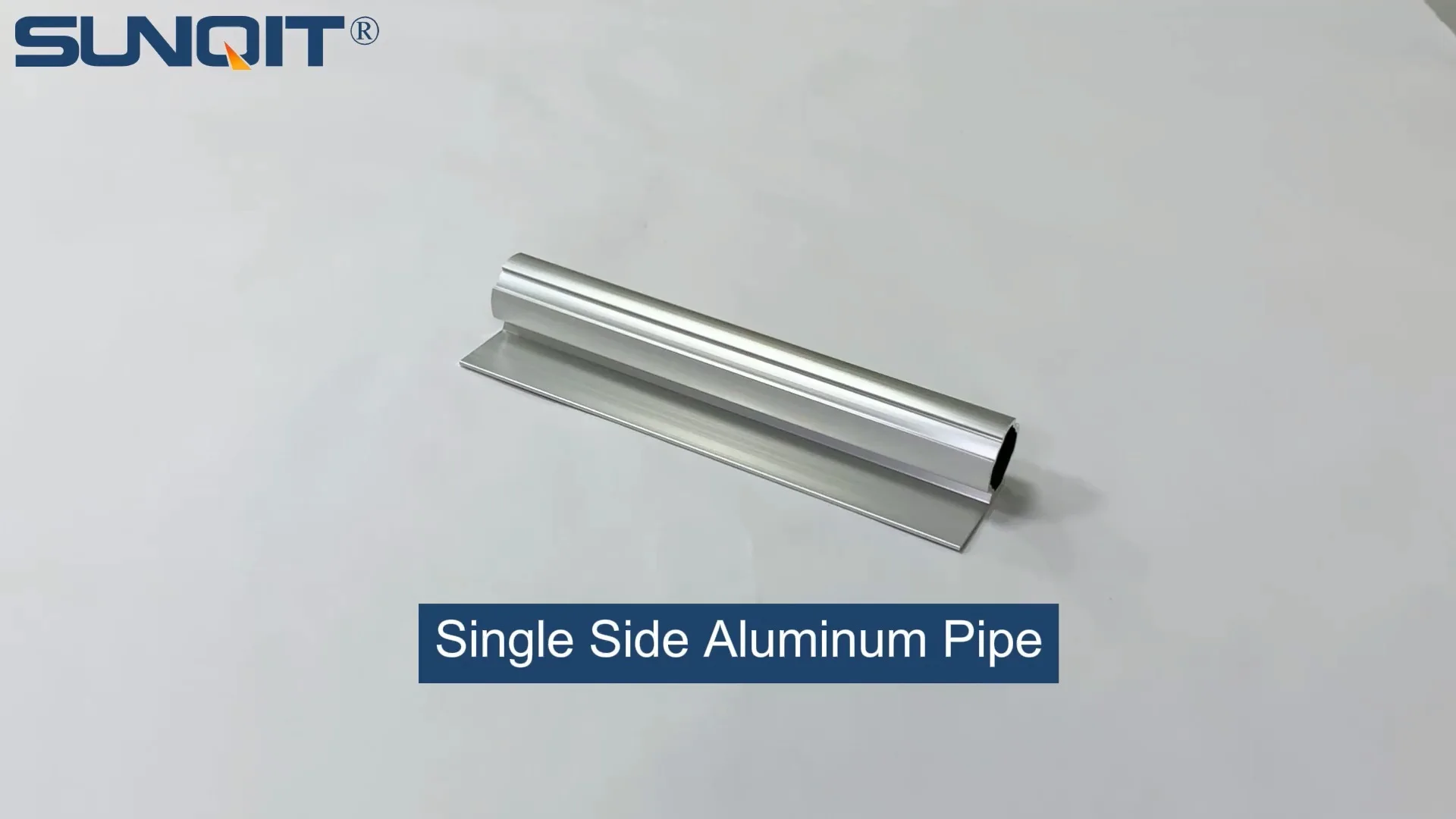
The single-sided plane can be installed with a back-mounted material box, and can also be used as a sidewall or partition.
Walk into any modern factory, workshop, or even a busy warehouse, and you'll likely spot a familiar sight: sleek, silver structures holding tools, guiding materials, or organizing workspaces. Chances are, those structures are built with single side aluminum pipe—a workhorse of industrial design that quietly powers efficiency across countless industries. But what makes this unassuming component so indispensable? The answer lies in its cross-section—the often-overlooked blueprint that determines everything from strength to versatility. In this article, we'll dive into the engineering behind single side aluminum pipe, exploring how its cross-sectional design shapes its performance, compatibility with aluminum profile accessories, and role in building lean systems that keep operations running smoothly.
What Is Single Side Aluminum Pipe, Anyway?
Before we dissect its cross-section, let's start with the basics. Single side aluminum pipe, also known as single-sided T-slot aluminum pipe, is a lightweight, durable extruded aluminum profile characterized by a longitudinal slot (or "T-slot") running along one side. Unlike traditional pipes with smooth exteriors, this slot is the pipe's secret weapon: it allows for quick, tool-free attachment of accessories like brackets, connectors, and shelves without welding or drilling. Imagine a carpenter's workbench where tools snap into place effortlessly, or a production line where a conveyor can be reconfigured in minutes—this flexibility starts with the pipe's cross-sectional design.
Commonly made from aluminum alloys like 6063 or 6061 (known for their excellent extrudability and corrosion resistance), these pipes balance strength and weight. A typical single side aluminum pipe might measure 20mm to 40mm in diameter, with wall thicknesses ranging from 1.2mm to 2.0mm, depending on the load it needs to bear. But numbers alone don't tell the story—how those dimensions are arranged in the cross-section is what truly sets this pipe apart.
The Cross-Section: More Than Just a Shape
If the single side aluminum pipe is the body, its cross-section is the skeleton. Every curve, thickness, and slot is meticulously engineered to serve a purpose. Let's break down the key elements of a typical cross-section:
1. The T-Slot: The Heart of Versatility
The defining feature is, of course, the T-slot. Shaped like an upside-down "T," this slot runs the length of the pipe and is designed to accept T-nuts, bolts, and connectors. The width and depth of the slot are critical: too narrow, and accessories won't fit; too shallow, and connections might slip under stress. Engineers often design slots with a slight taper (wider at the top, narrower at the base) to ensure a secure grip when bolts are tightened. For example, a 40mm pipe might have a slot 8mm wide at the opening and 10mm deep—dimensions that balance accessibility with holding power.
2. Wall Thickness: Strength Without the Weight
Aluminum's lightweight nature is a boon, but it needs to stand up to daily wear and tear. Cross-sectional engineering here is a balancing act: thicker walls boost strength but add weight, while thinner walls save on material but risk bending under heavy loads. Take a workbench frame, for instance: the vertical supports might use pipes with 2.0mm walls to bear the weight of tools and materials, while horizontal rails could opt for 1.5mm walls to reduce overall heft. Engineers use finite element analysis (FEA) to simulate stress points, ensuring the cross-section can handle everything from static loads (like a stacked shelf) to dynamic forces (like a moving conveyor).
3. Rounded Edges and Corners: Safety Meets Durability
Ever noticed how industrial pipes often have rounded edges? That's no accident. Sharp corners can catch on clothing, damage materials, or even cause injury in busy workspaces. In the cross-section, edges are typically rounded with a radius of 1-2mm, a detail that enhances safety while also reducing stress concentration—sharp corners are prone to cracking under pressure, so rounding distributes force more evenly. It's a small touch, but one that makes a big difference in real-world use.
Fun Fact: The cross-sectional design of single side aluminum pipe is so precise that even a 0.1mm deviation in slot width can affect accessory compatibility. That's why manufacturers use high-precision extrusion dies—often machined to tolerances of ±0.05mm—to ensure every pipe meets exact specifications.

Why Aluminum Extrusion Profile? The Manufacturing Edge
To truly appreciate the cross-section, we need to talk about how single side aluminum pipe is made: through aluminum extrusion, a process that turns raw aluminum billets into complex profiles with consistent cross-sections. Here's how it works: a heated billet (around 500°C) is pushed through a steel die with a shape matching the desired cross-section. As the billet exits the die, it cools and hardens, retaining the die's intricate details—including the T-slot, wall thickness, and rounded edges.
Extrusion is what makes the cross-section possible. Unlike welding or bending, which can weaken metal, extrusion creates a seamless profile with uniform strength. It also allows for almost limitless design flexibility: want a pipe with two slots instead of one? Or a custom shape to fit a unique accessory? Extrusion dies can be tailored to these needs, making aluminum extrusion profile the go-to choice for specialized applications. Compare that to steel pipes, which often require post-processing (like drilling holes for attachments) that weakens the material and adds cost.
Aluminum's natural properties enhance this process further. It's malleable when heated, making it easy to push through dies, and its rapid cooling (thanks to high thermal conductivity) ensures the cross-section retains its shape. Plus, aluminum's corrosion resistance means the pipe can withstand harsh environments—from humid factories to outdoor workshops—without rusting, unlike steel. And let's not forget recyclability: aluminum can be melted down and reused repeatedly, making the extrusion process not just efficient, but eco-friendly too.

Aluminum Profile Accessories: Designed for the Cross-Section
A pipe is only as good as the accessories it works with, and single side aluminum pipe's cross-section is engineered to play well with others. Aluminum profile accessories—think joints, brackets, end caps, and clamps—are designed to lock into the T-slot, creating a modular system that can be reconfigured on the fly. Let's take a closer look at a few key accessories and how they rely on the cross-section:
1. T-Nuts and Bolts: The Invisible Connectors
T-nuts are small, T-shaped fasteners that slide into the T-slot and rotate 90 degrees, locking into place. When a bolt is threaded through a bracket and into the T-nut, it pulls the bracket tight against the pipe—no drilling required. The cross-section's slot dimensions are critical here: a T-nut must fit snugly without wobbling, so manufacturers standardize slot sizes (like 6mm, 8mm, or 10mm) to ensure compatibility across brands. For example, a 40mm pipe with an 8mm slot will pair with 8mm T-nuts, making it easy to mix and match accessories from different suppliers.
2. End Caps: Protecting the Profile, One Cross-Section at a Time
Ever seen a pipe with a ragged, unfinished end? Not only does it look unprofessional, but it can also be a safety hazard. End caps—plastic or aluminum plugs that fit snugly into the pipe's open ends—solve this. Their cross-section mirrors the pipe's interior, with a lip that catches on the inner wall to stay in place. Some end caps even have built-in features, like holes for cables or slots for labels, adding functionality without altering the pipe itself.
3. Aluminum Pipe Clamps: Securing Connections, Simplifying Assembly
When two pipes need to join at an angle (say, a 90-degree corner for a shelf), aluminum pipe clamps step in. These clamps wrap around the pipe's exterior, using the T-slot to bolt into place. The clamp's cross-section is designed to cradle the pipe, distributing pressure evenly to avoid denting. A well-engineered clamp will align perfectly with the pipe's rounded edges, ensuring a tight, rattle-free connection that can withstand vibrations from machinery or moving parts.

From Cross-Section to Lean System: Building Efficiency
Single side aluminum pipe isn't just a component—it's a building block for lean systems, the philosophy of minimizing waste and maximizing productivity. Lean manufacturing thrives on flexibility: the ability to adapt workflows, reconfigure workstations, and scale operations without overhauling entire setups. Here's how the cross-section makes this possible:
1. Rapid Reconfiguration: No Welding, No Downtime
Traditional steel structures require welding or drilling to modify, which takes time and skilled labor. With single side aluminum pipe, reconfiguration is as simple as loosening a few bolts, sliding accessories into a new position, and tightening them back up. A production line that once took a day to rearrange can now be done in an hour—critical for meeting sudden demand spikes or testing new workflows. For example, a electronics manufacturer might shift from assembling smartphones to tablets by repositioning conveyors and workbenches, all thanks to the pipe's T-slot cross-section.
2. Modular Growth: Start Small, Scale Smart
Lean systems avoid over-investing in fixed infrastructure. Single side aluminum pipe's modular design lets businesses start with a basic setup (like a single workbench) and add components as needed. Need more storage? Add a shelf using T-slot brackets. Expanding to a second shift? Bolt on extra lighting or tool hooks. The cross-section ensures new accessories integrate seamlessly with existing pipes, so growth doesn't mean replacing what already works.
3. Reducing Waste: Precision Engineering, Less Material
Aluminum's lightweight nature already cuts down on material use, but the cross-section takes it further. By optimizing wall thickness—thicker where stress is highest, thinner where it's not—engineers reduce excess material without sacrificing strength. This not only lowers costs but also makes the pipes easier to handle, reducing worker fatigue and injury risk. Plus, aluminum is 100% recyclable, so even end-of-life pipes can be melted down and repurposed, aligning with lean's focus on sustainability.
The Future of Cross-Section Engineering: What's Next?
As industries evolve, so too does the engineering of single side aluminum pipe. Here are a few trends shaping the future of cross-sectional design:
1. Smart Slots: Integrating Technology into the Profile
Imagine a T-slot with built-in sensors that monitor temperature, vibration, or load—data that could alert managers to equipment issues before they cause downtime. Researchers are experimenting with embedding microchips or conductive materials into the cross-section, turning passive pipes into active components of the Industrial Internet of Things (IIoT). Early prototypes use thin, flexible sensors that fit within the slot, adding intelligence without compromising strength.
2. Eco-Friendly Alloys: Greener Cross-Sections
Sustainability is driving demand for low-carbon aluminum alloys. Manufacturers are developing blends with higher recycled content (up to 90% in some cases) that maintain the same strength and extrudability as virgin aluminum. Cross-section designs are also being optimized for recyclability, with simpler shapes that require less energy to melt and reprocess.
3. Custom Cross-Sections for Niche Applications
While standardization is key for compatibility, some industries need specialized solutions. For example, the aerospace sector might require ultra-lightweight pipes with honeycomb-like cross-sections for weight savings, while the food industry could use pipes with antimicrobial coatings and smooth, easy-to-clean cross-sections. 3D printing of extrusion dies is making custom cross-sections more affordable, opening the door to hyper-specific designs for unique challenges.
Conclusion: The Cross-Section as a Story of Innovation
Single side aluminum pipe may not grab headlines, but its cross-section is a masterpiece of industrial engineering—one that balances strength, flexibility, and user-centric design. From the T-slot that simplifies accessory attachment to the rounded edges that keep workers safe, every detail is a testament to the idea that great design solves problems quietly, making complex tasks feel effortless.
As we've explored, this cross-section isn't just about shape—it's about enabling the lean systems that power modern manufacturing, supporting the aluminum profile accessories that turn pipes into purposeful structures, and adapting to the needs of industries from automotive to electronics. The next time you walk through a workshop or watch a production line in action, take a moment to look at the structures around you. Chances are, you'll see the work of cross-sectional engineering hard at work—quietly, reliably, and efficiently.
In the end, the single side aluminum pipe's cross-section is more than a blueprint. It's a reminder that innovation often lies in the details—the unseen choices that turn a simple pipe into a tool for progress.