- Company Articles
- Products and Technology
- Product knowledge
- Understanding the Load Limits of One Way Rotatory Straight Lean Pipe Joints

Understanding the Load Limits of One Way Rotatory Straight Lean Pipe Joints
Related Product
One Way Rotatory Straight Lean Pipe Joint
Two way lean pipe joint for 2 pcs 28MM lean pipe connection in straight angle with rotatory fucntion, which used widely in workbench, flow rack, hand trolley frame connection.
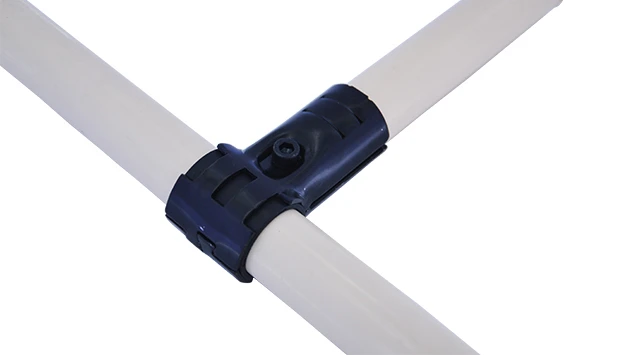
1. The Backbone of Lean Systems: Why Every Component Counts
In the world of manufacturing and production, efficiency isn't just a buzzword—it's the backbone of profitability and sustainability. Lean manufacturing, a philosophy centered on minimizing waste while maximizing value, has revolutionized how factories operate. At the heart of this revolution lies the lean system —a network of physical tools and structures designed to streamline workflows, reduce bottlenecks, and keep operations running like a well-oiled machine. From conveyor belts that move parts seamlessly to workbenches where assembly happens, every element of a lean system plays a role. But if you zoom in closer, past the large workstations and towering racks, you'll find the unsung heroes: the small, unassuming components that hold everything together. One such component is the one way rotatory straight lean pipe joint —a deceptively simple piece that wields enormous influence over the safety and efficiency of an entire operation.
Think about a busy production floor. Workers move quickly, parts glide along roller tracks, and assembly lines hum with activity. Behind this chaos is order, maintained in part by structures built from lean pipe and accessories. These structures—whether they're flow racks, workbenches, or material trolleys—depend on joints to connect pipes, support weight, and sometimes even allow controlled movement. The one way rotatory straight lean pipe joint is unique in that it does more than just hold pipes together: it allows rotation in one direction while keeping the structure rigid in others. This dual functionality makes it indispensable in setups where parts need to be repositioned, like on a assembly line where a workbench might need to pivot slightly, or a flow rack where items slide along a track that tilts gently. But here's the catch: if these joints fail—if they can't handle the weight or stress they're under—the entire structure could wobble, collapse, or malfunction. That's why understanding their load limits isn't just a technical detail; it's a critical part of keeping workers safe and production on track.
2. What Are One Way Rotatory Straight Lean Pipe Joints, Exactly?
Let's start with the basics. A lean pipe (also called a "lean tube") is a hollow tube, typically made of steel, aluminum, or stainless steel, used to build modular structures in lean systems. These pipes are lightweight, durable, and easy to assemble, which is why they're a staple in factories worldwide. To connect these pipes into useful structures—like a workbench or a flow rack—you need joints. Joints are the connectors that link pipes at angles, allowing you to create custom configurations without welding or drilling. Most joints are fixed, meaning once connected, they don't move. But the one way rotatory straight lean pipe joint is different: it's designed to rotate in a single direction while staying fixed in others. Imagine a joint that lets a pipe segment swivel up and down but not side to side, or rotate horizontally but lock vertically. This controlled movement is what makes it so valuable in dynamic work environments.
So, what does this joint look like? Physically, it's a small, often cylindrical or angular piece with holes or sockets where lean pipes fit. Inside, it contains a mechanism—usually a pin, bearing, or locking collar—that allows rotation in one axis. For example, some models have a spring-loaded pin that slots into a groove, letting the joint turn until the pin hits a stop, preventing rotation beyond a certain point. Others use a friction-based system, where rotation is smooth but requires intentional force, preventing accidental movement. The "straight" in its name refers to its primary function: connecting pipes in a straight line, though with the added twist of rotation. This design makes it ideal for applications where parts need to be moved along a fixed path but occasionally adjusted—like a roller track where the angle might need to speed up or slow down material flow.
Materials matter, too. Most one way rotatory straight lean pipe joints are made from steel (often coated to resist corrosion) or aluminum. Steel joints are known for their strength, making them suitable for heavy-duty applications, while aluminum joints are lighter and more resistant to rust, making them a better choice for cleanrooms or environments with high humidity. Some joints even come with a chrome finish, like the one way rotatory straight lean pipe joint chrome variant, which adds an extra layer of durability and a sleek look—though the chrome is more about aesthetics and corrosion resistance than load capacity. Regardless of material, the key is that the joint must balance two needs: allowing smooth rotation in one direction and providing unwavering stability in others.

3. The Critical Role of Load Limits: Safety First, Efficiency Second
Load limit—the maximum weight a joint can safely support without deforming or failing—is not just a number on a spec sheet. It's a safety threshold that protects workers, prevents costly downtime, and ensures the lean system functions as intended. Imagine a flow rack in a warehouse, loaded with heavy automotive parts. The rack is built with lean pipes and joints, including one way rotatory straight lean pipe joints that allow the top shelf to tilt for easy access. If those joints are rated for 50kg but the shelf is loaded with 70kg, the consequences could be disastrous: the joints might bend, the shelf could collapse, and parts could come crashing down, risking injury to anyone nearby. Even if a joint doesn't fail immediately, exceeding its load limit can cause gradual wear and tear, weakening the structure over time until it finally gives way. That's why understanding load limits isn't optional—it's a non-negotiable part of designing and maintaining a lean system.
But load limits aren't just about static weight. They also account for dynamic forces—like the impact of parts being placed on a workbench, the vibration from nearby machinery, or the movement of a trolley with casters rolling over uneven floors. For example, a joint supporting a conveyor belt isn't just holding the weight of the belt and the parts on it; it's also absorbing the constant motion of the rollers and the occasional jolt when a heavy part is dropped onto the belt. This dynamic load can be harder on joints than static weight alone, as repeated stress can lead to fatigue failure. Manufacturers test for both static and dynamic loads to ensure their joints can handle real-world conditions, but it's up to the end user to know which type of load their application involves and choose joints accordingly.
Another factor to consider is "factor of safety." This is the ratio of a joint's ultimate load capacity (the point at which it fails) to its recommended working load limit. For example, a joint with an ultimate capacity of 200kg might have a working load limit of 100kg, giving a factor of safety of 2. This buffer ensures that even if the load exceeds the working limit—due to human error or unexpected conditions—the joint won't fail. Reputable manufacturers always include this factor in their load ratings, but it's important to check that the working load limit (not the ultimate limit) is what's being referenced when selecting joints. Cutting corners here—using a joint with a lower load limit to save money—is a gamble that rarely pays off.

4. Factors Influencing Load Capacity: What Determines How Much a Joint Can Handle?
Load capacity isn't a one-size-fits-all number. It depends on a mix of design choices, materials, and environmental factors. Let's break down the key influencers:
Material Composition: Steel vs. Aluminum
The material a joint is made from is the first determinant of its strength. Steel joints, for example, have a higher tensile strength than aluminum, meaning they can resist more pulling or stretching force before breaking. A steel one way rotatory straight lean pipe joint might have a load capacity of 150kg, while an aluminum joint of the same size might max out at 100kg. But aluminum has its advantages: it's lighter, which reduces the overall weight of the structure, and it's more resistant to corrosion, making it better for damp or chemical-exposed environments. Some joints even combine materials—like a steel core with an aluminum casing—to balance strength and rust resistance. When evaluating load capacity, always check the material specs; a joint's strength is only as good as the metal it's made from.
Design and Engineering: How the Joint Is Built
Even two joints made from the same material can have drastically different load limits if their designs differ. Key design features include the thickness of the joint walls, the size of the connection points (where the pipe inserts into the joint), and the rotational mechanism itself. For example, a joint with thicker walls will be stiffer and more resistant to bending, while a joint with larger connection points distributes the load more evenly across the pipe, reducing stress on both the joint and the pipe. The rotational mechanism also plays a role: joints with ball bearings for rotation tend to have lower load capacities than those with solid metal hinges, as bearings add moving parts that can wear down or fail under heavy weight. On the flip side, bearings allow smoother rotation, which is critical for applications where frequent adjustment is needed. It's a trade-off between movement and strength, and the right choice depends on the specific needs of the setup.
Pipe Compatibility: Matching Joints to Pipes
A joint is only as strong as the pipe it's connected to. If you pair a heavy-duty steel joint with a thin-walled lean pipe (say, 1.0mm pe coated lean pipe), the pipe might bend or collapse before the joint does, rendering the joint's high load capacity irrelevant. That's why lean pipe accessories —including joints—are designed to work with specific pipe diameters and wall thicknesses. Most manufacturers specify compatible pipe sizes (e.g., 28mm diameter pipes) and wall thicknesses (1.2mm, 1.5mm, 2.0mm) for their joints. For example, a joint rated for 2.0mm steel pipes will have a larger inner diameter and tighter grip, ensuring the pipe doesn't slip or deform under load. Using a pipe that's too thin or too small for the joint is a common mistake that can lead to structural failure, even if the joint itself is rated for a higher load.
Installation Quality: Tightness and Alignment
Even the best joint will underperform if installed incorrectly. Over-tightening a joint can strip the threads or crack the metal, weakening it. Under-tightening can cause the pipe to wobble, creating stress points that lead to fatigue. Alignment is another critical factor: if the pipes connected by the joint are not straight or are at an angle the joint isn't designed for, the load won't be distributed evenly, increasing the strain on the joint. For example, a one way rotatory joint designed to rotate horizontally will fail quickly if forced to support a vertical load due to misalignment. That's why proper installation training is essential. Many lean pipe supplier companies offer guidelines or even on-site training to ensure installers understand how to tighten joints to the correct torque and align pipes properly.
Environmental Conditions: Heat, Moisture, and Chemicals
The environment in which a joint operates can also affect its load capacity. High temperatures can weaken metal, reducing its tensile strength. For example, a steel joint rated for 150kg at room temperature might only handle 120kg in a factory with constant heat from ovens or machinery. Moisture and chemicals can cause corrosion, eating away at the joint's structure over time. A joint that's rusted or pitted has less material to bear the load, increasing the risk of failure. Even humidity can be a problem: aluminum joints are resistant to rust, but steel joints without proper coating can corrode in damp environments. That's why it's important to choose joints designed for the specific conditions of your facility—whether it's a dry, temperature-controlled electronics plant or a hot, humid food processing facility.
5. Testing Load Limits: How Manufacturers Ensure Safety
You might wonder: How do manufacturers come up with those load limit numbers? It's not guesswork— it's rigorous testing. Before a one way rotatory straight lean pipe joint hits the market, it undergoes a series of tests to determine its maximum safe load capacity. These tests simulate real-world conditions and push the joint to its breaking point, allowing manufacturers to set conservative working load limits that account for variables like material fatigue and environmental stress.
Static Load Testing: The Foundation of Load Ratings
Static load testing is the most basic and common test. It involves placing a constant, stationary weight on the joint and measuring how much it deforms (bends, twists, or stretches) over time. For example, a manufacturer might mount a joint between two fixed pipes, then hang weights from the rotating arm, increasing the load gradually. They'll record the weight at which the joint first shows permanent deformation (e.g., a bend that doesn't straighten out when the weight is removed) and use that to set the ultimate load capacity. The working load limit is then set at a fraction of that number—usually 50% or less—to account for safety margins. A joint that deforms at 200kg during static testing might have a working load limit of 100kg, ensuring there's plenty of buffer for unexpected stress.
Dynamic Load Testing: Accounting for Movement
Static testing is important, but it doesn't account for the forces of movement—like parts sliding along a roller track or a trolley being pushed across the floor. That's where dynamic load testing comes in. In this test, the joint is subjected to moving or oscillating loads to simulate real-world conditions. For example, a joint used in a conveyor system might be tested by repeatedly dropping a weighted object onto the structure it supports, mimicking the impact of parts being placed on the conveyor. Another test might involve rotating the joint back and forth while under load, checking for wear on the rotational mechanism. Dynamic testing helps manufacturers determine how well the joint holds up under repeated stress, which is critical for applications where movement is frequent.
Fatigue Testing: Long-Term Durability
Even if a joint can handle a heavy load once, can it do so thousands of times over? Fatigue testing answers that question by subjecting the joint to repeated cycles of load and unload, simulating years of use in a short time. For example, a joint might be loaded with 80% of its working load limit, then unloaded, repeated 100,000 times. If the joint shows signs of cracking or deformation after these cycles, the working load limit might be lowered. Fatigue testing is especially important for one way rotatory joints, as the rotational mechanism is prone to wear from repeated movement. A joint that passes static and dynamic tests might still fail in fatigue testing if the bearings or pins aren't durable enough.
Industry Standards: Ensuring Consistency
To ensure reliability, most manufacturers follow industry standards set by organizations like the International Organization for Standardization (ISO) or the Occupational Safety and Health Administration (OSHA). These standards outline testing procedures, safety factors, and labeling requirements. For example, ISO 14122 specifies safety requirements for industrial trucks, which often use lean pipe structures with joints. OSHA, meanwhile, has guidelines for load capacities in workplace structures, requiring that all components—including joints—be rated for their intended use. By adhering to these standards, manufacturers ensure that their joints are tested consistently, making it easier for buyers to compare products and choose the right one for their needs.
To illustrate how these tests translate to real-world load limits, let's look at a sample of test results for common one way rotatory straight lean pipe joint materials:
| Joint Type | Material | Static Load Capacity (Ultimate) | Working Load Limit (50% of Ultimate) | Dynamic Load Capacity (10,000 cycles) | Fatigue Load Limit (100,000 cycles) |
|---|---|---|---|---|---|
| One Way Rotatory Straight (Chrome) | Steel (2.0mm wall) | 250 kg | 125 kg | 100 kg | 90 kg |
| One Way Rotatory Straight | Aluminum (1.5mm wall) | 180 kg | 90 kg | 75 kg | 65 kg |
| One Way Rotatory Straight | Stainless Steel (1.2mm wall) | 200 kg | 100 kg | 85 kg | 75 kg |
As you can see, steel joints generally offer higher load capacities than aluminum, but aluminum joints still hold their own for lighter applications. The fatigue load limit is lower than the working load limit because repeated cycles weaken the material over time. This table is a simplified example—actual load limits can vary by manufacturer, design, and pipe compatibility—but it gives a sense of how testing shapes the numbers you'll see on a joint's spec sheet.
6. Real-World Applications: Where Load Limits Make or Break Operations
Understanding load limits is one thing; applying that knowledge to real-world setups is another. Let's explore some common applications where one way rotatory straight lean pipe joints are used and why their load limits matter:
Production Assembly Lines: Supporting the Flow of Work
Assembly lines are the heartbeat of manufacturing, and lean pipe structures are everywhere here—from workbenches where workers assemble parts to flow racks that feed components to the line. One way rotatory straight lean pipe joints are often used on adjustable workbenches, allowing the tabletop to tilt or rotate for ergonomic access. For example, a workbench used to assemble small electronics might have a tilting top, supported by rotatory joints, so workers can adjust the angle to reduce neck strain. If those joints are underrated, the top could sag or collapse, disrupting the assembly process and risking injury. In high-volume production, even a few minutes of downtime can cost thousands of dollars, making reliable load limits critical.
Flow Racks and Roller Tracks: Moving Materials Safely
Flow racks—structures with roller track systems that let materials slide from the back to the front—depend on joints to support the weight of the rollers and the items on them. One way rotatory joints might be used at the ends of the roller track to adjust the angle of the track, controlling how fast materials flow. For example, a flow rack in a warehouse storing automotive parts might use rotatory joints to tilt the track slightly, ensuring parts glide forward as the front ones are removed. If the joints can't handle the weight of the parts (say, 20kg per shelf), the track could dip, causing parts to get stuck or jam. In a busy warehouse, a jammed flow rack can bring picking operations to a halt, leading to delays in order fulfillment.
Turnover Trolleys: Mobility and Stability
Turnover trolleys—used to transport materials between workstations—often use lean pipe frames with casters for mobility. The joints connecting the pipes must support not just the weight of the materials but also the stress of movement: bumps in the floor, sudden stops, and turns. One way rotatory joints might be used on the handle of the trolley, allowing it to fold down for storage. If those joints fail, the handle could break off, making the trolley hard to maneuver and increasing the risk of accidents. For example, a trolley loaded with 100kg of parts needs joints rated for at least that weight, plus extra to account for dynamic forces from movement. A joint with a working load limit of 75kg would be insufficient, leading to premature failure.
Cleanrooms and Special Environments: Corrosion and Contamination
In specialized environments like cleanrooms or pharmaceutical labs, joints must not only support loads but also resist corrosion and avoid shedding particles. Stainless steel one way rotatory joints are common here, as they're resistant to rust and easy to sanitize. However, stainless steel is slightly weaker than carbon steel, so load limits are often lower. For example, a stainless steel joint might have a working load limit of 80kg, compared to 125kg for a steel joint of the same size. In these environments, where even small failures can lead to product contamination, adhering to load limits is non-negotiable—cutting corners could result in costly recalls or regulatory fines.
7. Maintenance and Inspection: Keeping Joints Strong Over Time
Even the best joints won't last forever without proper care. Over time, wear and tear, corrosion, and loose connections can reduce a joint's load capacity, turning a safe structure into a hazard. Regular maintenance and inspection are key to preserving load capacity and extending the life of your lean system components. Here's what you need to do:
Regular Tightening Checks
Joints can loosen over time due to vibration from machinery or frequent use. At least once a month, inspect all rotatory joints and tighten any loose connections. Use a torque wrench to ensure you're applying the correct amount of force—over-tightening can strip threads or crack the joint, while under-tightening leaves the structure wobbly. For one way rotatory joints, pay extra attention to the rotational mechanism: if it feels stiff or loose, it may need adjustment or lubrication.
Inspect for Wear and Damage
Look for signs of wear, such as cracks, dents, or deformation in the joint body. Check the rotational parts—bearings, pins, or hinges—for rust, pitting, or excessive play. If a joint has a chrome finish, look for chips or flaking, which can expose the underlying metal to corrosion. In roller track systems, check that the joints supporting the rollers are still aligned; misalignment can cause uneven wear on both the joint and the rollers. If you notice any damage, replace the joint immediately—don't try to "make do" with a weakened component.
Lubricate Rotational Parts
One way rotatory joints with moving parts (like bearings) need regular lubrication to reduce friction and prevent wear. Use a lightweight machine oil or silicone lubricant, applying a small amount to the rotational mechanism every 3–6 months, depending on use. Avoid heavy greases, which can attract dust and debris, gumming up the works. For food-grade environments, use lubricants labeled "food safe" to avoid contamination.
Clean and Protect from Corrosion
In damp or corrosive environments, clean joints regularly to remove dirt and moisture. Wipe steel joints with a dry cloth, and consider applying a rust-resistant spray if they're not already coated. Aluminum joints can be cleaned with mild soap and water, but avoid abrasive cleaners that can scratch the surface. For stainless steel joints, a quick wipe with a vinegar solution can help remove water spots and prevent staining.
replace Worn Accessories
Joints don't work alone—they depend on lean pipe accessories like end caps, clamps, and pins to function properly. If an accessory is worn or damaged, it can compromise the joint's load capacity. For example, a cracked end cap might allow the pipe to slip inside the joint, reducing stability. Always replace worn accessories with genuine parts from a reputable lean pipe supplier —generic parts may not fit properly or meet the same quality standards.
8. Choosing the Right Joint: A Guide for Buyers
With so many options on the market, choosing the right one way rotatory straight lean pipe joint can feel overwhelming. But by focusing on your specific needs, you can narrow down the choices and select a joint that's safe, reliable, and cost-effective. Here's what to consider:
Calculate Your Load Requirements
Start by determining the maximum weight the joint will need to support. This includes the weight of the structure itself, plus the materials or parts it will hold. Be realistic—err on the side of overestimating rather than underestimating. For example, if you expect to load a workbench with 80kg of parts, choose a joint with a working load limit of at least 100kg to account for dynamic forces.
Consider the Environment
Will the joint be used indoors or outdoors? In a dry, temperature-controlled area or a humid, dusty factory? Choose materials accordingly: steel for heavy loads, aluminum for light weight and corrosion resistance, stainless steel for cleanrooms or wet environments. If aesthetics matter (e.g., in a customer-facing facility), consider a chrome-plated joint for a sleek look.
Check Compatibility
Ensure the joint is compatible with your existing lean pipes. Check the pipe diameter, wall thickness, and material—most joints are designed for specific sizes (e.g., 28mm diameter pipes). If you're building a new structure, buy pipes and joints from the same supplier to ensure a perfect fit.
Consult the Experts
If you're unsure which joint to choose, reach out to a lean pipe supplier with experience in your industry. They can help you calculate load requirements, recommend materials, and even provide samples for testing. A good supplier will also offer warranty information, ensuring you're covered if a joint fails prematurely.
9. Conclusion: Small Components, Big Impact
The one way rotatory straight lean pipe joint may be small, but its role in a lean system is enormous. It's the bridge between rigidity and movement, the component that allows lean structures to adapt to changing needs while staying strong and safe. Understanding its load limits—what they mean, how they're tested, and how to maintain them—is essential for anyone responsible for designing, building, or maintaining a lean manufacturing operation.
From production lines to warehouses, from cleanrooms to heavy-duty factories, these joints quietly support the flow of materials and the work of countless employees. By choosing the right joint, installing it properly, and maintaining it with care, you're not just protecting your equipment—you're protecting your team, your productivity, and your bottom line. So the next time you walk through a factory floor, take a moment to appreciate the small components holding everything together. They may not get the glory, but they're the unsung heroes of lean manufacturing.