- Company Articles
- Products and Technology
- Product knowledge
- Understanding the Rotation Mechanism of One Way Rotatory Straight Lean Pipe Joints

Understanding the Rotation Mechanism of One Way Rotatory Straight Lean Pipe Joints
Related Product
One Way Rotatory Straight Lean Pipe Joint
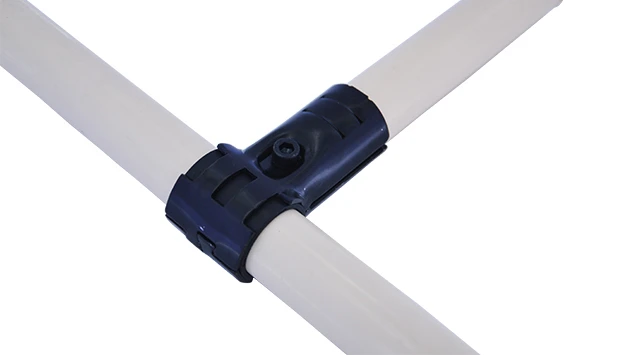
Two way lean pipe joint for 2 pcs 28MM lean pipe connection in straight angle with rotatory fucntion, which used widely in workbench, flow rack, hand trolley frame connection.
The Backbone of Lean Manufacturing: Why Components Like Joints Matter
In the fast-paced world of manufacturing, where every second counts and efficiency is the name of the game, lean systems have become the gold standard. These systems—built on the principles of minimizing waste, streamlining workflows, and maximizing productivity—rely heavily on modular, adaptable tools that can keep up with changing production demands. At the heart of these tools lie yet critical components: lean pipe joints. While they might not grab headlines, these small connectors are the unsung heroes that hold everything together, enabling the flexibility and precision that make lean manufacturing possible.
Among the many types of lean pipe joints available, the one way rotatory straight lean pipe joint stands out for its unique ability to combine stability with controlled movement. Whether you're building a lean pipe workbench for assembly line workers, a flow rack to move materials across the factory floor, or a conveyor system to synchronize production stages, this joint plays a pivotal role in ensuring everything runs smoothly. In this article, we'll take a deep dive into how this joint works, why its rotation mechanism is so crucial, and how it can transform your manufacturing processes—one precise turn at a time.
Meet the One Way Rotatory Straight Lean Pipe Joint: A Closer Look
Before we jump into the mechanics, let's start with the basics: What exactly is a one way rotatory straight lean pipe joint? At its core, it's a connector designed to join two lean pipes (or tubes) in a straight line while allowing one-directional rotation —meaning it can turn freely in one direction but locks in place when rotated the opposite way. This might sound simple, but this controlled movement is a game-changer for applications where precision and stability are non-negotiable.
Take, for example, a lean pipe workbench used in electronics assembly. Workers often need to adjust the angle of tools or component trays to access parts more easily. With a standard fixed joint, this would require loosening bolts, repositioning, and retightening—a process that disrupts workflow and wastes time. But with a one way rotatory joint, the tray can be smoothly rotated into the desired position and will stay put until intentionally adjusted again. No tools, no hassle, just seamless adaptability.
Now, let's talk about materials. Many of these joints come with a chrome coating, known as the one way rotatory straight lean pipe joint chrome variant. Chrome isn't just for aesthetics (though it does give the joint a sleek, professional look); it adds a layer of durability. Chrome plating resists corrosion, scratches, and wear from frequent use—essential in factory environments where dust, oils, and moisture can take a toll on metal components. This means the joint will maintain its smooth rotation and structural integrity even after years of heavy-duty operation.

The Heart of the Mechanism: How One-Way Rotation Works
The magic of the one way rotatory straight lean pipe joint lies in its internal mechanics. Let's break it down step by step, like peeling back the layers of a well-engineered machine.
1. The Ratchet-and-Pawl System: The Key to One-Way Movement
At the core of the joint is a ratchet-and-pawl mechanism—a classic engineering solution for controlled rotation. The ratchet is a toothed wheel attached to one end of the joint, while the pawl is a small, spring-loaded lever that fits into the ratchet's teeth. When you rotate the joint in the "allowed" direction, the pawl glides over the ratchet's teeth, creating a smooth, almost silent movement. But when you try to rotate it the opposite way, the pawl catches on a tooth, locking the joint in place. It's similar to how a wrench clicks when tightening a bolt—only allowing movement in one direction to prevent backsliding.
This mechanism is why the joint feels so intuitive to use. There's no need for manual locking or unlocking; the pawl does the work automatically. For workers on the factory floor, this means they can focus on their tasks without worrying about the joint slipping or shifting mid-operation.
2. Bearings: Reducing Friction for Smooth Rotation
To ensure the rotation feels effortless, the joint is fitted with small bearings (usually ball bearings) around its inner circumference. Bearings reduce friction between moving parts, so even when the joint is supporting heavy loads (like a fully loaded material rack), it still rotates smoothly. Imagine trying to push a heavy cart with rusted wheels versus one with well-lubricated, rolling wheels—that's the difference bearings make here.
High-quality joints use sealed bearings to keep out dust and debris, which can cause jamming over time. This is especially important in manufacturing settings where particles from cutting, grinding, or packaging processes are common. A sealed bearing ensures the joint's rotation stays consistent, day in and day out.
3. Spring Tension: Keeping the Pawl Engaged
The pawl in the ratchet system is kept in place by a small spring. This spring ensures the pawl always presses against the ratchet's teeth, even as the joint wears over time. If the spring were too weak, the pawl might disengage, causing the joint to slip. Too strong, and rotation would feel stiff or require excessive force. Manufacturers carefully calibrate this spring tension to strike the perfect balance—enough resistance to keep the joint locked when needed, but not so much that it's hard to rotate.
Some premium joints even allow for minor adjustments to the spring tension, letting users customize the "feel" of the rotation based on their specific needs. For example, a heavier load might require a stiffer spring to prevent accidental movement, while a lighter application could use a softer spring for easier adjustment.

Applications in the Real World: Where This Joint Shines
Now that we understand how the joint works, let's explore where it makes the biggest impact. From lean pipe workbenches to flow racks, this joint is a versatile tool that solves common manufacturing challenges.
1. Lean Pipe Workbenches: Adapting to Worker Needs
Workbenches are the command centers of manufacturing—where assembly, inspection, and packaging happen. Every worker has different preferences: some like their tools to the left, others to the right; some need parts trays tilted for better visibility, others flat. With fixed joints, workbenches are static, forcing workers to adapt to the setup rather than the other way around.
Enter the one way rotatory straight lean pipe joint. By using these joints to attach tool holders, shelves, or component bins to the workbench frame, workers can adjust their stations in seconds. Need to swing a tool tray closer? Rotate it forward, and it stays. Want to tuck a bin out of the way? Rotate it back, and it locks. This level of customization reduces fatigue and increases focus—two factors that directly boost productivity and reduce errors.
2. Flow Racks: Guiding Materials with Precision
Flow racks are essential for just-in-time production, where materials need to move smoothly from storage to assembly lines. These racks use gravity to slide items forward, but controlling the speed and direction of that movement is critical. Too fast, and parts might collide or fall off; too slow, and workers wait for materials.
One way rotatory joints are used to adjust the angle of roller tracks on flow racks. By tilting the tracks slightly, you control how quickly items flow. The one-way rotation ensures the track stays at the desired angle, even when loaded with heavy boxes or components. For example, a pharmaceutical manufacturer might use these joints to set a gentle slope for fragile vials, while an automotive plant could steepen the angle for sturdier parts—all with the same joint.
3. Conveyor Systems: Synchronizing Production Stages
Conveyors are the arteries of a factory, moving products from one station to the next. But not all products move at the same rate. A one way rotatory joint can be used to create adjustable stops or gates along the conveyor. For instance, when a product reaches a quality inspection station, a worker can rotate a gate into place to pause the product, inspect it, then rotate the gate back to let it continue. The joint's locking mechanism ensures the gate doesn't accidentally move during inspection, preventing jams or missed checks.
Case Study: XYZ Manufacturing's 20% Efficiency Boost
To put this into perspective, let's look at XYZ Manufacturing, a mid-sized electronics assembler. Before switching to one way rotatory joints, their workbenches used fixed steel brackets. Workers spent an average of 15 minutes per shift adjusting tools or bins—either by loosening bolts or asking maintenance for help. After upgrading to lean pipe workbenches with one way rotatory straight lean pipe joint chrome connectors, adjustment time dropped to less than 2 minutes per shift. Over a month, this saved 56 hours of productive time—equivalent to adding an extra full-time worker to the line. Plus, error rates decreased by 12% as workers could position components exactly where they needed them, reducing eye strain and fumbling.
Comparing Joints: What Makes the One-Way Rotatory Straight Joint Unique
Not all lean pipe joints are created equal. Let's compare the one way rotatory straight joint with two common alternatives to see why it stands out.
| Joint Type | Rotation Direction | Primary Use Case | Key Advantage | Limitations |
|---|---|---|---|---|
| One Way Rotatory Straight | One direction (locks in reverse) | Adjustable workbenches, flow racks, conveyor gates | Controlled movement with automatic locking; no tools needed | Not ideal for 360° rotation needs |
| 90° Fixed Joint | No rotation (fixed at 90° angle) | Right-angle connections (e.g., workbench legs to frame) | Maximum stability for static structures | No adjustability; requires tools to reposition |
| Parallel Rotatory Joint | 360° rotation (no locking) | Swivel arms, rotating shelves | Full range of motion | No locking mechanism; can shift under load |
As the table shows, the one way rotatory straight joint fills a unique niche: it offers adjustability without sacrificing stability. For applications where you need controlled movement (not full rotation) and reliable locking, there's no better option.
Installation Guide: Getting It Right the First Time
Installing a one way rotatory straight lean pipe joint is straightforward, but attention to detail ensures it performs as expected. Here's a step-by-step guide:
Tools You'll Need
- A rubber mallet (to tap pipes into place without damaging threads)
- A level (to ensure pipes are straight)
- A torque wrench (optional, for precise tightening)
- Clean cloth (to wipe away debris from pipe ends)
Step 1: Prepare the Pipes
Start by cutting your lean pipes to the desired length (if not pre-cut). Use a pipe cutter for clean, straight edges—burrs or uneven cuts can prevent the joint from seating properly. Wipe the pipe ends with a clean cloth to remove dust, oil, or metal shavings.
Step 2: insert Pipes into the Joint
Slide one pipe into each end of the joint. Most joints have a set screw or clamping mechanism to secure the pipes—hand-tighten this first to hold everything in place. Check that the pipes are fully inserted (look for a mark or stop inside the joint) and that the joint is centered between them.
Step 3: Align and Tighten
Use a level to ensure the pipes are straight and aligned. Once positioned, tighten the set screw or clamp with a wrench. Be careful not to over-tighten—this can strip threads or warp the joint. A good rule of thumb: tighten until snug, then give it a quarter-turn more.
Step 4: Test the Rotation
Finally, test the joint's rotation. It should spin smoothly in one direction and lock firmly in the other. If it's stiff, check for misalignment or debris in the ratchet mechanism. If it slips, ensure the set screw is tight enough (but not over-tightened) and that the pawl is engaging with the ratchet teeth.
Pro tip: If you're installing multiple joints in a row (like along a flow rack), test each one as you go. This makes it easier to spot and fix issues before the entire structure is assembled.
Maintenance and Longevity: Keeping Your Joints in Top Shape
A well-maintained one way rotatory straight lean pipe joint can last for years, even in harsh factory environments. Here's how to keep yours performing at its best:
1. Regular Inspections
Set a schedule to inspect joints monthly (or more often for high-use areas). Look for signs of wear: loose set screws, chipped chrome plating, or debris in the ratchet mechanism. If the joint feels gritty when rotating, it might need cleaning.
2. Cleaning Chrome Surfaces
Chrome is durable, but it can dull over time. Wipe the joint with a soft cloth dampened with mild soap and water to remove dirt and oils. Avoid abrasive cleaners or steel wool, which can scratch the chrome. For stubborn grime, a solution of equal parts vinegar and water works well—just rinse and dry thoroughly afterward.
3. Lubrication for Smooth Rotation
The ratchet-and-pawl mechanism and bearings benefit from occasional lubrication. Use a light machine oil or silicone spray (avoid heavy greases, which attract dust). Apply a drop or two to the joint's rotation point and work the joint back and forth to distribute the lubricant. This keeps rotation smooth and prevents corrosion inside the mechanism.
4. When to replace: Signs of Wear
Even with maintenance, joints eventually wear out. replace yours if you notice:
- The joint slips in the locked direction (pawl teeth are worn down).
- Rotation is consistently stiff or jerky, even after cleaning and lubrication (bearings are failing).
- Chrome plating is peeling or the base metal is rusting (structural integrity may be compromised).
Choosing the Right Supplier: What to Look For in a Lean Pipe Supplier
Not all lean pipe supplier options are created equal. The quality of your joint depends largely on where you buy it. Here's what to look for when choosing a supplier:
1. Quality Certifications
Reputable suppliers adhere to international standards like ISO 9001 for quality management. This ensures their manufacturing processes are consistent and their products meet strict durability and safety criteria. Ask to see certification documents—any supplier worth their salt will be happy to provide them.
2. Material Sourcing Transparency
The best joints are made from high-grade steel with thick, uniform chrome plating. Ask the supplier about their raw materials: Where do they source their steel? What's the thickness of the chrome coating? Avoid suppliers who can't answer these questions—they may be cutting corners with cheap materials.
3. Customer Support and Technical Assistance
A good lean system supplier does more than sell parts—they partner with you to solve problems. Look for suppliers that offer technical support, installation guides, and even custom solutions if needed. If you have questions about which joint is right for your application, they should be able to provide clear, helpful advice.
4. Reviews and References
Check online reviews or ask for customer references. Hearing from other manufacturers about their experience with the supplier can reveal red flags (like frequent delays or poor quality) or confirm that the supplier delivers on their promises.
Conclusion: The Small Component That Makes a Big Difference
In the grand scheme of manufacturing, the one way rotatory straight lean pipe joint might seem small—but its impact is anything but. By combining precise engineering, durable materials, and intuitive design, this joint empowers workers to adapt their environments, streamlines material flow, and reduces downtime. It's a testament to the idea that lean manufacturing isn't just about big-picture systems—it's about the small, thoughtful components that make those systems work.
Whether you're building a new lean pipe workbench , upgrading your flow racks, or revamping a conveyor system, choosing the right joint matters. The one way rotatory straight lean pipe joint chrome variant, with its corrosion-resistant finish and reliable rotation mechanism, is a investment in efficiency that pays off day after day.
So the next time you walk through a factory and see a smoothly rotating shelf or a perfectly angled workbench, take a moment to appreciate the joint that makes it all possible. It's not just a connector—it's a bridge between static structures and dynamic, human-centered manufacturing. And in the world of lean, that bridge is what turns good processes into great ones.