- Company Articles
- Products and Technology
- Product knowledge
- Understanding the Rotatory Mechanism in One Side Chrome Parallel Lean Pipe Joints

Understanding the Rotatory Mechanism in One Side Chrome Parallel Lean Pipe Joints
Related Product
Parallel Lean Pipe Joint
Parallel lean pipe joint used for 2 pcs 28MM lean pipe connection in parallel direction to enhance frame structure, usually for heavy payload requirement for workbench. flow rack, hand trolley.
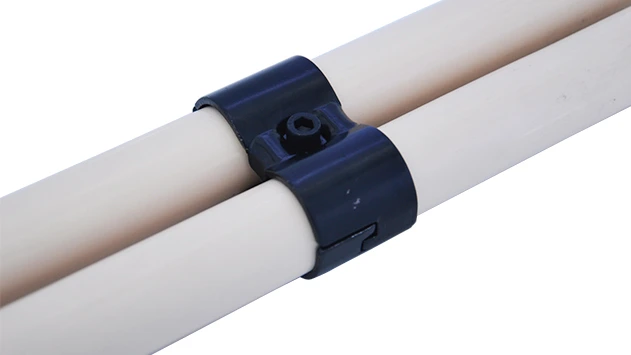
In the world of manufacturing, where every second counts and efficiency is the name of the game, the smallest components often play the biggest roles. Think about it: a well-oiled production line relies not just on high-tech machinery but on the quiet, unassuming parts that hold everything together. Today, we're shining a spotlight on one such unsung hero: the one side chrome parallel lean pipe joint . If you've ever walked through a factory floor, admired a neatly organized workshop, or wondered how teams reconfigure workstations in a snap, chances are you've seen these joints in action—even if you didn't realize it.
Lean manufacturing isn't just a buzzword; it's a philosophy built on eliminating waste, streamlining processes, and adapting to change. And at the heart of this philosophy lies the lean pipe system —a modular framework of pipes, joints, and accessories that lets teams build everything from workbenches to material racks, conveyor systems to turnover trolleys. But what makes these systems truly flexible? It's the joints. Specifically, rotatory joints like the one side chrome parallel variant, which act as the "hinges" of the lean world, allowing structures to bend, adjust, and evolve without being torn down and rebuilt.
In this article, we'll dive deep into how these joints work, why they matter, and how they're transforming the way manufacturers approach everything from assembly lines to storage solutions. Whether you're a production manager looking to boost your team's agility, a plant engineer troubleshooting workflow bottlenecks, or just someone curious about the mechanics behind efficient workspaces, this is your guide to understanding the rotatory magic that keeps lean systems moving.
Lean Pipe Systems: The Backbone of Modern Manufacturing Flexibility
Before we zoom in on the joints themselves, let's take a step back and appreciate the bigger picture: lean pipe systems. These systems are the Swiss Army knives of industrial infrastructure. Unlike rigid, custom-built workbenches or fixed material racks, lean pipe systems are modular. That means they're made from standardized components—pipes (often steel, aluminum, or chrome-plated), joints, and accessories like casters, roller tracks, and shelves—that can be assembled, disassembled, and reconfigured in endless combinations.
Why does this matter? Imagine a small electronics manufacturer that produces 10 different product models. Each model might require a slightly different workstation setup: some need extra shelving for tools, others need lower surfaces for manual assembly, and a few might even need integrated conveyor tracks to move parts between stations. With traditional fixed workbenches, the team would either need to invest in 10 separate setups (wasting space and money) or spend hours retooling a single bench every time the product line changes (wasting time). Enter lean pipe systems: with a few adjustments to the pipes and joints, the same base structure can transform from a smartphone assembly station in the morning to a tablet testing bench in the afternoon.
At the core of this flexibility are the lean pipe joints . They're the connectors that turn simple pipes into complex, functional structures. Without them, a lean pipe system is just a pile of metal tubes. With them, it's a dynamic, adaptable workspace that grows with your needs. And among the many types of lean pipe joints, the parallel rotatory ones stand out for their unique ability to balance stability with movement—making them indispensable in scenarios where angles, heights, or orientations need frequent tweaking.
Meet the Players: What Are One Side Chrome Parallel Lean Pipe Joints?
Let's start with the basics: what exactly is a one side chrome parallel lean pipe joint? Break it down, and you'll find three key descriptors: "one side," "chrome parallel," and "lean pipe joint." Let's unpack each:
- Lean pipe joint: The fundamental connector in lean systems, designed to join two or more pipes at specific angles. They come in fixed (non-moving) and rotatory (moving) versions, with materials ranging from plastic to aluminum to chrome-plated steel.
- Parallel: These joints are engineered to connect pipes that run parallel to each other—think of two horizontal pipes on a workbench shelf, or two vertical supports on a material rack. Unlike joints that connect pipes at 90° or 45° angles, parallel joints keep pipes aligned in the same plane, which is critical for stability in flat or linear structures.
- One side chrome: "One side" refers to the design: these joints typically have a fixed connection on one end and a rotatory mechanism on the other, allowing one pipe to rotate relative to the other while keeping them parallel. "Chrome" indicates the finish—chrome plating adds durability, corrosion resistance, and a smooth surface that's easy to clean, making these joints ideal for environments where hygiene or wear resistance matters (like food processing or automotive plants).
Picture this: a workbench built with lean pipes. The horizontal frame is held together with fixed 90° joints, but the adjustable shelf above uses one side chrome parallel joints. This setup lets workers raise or lower the shelf by rotating the joint, then lock it in place at the perfect height—no tools, no hassle. That's the power of rotatory parallel joints: they add a dimension of movement to otherwise static structures, turning rigid frames into dynamic tools that adapt to human needs, not the other way around.
Fun Fact: Chrome plating isn't just for looks. In industrial settings, chrome-plated joints can withstand up to 50,000 cycles of rotation (opening and closing) before showing signs of wear—meaning a well-maintained joint could last for years, even in high-use environments like 24/7 production lines.

The Rotatory Mechanism: How Do These Joints Actually Work?
Now, let's get into the nitty-gritty: the rotatory mechanism itself. At first glance, a one side chrome parallel lean pipe joint might look like a simple metal piece with two holes for pipes. But inside, there's a clever design that allows controlled rotation while maintaining strength and stability. Let's break it down component by component.
1. The Body: Strength and Structure
The outer body of the joint is usually made from high-grade steel, then coated in a layer of chrome (about 0.001–0.003 inches thick). Steel provides the tensile strength needed to support heavy loads—some industrial-grade joints can hold up to 200 kg per connection—while the chrome layer resists rust, scratches, and chemical exposure. The body has two main "arms": one fixed, one rotatory. The fixed arm is welded or machined to hold one pipe in a stationary position, while the rotatory arm houses the moving parts.
2. The Pivot Point: Where the Magic Happens
At the heart of the rotatory mechanism is a precision-engineered pivot—a small axle or pin that connects the rotatory arm to the fixed body. This pivot is often made from hardened steel or brass to reduce friction and wear. Around the pivot, you'll find a series of ball bearings or a smooth bushing (a cylindrical sleeve) that allows the rotatory arm to spin freely. The bearings are crucial here: they distribute the weight evenly, preventing the joint from jamming or wearing out prematurely.
3. The Locking Mechanism: Stability When You Need It
Rotation is useless if the joint can't stay put once adjusted. That's where the locking mechanism comes in. Most one side chrome parallel joints use a simple but effective "cam lock" or "threaded lock" system. Here's how it works: when you want to rotate the joint, you loosen a knob or lever, which releases pressure on the pivot. Once the arm is in the desired position, you tighten the knob, which presses a brake pad or clamp against the pivot, holding it firmly in place. Some advanced models even have "click-stop" positions—detents that lock the joint at 15°, 30°, or 45° intervals—making it easier to replicate setups across multiple workstations.
4. The Pipe Connections: Secure and Slip-Proof
Finally, the ends of the joint (both fixed and rotatory arms) have holes designed to fit standard lean pipe diameters (usually 28mm or 30mm for steel pipes, 20mm or 30mm for aluminum). To secure the pipes, the joint uses set screws—small, threaded bolts that tighten against the pipe, creating friction. Some joints also have rubberized liners inside the holes to prevent slipping, especially when the joint is under load. This combination of set screws and liners ensures the pipe stays locked into the joint, even during rotation or vibration from nearby machinery.
Put it all together, and you have a joint that's both strong and flexible: strong enough to support heavy tools or materials, flexible enough to adjust to new workflows in seconds. It's this balance that makes the one side chrome parallel lean pipe joint a favorite among lean manufacturing teams.

Why Chrome? Why Parallel? The Practical Benefits of This Design
You might be wondering: with so many joint types out there—fixed 90° joints, 135° crossing joints, even plastic snap-on joints—why choose a one side chrome parallel rotatory joint? The answer lies in its unique combination of features, each solving a specific problem in the manufacturing world.
1. Chrome Plating: Durability in Tough Environments
Manufacturing floors are harsh places. There's oil, grease, water, and constant physical contact (think tools bumping into joints, workers leaning on structures). Chrome plating acts as a shield. Unlike bare steel, which can rust if exposed to moisture, chrome resists corrosion. It's also harder than steel—rating around 85 on the Rockwell hardness scale (for comparison, a kitchen knife is about 55–60)—so it stands up to scratches and dents. For plants that operate in humid climates, handle food-grade products, or use water-based coolants, chrome-plated joints are a no-brainer.
2. Parallel Alignment: Stability for Horizontal and Vertical Adjustments
Parallel joints are designed to keep pipes in the same plane—meaning if you have two horizontal pipes, the joint ensures they stay parallel, not skewed. Why does this matter? Imagine a shelf built with non-parallel joints: over time, the weight of the materials could cause the shelf to twist, leading to uneven loading or even collapse. Parallel joints distribute weight evenly along the length of the pipes, reducing stress and extending the life of the entire structure. They're especially useful for adjustable workbenches, where the height of the tabletop or shelves needs to stay level as it moves up or down.
3. One-Side Rotation: Targeted Flexibility
Unlike fully rotatory joints (which can spin 360° on both ends), one side chrome parallel joints only rotate on one arm. This is intentional. In most applications, you don't need both pipes to move—just one. For example, on a material rack with adjustable dividers, you might want the divider (one pipe) to rotate to angle materials toward the worker, while the main frame (the other pipe) stays fixed. A one-side rotatory joint lets you isolate movement to the part that needs it, reducing complexity and improving stability.
4. Quick Adjustments: Saving Time (and Sanity)
Traditional fixed joints require tools to adjust—you'd need a wrench to loosen the set screws, move the pipe, then retighten. With a rotatory joint, the locking mechanism (usually a hand-tightened knob) lets workers make adjustments in seconds, no tools required. This is a game-changer for shift changes, where one team might need a workstation set to 80cm height for tall workers, and the next team needs it at 70cm for shorter ones. Instead of spending 10 minutes fumbling with tools, the team can adjust it in 10 seconds and get to work.
From Workbenches to Conveyors: Real-World Applications of These Joints
Enough theory—let's talk about how these joints are used in the real world. Chances are, if you've interacted with a lean pipe system, you've seen one side chrome parallel joints in action. Here are a few common applications:
1. Adjustable Workbenches: The Heart of the Workshop
Workbenches are the most obvious application. A typical lean workbench has a frame made from steel or aluminum pipes, with a tabletop (often plywood, MDF, or aluminum honeycomb panel) on top. To make the bench height-adjustable, manufacturers use one side chrome parallel joints on the legs. By rotating the joint, workers can raise or lower the tabletop in small increments (usually 5cm at a time), then lock it in place. Some workbenches even have adjustable shelves underneath, using the same joints to tilt shelves forward for easier access to tools or materials.
Case in point: A furniture manufacturer in Germany uses these joints on their assembly workbenches. When assembling chairs, workers need the bench low to sit; when assembling tables, they need it high to stand. With rotatory joints, the team switches between heights in 30 seconds, cutting setup time by 80% compared to their old fixed benches.
2. Material Racks and Flow Racks: Adapting to Inventory Changes
Material racks (used for storing parts, tools, or finished goods) often need to adapt to different item sizes. For example, a rack holding small electronic components might need narrow dividers, while the same rack holding larger plastic parts needs wider dividers. By using one side chrome parallel joints, the dividers can be rotated or moved to create custom spacing. Flow racks—racks with roller tracks that let materials "flow" forward as items are removed—also use these joints to adjust the angle of the roller tracks, ensuring gravity feeds parts smoothly without jamming.
3. Turnover Trolleys: Folding for Space Savings
Turnover trolleys (used to transport materials between stations) are often stored when not in use. To save space, many trolleys have foldable sides or shelves, held together by rotatory joints. When empty, the sides can be folded down, reducing the trolley's footprint by 50% or more. The one side chrome parallel joints ensure the sides fold smoothly and lock securely when in use, even when the trolley is loaded with heavy parts.
4. Conveyor Systems: Aligning for Seamless Material Flow
Small conveyor systems (often used in light assembly lines) rely on rotatory joints to adjust the angle of roller tracks. For example, a conveyor might need to turn 30° to feed parts into a machine. Instead of building a custom curved track, manufacturers can use straight roller tracks connected by one side chrome parallel joints, which rotate to create the turn. This not only saves money but also makes it easy to reconfigure the conveyor if the machine is moved later.
In each of these cases, the joint's ability to balance strength and flexibility is what makes the application possible. Without it, these structures would either be too rigid (and wasteful) or too flimsy (and unsafe).
Comparing Joint Types: When to Choose One Side Chrome Parallel Over the Rest
Not all lean pipe joints are created equal. To help you decide if one side chrome parallel rotatory joints are right for your needs, let's compare them to three other common joint types: fixed 90° joints, 90° crossing joints, and plastic snap-on joints. The table below breaks down their key features, best uses, and limitations.
| Joint Type | Key Features | Range of Motion | Max Load Capacity | Best For | Limitations |
|---|---|---|---|---|---|
| One Side Chrome Parallel Rotatory | Chrome-plated steel, rotatory on one arm, hand-tighten lock | 0–180° (rotary arm only) | 150–200 kg per joint | Adjustable workbenches, tiltable material racks, foldable trolleys | More expensive than fixed joints; over-tightening can damage threads |
| Fixed 90° Joint | Steel or aluminum, fixed 90° angle, set screw locking | 0° (no rotation) | 200–250 kg per joint | Static frames, rigid workbenches, permanent shelving | No adjustability; requires tools to reconfigure |
| 90° Crossing Joint | Steel or aluminum, connects four pipes in a cross shape | 0° (no rotation) | 150 kg per joint (shared across four pipes) | Multi-level racks, overhead supports, complex frames | Bulky; limited to 90° angles; hard to disassemble |
| Plastic Snap-On Joint | Polypropylene plastic, snap-on pipe connection, no tools needed | 0–90° (some models have limited rotation) | 30–50 kg per joint | Light-duty shelving, temporary structures, office use | Low load capacity; plastic degrades in high heat or UV light |
As you can see, one side chrome parallel rotatory joints occupy a sweet spot: they're more flexible than fixed joints, stronger than plastic joints, and more versatile than crossing joints. They're not the cheapest option, but their ability to adapt to changing needs often makes them the most cost-effective in the long run—especially for teams that reconfigure workspaces regularly.
Caring for Your Joints: Maintenance Tips to Extend Their Lifespan
Like any piece of industrial equipment, one side chrome parallel lean pipe joints need a little TLC to keep working their best.,,.:
1. Keep Them Clean: Dust and Grime Are the Enemy
Factory floors are dusty places, and dust loves to settle in the nooks and crannies of rotatory joints—especially around the pivot and locking mechanism. Over time, this dust can mix with oil or grease, creating a gritty paste that gums up the rotation. To prevent this, wipe the joint with a clean, dry cloth every week. For stubborn grime, use a damp cloth with mild soap (avoid harsh chemicals like bleach, which can damage the chrome plating). Pay extra attention to the set screws and locking knob threads—dust here can make the knob hard to turn.
2. Lubricate the Pivot: Keep It Moving Smoothly
The pivot point (where the rotatory arm meets the fixed body) needs regular lubrication to reduce friction. Every month (or every two weeks in high-use environments), apply a drop of light machine oil (like 3-in-1 oil) to the pivot. Then, rotate the arm back and forth a few times to work the oil into the bearings. Avoid heavy greases—they attract dust—and never use WD-40 (it's a solvent, not a lubricant, and will dry out the pivot over time).
3. Check the Set Screws: Tight but Not Too Tight
The set screws that hold the pipes in the joint can loosen over time, especially if the joint is vibrated by nearby machinery. Once a month, grab a hex key (the small tool that came with the joint) and gently tighten the set screws—just enough to ensure the pipe doesn't slip. Be careful not to over-tighten, though: this can strip the threads or damage the pipe (especially if it's aluminum).
4. Inspect for Wear: replace Before Failure
Even the best joints wear out eventually. Keep an eye out for signs of trouble: difficulty rotating the arm, visible rust on the chrome plating, stripped threads on the locking knob, or cracks in the body. If you notice any of these, replace the joint immediately. A failed joint can lead to a collapsed shelf or unstable workbench, which is a safety hazard. Most manufacturers sell replacement joints individually, so you don't need to replace the entire system—just the worn part.
Pro Tip: Keep a few spare joints in your tool crib. That way, if one fails unexpectedly, you can replace it in minutes instead of waiting for a delivery. It's a small investment that can save hours of downtime.
The Future of Lean Pipe Joints: What's Next?
As manufacturing continues to evolve—with trends like Industry 4.0, automation, and flexible production—lean pipe joints are evolving too. Here are a few innovations to watch for in the coming years:
1. Smart Locking Mechanisms
Imagine a joint that "remembers" its position. Some manufacturers are experimenting with electronic locking mechanisms that use sensors to detect the joint's angle, then store that position in a digital system. If the joint is moved (e.g., by accident), it alerts the team via a phone app. This could be a game-changer for quality control, ensuring workstations stay in their calibrated positions.
2. Lightweight Aluminum Alloys
While chrome-plated steel is strong, it's also heavy. New aluminum alloys (like 6061-T6) are being used to make joints that are 30% lighter than steel but just as strong. These aluminum joints are ideal for mobile applications (like trolleys) where reducing weight makes the structure easier to move.
3. 3D-Printed Custom Joints
For niche applications (like joints that need to fit non-standard pipe sizes), 3D printing is opening up new possibilities. Manufacturers can now print small batches of custom joints using high-strength plastics or even metal, allowing for designs that were impossible with traditional machining.
But even with these innovations, the core principle of the one side chrome parallel lean pipe joint—balance between strength and flexibility—will remain. Because at the end of the day, manufacturing will always need tools that can adapt to change. And that's exactly what these joints do: they let teams build for today, knowing they can rebuild for tomorrow.
Final Thoughts: The Little Joint That Powers Big Efficiency
It's easy to overlook the small parts. But in lean manufacturing, the difference between a good production line and a great one often comes down to the details—the joints that let workbenches adjust, the casters that let trolleys roll, the roller tracks that let materials flow. The one side chrome parallel lean pipe joint is one of those details: quiet, reliable, and indispensable.
Whether you're building a new workspace from scratch or upgrading an existing one, remember: the joints you choose will shape how flexible, durable, and efficient your system is. And if flexibility is your goal—if you want to adapt to new products, new workflows, or new team needs—then a rotatory joint like this one is worth every penny.
So the next time you walk through a factory or workshop, take a closer look at the structures around you. Chances are, you'll spot these joints hard at work, making sure everything stays connected, everything stays flexible, and everything stays lean. And now, you'll know exactly what makes them tick.