- Company Articles
- Products and Technology
- Product knowledge
- Understanding Thread Types in Aluminum Profile 3 Way Connectors

Understanding Thread Types in Aluminum Profile 3 Way Connectors
Related Product
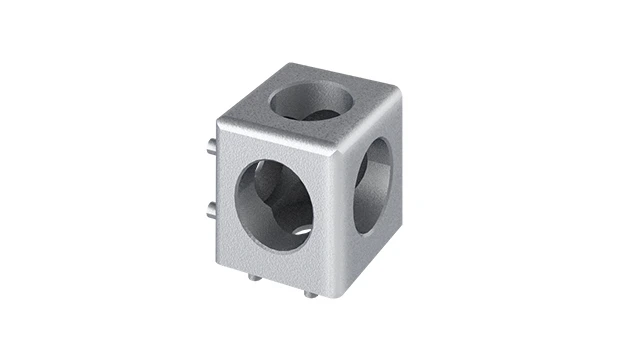
Aluminum Profile 3 Way Connector
The 3 way - squared corner connector is an external fastening method that is typically used to create a corner connection between three profiles. It is a heavy-duty connection that is simple to use and provides a polished look.
Imagine you're in a workshop, assembling a custom workbench for your team. You've got the aluminum profiles laid out, the tools ready, and a vision of a sturdy, efficient workspace. But when you try to attach the 3 way connector to join two profiles at a right angle, something feels off. The bolt turns, but it's loose—too loose to hold the weight of the equipment you plan to place on top. You grab another connector, thinking it's a dud, but the same thing happens. Frustrated, you pause and wonder: Is this a problem with the connector, or am I missing something about how these parts actually fit together?
If this scenario sounds familiar, you're not alone. For anyone working with aluminum profiles—whether building workbenches, material racks, or lean system setups—the tiny details of connectors often make the biggest difference. And at the heart of those details? Thread types. The threads on your 3 way aluminum profile connector determine how securely it fastens to the profile, how much weight it can support, and even how easy it is to disassemble and reconfigure later. In short, getting the thread type right isn't just a "nice-to-know"—it's the difference between a workspace that lasts and one that wobbles, bends, or fails entirely.
In this guide, we'll dive into everything you need to know about thread types in aluminum profile 3 way connectors. We'll start by breaking down what these connectors are and why they matter, then explore the most common thread types you'll encounter. We'll also share tips for identifying threads, avoiding common mistakes during installation, and choosing the right connector for your project—whether you're a small manufacturer building a single workbench or a warehouse manager setting up an entire lean system. Let's get started.
What Are Aluminum Profile 3 Way Connectors, Anyway?
Before we jump into threads, let's make sure we're all on the same page about the star of the show: aluminum profile 3 way connectors. If you've ever seen a modular workbench, a material rack with multiple shelves, or a conveyor system in a factory, chances are it's built with aluminum profiles—long, hollow tubes (or "extrusions") with T-slots along their length. These T-slots let you attach brackets, panels, and other components, making aluminum profiles infinitely customizable. But to join two or more profiles at different angles (like a corner or a T-junction), you need connectors. And 3 way connectors? They're the multitaskers of the bunch.
A 3 way aluminum profile connector does exactly what its name suggests: it connects three pieces of aluminum profile at once. Think of it as the "cornerstone" of structures like a material rack with three vertical supports, or a workbench with a side shelf and a back panel. Unlike simple two-way connectors, which only join two profiles in a straight line or at a 90° angle, 3 way connectors add a third axis—opening up design possibilities for more complex, stable setups. For example, the "material rack b (3 row and 3 floor)" from many lean system suppliers relies on 3 way connectors to secure its vertical posts to horizontal shelves, ensuring each level can hold heavy boxes without sagging.
But here's the catch: not all 3 way connectors are created equal. Their design varies based on the aluminum profile's size (like 2020, 3030, or 4040 series), the angle of the connection (90°, 45°, or adjustable), and—you guessed it—the type of threads they use. Some connectors have internal threads (meaning the bolt screws into the connector itself), while others have external threads (where the connector screws into a nut inside the profile's T-slot). The thread type determines which bolts, nuts, and tools you'll need, and mismatched threads can turn a simple assembly job into a nightmare of stripped bolts and wobbly joints.
Why Threads Matter: More Than Just "Screwing In"
At first glance, threads might seem like a minor detail—just a series of ridges on a bolt or inside a connector. But in reality, they're the unsung heroes of structural integrity. Let's break down why thread type matters so much:
- Load Capacity: Threads are designed to distribute weight evenly between the connector and the profile. A coarse thread (with fewer ridges per inch) can handle more torque, making it better for heavy-duty applications like supporting a workbench loaded with power tools. A fine thread (with more ridges) offers finer adjustment and better resistance to vibration, which is key for precision setups like lab workbenches.
- Fit and Security: Threads come in specific "pitches" (the distance between ridges) and diameters. If the pitch of your bolt doesn't match the pitch of the connector's threads, the bolt will either get stuck (cross-threaded) or never fully tighten. This is why a metric bolt (like M8) won't work with a UNC-threaded connector—even if they look the same size at first glance.
- Durability: Mismatched threads cause friction and wear. Over time, cross-threaded connections can strip the ridges, leaving the connector useless. On the flip side, the right thread type ensures smooth installation and removal, making it easy to reconfigure your setup later (a must for lean systems that need to adapt to changing workflows).
- Compatibility: If you're expanding an existing setup—say, adding a new shelf to your material rack—you need to match the thread type of your original connectors. Mixing metric and imperial threads here would mean replacing entire sections of the rack, not just adding a new part.
Pro Tip: Ever tried to use a U.S.-made bolt with a European aluminum profile? Chances are it didn't fit. That's because most aluminum profiles (and their connectors) use metric threads, while some older or U.S.-specific systems use UNC (Unified National Coarse) or UNF (Unified National Fine) threads. Always check the profile's specs before buying connectors!

Common Thread Types in Aluminum Profile 3 Way Connectors
Now that we know why threads matter, let's explore the most common types you'll encounter. While there are dozens of thread standards worldwide, aluminum profile 3 way connectors typically use one of five: Metric Coarse (M), Metric Fine (MF), UNC, UNF, or BSPP. Let's break down each, their pros and cons, and when to use them.
1. Metric Coarse (M): The Global Standard
If you've bought aluminum profiles or connectors from a lean system supplier in Europe, Asia, or most of the world, you've probably dealt with Metric Coarse threads. These are the most widely used thread type for aluminum profiles, and for good reason: they're standardized, easy to source, and designed for strength and simplicity.
Metric threads are designated by their diameter (in millimeters) followed by "M." For example, an M8 bolt has an 8mm diameter. The "coarse" part refers to the pitch—the distance between threads. For M8, the coarse pitch is 1.25mm (meaning there are 1.25mm between each ridge). You'll see this written as "M8 x 1.25."
Best For: General-purpose applications like workbenches, material racks, and basic lean system setups. Metric coarse threads are ideal for quick assembly and disassembly, and they're compatible with most standard aluminum profiles (2020, 3030, 4040, etc.).
2. Metric Fine (MF): Precision and Vibration Resistance
Metric Fine threads are similar to Metric Coarse but with a smaller pitch (more ridges per millimeter). For example, an M8 fine thread has a pitch of 1.0mm (written as "M8 x 1.0"), compared to the coarse 1.25mm. This tighter spacing makes them better for applications where you need precise adjustment or where vibration might loosen a connection.
Fine threads are also gentler on thin materials. If you're attaching a connector to a lightweight aluminum profile (like 2020 series), a coarse thread might split the profile, but a fine thread will grip without damaging the material.
Best For: Precision workbenches (think electronics assembly), medical equipment, or any setup where parts need to stay aligned under vibration (like conveyor systems).
3. UNC (Unified National Coarse): The U.S. Workhorse
UNC threads are the imperial counterpart to Metric Coarse. They're most common in the United States and are designated by diameter (in inches) and threads per inch (TPI). For example, a 1/4-20 UNC bolt has a 1/4-inch diameter and 20 threads per inch.
Like Metric Coarse, UNC threads are designed for strength and quick assembly. They're often used in older aluminum profile systems or in industries that still rely on imperial measurements, like some automotive or aerospace shops.
Best For: U.S.-based projects using imperial-sized profiles, or retrofitting existing setups that already use UNC hardware.
4. UNF (Unified National Fine): Imperial Precision
UNF threads are the fine-threaded version of UNC, with more threads per inch. For example, a 1/4-28 UNF bolt has 28 threads per inch (vs. 20 for UNC). This makes them better for thin materials and vibration resistance, similar to Metric Fine.
UNF threads are less common in aluminum profiles than UNC or metric, but you might encounter them in specialized equipment or high-precision setups.
Best For: Imperial-based precision applications, like custom jigs or fixtures where tight tolerances are critical.
5. BSPP (British Standard Pipe Parallel): For Pneumatic or Fluid Systems
BSPP threads are a bit of an oddball here—they're designed for pipes and fittings, not structural connections. But you might see them on 3 way connectors used in systems that carry air, water, or other fluids (like a workbench with built-in pneumatic tools).
Unlike the other thread types we've discussed, BSPP threads create a seal by compressing a washer or O-ring, not just by tightening. They're designated by nominal pipe size (e.g., 1/4 BSPP) and have a parallel design (the diameter doesn't taper).
Best For: Connectors that double as fluid or air lines. Stick to metric or UNC/UNF for structural connections.
At a Glance: Thread Type Comparison
| Thread Type | Designation Example | Pitch (mm or TPI) | Best For | Common Aluminum Profile Compatibility |
|---|---|---|---|---|
| Metric Coarse (M) | M8 x 1.25 | 1.25mm (pitch) | General structural use, workbenches, material racks | 2020, 3030, 4040, 4080 series |
| Metric Fine (MF) | M8 x 1.0 | 1.0mm (pitch) | Precision setups, vibration resistance, thin profiles | 2020, 3030 series, lab workbenches |
| UNC | 1/4-20 UNC | 20 TPI (threads per inch) | U.S.-based structural projects, heavy loads | Imperial-sized profiles (e.g., 1" x 1") |
| UNF | 1/4-28 UNF | 28 TPI | Precision imperial setups, thin materials | Smaller imperial profiles, jigs/fixtures |
| BSPP | 1/4 BSPP | 19 TPI (for 1/4" size) | Fluid/pneumatic systems, not structural | Specialized profiles with fluid lines |

How to Identify Thread Types: No More Guesswork
So, you've got a 3 way connector in hand, and you need to figure out its thread type. How do you do it without guessing (and potentially ruining the connector)? Here are three foolproof methods:
1. Check the Manufacturer's Specs
The easiest way is to look up the connector's part number. Most lean system suppliers list thread type in their product descriptions. For example, if you're looking at a "3 way aluminum profile connector" from a supplier's catalog, the specs might say "Thread: M6 x 1.0 (Metric Fine)" or "UNC 10-32." If you bought the connector in bulk, check the packaging—many come with labels that include thread details.
2. Use a Thread Gauge
A thread gauge (also called a "pitch gauge") is a cheap, handy tool that looks like a set of small metal leaves, each with a different thread pattern. To use it:
- Find a leaf that matches the ridges on your connector's threads. It should slide into place without gaps or forcing.
- Check the gauge for the designation: "M8 x 1.25" for metric, or "1/4-20" for UNC.
If you don't have a gauge, you can measure the pitch manually with a ruler. For metric threads, measure the distance between 10 ridges and divide by 10 to get the pitch (in mm). For imperial, count the number of ridges in 1 inch to get TPI.
3. Test with a Known Bolt
If you have bolts of known thread types, test them in the connector. A metric bolt will screw into a metric connector smoothly, but it will bind or skip in a UNC connector. Just be gentle—if it doesn't start easily, stop! Forcing it can cross-thread the connector.
Warning: Never assume thread type based on diameter alone! An M8 bolt (8mm diameter) and a 5/16" UNC bolt (7.9375mm diameter) are nearly the same size but have different pitches. They'll start to screw in, but they'll cross-thread before tightening.
Installation Best Practices: Avoiding Thread Troubles
Even if you've got the right thread type, poor installation can still lead to loose connections or stripped threads. Follow these tips to get it right the first time:
1. Clean the Threads First
Aluminum shavings, dust, or rust can gunk up threads and cause cross-threading. Before installing, wipe the connector's threads with a clean cloth. If there's stubborn debris, use a small brush (like a toothbrush) to dislodge it. For used connectors, a quick pass with a tap (a tool that cleans and reshapes threads) can work wonders.
2. Hand-Tighten First
Always start the bolt by hand. If it doesn't turn smoothly for the first few rotations, stop and check alignment. The bolt should screw in with minimal effort—if you have to force it, the threads might be mismatched or cross-threaded.
3. Use the Right Tool (and Torque)
Once hand-tightened, use a torque wrench to finish the job. Over-tightening is a common mistake—too much torque can strip threads or warp the aluminum profile. Most connectors have a recommended torque (e.g., 8-10 Nm for M8 Metric Coarse). If you don't have a torque wrench, a standard wrench will work, but err on the side of "snug" rather than "as tight as possible."
4. Add Thread Lockers (When Needed)
For setups that vibrate (like conveyor systems), a drop of thread locker (blue Loctite, for example) can prevent bolts from loosening. Just avoid permanent thread lockers (red Loctite)—they'll make it nearly impossible to disassemble the connector later.
Troubleshooting Common Thread Issues
Even with careful installation, things can go wrong. Here's how to fix the most common thread problems:
Problem: Cross-Threaded Connection
Signs:
The bolt gets stuck halfway, or you hear a "crunching" sound when turning.
Fix:
Stop immediately! Back the bolt out slowly (never force it). Inspect the threads—if they're damaged, you may need to replace the connector or use a thread repair kit (like a helicoil) to restore the threads.
Problem: Bolt Won't Tighten (Loose Threads)
Signs:
The bolt spins freely or tightens only partway.
Fix:
Check if the thread types match (e.g., metric vs. UNC). If they do, the connector's threads might be stripped. In that case, replace the connector—stripped threads can't be reliably repaired for structural use.
Problem: Bolt Breaks Off in the Connector
Signs:
The bolt snaps, leaving a piece stuck in the connector.
Fix:
Use a bolt extractor (a tool with reverse threads) to remove the broken piece. If that fails, drill a small hole in the bolt and tap it with a screwdriver. Avoid drilling too deep—you don't want to damage the connector's threads.
Choosing the Right Connector for Your Project
Now that you're a thread type expert, how do you pick the right 3 way connector for your project? Here's a step-by-step guide:
1. Know Your Profile Size
Aluminum profiles come in standard sizes, like 2020 (20mm x 20mm), 3030 (30mm x 30mm), or 4040 (40mm x 40mm). Your connector must match the profile's size—an M8 connector won't fit a 2020 profile (which typically uses M4 or M5 bolts).
2. Define Your Load and Use Case
Ask: What will this connector support? A workbench with a 50kg load needs a heavier-duty connector than a lightweight shelving unit. For heavy loads, go with Metric Coarse or UNC threads. For precision or vibration, choose Metric Fine or UNF.
3. Check Compatibility with Existing Systems
If you're adding to an existing setup (like expanding a material rack), match the thread type of your current connectors. Mixing metric and imperial threads will require adapters, which add cost and complexity.
4. Buy from a Reputable Lean System Supplier
Not all connectors are made equal. Cheap, low-quality connectors often have inconsistent thread pitches or weak materials that strip easily. A trusted lean system supplier will provide clear specs, consistent quality, and even technical support if you're unsure about thread type. They can also help you source compatible bolts, nuts, and tools—saving you time and frustration.
Final Thoughts: Threads as the Foundation of Your Workspace
At the end of the day, threads might be small, but they're the glue that holds your aluminum profile projects together. Whether you're building a workbench, a material rack, or an entire lean system, taking the time to understand thread types will save you from wobbly structures, stripped bolts, and costly do-overs. Remember: the right 3 way aluminum profile connector with the right thread type isn't just a part—it's an investment in a workspace that's strong, reliable, and built to last.
So, the next time you pick up a connector, take a moment to check those threads. Your future self (and your wobbly workbench) will thank you.