- Company Articles
- Products and Technology
- Product knowledge
- Understanding Turning Angle Code 3030: Structure, Material & Design Features

Understanding Turning Angle Code 3030: Structure, Material & Design Features
Related Product
Turning Angle Code 3030
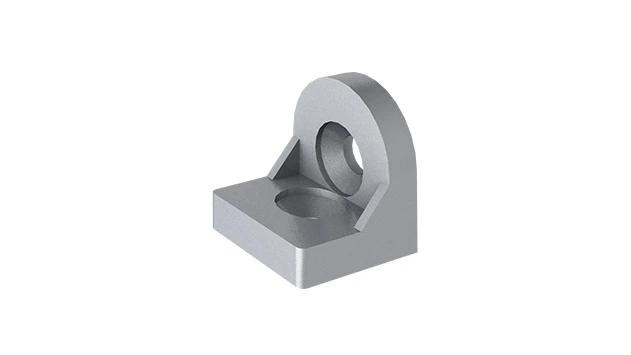
The turning angle aluminum profile connector provides a 90 degree hidden corner connection. 3030 it is means this size is used for 30 series aluminum profile.The corner code comes with set screws that allow for quick, easy connections.
In the world of industrial manufacturing, workshop setups, and lean production systems, the smallest components often play the biggest roles in ensuring efficiency, durability, and adaptability. One such unsung hero is the Turning Angle Code 3030 —a humble yet indispensable accessory that bridges the gap between aluminum profiles, enabling the creation of sturdy, modular structures. Whether you're building a workbench, a material rack, or an entire production line, this unassuming connector ensures that your aluminum extrusion profiles fit together seamlessly, standing strong under daily use. In this article, we'll dive deep into the structure, material, and design features of the Turning Angle Code 3030, exploring why it's a cornerstone of modern workspace design and why every lean system supplier worth their salt keeps it in stock.
What is a Turning Angle Code 3030, Anyway?
Before we get into the nitty-gritty, let's start with the basics: What exactly is a Turning Angle Code 3030? Put simply, it's a specialized connecting component designed to join two 3030 aluminum profile sections at a 90-degree angle (hence the "turning" in its name). Think of it as the "cornerstone" of modular aluminum structures—literally. Without it, assembling 30mm x 30mm aluminum extrusion profiles into stable frames, workbenches, or racks would be like trying to build a house without nails: possible, but far from efficient or reliable.
If you've ever walked through a well-organized factory floor, a tech workshop, or even a modern office with custom shelving, chances are you've seen the results of Turning Angle Code 3030 in action. It's the reason those sleek aluminum workbenches don't wobble when you place heavy tools on them, why material racks stay upright under stacks of inventory, and why production lines can be reconfigured in hours instead of days. It's a small part, but it's the glue that holds modular systems together.
Structure: The Anatomy of a Reliable Connector
The Turning Angle Code 3030 may look simple at first glance, but its structure is a masterclass in functional design. Let's break it down piece by piece to understand how it works—and why it works so well.
1. The Core Shape: L-Shaped for Perfect Angles
At its most basic, the Turning Angle Code 3030 has an L-shaped body, with two perpendicular arms (or "flanges") that align with the T-slots of 3030 aluminum profiles. Each arm is designed to fit snugly against the profile's surface, ensuring maximum contact area for stability. The length of these arms varies by manufacturer, but they're typically around 30-50mm long—just enough to provide a secure grip without adding unnecessary bulk.
2. Fastener Holes: Precision for T-Slot Compatibility
If the L-shape is the body of the angle code, the fastener holes are its "muscles." Most Turning Angle Code 3030 models feature pre-drilled holes (usually M5 or M6 threads) that align perfectly with the T-slots of 3030 aluminum profiles. This allows you to secure the angle code to the profile using T-bolts, socket head cap screws, or flange nuts—no need for drilling or welding. The holes are often countersunk, too, so the fastener heads sit flush with the angle code's surface, preventing snags or interference with other components.
3. Reinforcement Ribs: Strength Without Extra Weight
To boost load-bearing capacity without increasing size or weight, many Turning Angle Code 3030 designs include small reinforcement ribs along the inner corner of the L-shape. These ribs act like internal bracers, distributing stress evenly across the angle code when pressure is applied (say, when a workbench is loaded with heavy equipment). It's a clever engineering trick that makes the angle code surprisingly strong for its compact size.
4. Flange Edges: A Snug Fit Every Time
The edges of the angle code's flanges are another key structural detail. They're often slightly beveled or rounded to ensure a tight fit against the aluminum profile's T-slot openings. This not only prevents the angle code from shifting once installed but also protects the profile's surface from scratches during assembly—a small touch that adds up to longer-lasting equipment.

Material: Why Aluminum Alloy is the Gold Standard
Now that we understand the structure, let's talk about what the Turning Angle Code 3030 is made of—and why that matters. The vast majority of these angle codes are crafted from aluminum alloy, specifically the 6063-T5 grade. If you're not familiar with aluminum alloys, 6063-T5 is like the "workhorse" of the industry: lightweight, strong, corrosion-resistant, and easy to machine. But why not steel? Or plastic? Let's unpack the benefits.
1. Lightweight Yet Strong: The Best of Both Worlds
Aluminum is about one-third the weight of steel, which might not seem like a big deal for a single angle code, but multiply that by hundreds (or thousands) of components in a large workspace, and the difference adds up. Lighter structures are easier to assemble, reconfigure, and transport—critical for lean manufacturing systems that prioritize flexibility. Yet despite its lightness, 6063-T5 aluminum alloy offers impressive tensile strength (around 215 MPa) and yield strength (180 MPa), meaning it can handle the daily wear and tear of industrial environments without bending or breaking.
2. Corrosion Resistance: Built to Last in Tough Environments
Factories, workshops, and warehouses are rarely "clean rooms." There's dust, moisture, maybe even chemicals or oils in the air. Steel would rust; plastic might degrade. But aluminum? It forms a natural oxide layer on its surface, which acts as a barrier against corrosion. Many manufacturers take this a step further by anodizing or powder-coating the Turning Angle Code 3030, adding an extra layer of protection. This means your angle codes won't start flaking or weakening after a few months of exposure to workshop grime—they'll keep doing their job for years.
3. Machinability: Precision That Fits Like a Glove
Aluminum is a dream to machine compared to harder metals, which is why Turning Angle Code 3030 can be produced with such tight tolerances. The holes for fasteners are drilled with pinpoint accuracy, the flanges are cut to exact dimensions, and the reinforcement ribs are shaped to distribute stress evenly. This precision is what ensures the angle code fits perfectly with 3030 aluminum profiles every single time. No guesswork, no forcing parts into place—just a smooth, snug connection that saves time during assembly.
4. Eco-Friendly: Recyclable and Sustainable
In an era where sustainability matters more than ever, aluminum's recyclability is a big plus. Unlike plastic, which degrades over time, or steel, which requires massive energy to recycle, aluminum can be melted down and reused repeatedly without losing its properties. For companies aiming to reduce their carbon footprint, choosing aluminum aluminum profile accessories like the Turning Angle Code 3030 is a small but meaningful step toward greener operations.

Design Features: What Makes Turning Angle Code 3030 Stand Out?
So, we know it's structured to connect 3030 profiles and made of top-notch aluminum alloy—but what specific design features make the Turning Angle Code 3030 a cut above other angle connectors? Let's dive into the details that set it apart.
1. Universal Compatibility with T-Slot Profiles
One of the biggest advantages of the Turning Angle Code 3030 is its compatibility with standard T-slot 3030 aluminum profiles. T-slots—those longitudinal grooves running along the length of aluminum extrusion profiles—are the secret to modularity. They allow fasteners (like bolts or nuts) to slide into place and lock securely, making it easy to attach accessories like angle codes, brackets, or shelves. The Turning Angle Code 3030 is engineered to align perfectly with these T-slots, whether your profile has 2, 3, or 4 slots. This universality means you don't have to worry about brand-specific parts; if it's a 3030 T-slot profile, the Turning Angle Code 3030 will work with it.
2. Tool-Free (or Minimal-Tool) Installation
Gone are the days of needing a whole toolbox to assemble a simple frame. Most Turning Angle Code 3030 models can be installed with just a hex key (Allen wrench) or a screwdriver. Here's how it typically works: Slide a T-bolt into the T-slot of your 3030 profile, position the angle code over the bolt, and tighten the nut. That's it. No drilling, no welding, no complicated measurements. This simplicity is a game-changer for lean systems, where downtime during reconfiguration can cost money. With Turning Angle Code 3030, a single worker can assemble a basic workbench frame in under an hour—no prior experience needed.
3. High Load-Bearing Capacity (Yes, Even for Heavy Duty Use)
Don't let its small size fool you: the Turning Angle Code 3030 is built to handle serious weight. Thanks to its reinforced L-shape, precision machining, and high-grade aluminum alloy, it can typically support loads of up to 200-300 kg per connection (depending on the specific model and installation). That means you can safely stack heavy tools on a workbench, load pallets onto a material rack, or mount equipment on a production line frame without worrying about the angle codes failing. For context, 300 kg is roughly the weight of a small refrigerator—so unless you're planning to park a car on your aluminum structure, the Turning Angle Code 3030 has you covered.
4. Low Profile, High Aesthetics
Let's face it: industrial equipment doesn't have to be ugly. Modern workspaces value both function and form, and the Turning Angle Code 3030 delivers on both. Its low-profile design means it sits flush against the aluminum profiles, creating clean, uncluttered lines. Many manufacturers offer it in neutral colors like silver, black, or gray, which blend seamlessly with most workshop decors. Whether you're building a customer-facing display rack or a back-of-house production line, the Turning Angle Code 3030 won't stick out like a sore thumb—it'll enhance the overall look of your setup.
5. Reusability: Adapt and Evolve with Your Needs
In lean manufacturing, flexibility is key. Production lines change, workbenches need to be moved, and storage needs evolve. The Turning Angle Code 3030 is designed with this in mind. Unlike welded connections, which are permanent, angle codes can be unscrewed, removed, and reused elsewhere. Need to shorten a workbench? Just undo the angle codes, cut the profile, and reattach. Want to add a shelf to a material rack? Grab a few extra angle codes and bolts, and you're done. This reusability not only saves money (no need to buy new parts every time you reconfigure) but also reduces waste—another win for sustainability.
How Does It Compare to Other Angle Codes?
Now that we've covered the Turning Angle Code 3030 in detail, you might be wondering: How does it stack up against other angle codes, like the 2020 or 4040 models? Let's put it all in perspective with a quick comparison table. This will help you understand when to reach for the 3030 versus other sizes.
| Feature | Turning Angle Code 2020 | Turning Angle Code 3030 | Turning Angle Code 4040 |
|---|---|---|---|
| Compatible Profile Size | 20mm x 20mm | 30mm x 30mm | 40mm x 40mm |
| Material Thickness | 1.5-2.0mm | 2.0-2.5mm | 2.5-3.0mm |
| Max Load Capacity (Per Connection) | 80-120 kg | 200-300 kg | 400-500 kg |
| Common Applications | Small shelves, light-duty frames, electronics workbenches | Standard workbenches, material racks, production line frames | Heavy-duty machinery mounts, industrial storage racks, large assembly lines |
| Weight (Per Unit) | ~30-50g | ~80-120g | ~150-200g |
As you can see, the Turning Angle Code 3030 hits the sweet spot between the lightweight 2020 and heavy-duty 4040 models. It's strong enough for most industrial and workshop needs but not so bulky that it adds unnecessary weight or cost. That's why it's the go-to choice for everything from standard workbenches to mid-sized material racks—a true "all-rounder" in the world of aluminum profile accessories .
Real-World Applications: Where You'll Find Turning Angle Code 3030
To really understand the value of the Turning Angle Code 3030, let's look at some real-world scenarios where it shines. These examples will show you how this small component makes a big difference in day-to-day operations.
1. Workbenches: The Heart of the Workshop
Walk into any manufacturing plant, auto repair shop, or tech lab, and you'll find workbenches everywhere. They're where the magic happens—assembling products, repairing equipment, testing prototypes. A sturdy workbench is non-negotiable, and that's where the Turning Angle Code 3030 comes in. By connecting 3030 aluminum profiles at the corners, it creates a frame that can support a solid wood or metal top, tool hooks, shelves, and even built-in lighting. And because it's modular, you can customize the workbench to fit your needs: add a vice on one end, a storage shelf below, or extend the length by adding more profiles and angle codes. No more one-size-fits-all workbenches that leave you struggling for space—with Turning Angle Code 3030, it's built exactly how you need it.
2. Material Racks: Organized Storage That Stays Secure
Inventory management is a headache for many businesses. Piles of parts, tools, or finished products can quickly turn a workshop into a chaotic mess. Enter material racks built with 3030 aluminum profiles and Turning Angle Code 3030. These racks are sturdy enough to hold boxes, bins, or even pallets, but lightweight enough to move if needed. The angle codes ensure the vertical and horizontal profiles stay connected, even when the rack is fully loaded. Plus, since they're modular, you can add or remove shelves as your inventory changes. A lean system supplier might recommend this setup for "5S" organization—sort, set in order, shine, standardize, sustain—because it makes it easy to keep everything in its place.
3. Lean Production Lines: Flexibility for Changing Demands
In today's fast-paced manufacturing world, production lines need to adapt quickly. A product might be hot one month and replaced by a new model the next. With traditional fixed production lines, reconfiguring can take weeks. But with modular aluminum systems using 3030 profiles and Turning Angle Code 3030, it can be done in days—even hours. For example, a electronics manufacturer might need to adjust their assembly line to accommodate a new phone model. Using angle codes, they can reposition conveyor belts, add workstations, or modify testing stations without welding or cutting. The angle codes make it easy to disassemble and reassemble components, ensuring the line is up and running with minimal downtime.
4. Custom Shelving and Displays: Form Meets Function
It's not just industrial settings that benefit from Turning Angle Code 3030. Retail stores, trade shows, and even offices use it to build custom shelving and displays. Imagine a boutique clothing store with sleek aluminum racks that showcase merchandise—those racks are likely held together with angle codes. Or a trade show booth with modular walls and shelves that can be packed into a crate and reassembled in a new city every week. The low-profile design and clean look of the Turning Angle Code 3030 make it perfect for these applications, where aesthetics matter as much as functionality.
Choosing the Right Turning Angle Code 3030: Tips for Buyers
Now that you're convinced of the Turning Angle Code 3030's value, how do you choose the right one for your project? Here are a few tips to keep in mind when sourcing from a lean system supplier or aluminum profile accessories vendor.
1. Check the Material Grade and Thickness
Not all angle codes are created equal. Some cheaper models might use lower-grade aluminum or thinner material, which can compromise strength and durability. Look for angle codes made from 6063-T5 aluminum alloy with a material thickness of at least 2.0mm. This ensures they'll handle the load and last for years.
2. Verify Compatibility with Your Profiles
While most 3030 aluminum profiles are standard, there can be slight variations in T-slot size or profile design between manufacturers. Double-check that the angle code's hole spacing and flange dimensions match your profiles. A good supplier will provide technical drawings or samples to test compatibility.
3. Consider Surface Treatment
If your workspace is humid, dusty, or exposed to chemicals, opt for anodized or powder-coated angle codes. These treatments add extra corrosion resistance and make cleaning easier. For dry, indoor environments, a basic mill finish might be sufficient, but it's always better to err on the side of protection.
4. Buy in Bulk (But Don't Overstock)
Like most industrial parts, Turning Angle Code 3030 is cheaper when bought in bulk. If you have ongoing projects or anticipate reconfiguring your workspace often, stock up on a few extra—you'll save money and avoid delays. That said, don't overbuy: aluminum doesn't degrade, but storage space is valuable, and you don't want to tie up cash in unused parts.
Final Thoughts: Small Part, Big Impact
At the end of the day, the Turning Angle Code 3030 is a testament to the power of good design. It's a small, unassuming part, but it plays a critical role in making modern manufacturing, workshop, and workspace setups efficient, flexible, and reliable. By connecting 3030 aluminum profiles with precision, strength, and ease, it turns simple metal extrusion into the backbone of lean systems, custom workbenches, and modular structures that adapt to our ever-changing needs.
So the next time you walk into a well-organized factory or a sleek workshop, take a moment to look at the corners of those aluminum frames. Chances are, you'll see the Turning Angle Code 3030 hard at work—quietly holding everything together, one connection at a time. And if you're planning your own modular setup, don't overlook this humble hero. It might just be the key to building a workspace that's not only functional but built to last.