- Company Articles
- Products and Technology
- Product knowledge
- Understanding Vertical Lean Pipe Joint Chrome: Structure and Mechanism

Understanding Vertical Lean Pipe Joint Chrome: Structure and Mechanism
Related Product
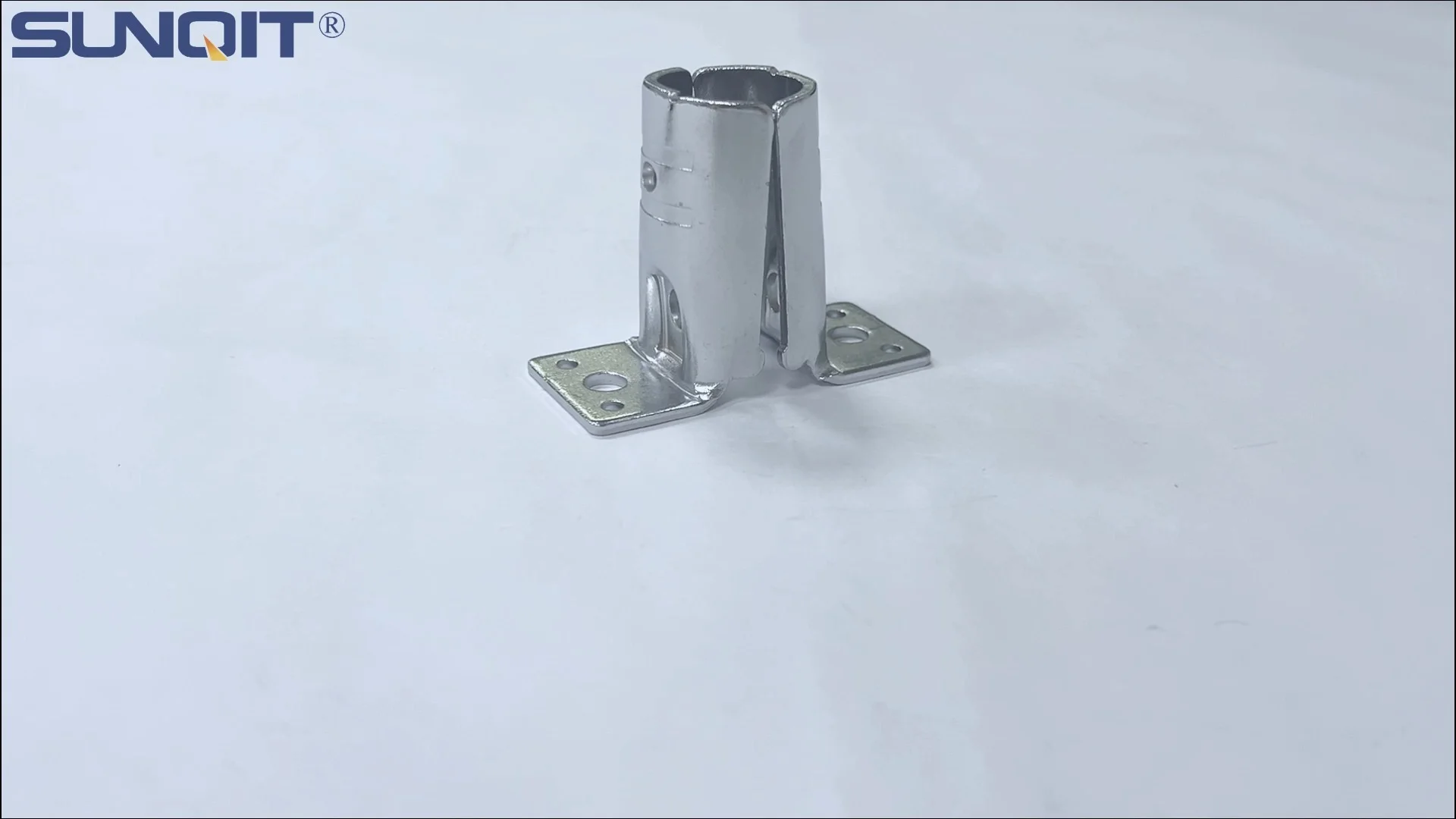
Vertical Lean Pipe Joint Chrome
Vertical lean pipe joint is used for 28mm lean pipe fixed on ground and keep it stable.
Walk into any modern manufacturing facility, and you'll notice a quiet revolution happening on the factory floor. It's not just the whir of machines or the hum of assembly lines—it's the flow of work. Materials glide smoothly from one station to the next, workbenches adapt to changing tasks in minutes, and teams collaborate around setups that feel less like rigid structures and more like extensions of their own problem-solving ingenuity. This is the power of a lean system , and at its heart lies a humble yet critical component: the vertical lean pipe joint chrome . In this article, we'll dive into what makes this small but mighty part indispensable, exploring its structure, how it works, and why it's the unsung hero of efficient, flexible workspaces.
Lean Systems: More Than a Buzzword—A Culture of Efficiency
Before we zoom in on the vertical joint, let's ground ourselves in what a lean system truly is. At its core, lean manufacturing is about eliminating waste—whether that's wasted time, space, or effort—while maximizing value for the customer. But here's the thing: you can't build a lean culture on outdated, inflexible infrastructure. Imagine trying to rearrange a production line if your workbenches are bolted to the floor, or reconfiguring a material rack when its shelves are welded in place. It's impossible. That's where lean pipes and their joints come in. They're the building blocks of a workspace that bends, not breaks, with your team's needs.
Lean systems thrive on modularity. A single length of pipe, paired with the right joint, can become a workbench one week, a turnover trolley the next, and a material rack the month after. And among all the joints that make this magic possible, the vertical lean pipe joint chrome stands out for its ability to anchor these structures vertically—adding stability without sacrificing adaptability. Think of it as the "backbone connector" that turns a collection of pipes into a reliable, functional tool.
Lean Pipes: The Unsung Heroes of Flexible Workspaces
To understand the vertical joint, we first need to appreciate the pipes themselves. Lean pipes—also called "lean tubes"—come in various materials: stainless steel for durability, aluminum for lightweight setups, and PE-coated steel for corrosion resistance. They're typically 28mm in diameter (though sizes vary) and designed to slot into joints seamlessly. But a pipe is just a tube without the right joint to give it purpose. Joints are the "verbs" of the lean pipe language; they let pipes connect , bend , support , and adapt .
Consider a lean pipe workbench . Its frame might use horizontal pipes for the top surface, vertical pipes for the legs, and diagonal pipes for bracing. The vertical joints? They're the ones holding those legs firmly to the horizontal frame, ensuring the workbench doesn't wobble when a technician leans on it or sets a heavy component down. Without sturdy vertical connections, even the best-designed workbench becomes a liability.
But why "vertical" specifically? In manufacturing, vertical space is often underutilized. A vertical joint lets you stack shelves, raise work surfaces, or build multi-tiered material racks—turning "dead" air into productive storage. For example, a material rack B (3 row and 3 floor) relies on vertical joints to connect each floor's supports, keeping the structure square and stable even when loaded with heavy parts. It's the difference between a rack that sags under weight and one that stands firm for years.

Unpacking the Vertical Lean Pipe Joint Chrome: What Makes It Unique?
Let's get up close with the star of the show: the vertical lean pipe joint chrome. At first glance, it might look like any other metal connector, but a closer inspection reveals thoughtful engineering tailored to the demands of factory life.
What Is It, Exactly?
A vertical lean pipe joint chrome is a modular connector designed to join two or more lean pipes at 90-degree vertical angles. It's most commonly used to attach vertical support pipes to horizontal frames—think workbench legs, rack posts, or trolley uprights. Unlike some joints that prioritize rotation or multi-directional connection, this joint's superpower is stability in vertical alignment.
The Chrome Coating: More Than Just Shiny
That chrome finish isn't for show. Chrome plating adds a hard, corrosion-resistant layer to the joint's base metal (usually steel), making it ideal for factories where moisture, oils, or chemicals are present. Ever seen a rusted joint on a workbench? It doesn't just look bad—it weakens the connection over time, risking collapse. Chrome solves that. It also wipes clean easily, which is a big plus for ESD workstations where dust and debris can interfere with sensitive electronics. And let's not overlook aesthetics: a chrome joint adds a professional, polished look to otherwise utilitarian setups, subtly boosting workplace morale (yes, small details like that matter).
Structure: The Anatomy of a Reliable Joint
While we can't include diagrams here, picture this: the joint has a central body with one or more sockets (usually two—one vertical, one horizontal) that fit snugly around standard lean pipes. Inside each socket, there's a clamping mechanism—often a set screw or a cam lever—that tightens against the pipe, creating friction to hold it in place. Some models have threaded holes for bolts, allowing for extra security in high-load applications. The body itself is typically die-cast metal, dense enough to prevent bending under stress but lightweight enough to keep the overall structure manageable.
One key feature is the "grip" of the socket. A well-designed vertical joint won't slip, even when the pipe is loaded. This is critical for safety—imagine a workbench leg suddenly sliding down because the joint couldn't hold. Reputable lean pipe suppliers test their joints rigorously, ensuring they can withstand hundreds of pounds of vertical load without deforming.

The Mechanism: How It Works in Real-World Applications
Let's walk through a typical scenario: building a simple workbench. You've got four vertical pipes for legs, a rectangular frame of horizontal pipes for the top, and a handful of vertical lean pipe joint chrome connectors. Here's how the joint does its job:
- Alignment: Slide the vertical pipe into the joint's vertical socket and the horizontal pipe into the horizontal socket. The sockets are precision-machined to hold the pipes at exactly 90 degrees, so you don't have to guess if the leg is straight.
- Clamping: Tighten the set screw (usually with a hex key) or flip the cam lever. As you do, the socket's inner surface presses into the pipe, creating a tight, non-slip grip. It's similar to how a pipe clamp works, but designed for quick assembly and disassembly.
- Stabilization: Once all four corners are connected, the vertical joints distribute the weight of the workbench top (and whatever's on it) evenly through the legs. If you later need to adjust the height, just loosen the joint, slide the pipe up or down, and retighten—no cutting or welding required.
What about load capacity? A standard vertical lean pipe joint chrome can typically support 150–300 pounds per joint, depending on the pipe material and diameter. For heavier applications—like a workbench E (single deck-without caster) used for assembling heavy machinery—suppliers often offer reinforced versions with thicker walls or dual clamping screws.
Another real-world example: turnover trolleys. These mobile carts use vertical joints to connect the frame's uprights to the base, which holds the casters. When the trolley is moved, the vertical joints absorb the vibrations and shocks of the floor, preventing the structure from shaking apart. It's a small part, but it ensures the trolley lasts through years of daily use.
How Does It Stack Up? Comparing Vertical Joints to Other Lean Pipe Joints
Not all lean pipe joints are created equal. Let's see how the vertical lean pipe joint chrome compares to other common connectors. The table below breaks down key differences:
| Joint Type | Primary Use | Load Capacity (Approx.) | Adjustability | Best For |
|---|---|---|---|---|
| Vertical Lean Pipe Joint Chrome | Connecting vertical pipes to horizontal frames (legs, posts) | 150–300 lbs per joint | Height-adjustable (loosen/tighten to slide pipe) | Workbenches, material racks, trolley frames |
| 90° Fixed Lean Pipe Joint | Right-angle connections (non-vertical) | 100–250 lbs per joint | Limited (fixed angle, but pipe can slide) | Shelving, horizontal bracing |
| Three-Way Lean Pipe Joint | Connecting three pipes (e.g., T-junctions) | 80–200 lbs per joint | Moderate (adjustable in two directions) | Corner shelves, multi-directional racks |
| Parallel Lean Pipe Joint | Connecting two parallel pipes (e.g., side-by-side rails) | 50–150 lbs per joint | High (slides along both pipes) | Roller tracks, conveyor guides |
The vertical joint's edge lies in its focus on vertical stability and chrome durability. While other joints excel at specific tasks—like the three-way joint for T-connections—the vertical chrome joint is the go-to when you need a rock-solid vertical anchor that stands up to harsh environments.
Applications in Action: Where Vertical Joints Shine
Let's look at three common scenarios where vertical lean pipe joint chrome proves its worth:
1. Lean Pipe Workbenches: A Stable Foundation for Precision Work
A lean pipe workbench is the center of many assembly operations. Whether it's electronics assembly, small-part sorting, or quality inspection, the workbench needs to stay steady. The vertical joints at each corner connect the legs to the tabletop frame, ensuring no wobble even when a technician leans on it or uses tools that generate vibration. The chrome coating also resists scratches from tools and solvents, keeping the workbench looking professional. Plus, if the team needs to raise the height (to accommodate taller workers or standing desks), loosening the vertical joints, sliding the legs, and retightening takes minutes—no need to buy a whole new workbench.
2. Material Racks: Stacking Safely Without Sagging
Take the material rack B (3 row and 3 floor) —a common setup for storing small to medium parts. Each "floor" of the rack is supported by vertical posts connected via vertical joints. These joints ensure the posts stay perfectly upright, so the shelves don't tilt or sag under the weight of boxes or bins. If the rack needs to be reconfigured (e.g., adding a fourth floor), the vertical joints make it easy: just add a new horizontal frame and secure it with more vertical joints. It's modularity in action, and it's only possible because the vertical joints provide consistent stability at every level.
3. Turnover Trolleys: Mobility Without Compromise
Turnover trolleys are workhorses in factories, moving materials from storage to assembly lines. Their frames need to be light enough to push but strong enough to handle heavy loads. Vertical joints connect the trolley's vertical posts to its base (which holds the casters) and top rail (for pushing). When the trolley hits a bump, the vertical joints absorb the shock, preventing the frame from twisting. The chrome coating also stands up to the occasional scrape against walls or other equipment, ensuring the trolley stays functional (and presentable) for years.
Why Chrome? The Practical and Aesthetic Benefits
We've touched on the chrome coating, but it's worth diving deeper into why it matters. In manufacturing, equipment lives in tough conditions: humidity, oil spills, chemical cleaners, and constant handling. A plain steel joint would rust quickly, weakening the connection and risking equipment failure. Chrome plating acts as a barrier, protecting the steel from corrosion. It's not just about longevity—it's about safety. A rusted joint is a weak joint, and weak joints can lead to accidents.
Chrome is also incredibly easy to clean. A quick wipe with a damp cloth removes oil, dust, or grime, which is critical for ESD workstations where static buildup can damage sensitive components. Even in non-ESD environments, a clean workspace is a more productive one; workers feel pride in their tools, and clutter (including dirty joints) is less likely to distract them.
And let's not forget cost. A chrome joint might cost a bit more upfront than an uncoated one, but it lasts 2–3 times longer. For a lean pipe supplier or manufacturer, that means fewer replacements, less downtime, and lower long-term costs. It's an investment that pays off in reliability.
Choosing the Right Supplier: What to Look For in a Lean Pipe Partner
Not all vertical lean pipe joint chrome products are created equal. To get the most out of your lean system, you need a lean pipe supplier that prioritizes quality, consistency, and support. Here's what to ask:
- Material Quality: Is the joint made from high-grade die-cast metal, or cheap pot metal that bends easily? Ask for material certifications.
- Chrome Plating Thickness: Thicker plating means better corrosion resistance. Look for suppliers who specify plating thickness (ideally 0.0005–0.001 inches).
- Load Testing: Can they provide data on the joint's load capacity? A reputable supplier will have tested their joints to failure to ensure they meet safety standards.
- Compatibility: Do their joints work with standard lean pipe sizes (e.g., 28mm)? Mismatched sizes lead to loose connections.
- Technical Support: If you're designing a custom workbench or rack, can they help you choose the right joints for the load and application? Good suppliers act as partners, not just vendors.
Remember, a cheap joint might save you a dollar today, but it could cost you a day of downtime tomorrow when it fails. Invest in quality, and your lean system will reward you with years of reliable service.
Installation Tips and Maintenance: Keeping Your Joints in Top Shape
Even the best joint performs poorly if installed wrong. Here are some pro tips for getting the most out of your vertical lean pipe joint chrome:
Installation Do's and Don'ts
- Do align pipes carefully: Misaligned pipes put extra stress on the joint, leading to premature wear. Use a level to ensure vertical pipes are straight before tightening.
- Don't over-tighten: Snug is good; stripping the threads is bad. Most joints require just enough torque to prevent slipping—follow the supplier's guidelines.
- Do clean pipes before assembly: Dust or oil on the pipe can weaken the joint's grip. Wipe pipes with a dry cloth before inserting them into sockets.
- Don't mix joint types unnecessarily: Stick to vertical joints for vertical connections—using a multi-directional joint where a vertical one is needed can compromise stability.
Maintenance: Simple Steps for Longevity
- Inspect regularly: Check joints monthly for looseness, rust (even chrome can chip if scratched), or bent sockets. Tighten loose joints immediately.
- Clean gently: Use a soft cloth and mild detergent to clean chrome surfaces. Avoid abrasive pads or harsh chemicals, which can damage the plating.
- Lubricate moving parts: If your joint has a cam lever or rotating component, apply a drop of machine oil occasionally to keep it smooth.
- replace when worn: If a joint cracks, strips, or loses its grip, replace it. A single faulty joint can compromise an entire structure.
The Future of Lean Systems: Innovation in Vertical Joint Design
As manufacturing evolves, so too do the tools that power it. Lean systems are no exception, and vertical lean pipe joint chrome is keeping pace with new demands. Here are a few trends to watch:
- Tool-Less Assembly: Some suppliers are developing vertical joints with quick-release levers, eliminating the need for hex keys or wrenches. This makes reconfiguration even faster—critical for factories with frequent setup changes.
- Smart Materials: Research into stronger, lighter alloys could make joints even more durable while reducing overall structure weight. Imagine a vertical joint that's 20% lighter but just as strong as today's models.
- Integrated Sensors: In smart factories, joints with built-in load sensors could alert teams when a structure is overloaded, preventing accidents before they happen. It's early days, but the potential is exciting.
Even with these innovations, the core purpose of the vertical lean pipe joint chrome remains the same: to connect, stabilize, and adapt. It's a testament to the beauty of lean thinking—sometimes the most impactful solutions are the ones that quietly do their job, day in and day out, making work easier, safer, and more efficient.
Conclusion: The Small Joint That Powers Big Efficiency
In the grand scheme of manufacturing, the vertical lean pipe joint chrome might seem. It's not as flashy as a robotic arm or as high-tech as a 3D printer. But without it, the flexible, adaptive workspaces that define lean systems would simply fall apart. It's the quiet enabler of efficiency—the component that turns pipes into productivity tools, and workplaces into spaces where teams can thrive.
Whether you're building a lean pipe workbench, a material rack, or a turnover trolley, remember: the strength of your structure depends on the strength of your joints. Choose wisely, invest in quality (like chrome-plated vertical joints), and partner with a supplier who understands your needs. In the world of lean manufacturing, the details matter—and the vertical lean pipe joint chrome is proof that even the smallest details can make the biggest difference.