- Company Articles
- Products and Technology
- Product knowledge
- Upgrading Conveyors with One Way Rotatory Straight Lean Pipe Joints

Upgrading Conveyors with One Way Rotatory Straight Lean Pipe Joints
Related Product
One Way Rotatory Straight Lean Pipe Joint
Two way lean pipe joint for 2 pcs 28MM lean pipe connection in straight angle with rotatory fucntion, which used widely in workbench, flow rack, hand trolley frame connection.
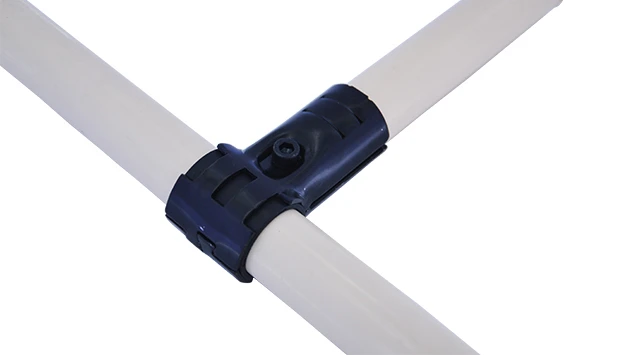
Walk into any modern manufacturing facility, and you'll likely hear the steady hum of conveyor systems. These unassuming workhorses move everything from tiny circuit boards to heavy automotive parts, stitching together production lines into a seamless flow. But for all their reliability, many conveyors hide a frustrating secret: rigidity. Traditional systems, built with fixed joints and inflexible frames, struggle to keep up with today's fast-changing production needs—whether that's shifting to a new product, scaling up output, or adapting to smaller batch sizes. What if there was a way to make conveyors as adaptable as the teams operating them? Enter the one way rotatory straight lean pipe joint chrome —a small but mighty component that's quietly revolutionizing how manufacturers build, adjust, and optimize their conveyor lines.
The Hidden Cost of Rigid Conveyors
To understand why the one way rotatory straight lean pipe joint matters, let's start with the problem it solves. Imagine a electronics assembly plant that's just landed a rush order for a new smartphone model. The existing conveyor line, designed for last year's model, has fixed-width roller track and immovable support frames. To fit the new, slightly larger battery modules, the team needs to widen the track by 3 inches. With traditional fixed joints, this means shutting down the line, unbolting sections, drilling new holes, and reattaching everything—hours of downtime, missed deadlines, and frustrated workers. Sound familiar? This scenario plays out daily in factories worldwide, where rigid conveyors become bottlenecks instead of enablers.
The issues go beyond reconfiguration. Fixed joints often require specialized tools and skilled labor to adjust, driving up maintenance costs. Over time, their rigidity leads to uneven wear on roller track components, as slight misalignments cause parts to jostle or jam. And when a line needs to be completely redesigned—say, to accommodate a new lean pipe workbench at the end of the conveyor—manufacturers often end up replacing entire sections, wasting money on perfectly functional but incompatible parts. In an era where agility is everything, these inefficiencies aren't just inconvenient; they're costly.
Meet the Game-Changer: One Way Rotatory Straight Lean Pipe Joint Chrome
At first glance, the one way rotatory straight lean pipe joint chrome might seem unremarkable. It's a compact, cylindrical component with a threaded core, a rotating sleeve, and a chrome-plated exterior. But its magic lies in its design: unlike fixed joints, which lock pipes into a single angle, this joint allows controlled, one-way rotation. Picture a hinge that lets you tilt a section of roller track upward by 5 degrees, then locks it in place—no tools, no drilling, no hassle. This simple feature transforms static conveyors into dynamic systems that can bend, tilt, and reconfigure on the fly.
Let's break down what makes this joint unique. First, the "one way" rotation: it allows movement in a single plane (usually up/down or left/right) but resists rotation in the opposite direction, preventing accidental misalignment during operation. This is critical for maintaining stability while still offering flexibility. Second, the "straight" design ensures that pipes connect in a linear path, avoiding the kinks or uneven angles that can disrupt material flow. Third, the "chrome" plating isn't just for shine—it adds a layer of corrosion resistance, making the joint ideal for factories with humid environments or frequent cleaning (think food processing or pharmaceutical plants).
But the real genius is compatibility. The one way rotatory straight lean pipe joint chrome works seamlessly with standard lean pipes, aluminum profile , and roller track systems. Whether you're building a new conveyor from scratch or retrofitting an old one, it slots into existing setups without requiring a complete overhaul. This modularity is key: instead of replacing entire lines, manufacturers can swap out fixed joints for these rotatory ones, instantly unlocking new levels of adaptability.

5 Ways This Joint Transforms Conveyor Performance
Still skeptical? Let's dive into the tangible benefits that make this joint a must-have for modern factories. From reducing downtime to improving worker ergonomics, the impact goes far beyond "just" flexibility.
1. Reconfigure in Hours, Not Days
Remember that electronics plant with the rush order? With one way rotatory joints, adjusting the roller track width wouldn't require shutting down the line for hours. A single technician, armed with a hex key, could loosen the joints, rotate the support pipes to widen the track, and lock everything back in place—all in under 30 minutes. No drilling, no welding, no waiting for a maintenance crew. This speed isn't just convenient; it's a competitive advantage. In a survey by the Manufacturing Enterprise Solutions Association, 78% of plant managers cited "reducing changeover time" as a top priority. The one way rotatory joint delivers exactly that, turning reconfiguration from a production-stopping event into a quick, routine task.
2. Extend the Life of Your Conveyor
Traditional fixed joints take a beating. Every time a conveyor starts, stops, or vibrates, stresss at the rigid connection points, leading to cracks, stripped threads, or bent pipes. Over time, this wear forces replacements—costly both in parts and labor. The one way rotatory joint, with its rotating sleeve, absorbs much of that stress. Instead of the joint itself taking the hit, the rotation allows the pipe to flex slightly, reducing strain. Chrome plating adds durability, too: tests show these joints last up to 3x longer than unplated alternatives in high-vibration environments. For a mid-sized factory with 10 conveyor lines, this could mean saving $20,000+ annually in replacement parts alone.
3. Customize for Every Product
Not all parts move the same way. A fragile circuit board needs a gentle, level ride, while a heavy metal bracket might require a steeper incline to slide into place. With fixed joints, conveyor angles are set in stone—one size fits all. The one way rotatory joint changes that. By adjusting the rotation, workers can tilt roller track sections to match the needs of each product. For example, a cosmetics manufacturer could angle the track at 5° for small lipstick tubes (to prevent jamming) and 10° for larger perfume bottles (to speed up flow). This customization reduces product damage, too: in one automotive plant, switching to adjustable tracks with rotatory joints cut part breakage by 42% in the first quarter alone.
4. Improve Worker Ergonomics
Conveyors aren't just about moving parts—they're about making workers' jobs easier. A poorly positioned lean pipe workbench at the end of a conveyor can lead to strained backs, repetitive motion injuries, and decreased productivity. With one way rotatory joints, workbenches and conveyor heights can be adjusted to match each worker's needs. A taller technician might raise the track by 6 inches, while a shorter colleague could lower it—no tools, no hassle. This isn't just about comfort; it's about compliance. OSHA estimates that ergonomic injuries cost U.S. businesses $50 billion annually in workers' compensation and lost productivity. The one way rotatory joint helps factories avoid these costs by making ergonomic adjustments simple and routine.
5. Seamless Integration with Lean Principles
Lean manufacturing is all about eliminating waste—whether that's time, materials, or space. Rigid conveyors are a hidden source of waste, taking up valuable floor space with fixed layouts that can't adapt to changing needs. The one way rotatory joint, paired with aluminum profile frames, lets factories design modular, space-efficient lines. Need to shrink the conveyor footprint to make room for a new lean pipe workbench ? Rotate the joints to fold sections upward or inward. Seasonal demand spike? Expand the line by adding new roller track sections connected with rotatory joints. It's lean in action: using resources only when and where they're needed, and reusing components instead of replacing them.

Comparing the Options: Traditional vs. Rotatory Joints
Still on the fence? Let's put the one way rotatory straight lean pipe joint chrome head-to-head with traditional fixed joints. The table below breaks down key factors like cost, flexibility, and maintenance—so you can see exactly where the value lies.
| Feature | Traditional Fixed Joints | One Way Rotatory Straight Lean Pipe Joint Chrome |
|---|---|---|
| Reconfiguration Time | 4–8 hours (requires tools, drilling, and labor) | 15–30 minutes (no special tools needed) |
| Durability | Prone to stress cracks; average lifespan 1–2 years | Chrome-plated, stress-absorbing design; lifespan 3–5 years |
| Compatibility | Often proprietary; works only with specific pipe/frame systems | Universal fit with standard lean pipes, aluminum profile, and roller track |
| Maintenance Needs | Frequent tightening; requires replacement of stripped threads | Minimal—occasional lubrication of rotation mechanism |
| Initial Cost | Lower upfront ($5–$10 per joint) | Higher upfront ($12–$18 per joint) |
| Total Cost Over 5 Years* | $35–$50 per joint (replacement + labor) | $20–$25 per joint (minimal replacement + labor savings) |
*Based on average usage in a medium-sized manufacturing plant; includes replacement parts, labor for adjustments, and downtime costs.
The numbers speak for themselves. While traditional joints are cheaper upfront, their high maintenance costs and downtime quickly erase those savings. The one way rotatory joint, with its longer lifespan and faster adjustments, becomes the more cost-effective choice within the first year.
From Conveyor to Complete Workflow: Building a Lean Ecosystem
The one way rotatory joint isn't just a conveyor upgrade—it's the cornerstone of a fully integrated lean workflow. When paired with complementary components like aluminum profile workstations, adjustable roller track , and modular lean pipe workbench setups, it creates a system where every part works in harmony. Let's walk through a real-world example of how this ecosystem comes together.
Consider a automotive parts supplier that specializes in brake assemblies. Their production line includes three stages: component sorting, assembly, and quality inspection. Historically, each stage was separated by rigid conveyors, with workers walking back and forth to retrieve parts—a classic case of motion waste. To fix this, they redesigned the line using one way rotatory joints, aluminum profile frames, and curved roller track .
First, they connected the sorting area to the assembly lean pipe workbench with a conveyor line that could be adjusted in height and angle using rotatory joints. Now, parts flow directly to the assembler's workstation at waist level, eliminating bending or reaching. Next, they added a pivoting section (thanks to rotatory joints) that directs finished assemblies to the inspection area—no more workers carrying parts across the floor. Finally, they mounted the entire system on lockable casters, so the entire line can be shifted to make space for periodic deep cleaning or new equipment.
The results? A 35% reduction in worker motion, a 20% increase in assembly speed, and a 50% drop in part damage. And because the system is modular, they've since added two more assembly stations during peak season—simply by extending the roller track and adding new lean pipe workbench sections connected with rotatory joints. No new conveyor purchase, no major construction—just smart, adaptable design.
Installation and Maintenance: Keeping It Simple
You might be thinking, "This sounds great, but is it hard to install?" The short answer: no. Unlike traditional joints, which often require welding or specialized training, the one way rotatory straight lean pipe joint chrome is designed for "plug-and-play" simplicity. Here's a quick overview of the installation process (no technical degree required):
- Prepare the pipes: Cut your lean pipes or aluminum profile to the desired length (a pipe cutter or hacksaw works fine).
- insert the joint: Slide the rotatory joint onto the end of one pipe until it's flush with the edge.
- Connect the second pipe: insert the second pipe into the other end of the joint. For roller track systems, align the track with the joint's rotation axis to ensure smooth movement.
- Lock it in place: Tighten the set screw on the joint with a hex key. The joint will now rotate freely in one direction but lock when pressure is applied the other way.
- Test and adjust: Rotate the connected pipes to the desired angle, then give them a gentle tug to ensure they're secure. If needed, loosen the set screw, readjust, and retighten.
Maintenance is just as straightforward. Every 3–6 months, wipe the chrome finish with a damp cloth to remove dust and debris (this prevents corrosion). If the rotation feels stiff, apply a drop of lightweight machine oil to the joint's sleeve—avoid heavy greases, which can attract dirt. And if a joint does wear out (after 3–5 years, maybe), replacing it takes 5 minutes: just loosen the set screw, slide off the old joint, and pop on a new one. No need to disrupt the entire conveyor line.
The Future of Conveyors: Adaptable, Modular, and Ready for What's Next
As manufacturing evolves—with trends like small-batch production, customization, and Industry 4.0—conveyors can't afford to stay static. The one way rotatory straight lean pipe joint chrome isn't just a solution for today's problems; it's a bridge to tomorrow's factories. Imagine a line that adjusts automatically, with sensors triggering joint rotations to reroute parts around bottlenecks. Or a conveyor that folds up when not in use, freeing up floor space for collaborative robots. These aren't science fiction—they're the logical next steps for modular systems built with adaptable components like rotatory joints, aluminum profile , and smart roller track .
But even without high-tech add-ons, the value is clear. In a world where change is the only constant, the ability to adapt quickly isn't just a nice-to-have—it's survival. The one way rotatory straight lean pipe joint chrome gives manufacturers that adaptability, turning rigid conveyors into flexible, responsive tools that grow with their business. It's not just about upgrading a part; it's about upgrading how you think about production—faster, smarter, and ready for whatever comes next.
Final Thoughts: Small Part, Big Impact
At the end of the day, the one way rotatory straight lean pipe joint chrome is a reminder that innovation in manufacturing doesn't always come from flashy new machines or high-tech software. Sometimes, it's the small, unassuming components that make the biggest difference—the ones that turn "we can't" into "we can," and "it'll take hours" into "I'll do it now." For factories tired of rigid conveyors holding them back, this joint is more than a part; it's a catalyst for change. So the next time you walk past your conveyor line, take a look at those fixed joints. Imagine what you could do if they could rotate, adjust, and adapt. Then ask yourself: Why wait?