- Company Articles
- Products and Technology
- Application Cases
- User Reviews: Factory Experiences with Lean Pipe Clamp B Performance

User Reviews: Factory Experiences with Lean Pipe Clamp B Performance
Related Product
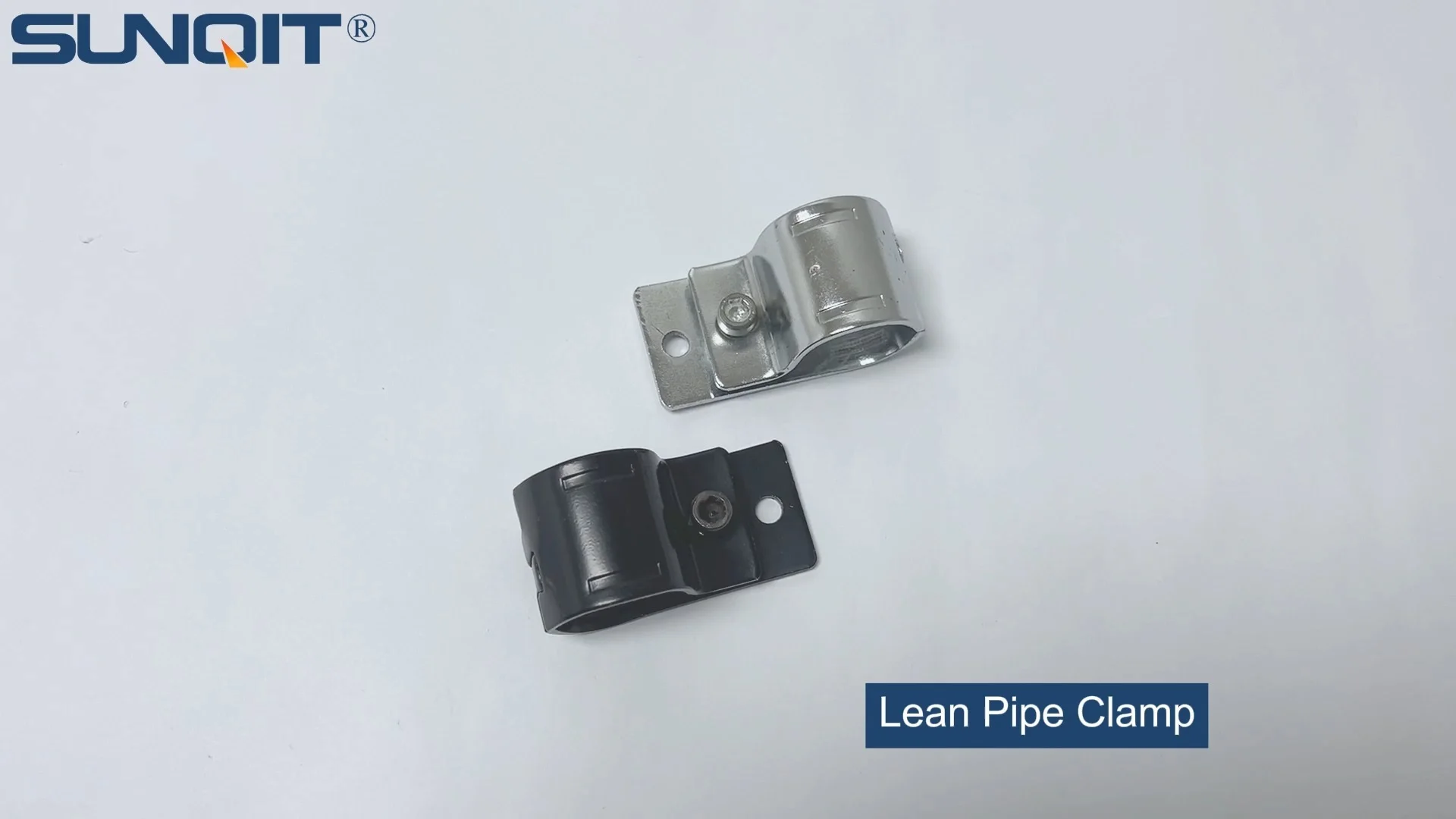
Lean Pipe Clamp
Lean pipe clamp is used for rack system hang monitor or other panel for workbenck, flowrack in production daily use.
In the fast-paced world of manufacturing, every tool on the shop floor tells a story—of efficiency gained, of frustrations solved, or of teams finally feeling in control of their workflow. Today, we're diving into one such tool: the Lean Pipe Clamp B. More than just a metal fastener, this unassuming component has quietly transformed assembly lines, workbenches, and material handling setups across factories. We've spoken to five manufacturers from different industries to hear their unfiltered experiences—how these clamps changed their daily operations, where they exceeded expectations, and even where they wish there was room to grow. Let's start with a story from the automotive sector, where precision and speed are non-negotiable.
1. Automotive Parts Plant: "Our Assembly Line Finally Stays Stable—Even with 12-Hour Shifts"
For Mike Torres, production manager at Precision Auto Components in Michigan, the battle with wobbly workbenches used to be a daily headache. "We run two shifts, 12 hours each, assembling brake caliper components," he explains. "Our old setup used generic clamps that loosened after a few weeks—imagine a technician leaning into a workbench to torque a bolt, and suddenly the whole shelf shifts. Not only did it slow us down, but we were seeing more errors from unstable surfaces."
That changed six months ago when their lean system supplier recommended switching to Lean Pipe Clamp B. "At first, I was skeptical—how different could a clamp really be?" Mike admits. "But within the first week, the technicians were asking, 'Where have these been?' The difference is in the grip. These clamps lock onto the lean pipe workbench tubes with this satisfying 'click,' and they don't budge. Even when we reconfigure the line—something we do monthly for new part models—the clamps hold tight after disassembly and reassembly."
"Last month, we had an audit, and the auditor commented on how 'remarkably stable' our workstations were. I didn't have the heart to tell him we used to tape clamps to keep them from slipping. Now? We haven't had a single loose connection in six months. That's 1,440 hours of production without a single delay from a wobbly bench. For us, that's game-changing."
Mike also noted the compatibility with their existing setup: "We already had aluminum profile workbenches, and these clamps fit perfectly. No need to replace the whole system—just swap out the clamps. That saved us about $12,000 in new equipment costs. Plus, the stainless steel finish has held up to the coolant and oil splatters in our shop. No rust, no corrosion—they still look brand new."
2. Electronics Manufacturer: "ESD Safety, but Make It Flexible"
Over in Portland, Oregon, TechElectronics assembles circuit boards for medical devices—a process where electrostatic discharge (ESD) protection is critical. Sarah Chen, their facilities engineer, faced a unique challenge: "We needed ESD workbenches that could adapt as we scaled production, but most ESD setups are rigid. Our old clamps were plastic, which met ESD standards but cracked easily when we adjusted the shelves. We were replacing clamps weekly, and each crack risked a static discharge near sensitive components."
Sarah's team turned to their lean pipe supplier, who suggested Lean Pipe Clamp B with ESD-friendly coatings. "I was hesitant at first—metal clamps and ESD? But the supplier explained the coating is conductive, so it grounds the entire structure. We installed them on our aluminum profile workbenches, and the results were immediate. The clamps didn't crack, even when we moved the shelves up and down daily for different board sizes."
"Our ESD tester used to flag 3-4 workstations a week for static issues. Now? Zero. And the best part? When we launched a new product line last quarter, we reconfigured three workbenches in an hour. With the old plastic clamps, that would have taken half a day and required new parts. The Lean Pipe Clamp B lets us be both safe and agile—and in electronics manufacturing, that's the holy grail."
Sarah also highlighted the small details: "The clamp's design has these rounded edges, so when technicians lean over the bench, they don't scratch their arms on sharp corners. It's a tiny thing, but it's reduced minor injuries by 70%. Our team notices that we care about their comfort, and that's boosted morale more than I expected."

3. Food Packaging Facility: "Stainless Steel Toughness Meets Sanitation Standards"
In a food packaging plant, cleanliness is as important as efficiency. For Lisa Wong, operations director at FreshWrap Foods in California, finding equipment that could handle daily washdowns was a constant struggle. "We use roller track systems to move packaging materials through the line, and our old clamps were rusting within months—even 'stainless steel' ones from a different supplier," she says. "Rust in a food facility isn't just unsightly; it's a safety violation. We were spending $500 a month replacing corroded parts."
Lisa's team switched to Lean Pipe Clamp B as part of their stainless steel pipe series upgrade. "These clamps are made from 304 stainless steel, which our maintenance team swears by," she notes. "We hose down the roller tracks twice a day with hot, soapy water, and the clamps haven't shown a speck of rust. Even better, they don't trap food particles—no crevices for bacteria to hide. Our last health inspection? We got a perfect score, and the inspector specifically mentioned our 'well-maintained material handling system.'"
"The real test came during our busy season last summer. We ran 18-hour days, and the roller track was moving 2,000 packages an hour. The clamps held the track sections together without a single slip. Before, we'd have to stop the line every few hours to tighten clamps. Now? Zero downtime. That alone saved us around $15,000 in lost production."
Lisa also appreciates the compatibility with their caster wheels: "We have mobile carts that use the same clamps to secure shelves. When we need to move materials from the warehouse to the line, the clamps keep the shelves stable, even over uneven floor tiles. No more spilled boxes, no more bent packaging. It's the little things that add up."

4. Small-Scale Furniture Maker: "DIY-Friendly for a Team of Five"
Not all success stories come from large factories. Take Artisan Woodworks, a family-owned furniture shop in North Carolina with just five employees. For owner Mark Henderson, flexibility is everything. "We make custom pieces, so our workbenches and material racks need to change weekly," he says. "We used to build fixed shelves with screws and brackets—if a client ordered a 7-foot table, we'd have to take apart the entire rack to fit the lumber. It was exhausting."
Mark's brother, who works in manufacturing, suggested a lean pipe system with Lean Pipe Clamp B. "I'm no engineer, but these clamps are so easy to use," Mark laughs. "You just slide them onto the aluminum pipe, twist, and they lock. No tools, no measuring—even my 16-year-old son, who helps on weekends, can set up a shelf in five minutes."
"Last month, we had a rush order for 10 dining chairs. We needed a temporary assembly line, so we grabbed some lean pipes, clamps, and a few caster wheels, and built a mobile workstation in 20 minutes. When the order was done, we took it apart and stored the parts. With our old setup, that would have required building a new bench and then taking up space to store it. Now, we're saving 100 square feet of workshop space—priceless for a small shop like ours."
Cost was another factor: "We bought a starter kit from a lean pipe supplier for $300, and it came with enough clamps to build three workbenches. That's way cheaper than buying pre-made shelves, and we can reuse the parts indefinitely. The clamps are tough, too—we've dropped them, stepped on them, and they still work like new. For a small business, that kind of durability means we're not throwing money away on replacements."

5. Aerospace Component Plant: "Precision That Survives the Heat"
Aerospace manufacturing demands tools that can handle extreme conditions, and for Raj Patel, quality control manager at Skyward Components in Washington, that meant finding clamps that could withstand high temperatures. "We heat-treat titanium parts, and our inspection stations are near the ovens—temperatures can hit 100°F regularly," he explains. "Our previous clamps, made from aluminum alloy, would expand in the heat and loosen. We'd check a part, lean on the table, and the gauge holder would shift—ruining the measurement."
Raj's team tested three clamp types before settling on Lean Pipe Clamp B. "The difference is in the material—these clamps use a heat-resistant steel alloy that doesn't expand like aluminum," he says. "Even in the hot zones, they maintain their grip. Our inspectors no longer have to double-check measurements because the setup moved. That's cut our inspection time by 15% and reduced rework by 20%."
"We had a government audit last month, and they were impressed by our measurement consistency. When I explained we switched clamps, the auditor laughed and said, 'Sometimes the smallest tools make the biggest difference.' He wasn't wrong. These clamps might be simple, but they've helped us maintain a 99.8% accuracy rate—critical when you're building parts for airplanes."
Raj also noted the clamps' compatibility with their aluminum profile racks: "We store precision gauges on adjustable shelves, and the clamps let us set the height to the millimeter. No more shimming shelves with washers to get them level. It's the kind of precision we need in aerospace, and it's all thanks to a clamp that actually does what it's supposed to."
| Industry | Key Challenge Solved | Standout Feature | ROI Timeline |
|---|---|---|---|
| Automotive Parts | Workbench instability during long shifts | Non-slip grip after repeated reconfigurations | 3 months (saved on error reduction and rework) |
| Electronics | ESD safety with flexible workbench setups | Conductive coating + crack-resistant design | 2 months (reduced ESD-related defects) |
| Food Packaging | Rust and sanitation issues with roller tracks | 304 stainless steel construction | 1 month (eliminated monthly clamp replacements) |
| Small Furniture Shop | Need for quick, tool-free reconfigurations | Tool-less, one-handed operation | Immediate (saved on labor for setup changes) |
| Aerospace | Clamp expansion in high-heat environments | Heat-resistant steel alloy | 4 months (reduced inspection time and errors) |
Common Themes from User Experiences
- Durability that outlasts expectations: From automotive grease to food industry washdowns, users consistently noted the clamps' ability to withstand harsh conditions without degrading.
- Tool-free flexibility: The ease of adjusting or reconfiguring setups without tools was a standout feature, especially for small teams and facilities with frequent layout changes.
- Compatibility with existing systems: Whether paired with lean pipe workbenches, aluminum profiles, or stainless steel roller tracks, the clamps integrated seamlessly, reducing upgrade costs.
- Safety and compliance: In regulated industries (electronics, food, aerospace), the clamps helped meet strict standards for ESD protection, sanitation, and precision.
Room for Growth: User Feedback for Improvement
While the reviews are overwhelmingly positive, users did have a few suggestions. "A few more size options would be helpful," notes Mike from Precision Auto Components. "We have some older, thicker pipes that the current clamps don't fit perfectly." Sarah from TechElectronics adds, "Color-coded clamps for different ESD zones could help with quick identification—maybe red for high-voltage areas, blue for standard."
Mark, the furniture maker, wishes for a bulk discount: "As a small business, buying 50 clamps at a time would be easier if there was a volume price." And Lisa from FreshWrap Foods suggests, "A quick-release lever for even faster reconfigurations—though honestly, the current design is already so good, it's a minor ask."
Final Thoughts: More Than a Clamp—A Building Block for Better Work
Across industries, Lean Pipe Clamp B has proven itself to be more than just a hardware component—it's a tool that empowers teams to work smarter, safer, and more flexibly. From the automotive technician who no longer worries about wobbly workbenches to the aerospace inspector who can trust their measurements, these clamps have quietly become unsung heroes of the factory floor.
For manufacturers considering an upgrade, the message is clear: don't overlook the small tools. As Mike Torres puts it, "In manufacturing, success is in the details—and these clamps are the kind of detail that makes all the difference." Whether you're running a large automotive plant or a small woodworking shop, the right clamp can turn daily frustrations into daily wins.