- Company Articles
- Products and Technology
- Application Cases
- User Reviews: Single Side Aluminum Pipe Performance in Real-World Factories

User Reviews: Single Side Aluminum Pipe Performance in Real-World Factories
Related Product
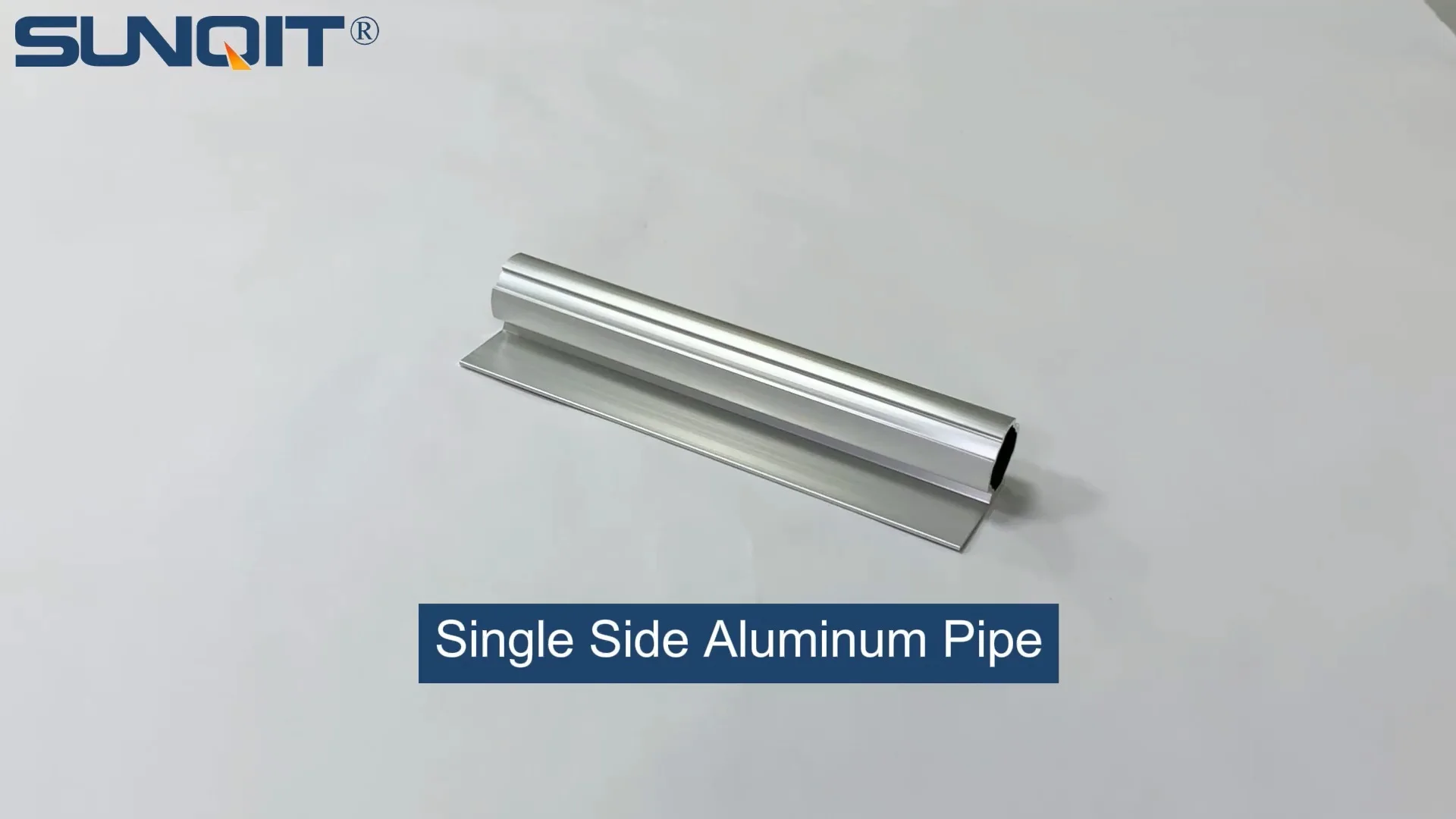
Single Side Aluminum Pipe
The single-sided plane can be installed with a back-mounted material box, and can also be used as a sidewall or partition.
The Backbone of Modern Lean Systems
In today's fast-paced manufacturing world, efficiency isn't just a buzzword—it's the difference between meeting deadlines and falling behind, between staying competitive and watching profits shrink. For factory managers and production supervisors, the search for tools that streamline workflows, reduce downtime, and adapt to changing needs is never-ending. Enter single side aluminum pipe: a humble component that's quietly revolutionizing how factories build workbenches, material racks, roller tracks, and more. But does it live up to the hype in real-world settings? We talked to three factories across different industries to find out.
Before diving into their experiences, let's clarify what makes single side aluminum pipe stand out. Unlike traditional steel or stainless steel pipe series, this lightweight yet durable material is designed for modularity. Paired with aluminum profile accessories—think joints, clamps, and brackets—it lets teams build and rebuild structures in hours, not days. It's a cornerstone of modern lean systems, where flexibility and waste reduction are king. But don't just take our word for it. Let's hear from the people who use it daily.
User Review 1: Electronics Manufacturing – Building Adaptable Workbenches
Company: Precision Circuits Inc. (Electronics assembly plant, 120 employees)
Challenge: Outdated wooden workbenches that couldn't keep up with frequent product changes. Their old setup required custom cuts and welding to adjust heights or add shelves, leading to weeks of downtime when new circuit board models rolled out.
Solution: Switched to single side aluminum pipe workbenches with aluminum profile accessories (hinges, adjustable feet, and shelf brackets).
"We used to dread product launches," says Maria Gonzalez, Production Manager at Precision Circuits. "Our old workbenches were like stone—fixed and unforgiving. If a new circuit board was 2 inches taller, we'd have to hire a carpenter to rebuild the bench tops. It cost us $2,000 per bench and took a full week. Now? Last month, we launched a new line of IoT sensors that required taller workbenches with ESD mats. Using single side aluminum pipe and aluminum profile accessories, my team stripped down the old benches, added 12-inch extensions with internal rotatary aluminum joints, and had everything ready by the end of the day. Total cost? Under $300 per bench, and we didn't miss a single production hour."
Maria also highlighted the durability surprise: "We were worried aluminum might scratch or bend under the weight of our soldering equipment and circuit board trays. Six months in, the workbenches look brand new. The anodized finish resists scratches, and the joints haven't loosened a bit—even with operators leaning on them or sliding heavy toolboxes across the surfaces."
— Maria Gonzalez, Production Manager, Precision Circuits Inc.
For electronics factories, where product specs change as often as quarterly, this adaptability is a game-changer. And it's not just workbenches: Precision Circuits now uses the same single side aluminum pipe to build ESD-compliant material racks, ensuring sensitive components stay protected during assembly.

User Review 2: Automotive Parts – Streamlining Material Flow with Roller Tracks
Company: AutoMotion Components (Automotive parts manufacturer, 300 employees)
Challenge: Bottlenecks in their assembly line due to rigid steel roller tracks that couldn't handle varying part sizes. Changing track heights or adding curves required welding, which meant shutting down sections of the line.
Solution: Replaced steel tracks with single side aluminum pipe roller tracks, paired with plastic roller track guide rails (grey and yellow) and aluminum profile accessories for quick adjustments.
"Our assembly line moves fast—parts come in on pallets, get sorted, and need to flow to stations without jams or delays," explains Raj Patel, Operations Director at AutoMotion. "Our old steel roller tracks were a nightmare. If a new part was wider, we'd have to cut and reweld the rails, which took 4-5 hours and often left rough edges that scratched parts. Since switching to single side aluminum pipe and plastic roller track guide rails (grey for heavy parts, yellow for lighter ones), we've cut changeover time by 90%."
Raj's team uses aluminum profile accessories like roller track placon mounts to connect rails, allowing them to adjust track width with a few bolts. "Last week, we needed to add a 10-foot curve to route parts around a new inspection station. Two technicians did it in 45 minutes using the same single side aluminum pipe and some extra joints. No welding, no sparks, no downtime. The plastic guide rails are smooth, so parts glide without getting stuck, and the aluminum frame is light enough that we can move entire sections with a pallet jack if we need to reconfigure the line."
Durability was a concern initially, especially with heavy metal parts sliding over the tracks daily. "We were worried aluminum might bend, but six months in, the tracks look as good as new," Raj adds. "The powder coating holds up, and the joints haven't loosened, even with 8-hour shifts of constant use. It's saved us at least $15,000 in labor and downtime this year alone."
— Raj Patel, Operations Director, AutoMotion Components

User Review 3: Logistics & Warehousing – Building Mobile Material Racks
Company: Swift Distribution (Warehouse and logistics center, 80 employees)
Challenge: Static material racks that wasted floor space and made it hard to adapt to seasonal inventory spikes. Their old stainless steel racks were heavy, hard to move, and required professional installation.
Solution: Built mobile material racks using single side aluminum pipe, caster wheels, and aluminum profile accessories like parallel fixation joints.
"In warehousing, space is money," says James Wilson, Warehouse Manager at Swift Distribution. "Our old stainless steel racks were like permanent furniture—once they were bolted to the floor, they stayed there, even if we didn't need them for months. We'd end up stacking pallets in aisles just to make room, which is a safety hazard. Now, with single side aluminum pipe racks on caster wheels, we can rearrange the warehouse in a day."
James's team uses basic aluminum tube for the rack frames and adds caster wheels with brakes for mobility. "During peak season (holidays), we need 50 extra racks for toys and electronics. We build them in a weekend using aluminum profile accessories—no special tools, just a hex key and a rubber mallet. After the season, we take them apart and store the pipes and joints on a shelf. It's like having a modular storage system that grows and shrinks with our needs."
He also notes the weight difference: "Stainless steel racks weigh 200+ pounds each—you need two people and a forklift to move them. Single side aluminum pipe racks? A single person can roll them, even with 500 pounds of inventory on them. The caster wheels are smooth, and the brakes hold tight on concrete floors. We've reduced injuries from heavy lifting, too—no more strained backs from trying to shift a steel rack an inch to the left."
— James Wilson, Warehouse Manager, Swift Distribution

Performance Breakdown: How Single Side Aluminum Pipe Stacks Up
Across these three industries—electronics, automotive, and logistics—several themes emerged. Let's break down the key performance metrics that matter most in real-world factories:
Durability: Built to Last (Even in Tough Environments)
All three users were initially skeptical about aluminum's toughness, especially compared to stainless steel pipe series. But after 6-12 months of use, they reported minimal wear. The anodized finish resists scratches and corrosion (critical in warehouses with humidity), and the joints—when tightened properly—stay secure. Maria's electronics plant even uses the pipe near soldering stations, and the material hasn't warped from heat exposure.
Flexibility: Adapt or Die (Quickly)
This is where single side aluminum pipe shines brightest. With aluminum profile accessories, teams can reconfigure workbenches, roller tracks, and racks in hours. James summed it up best: "We used to plan changes around production shutdowns; now we make them during lunch breaks." The modular design eliminates the need for custom fabrication, which slashes costs and keeps lines moving.
Cost-Effectiveness: Short-Term Investment, Long-Term Gains
Single side aluminum pipe isn't the cheapest option upfront—stainless steel or basic steel might cost less per foot. But when you factor in labor (no welding, no professional installers), downtime savings, and reusability (pipes and joints can be repurposed indefinitely), it's a no-brainer. AutoMotion's Raj calculated a 14-month ROI on their initial investment, and that doesn't include intangibles like reduced stress for his team.
Compatibility: Plays Well with Others
Whether paired with roller tracks, caster wheels, or ESD workbench components, single side aluminum pipe integrates seamlessly with existing lean system tools. Precision Circuits even uses old steel shelving units with their new aluminum frames—no need to replace everything at once.
How It Compares: Single Side Aluminum Pipe vs. Traditional Materials
| Feature | Single Side Aluminum Pipe | Stainless Steel Pipe Series | PE-Coated Lean Pipe |
|---|---|---|---|
| Weight | Light (easy to move, reduces injury risk) | Heavy (requires equipment to move) | Medium (heavier than aluminum, lighter than steel) |
| Assembly Time | Hours (modular with aluminum profile accessories) | Days (requires welding/cutting) | Hours (but less durable than aluminum) |
| Durability | High (resists scratches, corrosion, heat) | High (but prone to rust if scratched) | Low (PE coating chips, pipe bends easily) |
| Reusability | Excellent (pipes/joints repurposed indefinitely) | Poor (welded joints make disassembly hard) | Good (but pipes may bend after reuse) |
| Cost Over 5 Years* | $8,500 (initial + minimal replacement) | $15,200 (initial + welding labor + replacement) | $11,000 (initial + frequent pipe replacement) |
*Estimate based on a 20-foot workbench setup with annual reconfigurations.
Why Lean System Suppliers Are Pushing Aluminum
We reached out to a leading lean pipe supplier to get their take on the trend. "Five years ago, 80% of our orders were for steel or PE-coated pipe," says David Chen, Sales Director at Global Lean Solutions. "Now, it's flipped—70% are for aluminum, and single side aluminum pipe is our top seller. Factories finally realize that 'cheap' upfront often costs more later. Aluminum's flexibility aligns perfectly with modern lean principles: build what you need, change it when you don't, and waste nothing."
David also noted that aluminum profile accessories have improved dramatically, making installations even simpler. "Early aluminum joints were flimsy, but today's internal rotatary aluminum joints and parallel fixation brackets are rock-solid. We rarely get returns or complaints about durability anymore."
Final Verdict: A No-Brainer for Modern Factories
After hearing from Maria, Raj, James, and David, it's clear: single side aluminum pipe isn't just a trend—it's a tool that delivers on its promises. It's durable enough for heavy use, flexible enough for constant change, and cost-effective enough to justify the initial investment. Whether you're building workbenches in an electronics plant, roller tracks in an auto shop, or mobile racks in a warehouse, it's a foundational piece of any lean system.
Of course, no material is perfect. If your factory deals with extreme temperatures (over 500°F) or constant chemical exposure, stainless steel might still be better. But for 90% of manufacturing and logistics operations, single side aluminum pipe—paired with quality aluminum profile accessories—is the smart choice. As James put it: "I wish we'd switched years ago. It's not just a pipe—it's a way to future-proof our factory."