- Company Articles
- Products and Technology
- Product knowledge
- Using 3060 Aluminum Angle Yards in Flexible Material Handling Systems

Using 3060 Aluminum Angle Yards in Flexible Material Handling Systems
Related Product
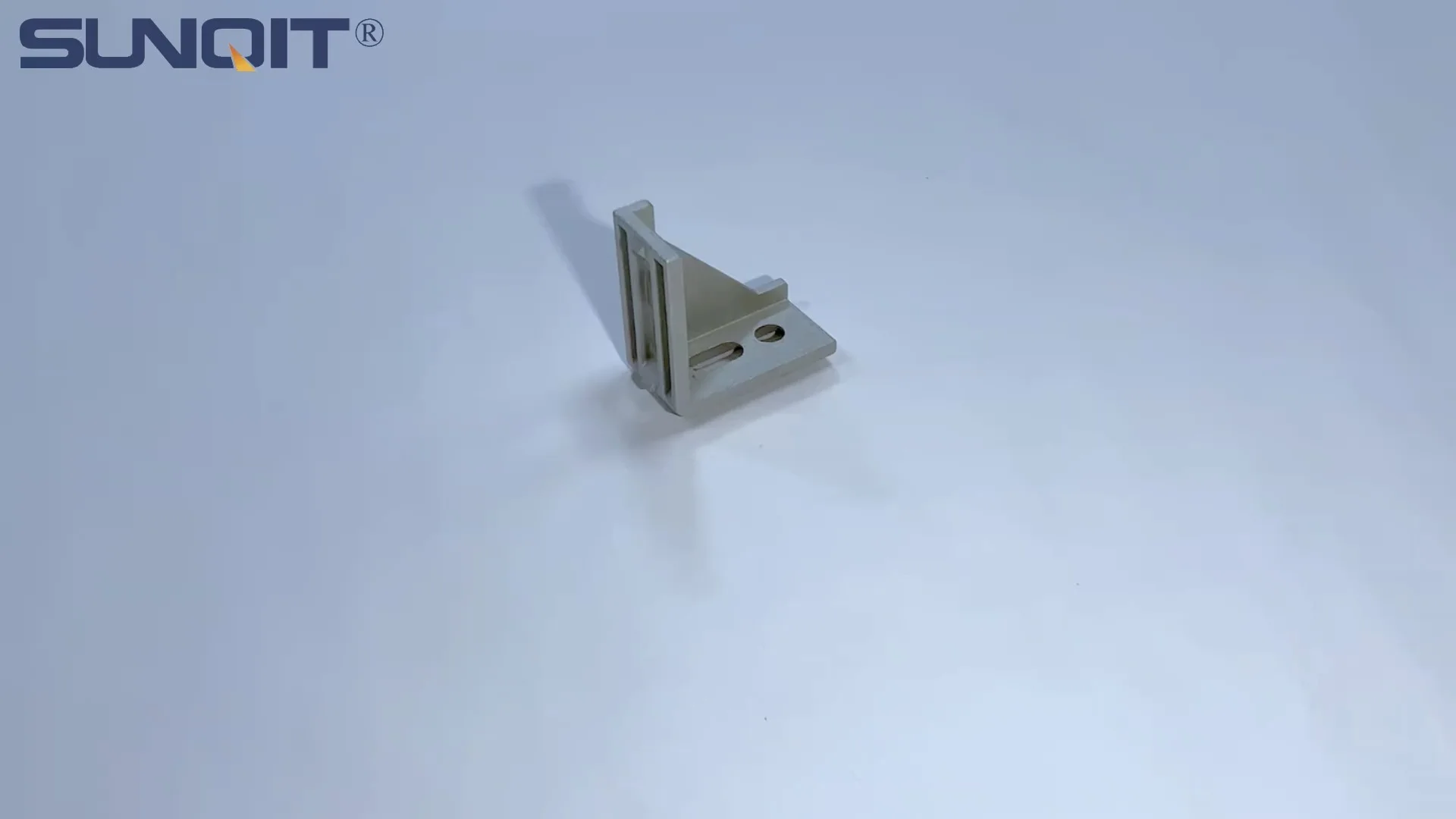
3060 Aluminum Angle Yards
It used for 90° flat connection for 20 series aluminum profile.
Using 3060 Aluminum Angle Yards in Flexible Material Handling Systems
In the fast-paced world of manufacturing, warehousing, and logistics, the efficiency of material handling can make or break a business. Every second spent searching for tools, adjusting workflows, or struggling with rigid equipment eats into productivity—and profits. That's where flexible material handling systems come in, designed to adapt to changing needs, streamline processes, and reduce waste. At the heart of many of these systems lies a component that's quietly revolutionizing how teams build, reconfigure, and optimize their workspaces: the 3060 aluminum angle yard. In this article, we'll explore what makes these angle yards indispensable, how they integrate with broader lean systems, and why they've become a go-to choice for businesses aiming to stay agile in an unpredictable market.
What Are 3060 Aluminum Angle Yards?
Before diving into their applications, let's start with the basics: what exactly is a 3060 aluminum angle yard? Simply put, it's a type of extruded aluminum profile characterized by its L-shaped cross-section, with dimensions roughly 30mm by 60mm (the numbers "3060" denote width and height). But to call it just a "metal bracket" would be a disservice. These angle yards are precision-engineered, with a T-slot design running along their length—a feature that transforms them from static structural elements into dynamic building blocks for endless configurations.
Made from high-grade aluminum alloy, 3060 angle yards strike a rare balance between strength and lightweight. Unlike steel, which is heavy and prone to rust, aluminum resists corrosion, making it suitable for use in diverse environments, from dusty warehouses to cleanrooms in electronics manufacturing. The extrusion process ensures consistent quality and dimensional accuracy, so every piece fits together seamlessly—no more wrestling with mismatched parts or imprecise cuts. And because aluminum is inherently lightweight, even large assemblies built with these angle yards can be moved, adjusted, or reconfigured by a small team, without the need for heavy machinery.
But what truly sets 3060 aluminum angle yards apart is their versatility. The T-slot channels allow for easy attachment of accessories: brackets, shelves, rollers, casters, and even workbench surfaces. Whether you're building a simple material rack or a complex conveyor system, these angle yards serve as the "backbone" that holds everything together—while still allowing for tweaks and overhauls as your needs evolve. It's this combination of strength, precision, and adaptability that makes them a cornerstone of modern flexible material handling.

The Role of 3060 Aluminum Angle Yards in Flexible Material Handling
Flexible material handling systems are all about responsiveness. A rigid system—think fixed steel racks, welded workbenches, or one-size-fits-all conveyor belts—works well until your product line changes, your order volume spikes, or your facility layout needs a refresh. Then, it becomes a liability, requiring costly modifications or complete replacements. 3060 aluminum angle yards solve this problem by enabling modular design: systems that can be easily expanded, reconfigured, or repurposed without starting from scratch.
Let's break down how they enable flexibility in three key areas:
1. Modular Construction: Build What You Need, When You Need It
Traditional material handling equipment often comes pre-assembled with fixed dimensions. A standard steel workbench, for example, might have a fixed height, a single shelf, and no room to add accessories like tool hooks or monitor mounts. With 3060 aluminum angle yards, you start with a blank canvas. Need a workbench that's 1.2 meters long, with adjustable shelves and a keyboard tray? Combine angle yards with aluminum honeycomb panels for the work surface, add T-slot brackets to hold the shelves, and attach caster wheels for mobility. Six months later, if you need to extend it by 60cm or add a side rack for parts storage? Simply unbolt the existing sections, add new angle yards, and reattach the accessories. No welding, no cutting, no waiting for custom parts—just quick, tool-free adjustments.
2. Compatibility with Lean Systems
For businesses adopting lean manufacturing principles—focused on minimizing waste, maximizing value, and continuous improvement—3060 aluminum angle yards are a natural fit. Lean systems thrive on adaptability: if a workflow isn't working, you change it. If a workstation is causing bottlenecks, you rearrange it. Aluminum angle yards support this by making reconfiguration fast and low-cost. For example, a 5S initiative (Sort, Set in Order, Shine, Standardize, Sustain) might call for dedicated storage zones for tools and materials. With angle yards, teams can build custom shadow boards, peg racks, or bin holders that exactly match the size and shape of their equipment—then tweak those designs as tools are updated or processes change. This level of customization ensures that "Set in Order" isn't just a one-time project but an ongoing practice.
3. Integration with Material Racks and Conveyors
Material racks and conveyors are the arteries of any material handling system, moving parts from storage to assembly lines and finished goods to shipping. Rigid steel racks often have fixed shelf heights, meaning you either waste space (if items are smaller than the shelf) or can't fit larger items at all. 3060 angle yards solve this with adjustable shelving: using T-slot brackets, shelves can be moved up or down in increments as small as a few millimeters, ensuring every inch of vertical space is used efficiently. Take, for instance, a material rack designed to hold electronic components: some bins might be 10cm tall, others 20cm. With angle yards, you set the shelf heights to match, eliminating gaps and reducing the need for extra racks.
Conveyors, too, benefit from angle yards' adaptability. Roller tracks, a common component in flow racks and assembly lines, can be mounted directly to 3060 angle yards using T-slot connectors. If you need to change the conveyor's angle (to accommodate a new workstation layout) or add a branch (to route materials to a second line), you simply adjust the angle yards' positioning and reattach the rollers. This flexibility is a game-changer for high-mix, low-volume production environments, where product sizes and assembly steps can vary daily.

Key Features of 3060 Aluminum Angle Yards
To understand why these angle yards are so versatile, let's dive into their standout features. These aren't just "nice-to-haves"—they're the reasons businesses across industries are swapping traditional steel for aluminum profiles.
| Feature | Benefit | Real-World Application |
|---|---|---|
| T-slot Design | Enables quick attachment of accessories (brackets, shelves, rollers) without drilling or welding. | Adding a monitor arm to a workbench by sliding a T-nut into the slot and tightening a bolt. |
| Lightweight Aluminum Construction | Eases transportation, assembly, and reconfiguration; reduces structural load on floors. | Two workers moving a 2-meter-long material rack (built with angle yards) across a warehouse. |
| Corrosion Resistance | Suitable for humid, dusty, or cleanroom environments without rust or degradation. | Using angle yards in food processing facilities or outdoor loading docks. |
| Precision Extrusion | Consistent dimensions ensure parts fit together perfectly, reducing assembly time. | Interchanging angle yards from different batches without gaps or misalignments. |
| High Strength-to-Weight Ratio | Supports heavy loads (up to hundreds of kg per meter) without bending or warping. | Building a workbench that holds a 300kg industrial printer. |

Practical Applications: From Workbenches to Turnover Trolleys
The beauty of 3060 aluminum angle yards lies in their ability to adapt to almost any material handling need. Let's explore some of the most common applications where they shine, and how they enhance functionality compared to traditional alternatives.
Workbenches: The Heart of the Workstation
A workstation is more than just a table—it's where operators spend hours assembling products, testing equipment, or packing orders. Comfort, organization, and durability matter. 3060 angle yards excel here. For example, the "Workbench E (Single Deck – Without Caster)" is a popular configuration: a frame built from angle yards, topped with a lightweight but sturdy aluminum honeycomb panel. The T-slots along the angle yards allow for easy attachment of accessories: LED task lights, tool holders, cable management clips, or even a vice. Need to raise the height by 10cm? Swap out the leg brackets for taller ones. Want to add a shelf for under-bench storage? Slide T-slot brackets into the vertical angle yards and secure a panel. Unlike wooden workbenches, which splinter or warp over time, or steel ones that rust and are hard to modify, aluminum angle yard workbenches stay looking new and adapt as tasks change.
Material Racks: Custom Storage for Every Need
Storage is often the first area where inefficiency creeps in. Generic steel racks with fixed shelves force teams to cram odd-sized items into one-size-fits-all spaces, leading to wasted time searching for parts or damaged inventory. 3060 angle yards eliminate this with racks tailored to your exact needs. Take "Material Rack B (3 Row and 3 Floor)": a vertical structure built from angle yards, with adjustable shelves spaced to fit everything from small bins to large components. The T-slot design lets you add dividers, label holders, or even roller tracks (for sliding bins) with minimal effort. If your inventory shifts—say, you start stocking larger boxes—simply adjust the shelf heights or add new angle yard sections to extend the rack. It's storage that grows with your business, not against it.
Turnover Trolleys: Mobility Without Compromise
Moving materials from one end of the facility to another shouldn't mean sacrificing stability or safety. Turnover trolleys built with 3060 angle yards are lightweight enough to push by hand (thanks to aluminum's low weight) but strong enough to carry heavy loads. Add caster wheels with brakes, and you've got a trolley that's easy to maneuver in tight spaces and stays put when loading/unloading. The T-slots allow for customization: side rails to prevent items from falling off, fold-down shelves for variable load sizes, or even hooks for tools. Unlike plastic trolleys that crack under heavy use or steel ones that rust and are hard to clean, aluminum angle yard trolleys are built to last—and to adapt. A maintenance team might use one trolley for tools one day and reconfigure it with a larger shelf the next to transport parts.
Why 3060 Aluminum Angle Yards Outperform Traditional Materials
To truly appreciate the value of 3060 aluminum angle yards, it helps to compare them to the materials they're replacing: steel, wood, and generic plastic profiles. Here's how they stack up:
vs. Steel: Lighter, More Adaptable, Less Hassle
Steel is strong, but it's heavy—so heavy that even small structures require multiple people or forklifts to move. It also rusts, which limits its use in damp or outdoor environments. Welding or drilling steel is time-consuming and permanent; once a steel rack is built, changing its design means cutting it apart and starting over. 3060 aluminum angle yards, by contrast, are up to 70% lighter than steel while offering comparable strength for most material handling tasks. Their T-slot design eliminates the need for welding: accessories attach with bolts or T-nuts, making reconfiguration as simple as loosening a few fasteners. And since aluminum doesn't rust, it's suitable for everything from food processing plants to coastal warehouses.
vs. Wood: Durable, Hygienic, and Consistent
Wooden workbenches or racks might seem affordable upfront, but they're prone to warping, splintering, and harboring bacteria—making them a poor choice for clean environments or heavy use. They also lack the precision of aluminum: no two wooden boards are exactly the same, leading to wobbly structures. 3060 angle yards, extruded to exact specifications, ensure every piece fits perfectly. They're easy to clean (just wipe with a damp cloth), resist scratches, and won't absorb spills—critical for labs, medical device facilities, or any space where hygiene matters.
vs. Plastic Profiles: Stronger, More Heat-Resistant
Plastic profiles are lightweight and cheap, but they lack the structural integrity of aluminum. They bend under heavy loads, melt in high temperatures (common near industrial ovens or machinery), and degrade over time when exposed to UV light. 3060 aluminum angle yards, on the other hand, maintain their shape even under stress, withstand temperatures up to 100°C (or higher with heat-treated alloys), and don't degrade in sunlight. For applications like automotive manufacturing or outdoor storage, plastic simply can't compete.
Installation and Maintenance: Simple, Even for Non-Experts
One of the biggest myths about modular aluminum systems is that they require specialized skills to install. Nothing could be further from the truth. 3060 aluminum angle yards are designed for "do-it-yourself" assembly, with no welding, cutting, or advanced tools needed. Here's a typical process for building a small material rack:
- Plan the design: Sketch the rack dimensions and decide on shelf spacing (most suppliers offer free design tools to help).
- Cut angle yards to length (if needed): Many suppliers sell pre-cut lengths, but a basic miter saw (or even a hacksaw) works for custom cuts.
- Assemble the frame: Connect angle yards using T-slot brackets and bolts. The T-slots guide the bolts into place, so alignment is automatic.
- Add shelves and accessories: Slide shelf brackets into the T-slots, secure with bolts, and attach panels, dividers, or rollers.
- Test and adjust: Tighten bolts, check for stability, and tweak shelf heights as needed.
Maintenance is just as straightforward. Aluminum's corrosion resistance means no painting or rust treatment—just occasional cleaning with soap and water. If a component wears out (e.g., a caster wheel), simply unbolt it and replace it; no need to replace the entire structure. This low upkeep makes 3060 angle yards a cost-effective choice over time, even if their upfront price is slightly higher than wood or plastic.
Case Study: How a Small Manufacturer Boosted Efficiency with 3060 Angle Yards
To put this all into context, let's look at a real-world example: a small electronics manufacturer (we'll call them "TechFlow") that was struggling with outdated material handling systems. TechFlow's assembly line was bottlenecked by rigid steel workbenches that couldn't be adjusted for different product sizes, and fixed racks that forced workers to climb ladders to reach parts. Their lean coordinator, Maria, proposed a switch to modular systems built with 3060 aluminum angle yards.
First, they replaced the steel workbenches with custom setups using angle yards and aluminum honeycomb panels. Workers could now adjust the height to their comfort, add tool holders for frequently used equipment, and attach cable management clips to reduce clutter. Next, they rebuilt their material racks with adjustable shelves, ensuring parts were at eye level (eliminating ladder use) and bins slid on roller tracks for easy access. Finally, they added turnover trolleys with casters to move materials between stations, reducing walking time by 25%.
The results? Assembly time per unit dropped by 18%, errors decreased (fewer misplaced parts), and employee satisfaction rose (no more straining to reach tools or climb ladders). Best of all, when TechFlow launched a new product line six months later, they reconfigured the workbenches and racks in a single weekend—no contractors, no downtime, just a team of employees and a few hand tools. As Maria put it: "We used to build systems around our equipment. Now, our equipment adapts to us."
Conclusion: The Future of Flexible Material Handling
In a world where change is the only constant, flexibility isn't a luxury—it's a necessity. 3060 aluminum angle yards embody this flexibility, offering businesses a way to build material handling systems that grow, adapt, and evolve alongside their needs. Whether you're constructing a workbench, a material rack, or a turnover trolley, these angle yards deliver the strength, precision, and versatility that traditional materials can't match. They integrate seamlessly with lean systems, reduce waste, and empower teams to take ownership of their workspaces.
So, if you're tired of rigid, outdated equipment holding your business back, it might be time to consider the 3060 aluminum angle yard. It's not just a component—it's a tool for building a more efficient, agile, and resilient operation. After all, in manufacturing and logistics, the ability to adapt quickly isn't just about keeping up with the competition. It's about staying ahead.