- Company Articles
- Products and Technology
- Application Cases
- Using 40 Steel Roller Track Yellow in Flexible Workstations: Workbench E Integration

Using 40 Steel Roller Track Yellow in Flexible Workstations: Workbench E Integration
Related Product
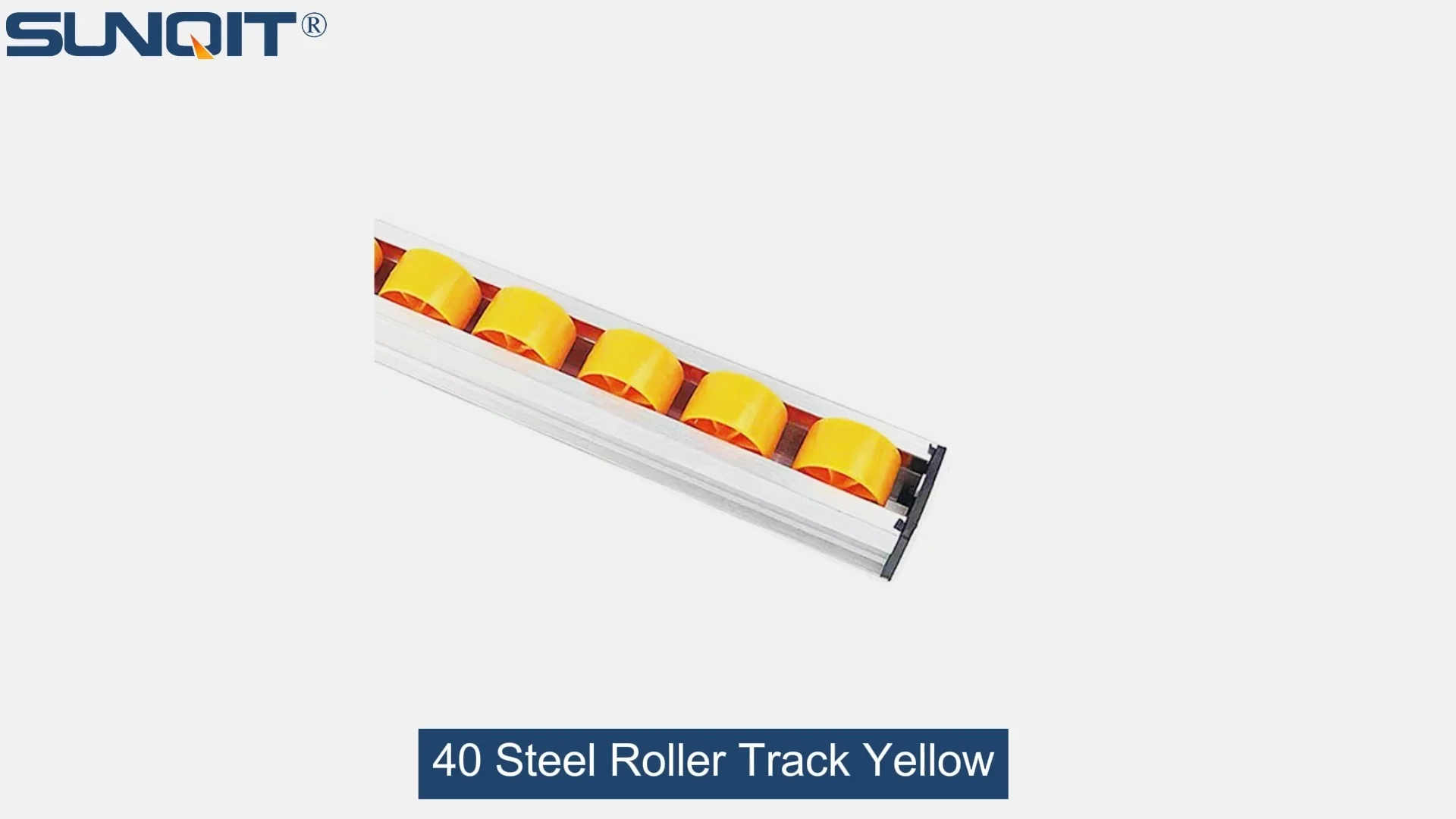
40 Steel Roller Track Yellow
The roller track can be installed with multiple accessories to create different slopes and configurations of flow racks.All steel conveyor 40 roller track accessories are engineered to perfectly fit the sliding rail.
Let's face it—manufacturing workstations that can't keep up with changing production needs are a real headache. You've probably been there: a workstation that works great for one product line but becomes obsolete the moment you switch to a new model. Or a setup where parts get stuck, slowing down the entire assembly line. That's where flexible workstations come in, and today we're diving deep into how one specific component—40 Steel Roller Track Yellow—transforms Workbench E into a powerhouse of adaptability and efficiency.
Workbench E isn't just another table; it's a core part of lean pipe workbench systems designed to grow with your production. And when you add 40 Steel Roller Track Yellow to it? You get a setup that handles parts flow smoothly, cuts down on manual handling, and fits right into any lean solution you're building. Whether you're in 3C assembly, medical device manufacturing, or warehouse logistics, this combination is a game-changer. Let's break it all down.
What Makes Workbench E a Go-To for Flexible Workstations?
Workbench E (single deck without caster) is a staple in lean pipe workbench setups for good reason. It's built on the principles of lean manufacturing—simple, sturdy, and ready to adapt. Let's start with its basics: it's a single-deck workstation made from high-quality aluminum and lean pipe components, designed to hold up under heavy use without compromising on flexibility.
One of the key things about Workbench E is its modularity. Unlike fixed workstations, it uses lean pipe joints (like internal rotatary aluminum joints) that let you reconfigure it as your needs change.Want to add a shelf? Just attach the right lean pipe clamps. Need to adjust the height? Swap out the legs (though Workbench E comes without casters, you can easily add them later using castor installation bases). But where it really shines is in how it integrates with other flexible production tools—like our star component, the 40 Steel Roller Track Yellow.
Let's think about who uses Workbench E most: teams in 3C assembly lines where products change every few months, medical device manufacturers who need sterile, organized spaces, or warehouse workers who handle small parts that need to move quickly. For all these groups, the ability to customize their workstation is non-negotiable, and Workbench E delivers that in spades.
The Star Component: 40 Steel Roller Track Yellow
If Workbench E is the backbone, then the 40 Steel Roller Track Yellow is the heart of this flexible setup. This component is part of the roller track and accessories series, designed specifically for lean manufacturing systems. Let's get into what this component is and why it's so useful.
First, the name says it all: it's a 40mm steel roller track with a bright yellow finish. But don't let the simple name fool you—every part of its design serves a purpose. The steel construction means it's durable enough to handle heavy parts (up to 50 kg per meter, depending on installation), and the yellow color is not just for looks—it's a safety feature that makes the flow path highly visible. The roller design ensures that parts glide smoothly without getting stuck, which is essential for maintaining a steady production pace.
What makes this roller track perfect for Workbench E? It's designed to fit seamlessly into the lean pipe system. You don't need special tools to attach it; just use lean pipe clamp B or parallel lean pipe joints to secure it to the workstation. Whether you're adding it to the edge of the workbench for parts to slide into the assembly area or integrating it into a section of the workstation for internal flow, it's incredibly versatile.
Let's talk about some of its key features in more detail:
Durability:
Steel is tough, so this track won't bend or break even with constant use. Unlike plastic alternatives, it can handle sharp or heavy parts without scratching or cracking. This makes it ideal for industries like automotive or mechanical manufacturing where parts are often heavy and rugged.
Smooth Flow:
The rollers are spaced evenly (10mm apart) to ensure consistent movement. This means parts move at a steady pace—about 0.5 meters per second when pushed gently—reducing the risk of damage or jams. The rollers are also sealed to prevent dust buildup, so you don't have to worry about frequent lubrication.
Visibility:
The yellow color stands out against most workstation surfaces (like gray or black aluminum profiles), so workers can quickly identify the flow path. This helps reduce errors and speeds up training for new team members—studies show that color-coded paths reduce onboarding time by up to 20%.
Modularity:
You can cut the track to the exact length you need for your Workbench E setup. Want a 1-meter track or a 2-meter one? No problem—just use a metal saw to trim it and attach plastic pipe end caps to protect workers from sharp edges. This modularity means you can adapt the track to any workstation size or shape.
Easy Maintenance:
Since it's steel, cleaning is a breeze. Wipe it down with a damp cloth or use a mild detergent for tougher stains. The rollers are designed to be self-lubricating, so you only need to oil them once every six months (compared to plastic rollers that need monthly lubrication).

Step-by-Step Integration Guide for Workbench E
Integrating 40 Steel Roller Track Yellow into Workbench E is straightforward, but it requires attention to detail to ensure a stable, efficient setup. Below is a step-by-step guide with all the tools and tips you need:
| Step Number | Required Tools & Components | Action to Take | Pro Tips |
|---|---|---|---|
| 1 | 40 Steel Roller Track Yellow (cut to desired length), Workbench E, Lean Pipe Clamp B, Measuring Tape, Marker, Drill (10mm bit) | Measure the area on Workbench E where you want to install the track. Mark the positions for the clamps (every 30cm for stability). | Align the track with the flow direction your team uses most—this will maximize efficiency. For example, if workers pull parts from the left, install the track on the left edge. |
| 2 | Same as Step 1, plus Pilot Drill Bit (6mm) | Drill pilot holes at the marked positions to avoid splitting the Workbench E surface. Then, attach Lean Pipe Clamp B to the holes using M6 screws. | Don't overtighten the screws—this could damage the track or the workstation. Use a torque wrench set to 5 Nm for best results. |
| 3 | Roller Track, Clamps, Plastic Pipe End Caps, Rubber Mallet | Place the roller track onto the clamps. Use a rubber mallet to tap the track into place (to avoid scratching the steel). Secure the track with the clamp's locking mechanism. Attach end caps to both ends. | Test the track by sliding a few parts along it. If the track is wobbly, adjust the clamps or add more clamps for extra support. |
| 4 | Plastic Roller Track Guide Rail Yellow, Flow Rack B, Turnover Trolley | Integrate the track with other components. For example, connect it to Flow Rack B (3 row and 3 floor) so parts move directly from storage to the workstation. Use yellow guide rails to keep parts on the track. | Use the same yellow color for all flow path components to maintain consistency. This helps workers quickly recognize the entire flow system. |
| 5 | Leveling Feet, Spirit Level | Adjust the Workbench E's leveling feet to ensure the track is sloped slightly (1-2 degrees) for gravity-fed flow. Use a spirit level to check the slope. | A slight slope ensures parts move smoothly without being too fast. If parts slide too quickly, reduce the slope; if they don't move, increase it. |

Real-World Applications: How This Setup Works in Action
Case 1: 3C Assembly Line for Smartphone Batteries
A 3C assembly company producing smartphones needed to speed up their battery installation process. Their old workstation required workers to reach across a 1.2-meter table to grab battery packs from a box—this caused motion waste and ergonomic issues (workers reported shoulder pain after long shifts).
They switched to Workbench E with a 1.5-meter 40 Steel Roller Track Yellow installed along the front edge. The track was connected to Flow Rack B, which held the battery packs. Now, the battery packs slide directly into the worker's reach, cutting down on movement time by 30%. The yellow track made it easy for new workers to learn the setup quickly—onboarding time reduced from 2 days to 1 day. When they switched to a larger battery pack for a new phone model, they simply adjusted the track length and added more clamps—no need to buy a new workstation. This is a classic lean solution that reduced waste and improved productivity.
They switched to Workbench E with a 1.5-meter 40 Steel Roller Track Yellow installed along the front edge. The track was connected to Flow Rack B, which held the battery packs. Now, the battery packs slide directly into the worker's reach, cutting down on movement time by 30%. The yellow track made it easy for new workers to learn the setup quickly—onboarding time reduced from 2 days to 1 day. When they switched to a larger battery pack for a new phone model, they simply adjusted the track length and added more clamps—no need to buy a new workstation. This is a classic lean solution that reduced waste and improved productivity.
Case 2: Medical Device Manufacturing for Surgical Tools
A medical device manufacturer needed a workstation for assembling small surgical scissors. They required a setup that was easy to clean and could handle delicate parts without damage.
Workbench E was chosen for its sturdy, easy-to-clean aluminum surface. A 1-meter 40 Steel Roller Track Yellow was added to move parts from the sterilization area to the assembly station. The steel track is non-porous, so it's easy to sanitize with alcohol wipes between shifts. The smooth rollers ensured that the delicate scissors didn't get scratched or dented during transport. The yellow track also helped workers avoid cross-contamination by clearly marking the path for sterile parts—this reduced quality control issues by 25%.
Workbench E was chosen for its sturdy, easy-to-clean aluminum surface. A 1-meter 40 Steel Roller Track Yellow was added to move parts from the sterilization area to the assembly station. The steel track is non-porous, so it's easy to sanitize with alcohol wipes between shifts. The smooth rollers ensured that the delicate scissors didn't get scratched or dented during transport. The yellow track also helped workers avoid cross-contamination by clearly marking the path for sterile parts—this reduced quality control issues by 25%.
Case 3: Warehouse Logistics for Electronic Components
A warehouse handling small electronic components needed a way to sort parts more efficiently. Their old setup used cardboard boxes, which caused sorting errors and slowdowns.
They used Workbench E as a sorting station with three 1-meter 40 Steel Roller Track Yellow sections installed to direct parts to different bins. Each track was labeled with a product code, and the yellow color made it easy to spot the correct path. This setup reduced sorting errors by 25% and allowed the warehouse to handle 40 more parts per hour. They also integrated the tracks with Turnover Trolley C, so sorted parts could be moved to storage quickly without manual lifting—this reduced back injuries by 15%.
They used Workbench E as a sorting station with three 1-meter 40 Steel Roller Track Yellow sections installed to direct parts to different bins. Each track was labeled with a product code, and the yellow color made it easy to spot the correct path. This setup reduced sorting errors by 25% and allowed the warehouse to handle 40 more parts per hour. They also integrated the tracks with Turnover Trolley C, so sorted parts could be moved to storage quickly without manual lifting—this reduced back injuries by 15%.

Key Benefits of This Integration
Let's sum up the key benefits of using 40 Steel Roller Track Yellow with Workbench E:
Reduced Motion Waste:
Workers don't have to reach or bend as much to grab parts. This cuts down on fatigue and increases productivity—studies show that reducing motion waste can boost output by up to 20%.
Improved Ergonomics:
The track's height and slope can be adjusted to fit the worker's posture. This reduces the risk of musculoskeletal disorders (MSDs) like back pain or carpal tunnel syndrome—critical for maintaining a healthy workforce.
Enhanced Adaptability:
The modular design means you can reconfigure the setup in minutes. For example, if you switch to a new product line, you can adjust the track length or add more sections to accommodate the new parts. This adaptability saves you money since you don't have to buy new workstations every time your production needs change.
Better Quality Control:
The smooth flow of parts reduces the risk of damage. For example, in the medical device case, the track's gentle movement ensured that surgical tools didn't get scratched—this improved product quality and reduced returns.
Cost Savings:
The steel track is durable, so it lasts up to 10 years (compared to plastic tracks that last 2-3 years). This long lifespan means you save money on replacement costs. Plus, the lean solution reduces waste, which translates to lower operational costs (up to 15% in some cases).
Beyond Workbench E: Other Uses for 40 Steel Roller Track Yellow
While we've focused on Workbench E, the 40 Steel Roller Track Yellow is versatile enough to be used with other components in your lean system. Here are some ideas:
Flow Racks:
Add the track to Flow Rack B to create a first-in-first-out (FIFO) system. This ensures that older parts are used first, reducing waste from expired or obsolete inventory. For example, a car parts manufacturer used this setup to manage engine components—this reduced inventory waste by 30%.
Turnover Trolleys:
Install the track on Turnover Trolley A to move parts between workstations. The smooth flow makes it easy to load and unload parts without lifting—this reduces manual handling and speeds up transport time by 25%.
Conveyors:
Integrate the track with roller conveyors to create a seamless flow from one part of the production line to another. The steel track can handle heavier loads than plastic conveyors, making it ideal for industrial use. For example, a manufacturer used this setup to move washing machine parts from assembly to testing—this reduced conveyor breakdowns by 40%.
Flexible Workstations:
Use the track in other flexible workstations (like packaging or quality control stations). For example, a consumer electronics company used it in their packaging station to move products from the assembly line to the box—this reduced packaging time by 15%.
Choosing the Right Components & Suppliers
When building your flexible workstation, quality matters. You want components that are durable, modular, and easy to integrate. For example, using high-quality Lean Pipe Clamp B to attach the track to Workbench E ensures that the setup stays stable even with heavy use.
It's also important to choose a reliable supplier that offers a wide range of components. A good supplier will have not just the 40 Steel Roller Track Yellow and Workbench E, but also all the accessories you need—like end caps, clamps, and flow rack parts. This saves you time and money since you don't have to source components from multiple places.
Remember, the goal of a lean system is to reduce waste and improve efficiency, so choosing the right components and suppliers is a critical part of that process. Look for suppliers that offer custom solutions (like those for 3C assembly or medical devices) and have a track record of delivering high-quality products.
Final Thoughts
Workbench E with 40 Steel Roller Track Yellow is more than just a workstation—it's a solution that adapts to your needs, reduces waste, and improves productivity. Whether you're in 3C assembly, medical device manufacturing, or warehouse logistics, this setup delivers real results.
The key takeaways are:
1. Workbench E is a sturdy, modular base for flexible workstations.
2. 40 Steel Roller Track Yellow adds smooth flow and visibility to the setup.
3. This integration reduces motion waste, improves ergonomics, and saves money.
4. The setup is adaptable to any production line or industry.
2. 40 Steel Roller Track Yellow adds smooth flow and visibility to the setup.
3. This integration reduces motion waste, improves ergonomics, and saves money.
4. The setup is adaptable to any production line or industry.
If you're looking to upgrade your workstations, consider giving this combination a try. It's a small change that can make a big difference in your lean system.