- Company Articles
- Products and Technology
- Product knowledge
- Using 4040C EU Standard Aluminum Profile for Lean Material Racks: Organization & Accessibility

Using 4040C EU Standard Aluminum Profile for Lean Material Racks: Organization & Accessibility
Related Product
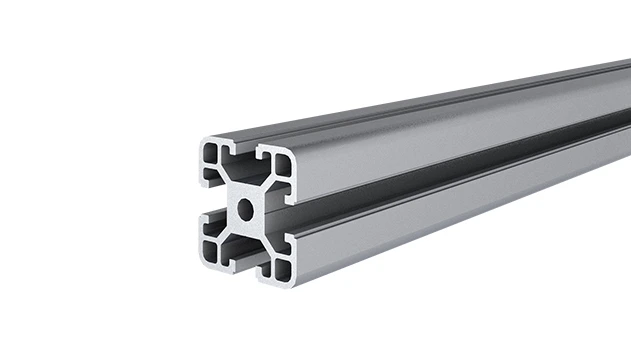
4040C EU Standard Aluminum Profile
4040C is a 4.00x4.00 CM fractional 40 series square extrusion T-slot profile with four open T-slots, each side with 4.00cm face. The profile has align-a-grooves to assist in aligning connecting profiles.
Walk into any high-performing manufacturing facility, and you'll notice a quiet rhythm: materials glide smoothly from storage to assembly lines, workers move with purpose, and every tool has a designated spot. This isn't luck—it's the result of intentional design, where organization and accessibility aren't afterthoughts but the foundation of daily operations. At the heart of this efficiency often lies a simple yet powerful component: the 4040C EU Standard Aluminum Profile . In this article, we'll explore how this unassuming piece of aluminum transforms lean material racks into engines of productivity, supporting lean system goals while making organization and accessibility feel almost effortless.
What Is the 4040C EU Standard Aluminum Profile, and Why Does It Matter?
Before diving into its role in material racks, let's get to know the 4040C profile itself. Part of the EU standard aluminum extrusion family, the 4040C is a square-shaped aluminum rail measuring 40mm by 40mm (hence the "4040" in its name). What sets it apart from generic aluminum bars is its T-slot design —longitudinal grooves running along its length that allow accessories like brackets, connectors, and panels to slide in and lock securely. This isn't just a design quirk; it's the secret to its versatility.
Manufactured from high-grade aluminum alloy (typically 6063-T5), the 4040C strikes a rare balance between strength and weight. It's lightweight enough to be assembled by hand (no heavy machinery required) but robust enough to support hundreds of kilograms—critical for material racks holding everything from small components to bulky parts. And because it's an EU standard, you'll find consistent dimensions and quality across suppliers, meaning you won't waste time hunting for compatible parts or dealing with ill-fitting components.
But why "C"? Within the 4040 EU profile family, there are variations (A, B, C, etc.), each with slightly different slot sizes, wall thicknesses, or weight capacities. The 4040C is a workhorse, optimized for medium to heavy-duty applications—exactly the sweet spot for lean material racks. Its wall thickness (usually 2.0mm) and reinforced T-slots make it ideal for supporting multiple shelves, while its smooth, anodized finish resists scratches and corrosion, ensuring it holds up in busy factory environments.
Lean Systems and the Critical Role of Material Racks
Lean manufacturing isn't just a buzzword—it's a philosophy centered on eliminating waste (or "muda") in all forms: wasted time, wasted motion, wasted space. And few areas contribute more to waste than disorganized material storage. Imagine a worker spending 10 minutes hunting for a specific part because it's buried under other items, or a production line halting because a critical component ran out unexpectedly. These are the kinds of inefficiencies that erode profits and morale.
Material racks are the frontline defense against these wastes. A well-designed rack does more than hold parts; it ensures materials are visible (so you never run out unexpectedly), accessible (so workers don't waste steps), and organized (so every item has a clear home). In lean terms, this supports key principles like "5S" (Sort, Set in Order, Shine, Standardize, Sustain) and "Just-In-Time" (JIT) production, where materials arrive exactly when needed—no sooner, no later.
But here's the catch: not all material racks are created equal. Traditional racks—welded steel, fixed wooden shelves, or generic wire shelving—often fall short. They're hard to reconfigure when production needs change, heavy to move, and prone to causing bottlenecks. This is where the 4040C aluminum profile shines: it's built for the flexibility and adaptability that modern lean systems demand.

Why 4040C Aluminum Profile Is a Game-Changer for Lean Material Racks
So, what makes the 4040C such a powerful tool for building lean material racks? Let's break down its key advantages:
1. Modularity: Build Racks That Grow with Your Needs
One of the biggest challenges in manufacturing is change. A product line expands, a new part is introduced, or a workflow is redesigned—and suddenly, your once-functional material rack is obsolete. Welded steel racks? You'll need to cut them apart or buy new ones. Wire shelving? It bends under heavy loads or lacks the adjustability to fit new part sizes.
The 4040C profile solves this with modularity. Thanks to its T-slot design and compatible aluminum profile accessories (like 90° aluminum profile connectors, gusset plates, and end caps), you can assemble, disassemble, and reconfigure your rack in hours—not days. Need to add a shelf? Slide in a new bracket. Want to raise the height? Swap out shorter legs for longer ones. Even better, since the components are lightweight, you won't need a team of engineers to make changes—your own maintenance staff can handle it with basic tools (a hex key, for example).
This modularity aligns perfectly with lean's "Standardize" principle. You can create a library of standardized rack configurations, then tweak them as needed, ensuring consistency across your facility while still adapting to unique needs.
2. Accessibility: Put Materials at Workers' Fingertips
In lean, "accessibility" isn't just about being able to reach a part—it's about minimizing motion waste. The less a worker has to bend, stretch, or walk to grab materials, the more time they spend adding value to products. The 4040C profile supports this in two key ways: height adjustability and compatibility with flow-enhancing components.
First, height adjustability. With 4040C, you can set shelf heights to match the average worker's reach (typically 75-150cm for easy access). No more straining to reach the top shelf or bending awkwardly for items on the bottom. Second, compatibility with flow rack components like roller tracks and swivel roller balls. By adding roller track to 4040C shelves, materials can "flow" toward the front as items are removed, ensuring the next part is always within arm's reach—no more digging to the back of the shelf.
For example, a 4040C-based rack using 1-inch swivel roller balls creates a "gravity-fed" system: when a worker takes a box from the front, the remaining boxes slide forward automatically. This not only saves time but also reduces the risk of items being left forgotten at the back of the shelf.
3. Durability: Built to Last, Even in Harsh Environments
Lean systems thrive on reliability. A material rack that bends, rusts, or breaks down is just another form of waste—wasted money on replacements, wasted time on repairs. The 4040C profile is engineered for durability. Its aluminum alloy construction resists corrosion, even in humid or dusty factory settings, and the anodized finish adds a protective layer that stands up to daily wear and tear (think: parts being slid on and off shelves, carts bumping into the frame).
Unlike wooden shelves, which warp or rot, or plastic racks, which crack under heavy loads, 4040C maintains its structural integrity for years. This longevity means fewer replacements, lower maintenance costs, and a more sustainable operation—all core to lean's focus on long-term efficiency.
4. Lightweight Design: Easy to Move, No Heavy Lifting Required
Despite its strength, the 4040C is surprisingly lightweight. A 1-meter length weighs around 1.5kg—far less than a comparable steel bar (which might weigh 5kg or more). This makes assembling and repositioning racks a breeze. Need to shift a rack closer to the assembly line during a production rush? Two workers can lift and move it without forklifts or special equipment. This flexibility reduces downtime and makes it easy to adapt your layout to changing workflow needs—say, rearranging racks to support a new product launch or seasonal demand spike.
Aluminum Profile Accessories: The "Glue" That Holds Lean Racks Together
A 4040C profile is only as good as the accessories that bring it to life. These small but mighty components turn a simple aluminum bar into a fully functional material rack. Let's explore the key players:
Connectors: The Building Blocks of Modularity
Connectors are what make 4040C racks so easy to assemble and reconfigure. Unlike welded racks, which require permanent joins, 4040C uses T-slot connectors that slide into the profile's grooves and lock in place with bolts. Common types include:
- 90° Aluminum Profile Connectors : For joining profiles at right angles (e.g., vertical posts to horizontal shelves).
- 45° Aluminum Profile Connectors : Useful for angled supports or diagonal bracing, adding stability to tall racks.
- 3-Way Aluminum Profile Connectors : Allow branching off in three directions, perfect for building multi-tiered or corner racks.
These connectors require no special tools—just a hex key to tighten the bolts—and can be disassembled and reused repeatedly. This means if you need to shorten a shelf or add a new section, you don't have to start from scratch.
End Caps and Covers: Safety and Cleanliness
Sharp edges on aluminum profiles are a safety hazard, especially in busy work areas. 4040 Aluminum Profile End Caps snap onto the ends of profiles, covering raw edges and preventing cuts. They also keep dust, debris, and moisture from collecting inside the T-slots, ensuring accessories continue to slide smoothly over time. Available in colors like black or silver, they add a polished look to racks—small details that contribute to the "Shine" (cleanliness) step of 5S.
Gussets and Brackets: Reinforcing for Heavy Loads
For racks holding heavier materials (think: metal components or large tooling), gusset alp 4040 brackets add critical reinforcement. These triangular plates bolt onto corners (e.g., where vertical posts meet horizontal shelves), distributing weight evenly and preventing bending. Gussets are a simple way to boost a rack's load capacity without upgrading to thicker, heavier profiles—saving both cost and weight.
Casters: Mobility for On-the-Go Storage
Sometimes, a stationary rack isn't enough. Adding caster wheel accessories to the base of a 4040C rack turns it into a mobile cart, perfect for transporting materials directly to the assembly line. Look for casters with brakes to lock the rack in place during loading/unloading, ensuring stability when in use. Swivel casters offer 360° mobility, making it easy to maneuver tight corners in busy factories.
Designing a Lean Material Rack with 4040C: A Step-by-Step Guide
Ready to build your own lean material rack using 4040C? Let's walk through the process, from planning to assembly:
Step 1: Define Your Needs
Start by asking: What will the rack hold? (Small components? Large assemblies? Heavy tools?) How much weight per shelf? (This determines shelf thickness and bracket spacing.) How many shelves? (Consider visibility—too many shelves can make items hard to reach.) Will it be stationary or mobile? (Add casters if mobility is needed.) Answering these questions ensures your rack is tailored to your specific workflow, not just a generic solution.
Step 2: Sketch the Design
Grab a pencil and paper (or use a simple CAD tool) to sketch your rack. Include dimensions: height (standard is 1.5–2m for easy reach), width (typically 0.8–1.2m to fit through doorways), and depth (0.4–0.6m to prevent items from getting lost in the back). For a material rack B (3 row and 3 floor) —a common configuration in lean setups—you'll have 3 vertical posts per side, 3 horizontal shelves per row, and 3 tiers (floors) of storage. This balances capacity with accessibility, ensuring workers can reach all items without ladders.
Step 3: select Materials and Accessories
For the frame, you'll need 4040C profiles cut to your desired lengths (most suppliers offer custom cutting). For shelves, consider adding flow rack components like roller track or swivel roller balls to enhance accessibility. Don't forget connectors (90° and 3-way), end caps, gussets (for heavy shelves), and casters (if mobile). Pro tip: Order extra connectors—they're easy to misplace, and having spares speeds up assembly.
Step 4: Assemble the Frame
Start with the vertical posts: connect four 4040C profiles (two on each side) with horizontal crossbars at the top, bottom, and shelf heights. Use 90° connectors to join the posts and crossbars, tightening bolts with a hex key until snug (but not over-tightened—you want to avoid stripping the T-slots). Add diagonal bracing (using 45° connectors) if the rack is tall (over 1.8m) to prevent wobbling.
Step 5: Add Shelves and Flow Components
Once the frame is stable, attach shelf brackets to the vertical posts. Slide the brackets into the T-slots at your desired heights, then secure them with bolts. Lay shelf panels (plywood, metal, or aluminum sheets) on top of the brackets, or install roller track for flow functionality—simply snap the track into the brackets and secure with screws. For a material rack B, repeat this for all 3 floors, spacing shelves evenly (typically 40–50cm apart) to fit standard bins or boxes.
Step 6: Test and Refine
Load the rack with typical materials and test accessibility: Can workers reach the top shelf without stretching? Do items on roller track flow smoothly? Is the rack stable when fully loaded? If something feels off—adjust shelf heights, add more gussets, or tweak the roller track alignment. Lean is all about continuous improvement, so don't be afraid to refine your design based on real-world use.
Case Study: Material Rack B (3 Row and 3 Floor) in Action
To see the 4040C in action, let's look at a real-world example: a automotive parts manufacturer that upgraded from traditional steel racks to a 4040C-based material rack B (3 row, 3 floor) setup. Here's what happened:
Before: The factory used welded steel racks with fixed wooden shelves. Reconfiguring a rack took 2+ hours (and a welder), and shelves often warped under heavy plastic bins. Workers spent 5–7 minutes per hour searching for parts, and the racks were too heavy to move, leading to bottlenecks when production lines needed materials nearby.
After: The team replaced 10 steel racks with 4040C-based material rack B units. Each rack featured 3 rows of 3 floors, with roller track on the middle and bottom shelves for fast-moving parts. Key results:
- 50% reduction in search time : Clear labeling and roller track flow meant parts were always at the front of shelves.
- 80% faster reconfiguration : Adding a new shelf or adjusting heights now takes 15 minutes with basic tools.
- 30% less floor space used : Modular design allowed stacking racks closer together without sacrificing accessibility.
- Zero injuries from sharp edges : End caps eliminated cuts, and lightweight racks reduced lifting strain.
The plant manager summed it up: "We used to think of racks as just 'storage.' Now, with 4040C, they're active participants in our lean system—saving time, space, and headaches."
Integrating 4040C Racks with Workbenches and Flow Racks
Lean efficiency doesn't stop at the material rack—it extends to how racks connect with other workstations. The 4040C profile plays well with others, making it easy to create seamless workflows between racks, workbench stations, and flow rack lines.
For example, position a 4040C material rack adjacent to a workbench E (single deck-without caster) —a common setup in assembly areas. Use roller track to bridge the gap between the rack and workbench, allowing parts to slide directly from storage to the worker's hands. This eliminates the need for workers to carry bins back and forth, cutting motion waste and reducing fatigue.
In larger facilities, link multiple 4040C racks into a flow rack system, where materials move from receiving to production via gravity-fed roller tracks. The T-slot design makes it easy to connect racks end-to-end or around corners, creating a continuous material flow that supports JIT production. Add labels or color-coded bins to each shelf, and you've got a visual management system that ensures everyone knows where to find (and return) items—key to sustaining 5S practices.
Conclusion: 4040C Aluminum Profile—The Foundation of Lean Material Management
In the world of lean manufacturing, organization and accessibility aren't just nice-to-haves—they're the backbone of productivity. The 4040C EU Standard Aluminum Profile, with its modular design, strength, and compatibility with aluminum profile accessories , transforms material racks from static storage units into dynamic tools that drive efficiency. Whether you're building a simple material rack B (3 row and 3 floor) or an integrated system linking racks, workbench stations, and flow rack lines, 4040C delivers the flexibility, durability, and performance lean systems demand.
At the end of the day, lean is about people—making their jobs easier, safer, and more fulfilling. When workers spend less time searching for parts and more time adding value, morale rises, and productivity follows. The 4040C aluminum profile might be a small component, but its impact on how work gets done is anything but. It's not just about building better racks; it's about building better workplaces—one T-slot at a time.