- Company Articles
- Products and Technology
- Product knowledge
- Using Aluminum Profile 3 Way Connectors in Automotive Manufacturing

Using Aluminum Profile 3 Way Connectors in Automotive Manufacturing
Related Product
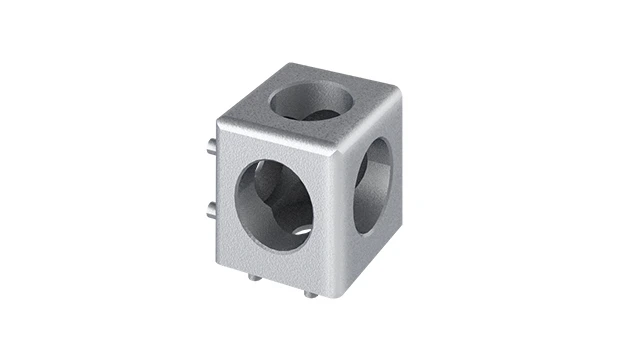
Aluminum Profile 3 Way Connector
The 3 way - squared corner connector is an external fastening method that is typically used to create a corner connection between three profiles. It is a heavy-duty connection that is simple to use and provides a polished look.
The Pulse of Automotive Manufacturing: Where Precision Meets Flexibility
Walk into any modern automotive manufacturing plant, and you'll feel it immediately—the hum of machinery, the coordinated movement of parts, the quiet focus of workers assembling components that will one day roll off the lot as sleek sedans, rugged SUVs, or eco-friendly electric vehicles. In this high-stakes environment, every second counts. A single bottleneck can delay production schedules, and an inflexible workstation can throw off an entire assembly line. That's why today's automotive leaders aren't just investing in robots or advanced software—they're rethinking the very infrastructure that holds their operations together.
At the heart of this transformation lies a deceptively simple component: the aluminum extrusion profile. Lightweight yet remarkably strong, these modular building blocks have revolutionized how factories design workstations, material racks, and flow systems. But what truly unlocks their potential? The unsung hero of modular assembly: the aluminum profile 3 way connector. This small, unassuming part is changing the game, turning rigid, one-size-fits-all production lines into dynamic, adaptable ecosystems that keep pace with the industry's relentless demand for innovation.
The Challenge: Rigid Systems in a Fast-Changing Industry
Automotive manufacturing isn't what it used to be. Decades ago, a factory might produce the same model for years, with production lines bolted into place and rarely modified. Today, the landscape is unrecognizable. Consumer preferences shift overnight, new safety regulations emerge, and the rise of electric vehicles (EVs) has forced plants to retool for battery packs, electric motors, and complex wiring harnesses—all while maintaining the precision required for internal combustion engine (ICE) vehicles. In short, rigidity is the enemy.
Consider a typical scenario: A plant manager receives word that next quarter, they'll need to add a new inspection station to accommodate a redesigned dashboard component. With traditional steel workbenches and welded material racks, this might mean shutting down the line for days, hiring a welding crew, and spending thousands on custom metal fabrication. By the time the station is ready, the production schedule is already behind. Now imagine the same scenario with a modular setup built from aluminum extrusion profiles and 3 way connectors. Overnight, workers could disassemble the existing workstation, reconfigure the frame with new angles, and have the inspection station up and running by morning—no welding, no downtime, no massive costs.
This isn't just a hypothetical. Major automotive manufacturers like Toyota and BMW have already embraced modular systems, citing flexibility and cost savings as key drivers. But to understand why aluminum profile 3 way connectors are so transformative, we first need to appreciate the foundation they're built on: the aluminum extrusion profile itself.

Aluminum Extrusion Profiles: The Backbone of Modern Factories
Aluminum extrusion profiles are created by forcing heated aluminum through a die, shaping it into long, uniform lengths with precise cross-sections. The result? A material that's 75% lighter than steel but retains 90% of its strength. For automotive plants, this means easier handling during assembly, lower shipping costs, and reduced strain on workers who need to reposition equipment. But the real magic lies in their design: most profiles feature T-slots—longitudinal grooves that run the length of the profile, allowing accessories like brackets, shelves, and connectors to be attached anywhere along the length, no drilling required.
These profiles come in a range of sizes, from compact 20x20mm options for lightweight workstations to robust 40x80mm models that support heavy machinery. In automotive settings, you'll find them everywhere: from the workbench where a technician assembles door panels to the roller track that carries engine blocks from one station to the next. And while the profiles themselves are versatile, their true power is unlocked when paired with the right accessories—especially 3 way connectors.

Aluminum Profile 3 Way Connectors: Small Part, Big Impact
So, what exactly is an aluminum profile 3 way connector? At its core, it's a joining component designed to connect three aluminum extrusion profiles at once, typically at 90-degree angles (though some models allow for adjustable angles). Made from die-cast aluminum or high-strength plastic, these connectors slide into the T-slots of the profiles and are secured with bolts, creating a tight, stable joint that can withstand the vibrations and heavy loads common in automotive plants.
What makes them so special? Unlike welded joints or fixed brackets, 3 way connectors are reusable and reconfigurable . Need to change the height of a workstation? Loosen the bolts, adjust the connector's position, and retighten. Want to add a side shelf to a material rack? Slide a new profile into the third slot of the connector and secure it. There's no cutting, no welding, and no need for specialized tools—even a line worker with basic training can make adjustments in minutes.
Take the example of a workbench on an EV battery assembly line. Battery packs are heavy, and workers need the bench to be at a precise height to avoid back strain. With a traditional wooden or steel bench, adjusting the height would require replacing the legs entirely. With an aluminum extrusion profile workbench built using 3 way connectors, it's as simple as loosening the connectors holding the legs, sliding them up or down to the desired height, and resecuring. The same bench can then be repurposed for smaller components later by adding a second tier using another 3 way connector—no new bench needed.
Real-World Applications: How 3 Way Connectors Transform Automotive Workflows
To truly grasp the impact of aluminum profile 3 way connectors, let's dive into three critical applications in automotive manufacturing: workbenches, roller tracks, and material racks. Each demonstrates how these connectors turn static infrastructure into dynamic tools that adapt to the factory's needs.
1. Workstations: Customized for Every Task
In automotive assembly, no two tasks are the same. A worker installing a steering wheel needs a different setup than someone wiring a dashboard, and both need different configurations than a quality control inspector checking for paint defects. Aluminum extrusion profile workbenches, built with 3 way connectors, excel here.
Consider a multi-purpose assembly workstation. Using 3 way connectors, the frame can be configured with a main work surface, a lower shelf for tools, and an upper shelf for parts bins. The height can be adjusted to accommodate workers of different statures, reducing ergonomic strain and lowering the risk of injuries. If the task changes—say, the line switches from installing door handles to seatbelts—the upper shelf can be removed by detaching the 3 way connectors, and the lower shelf can be repositioned to hold larger tools. Even accessories like LED task lights or ESD (electrostatic discharge) mats can be attached directly to the T-slots, using compatible aluminum profile accessories like bracket clamps or end caps.
One automotive supplier in Michigan reported that after switching to modular workbenches with 3 way connectors, worker satisfaction scores rose by 22%, and ergonomic-related injuries dropped by 18%. "Workers feel empowered when they can adjust their stations to fit their needs," said the plant's operations manager. "It's not just about efficiency—it's about respect for the people on the line."
2. Roller Tracks: Smooth Flow for Heavy Parts
Material flow is the lifeblood of automotive manufacturing. Parts need to move seamlessly from storage to assembly stations, often across long distances. Roller tracks—systems of wheels or rollers mounted on frames—are the standard solution, but traditional steel roller tracks are heavy, hard to modify, and prone to rust in humid factory environments.
Enter aluminum roller tracks, built with aluminum extrusion profiles and 3 way connectors. These systems are lightweight enough to be repositioned by two workers, yet strong enough to carry engine blocks or transmission assemblies. The 3 way connectors play a critical role here: they allow the track to be built in straight sections, corners, or even inclines, depending on the layout of the plant. For example, a roller track feeding into an assembly station might need a 90-degree turn to avoid a robot arm. With 3 way connectors, the turn can be constructed on-site by joining three profiles at the corner, with roller track placon mount connectors securing the rollers to the frame. If the robot's position shifts later, the turn can be disassembled and rebuilt in minutes.
A plant in Ohio that manufactures truck axles recently replaced its steel roller tracks with aluminum systems using 3 way connectors. The result? A 30% reduction in the time needed to reconfigure tracks for new axle models, and a 15% decrease in maintenance costs, since aluminum resists rust and the modular design makes it easy to replace damaged rollers without taking the entire track offline.
3. Material Racks: Storage That Grows With Demand
Automotive plants stock thousands of parts, from tiny screws to large body panels. Storing these efficiently is a constant challenge, especially as production volumes fluctuate or new parts are introduced. Traditional steel racks are fixed in size—add a new part, and you need a whole new rack. Modular material racks, built with aluminum extrusion profiles and 3 way connectors, solve this problem.
Imagine a material rack designed to hold plastic trim pieces for a sedan. Using 3 way connectors, the rack can be built with three shelves, each adjustable in height. When the plant starts producing an SUV with longer trim pieces, the middle shelf can be removed by detaching the 3 way connectors, creating space for taller items. If demand spikes and more storage is needed, additional vertical profiles can be added using the connectors, doubling the rack's capacity without extra floor space.
A European automotive plant specializing in EV batteries shared that modular material racks reduced their storage footprint by 25%, as they could now stack racks vertically and adjust shelf heights to fit battery modules of varying sizes. "We used to have racks sitting empty because they were too short for new battery packs," said the logistics coordinator. "Now, we just reconfigure the existing racks with 3 way connectors. It's like having a storage system that speaks the same language as our production needs."
Comparing Traditional Assembly vs. Aluminum Profile 3 Way Connectors
To quantify the benefits, let's compare traditional steel/welded systems with modular aluminum extrusion profiles and 3 way connectors across key metrics:
| Metric | Traditional Steel/Welded Systems | Aluminum Profile + 3 Way Connectors |
|---|---|---|
| Assembly Time | Days to weeks (requires welding, cutting, and custom fabrication) | Hours (no welding; connectors secure with bolts in T-slots) |
| Flexibility | Rigid; modifications require cutting/welding or replacing entire structures | Highly flexible; profiles and connectors can be disassembled/reused infinitely |
| Cost Over Time | High; initial fabrication costs + ongoing costs for modifications/replacements | Lower; higher upfront cost offset by reusability and minimal modification costs |
| Labor Requirements | Specialized workers (welders, fabricators) | General line workers (no specialized training needed) |
| Weight | Heavy (difficult to reposition; higher shipping/installation costs) | Lightweight (easy to move; reduces strain on workers and equipment) |
| Durability | Prone to rust; welded joints can weaken over time with vibration | Corrosion-resistant aluminum; bolted joints maintain strength under vibration |
Aluminum Profile Accessories: The Perfect Complement to 3 Way Connectors
While 3 way connectors are the stars of the modular show, they don't work alone. A suite of aluminum profile accessories enhances their functionality, turning basic frames into fully equipped systems tailored to automotive needs. These include:
- End caps: Snap onto the ends of aluminum profiles to prevent sharp edges, protecting workers from cuts and keeping debris out of T-slots.
- Gussets: Reinforce joints where 3 way connectors meet, adding stability for heavy loads like engine components.
- Brackets: Attach accessories like tool hooks, monitor arms, or ESD mats directly to the profiles, keeping workstations organized.
- Casters: Add mobility to workbenches or material racks, allowing them to be moved to different parts of the line as needed.
For example, a workbench used for inspecting brake components might include gussets at the 3 way connectors to support the weight of a heavy inspection light, plus end caps to protect workers from sharp profile edges. A mobile material rack could use casters attached via bracket accessories, making it easy to roll parts directly to the assembly station.
These accessories are designed to work seamlessly with 3 way connectors, ensuring that the entire system remains modular. Even better, they're standardized—meaning a bracket that fits a 30x30mm profile will work with any 30x30mm profile from any supplier, reducing the risk of compatibility issues.
Long-Term Benefits: Beyond the Assembly Line
The advantages of aluminum profile 3 way connectors extend far beyond day-to-day operations. Over time, they deliver benefits that impact a plant's bottom line, sustainability goals, and ability to innovate.
Cost Savings: While modular systems have a higher upfront cost than basic steel racks, the savings add up quickly. A study by the Manufacturing Technology Insights found that automotive plants using modular aluminum systems saved an average of 35% on reconfiguration costs over five years, thanks to reusable components and reduced downtime.
Sustainability: Aluminum is 100% recyclable, and modular systems generate far less waste than traditional setups, where old racks or workbenches are often scrapped when modified. Many suppliers also use recycled aluminum in their profiles, aligning with automotive manufacturers' goals to reduce carbon footprints.
Scalability: As plants grow or add new production lines, modular systems can scale without major overhauls. A small startup building electric delivery vans, for example, might start with a handful of workbenches and roller tracks; as demand grows, they can add more profiles and 3 way connectors to expand capacity, rather than rebuilding from scratch.
Future-Proofing: The automotive industry is evolving faster than ever, with new technologies like autonomous driving and AI-powered quality control on the horizon. Modular systems with 3 way connectors ensure that plants can adapt to these changes without ripping out existing infrastructure. Need to add a sensor mount to a workstation? Attach it via a bracket in the T-slot. Want to integrate a collaborative robot (cobot) into a roller track system? Use 3 way connectors to build a custom frame around the cobot.
Conclusion: Building the Factories of Tomorrow, Today
In the race to build better, faster, and more sustainable vehicles, automotive manufacturers can't afford to be held back by rigid infrastructure. Aluminum extrusion profiles and aluminum profile 3 way connectors offer a path forward—one where production lines adapt as quickly as ideas, where workers have the tools to customize their environments, and where every component serves a purpose today and tomorrow.
From the workbench where a technician assembles a wiring harness to the roller track carrying a battery pack to final assembly, these modular systems are more than just tools—they're a statement about how manufacturing should work: flexible, respectful of workers, and ready for whatever the future brings. As one plant manager put it: "We don't just build cars here. We build systems that build cars. And with aluminum profile 3 way connectors, those systems are finally keeping up with us."
So the next time you see a sleek new vehicle on the road, take a moment to appreciate the unsung heroes behind its creation: the modular workstations, the adaptable roller tracks, and the small but mighty aluminum profile 3 way connectors that made it all possible. In automotive manufacturing, the future isn't just about the cars we drive—it's about the factories that build them. And those factories? They're built on connections.