- Company Articles
- Products and Technology
- Application Cases
- Using Aluminum Workbench D in Mechanical Manufacturing: Handling Heavy Components Safely

Using Aluminum Workbench D in Mechanical Manufacturing: Handling Heavy Components Safely
Related Product
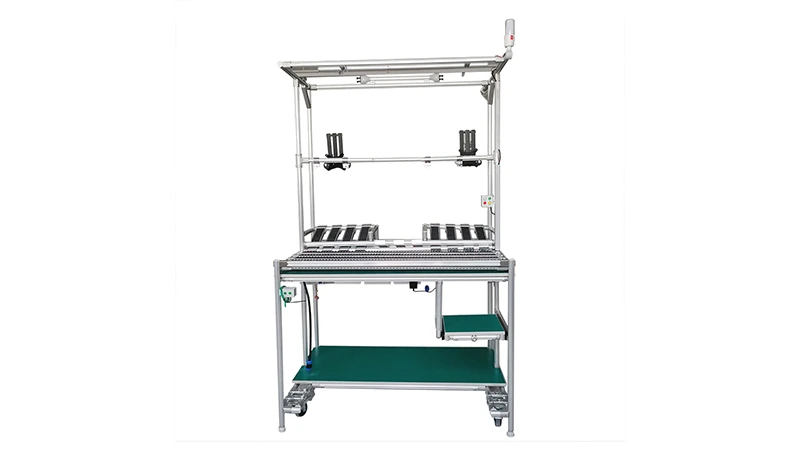
Aluminum Workbench D
Aluminum tube workbench is more flexible and durable, compared with traditional PE/ABS coated steel tube. It is easy to assemble, anti corrosion, rust protection, and recycle use after disassemble.
Introduction: The Backbone of Efficient, Safe Manufacturing
In the fast-paced world of mechanical manufacturing, every tool, every surface, and every process plays a critical role in determining the success of production. Among these, workbenches stand as unsung heroes—they are the literal foundation where precision meets productivity, where heavy components are assembled, inspected, and prepared for the next stage of the line. But not all workbenches are created equal. When it comes to handling heavy components—think engine blocks, large gear assemblies, or industrial machinery parts—safety, stability, and durability aren't just buzzwords; they're non-negotiable.
This is where Aluminum Workbench D steps in. Designed with the unique challenges of mechanical manufacturing in mind, this workbench isn't just a flat surface to place tools. It's a thoughtfully engineered solution that addresses the dual demands of heavy-duty performance and operator safety. In this article, we'll dive deep into how Aluminum Workbench D transforms the way manufacturers handle heavy components, exploring its design, safety features, integration with lean systems, and real-world impact. Whether you're a plant manager looking to upgrade your workspace or a safety officer aiming to reduce workplace incidents, understanding the value of Aluminum Workbench D could be the key to unlocking a more efficient, safer manufacturing floor.
Meet Aluminum Workbench D: More Than Just a Workbench
Let's start with the basics: What exactly is Aluminum Workbench D? At first glance, it might look like any other workbench, but a closer inspection reveals a design tailored for the rigors of mechanical manufacturing. Unlike generic workbenches made from wood or low-grade steel, Aluminum Workbench D is built using high-quality aluminum profile—a material celebrated for its unique blend of strength and lightweight properties. This choice of material isn't arbitrary; aluminum profile offers exceptional rigidity, corrosion resistance, and modularity, making it ideal for environments where heavy loads and frequent use are the norm.
One of the defining features of Aluminum Workbench D, as noted in its specifications, is its single-deck design without casters. While some workbenches prioritize mobility, this model doubles down on stability. By eliminating casters, it minimizes the risk of unintended movement when heavy components are placed or shifted—a common hazard in workshops where even a small wobble can lead to accidents. The single-deck surface, typically measuring around 1200mm x 800mm (though customizable), provides ample space for large components without compromising on structural integrity. Underneath, a robust frame constructed from aluminum extrusion profile ensures that the workbench can support weights of up to 500kg or more, depending on configuration—far exceeding the capacity of many standard workbenches.
But Aluminum Workbench D isn't just about raw strength. It's the attention to detail that sets it apart. The edges of the workbench are rounded to prevent accidental cuts or scrapes, a small but crucial feature for operators who spend hours leaning over the surface. The deck itself is often finished with a non-slip coating, ensuring that oily or greasy components (common in mechanical manufacturing) stay firmly in place. Additionally, the aluminum profile structure allows for easy integration with accessories like tool rails, overhead shelves, or LED task lighting—customizing the workspace to fit specific tasks without sacrificing stability.

Safety First: How Aluminum Workbench D Protects Operators and Components
When handling heavy components, safety is a multi-faceted challenge. It's not just about preventing the component from falling; it's about protecting the operator from strain, ensuring the workbench itself doesn't fail, and maintaining precision to avoid damage to expensive parts. Aluminum Workbench D addresses all these concerns through a combination of structural design and smart engineering.
First and foremost is stability. Heavy components, especially those weighing several hundred kilograms, exert significant downward force and can cause uneven stress distribution. Aluminum Workbench D's frame, built from thick-walled aluminum extrusion profile, is engineered to distribute weight evenly across its entire structure. This prevents warping or bending over time, even with constant use. The absence of casters, as mentioned earlier, eliminates a major stability risk—casters can lock improperly or wear down, leading to sudden shifts. Instead, Aluminum Workbench D is anchored to the floor (or sits on heavy-duty leveling feet) to create a fixed, immovable workspace.
Ergonomics is another critical safety aspect. Repetitive lifting or leaning over a poorly positioned workbench can lead to musculoskeletal injuries, a leading cause of downtime in manufacturing. Aluminum Workbench D is designed with adjustable height options (often ranging from 750mm to 900mm) to accommodate operators of different heights, reducing the need to bend or stretch. The flat, even surface ensures that components lie at a comfortable working height, minimizing strain on the back and shoulders. For tasks that require precision, such as assembling intricate mechanical parts, this ergonomic design also reduces fatigue, leading to fewer mistakes and higher quality output.
Then there's the matter of component protection. Heavy components are often expensive and delicate—even a small scratch or dent can render a part unusable. The non-slip deck of Aluminum Workbench D, often made from a soft yet durable aluminum honeycomb panel, provides a gentle surface that won't mar or scratch sensitive components. For environments where electrostatic discharge (ESD) is a concern—such as when handling electronic components alongside mechanical parts—some variants of Aluminum Workbench D can be upgraded to include ESD workstation features, like conductive materials that dissipate static electricity, further safeguarding both operators and parts.

Integration with Lean Systems: Streamlining Workflow, Reducing Waste
In today's manufacturing landscape, efficiency is just as important as safety. Lean manufacturing principles—focused on minimizing waste and maximizing value—have become the gold standard for modern plants. Aluminum Workbench D isn't just a safe workspace; it's a lean-friendly tool that seamlessly integrates into existing systems, enhancing workflow and reducing unnecessary steps.
One of the core tenets of lean manufacturing is "5S"—sort, set in order, shine, standardize, sustain. Aluminum Workbench D supports this by providing a structured, organized workspace. Its modular aluminum profile design allows for the addition of accessories like tool hooks, bins, and overhead racks, ensuring that tools and components are always within arm's reach. No more wasted time searching for a wrench or walking to a distant storage area—everything needed for the task is right at the workbench. This "set in order" approach reduces motion waste, one of the seven types of waste identified in lean methodology.
Another key lean principle is continuous flow, which aims to move components through the production line with minimal delay. Aluminum Workbench D excels here when paired with complementary systems like flow racks and conveyors. Imagine a scenario where heavy components arrive via a conveyor, are placed on Aluminum Workbench D for assembly, and then are moved to the next station using a flow rack. The workbench acts as a central hub, positioned strategically between these systems to eliminate bottlenecks. Because Aluminum Workbench D is fixed and stable, it can be precisely aligned with conveyors and flow racks, ensuring smooth transfer of components without the need for manual lifting or awkward maneuvering. This not only speeds up production but also reduces the risk of injury from lifting heavy parts between surfaces.
Waste reduction also extends to space efficiency. Aluminum Workbench D's compact design (especially compared to bulkier steel workbenches) allows for better use of floor space, enabling manufacturers to fit more workstations in the same area or create wider aisles for safer movement of personnel and equipment. Its aluminum profile construction is also lightweight enough to be reconfigured if production needs change—unlike permanent concrete or steel workbenches, which are difficult to move or modify. This flexibility supports the lean principle of "adaptability," ensuring the workspace can evolve with shifting production demands.
Key Components and Accessories: Enhancing Functionality
While Aluminum Workbench D is impressive on its own, its true potential is unlocked when paired with the right accessories. These add-ons transform the workbench from a static surface into a dynamic, task-specific tool that can adapt to a wide range of manufacturing needs. Let's take a closer look at some of the most valuable accessories and how they enhance safety and efficiency.
First, aluminum guide rails. These simple yet effective additions mount along the edges of the workbench, creating a barrier that prevents components from sliding off during assembly or inspection. For heavy components, even a slight nudge can send them toppling—guide rails act as a first line of defense, keeping parts secure and operators safe from falling objects. Available in different heights and materials (including ESD-safe options), they're easy to install using aluminum profile accessories like T-slot nuts and bolts, ensuring a snug fit that won't loosen over time.
Next, leveling feet. While Aluminum Workbench D is designed for stability, factory floors are rarely perfectly flat. Uneven surfaces can cause the workbench to rock, compromising both safety and precision. Adjustable leveling feet—often made from durable plastic or rubber with metal threads—allow operators to fine-tune the height of each corner, ensuring the workbench sits perfectly level even on rough terrain. Some models even include suction cup anti-slip foot adjusters, which grip the floor to further prevent movement, making them ideal for environments with oily or wet floors.
Tool storage is another area where accessories shine. Overhead tool racks, mounted to the aluminum profile frame, keep frequently used tools like wrenches, screwdrivers, and gauges within easy reach, eliminating clutter on the workbench surface. Drawer units, which can be attached to the side of the workbench, provide secure storage for smaller components or sensitive tools, reducing the risk of loss or damage. For heavier tools, such as power drills or impact wrenches, sturdy hooks mounted on the frame keep them off the floor and ready for use.
Finally, lighting. Proper illumination is critical when working with heavy components, as poor visibility can lead to mistakes or missed safety hazards. LED task lights, designed to clamp onto the aluminum profile frame, provide bright, focused light exactly where it's needed. Many models are adjustable, allowing operators to angle the light to avoid glare on shiny metal surfaces. Some even include ESD-safe features, making them compatible with ESD workstation setups.
| Accessory | Function | Safety/Efficiency Benefit |
|---|---|---|
| Aluminum Guide Rails | Prevent components from sliding off the workbench | Reduces risk of falling objects and operator injury |
| Adjustable Leveling Feet | Ensure workbench stability on uneven floors | Enhances stability, prevents rocking during heavy component handling |
| Overhead Tool Racks | Store tools within arm's reach | Reduces clutter, minimizes time spent searching for tools |
| LED Task Lights | Provide focused illumination on the work surface | Improves visibility, reduces errors and eye strain |
| ESD-Safe Drawer Units | Store sensitive components securely | Protects against electrostatic discharge, prevents component damage |
Real-World Impact: Case Study in Automotive Manufacturing
To truly understand the value of Aluminum Workbench D, let's look at a real-world example: a mid-sized automotive parts manufacturer that recently upgraded its assembly line workbenches. Prior to the upgrade, the plant was using old steel workbenches that were heavy, prone to rust, and lacked adjustability. Operators frequently complained about back pain from leaning over the non-adjustable surfaces, and there had been two incidents in the past year where heavy gear components had slipped off the workbenches, causing minor injuries and damaged parts.
The plant manager, tasked with improving safety and reducing downtime, turned to Aluminum Workbench D after researching lean system-friendly solutions. Over a two-week period, the old steel workbenches were replaced with 12 Aluminum Workbench D units, each customized with aluminum guide rails, adjustable leveling feet, and overhead tool racks. The results were striking, even in the first month.
First, safety incidents related to component handling dropped to zero. The non-slip deck and guide rails prevented any further, and operators reported feeling more confident when working with heavy parts. The adjustable height feature reduced complaints of back pain by 70%, according to a post-upgrade survey, leading to a noticeable improvement in morale and a 15% reduction in sick days related to musculoskeletal issues.
Efficiency also saw a boost. The integration with existing flow racks and conveyors (positioned adjacent to the workbenches) cut down on the time spent moving components between stations. Operators no longer had to walk to a distant storage area for tools, thanks to the overhead racks, reducing motion waste by an estimated 20%. Quality control inspectors noted fewer defects, attributing the improvement to better visibility from the LED task lights and the stable work surface, which minimized component movement during assembly.
Perhaps most impressively, the plant manager calculated that the investment in Aluminum Workbench D would pay for itself within 18 months, thanks to reduced downtime, lower injury-related costs, and improved productivity. "It's not just a workbench," they noted in a follow-up interview. "It's a complete workspace solution that aligns with our lean goals and puts safety first. We're already planning to roll out Aluminum Workbench D to other departments."
Why Aluminum? Comparing Materials for Heavy-Duty Workbenches
You might be wondering: Why aluminum? After all, steel is often seen as the go-to material for heavy-duty applications. While steel workbenches do have their merits, aluminum—specifically aluminum profile—offers unique advantages that make it better suited for handling heavy components in mechanical manufacturing. Let's break down the comparison.
Steel workbenches are undeniably strong, but they come with significant drawbacks. They're heavy, making them difficult to move or reconfigure if production needs change. They're also prone to rust, especially in manufacturing environments where oil, coolant, or moisture is present. Over time, rust can weaken the structure, compromising safety. Steel is also a poor conductor of heat, meaning it can get uncomfortably hot or cold in extreme factory temperatures, making it less ergonomic for operators who work at the bench for hours.
Aluminum profile, on the other hand, addresses all these issues. It's lightweight—about one-third the weight of steel—yet offers comparable strength when properly engineered. This makes Aluminum Workbench D easier to install and reconfigure, supporting lean manufacturing's need for adaptability. Aluminum is naturally corrosion-resistant, thanks to a thin oxide layer that forms on its surface, protecting it from rust even in damp or oily environments. This longevity reduces the need for frequent replacements, lowering long-term costs.
Another advantage of aluminum is its thermal conductivity. While this might sound like a downside, it actually helps the workbench maintain a more consistent temperature, preventing extreme hot or cold spots that can make the surface uncomfortable to touch. Additionally, aluminum profile is highly customizable. Unlike steel, which requires welding or cutting to modify, aluminum extrusion profiles use T-slot designs that allow accessories to be added or removed with simple tools. This modularity means Aluminum Workbench D can evolve with your needs—adding a drawer unit one month, a tool rack the next—without requiring a complete overhaul.
Wooden workbenches, while affordable, are even less suitable for heavy component handling. They lack the load capacity of aluminum or steel, warp over time with exposure to moisture, and are prone to splintering. They also can't be easily customized with accessories, making them a poor fit for lean or safety-focused environments.
Maintenance and Longevity: Keeping Aluminum Workbench D in Top Shape
Like any piece of industrial equipment, Aluminum Workbench D requires regular maintenance to ensure it continues to perform safely and efficiently. The good news? Its aluminum profile construction makes maintenance a breeze, requiring minimal time and resources compared to steel or wood alternatives.
Daily care is simple: Wipe down the workbench surface with a damp cloth to remove oil, grease, or debris. For stubborn stains, a mild detergent can be used—avoid harsh chemicals, as they may damage the non-slip coating or aluminum finish. Inspect the guide rails, leveling feet, and accessories for any signs of looseness, and tighten any bolts or screws as needed. This quick daily check takes less than five minutes per workbench but can prevent small issues from becoming major problems.
Weekly maintenance involves a more thorough inspection of the frame and structural components. Check the aluminum extrusion profile for any dents or bends, especially around the corners or where heavy components are frequently placed. While aluminum is strong, severe impacts can cause damage, so it's important to address any deformities promptly. Inspect the leveling feet for wear, and replace any that show signs of cracking or loss of grip. If the workbench is equipped with ESD features, test the conductivity regularly using a multimeter to ensure it's still dissipating static electricity effectively.
Long-term care is minimal, thanks to aluminum's corrosion resistance. Unlike steel, there's no need for painting or rust treatment. If the surface becomes scratched, a simple aluminum polish can restore its appearance, though scratches don't affect the structural integrity of the workbench. Accessories like drawer units or tool racks may need occasional lubrication (for moving parts like drawer slides), but this is infrequent and straightforward.
With proper maintenance, Aluminum Workbench D can last 10 years or more—far longer than many steel or wood workbenches. This longevity not only reduces replacement costs but also ensures a consistent, safe workspace for years to come.
Conclusion: Investing in Safety, Efficiency, and the Future
In the high-stakes world of mechanical manufacturing, where every decision impacts safety, efficiency, and bottom-line results, choosing the right tools and equipment is paramount. Aluminum Workbench D emerges not just as a workbench, but as a strategic investment in your team's well-being and your operation's success. Its combination of aluminum profile durability, safety-focused design, and lean system integration addresses the core challenges of handling heavy components, from reducing injury risks to streamlining workflow.
As we've explored, the benefits of Aluminum Workbench D extend far beyond the surface. It's a tool that supports lean principles by minimizing waste, enhances ergonomics to keep operators healthy and productive, and integrates seamlessly with existing systems like flow racks and conveyors. The real-world case study from automotive manufacturing illustrates how these benefits translate to tangible results: fewer injuries, higher efficiency, and a faster return on investment.
For manufacturers looking to stay competitive in today's market, where safety regulations are stricter and efficiency demands are higher than ever, Aluminum Workbench D isn't just an option—it's a necessity. It's a commitment to your team that their safety matters, and a commitment to your customers that you're dedicated to producing high-quality products efficiently. So, if you're ready to transform your manufacturing floor into a safer, more productive space, consider Aluminum Workbench D. Your operators, your bottom line, and your future self will thank you.