- Company Articles
- Products and Technology
- Product knowledge
- Using External Straight Aluminum Joints in Medical Device Assembly: Precision Focus

Using External Straight Aluminum Joints in Medical Device Assembly: Precision Focus
Related Product
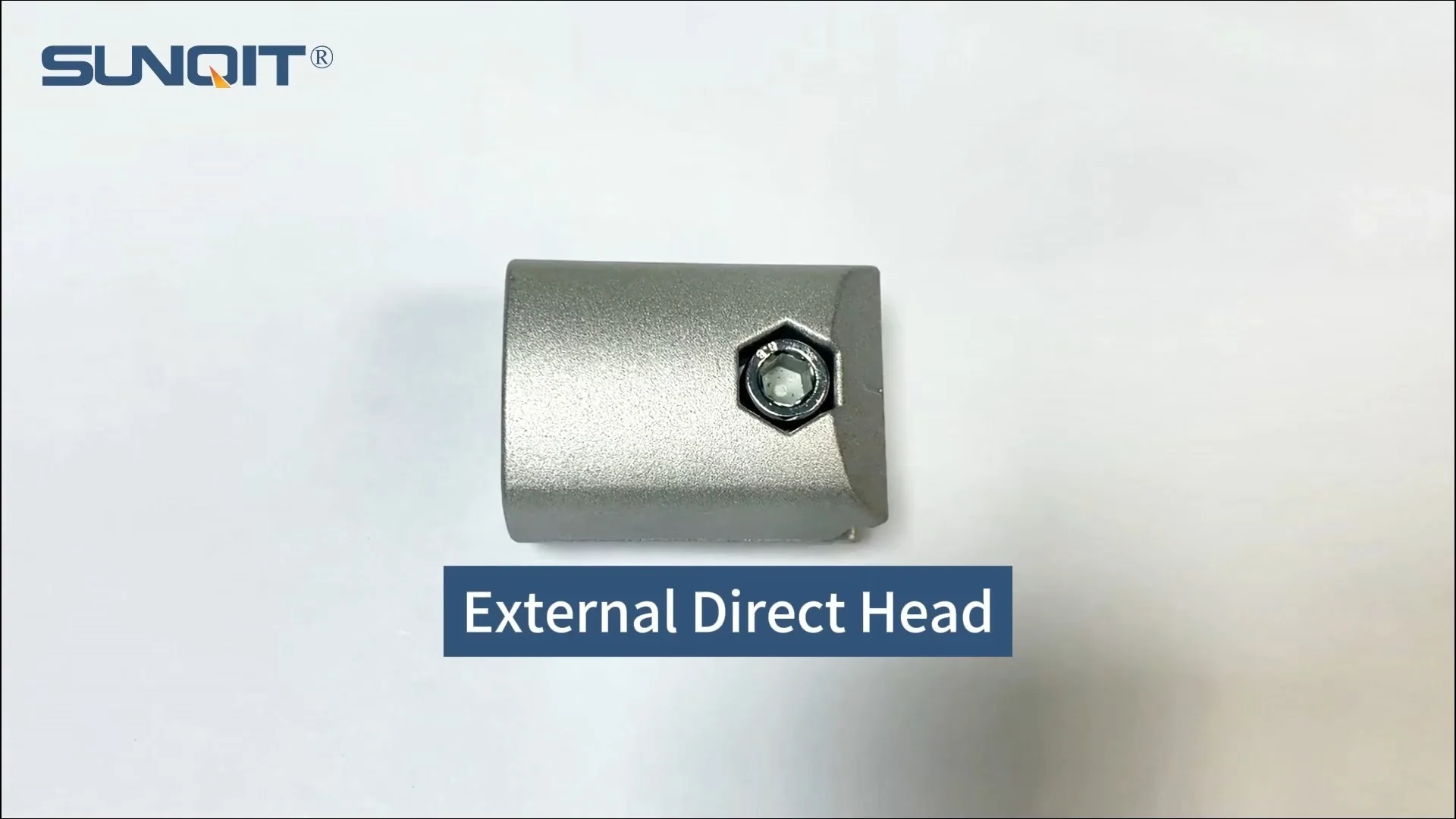
External Straight Aluminum Joint
Aluminum pipe joint outside connection used for two pcs 28pcs aluminum pipe connection in straight angle,it connects two pcs pipe from outside.
In the world of medical device manufacturing, where the margin for error is measured in fractions of a millimeter and patient safety hangs in the balance, every component matters. From the tiniest sensor in a heart monitor to the structural frame of a surgical robot, precision isn't just a goal—it's the foundation of trust. Today, we're diving into a quiet yet critical player in this high-stakes arena: the external straight aluminum joint. Often overlooked amid flashier technologies, this unassuming connector is a linchpin in assembling the tools that save lives, streamline care, and push the boundaries of medical innovation. Let's explore how these joints, paired with aluminum profiles, lean systems, and thoughtful workbench design, are redefining precision in medical device assembly.
The Critical Role of Lean Systems in Medical Manufacturing
Before we zoom in on the external straight aluminum joint itself, it's essential to understand the ecosystem it operates within: lean systems. Lean manufacturing isn't just a buzzword in medical device production—it's a lifeline. At its core, lean is about eliminating waste, optimizing flow, and fostering continuous improvement. In a field where delays can mean delayed treatments and inefficiencies can drive up costs (and thus patient expenses), lean principles are non-negotiable.
Imagine a traditional assembly line bogged down by rigid, one-size-fits-all workstations. If a new device requires a slightly different layout, reconfiguring the line could take days—wasting valuable time and disrupting production. Lean systems, by contrast, thrive on adaptability. They prioritize modularity, allowing teams to tweak workflows, adjust workspaces, and scale operations without overhauling entire setups. This is where aluminum profiles and their accompanying joints step in: they're the building blocks of lean, providing the flexibility to create, modify, and repurpose assembly systems on the fly.
In medical manufacturing, lean systems also play a vital role in maintaining compliance. Regulatory bodies like the FDA demand strict documentation and consistency, but they also recognize that innovation requires agility. A well-designed lean setup, with components that are easy to clean, calibrate, and validate, ensures that teams can meet both demands: staying compliant while rapidly iterating on device designs. For example, when a manufacturer shifts from assembling a standard syringe to a specialized insulin delivery pen, a lean system with modular workbenches and adjustable racks can adapt in hours, not weeks—keeping production on track and patients supplied with critical tools.
Aluminum Profiles: The Backbone of Precision Assembly
If lean systems are the strategy, aluminum profiles are the tactical toolkit. These extruded aluminum rails, with their signature T-slots and precise dimensions, have become the gold standard in medical device assembly for a handful of unbeatable reasons. First, aluminum is inherently lightweight—yet surprisingly strong. A typical 40x40mm aluminum profile can support hundreds of pounds, making it ideal for holding heavy assembly jigs or stacks of medical components without bowing or warping. This strength-to-weight ratio reduces strain on technicians (no more wrestling with bulky steel frames) and makes reconfiguring workspaces a one-person job, not a team effort.
Then there's corrosion resistance. Medical device assembly often happens in controlled environments, like cleanrooms, where exposure to disinfectants, solvents, and humidity is constant. Steel, if not properly coated, can rust; plastic can degrade under harsh chemicals. Aluminum, however, forms a natural oxide layer that shields it from corrosion, ensuring longevity even in demanding conditions. This durability isn't just about lifespan—it's about consistency. A rusted joint or warped frame could throw off alignment by a hair, leading to misassembled devices that fail quality checks (or worse, patient use). Aluminum profiles maintain their integrity, ensuring that the assembly line's "backbone" stays straight and true, day in and day out.
But perhaps the most compelling advantage of aluminum profiles is their customizability. Thanks to their T-slot design, they're compatible with a vast array of aluminum pipe accessories—brackets, clamps, tool holders, and, of course, joints. This means a single length of profile can be transformed into a workbench, a material rack, a conveyor guide, or a testing station, depending on the day's needs. For medical manufacturers juggling multiple product lines (think: diagnostic equipment one week, surgical tools the next), this versatility is invaluable. It's not just about saving money on equipment; it's about saving time and mental energy, letting teams focus on what matters most: building safe, effective devices.

External Straight Aluminum Joints: The Unsung Heroes of Precision
Now, let's turn our attention to the star of the show: the external straight aluminum joint. At first glance, it might seem like a simple connector—a small, unassuming piece of metal designed to link two aluminum profiles. But looks are deceiving. These joints are precision-engineered to meet the exacting standards of medical manufacturing, where even a fraction of a millimeter of misalignment can compromise a device's functionality.
So, what makes external straight aluminum joints stand out? Let's start with their design. Unlike some traditional joints that rely on welding or adhesives (both of which introduce variables like heat distortion or bond degradation), these joints use mechanical fastening. They typically feature a clamping mechanism that locks securely into the T-slots of aluminum profiles, creating a rigid, stable connection without damaging the profile itself. This mechanical approach ensures consistent alignment: most high-quality external straight joints boast tolerance levels of ±0.05mm, meaning two profiles connected by the joint will sit perfectly flush, no matter how many times they're assembled and disassembled.
Another key feature is their ease of use. In a fast-paced medical assembly environment, technicians don't have time to fumble with complex tools or spend 20 minutes tightening a single joint. External straight aluminum joints are often tool-free or require nothing more than a hex key, allowing for quick adjustments. Need to raise a workbench by 2 inches to accommodate a taller technician? Loosen the joint, slide the profile, retighten, and you're done—all in under a minute. This speed isn't just convenient; it's critical for maintaining lean workflows, reducing downtime, and keeping production on schedule.
Durability is another non-negotiable trait. Medical device assembly areas are rigorous environments: workbenches are cleaned daily with disinfectants, profiles are bumped by carts, and joints are subjected to constant vibration from machinery. External straight aluminum joints are built to withstand this abuse. They're often made from high-grade aluminum alloy (or stainless steel for extra corrosion resistance) and undergo rigorous testing to ensure they can handle repeated use without loosening or deforming. Some joints even feature internal gaskets or O-rings to prevent debris from entering the connection point—a small detail that makes a big difference in cleanroom settings, where contamination risks are ever-present.

Integrating Joints with Workbenches: Creating the Perfect Assembly Hub
A medical device assembly line is only as good as its workbenches. These are the command centers where technicians spend hours meticulously piecing together components, from tiny circuit boards to intricate mechanical parts. The design of these workbenches directly impacts precision, ergonomics, and technician satisfaction—and external straight aluminum joints are central to getting that design right.
Let's consider a typical workbench in a medical device facility. It needs to be stable enough to support sensitive equipment (like microscopes or torque wrenches), adjustable to fit technicians of different heights, and modular enough to add accessories (tool hooks, ESD mats, bin rails) as needed. Aluminum profiles form the bench's frame, but it's the external straight joints that hold everything together, ensuring the structure doesn't wobble during delicate tasks. For example, when assembling a pacemaker, technicians need to align wires with sub-millimeter accuracy; a shaky workbench could lead to misconnections, rendering the device useless. External straight joints eliminate that risk by creating a rock-solid base, even when the bench is loaded with tools and materials.
Ergonomics is another area where these joints shine. Repetitive strain injuries are a real concern in assembly work, and medical device technicians often perform the same motions hundreds of times a day. A workbench that's too low forces technicians to hunch; too high, and their shoulders ache. With external straight joints, adjusting the bench height is a breeze. Some facilities even equip their workbenches with electric lifts controlled by a foot pedal, but the underlying principle remains the same: the joints allow for infinite adjustability, ensuring each technician can work in a position that's comfortable and sustainable.
Modularity is equally important. A workbench that can only hold a single tool tray quickly becomes cluttered, leading to wasted time searching for supplies. External straight joints let teams add accessories on the fly: mount a bin rail along the back for screws and washers, attach a monitor arm for digital work instructions, or clamp a magnifying glass above the assembly area. When the next project requires a different setup, simply remove the accessories, reposition the joints, and the bench is ready for a new task. This flexibility isn't just about organization; it's about creating a workspace that adapts to the device, not the other way around.

Comparing Joint Options: Why External Straight Aluminum Joints Come Out on Top
To truly appreciate the value of external straight aluminum joints, it helps to see how they stack up against other common joint types. Below is a comparison table highlighting key metrics for medical device assembly:
| Feature | External Straight Aluminum Joint | Traditional Steel Welded Joint | Plastic Snap-Fit Connector |
|---|---|---|---|
| Precision Tolerance | ±0.05mm (consistent alignment) | ±0.2mm (prone to heat distortion) | ±0.5mm (loose fit over time) |
| Adjustability | Tool-free/quick release; infinite reconfigurations | Permanent (requires cutting/welding to modify) | Limited (snaps wear out after ~20 uses) |
| Cleanroom Compatibility | Excellent (smooth surfaces, no crevices for debris) | Poor (weld seams trap particles; rust risk) | Fair (smooth but may degrade with disinfectants) |
| Load Capacity | High (supports up to 500kg per joint) | Very high (but rigid, no flexibility) | Low (max 50kg; prone to bending) |
| Long-Term Cost | Higher upfront, but reusable for years; low maintenance | Low upfront, but expensive to replace/modify | Very low upfront, but frequent replacement needed |
The table tells a clear story: external straight aluminum joints strike the perfect balance between precision, flexibility, and durability—three traits that are indispensable in medical device assembly. While steel welded joints offer raw strength, they lack the adaptability lean systems demand. Plastic connectors are cheap and easy to use, but they can't match the joint's precision or longevity. For medical manufacturers, the choice is clear: investing in external straight aluminum joints isn't just about buying a component; it's about investing in a system that grows with your needs, maintains compliance, and ensures every device leaving the line meets the highest standards.
Real-World Impact: A Day in the Life of a Medical Device Assembler
To put this all in perspective, let's walk through a hypothetical (but realistic) day in the life of Maria, a technician at a mid-sized medical device company specializing in portable ultrasound machines. Maria's team is tasked with assembling the device's transducer array—a component with 128 individual sensors that must be aligned within 0.1mm of each other to ensure accurate imaging.
Maria arrives at her workstation, which is built from aluminum profiles connected by external straight aluminum joints. The workbench height is set to 38 inches, perfect for her 5'6" frame, and the surface is covered in an ESD mat to protect sensitive electronics. Above the bench, a overhead rack (also made from aluminum profiles and joints) holds her tools: tweezers, torque drivers, and a microscope. The night before, the team switched from assembling Model A transducers to Model B, which is 2cm wider. Instead of starting from scratch, the lead technician simply loosened the external straight joints on Maria's workbench, slid the side rails outward, and retightened them—all in 15 minutes.
As Maria begins assembling, she notices the transducer's circuit board needs a slight angle to fit into the housing. She grabs an adjustable bracket (another aluminum pipe accessory) and attaches it to the bench using an external straight joint. With a quick twist of her hex key, the bracket is set at 10 degrees, giving her the perfect angle to solder the connections. Later in the morning, a new batch of transducers arrives, and Maria needs to store the completed ones temporarily. She wheels over a material rack (again, aluminum profiles and joints) and adjusts its shelves to fit the Model B size—no tools required.
By lunch, Maria has assembled 20 transducers, all within tolerance. Thanks to the stability of her workbench (courtesy of those external straight joints), she hasn't had a single misalignment. The flexibility of the setup means she didn't waste time waiting for a new bench, and the clean, smooth surfaces of the aluminum components made disinfecting during her break a breeze. At the end of the day, Maria reflects: this isn't just a workbench—it's a partner in precision. And that partner is built, in large part, on the quiet reliability of external straight aluminum joints.
Beyond Precision: Sustainability and Future-Proofing
While precision and efficiency are the immediate benefits of external straight aluminum joints, their impact extends far beyond the assembly line. In an era where sustainability is increasingly central to business—and patient—values, aluminum's eco-friendly properties are a significant plus. Aluminum is 100% recyclable, and recycling it requires just 5% of the energy needed to produce new aluminum. For medical manufacturers looking to reduce their carbon footprint, this is a game-changer. When a joint or profile reaches the end of its life (which, with aluminum, can be decades), it can be melted down and repurposed into new components, minimizing waste.
Looking ahead, external straight aluminum joints are poised to play an even bigger role in medical device assembly. As devices become smaller, more complex, and more personalized (think: 3D-printed implants tailored to individual patients), the need for hyper-precise, adaptable assembly systems will only grow. Some manufacturers are already experimenting with "smart joints" equipped with RFID tags or sensors that monitor tightness and alignment in real time, alerting technicians to potential issues before they impact production. Others are exploring lightweight, high-strength aluminum alloys that reduce joint weight without sacrificing durability—critical for portable assembly carts used in field hospitals or remote clinics.
Conclusion: Precision That Saves Lives
At the end of the day, medical device assembly isn't just about building products—it's about building trust. Patients trust that the devices they rely on are safe, accurate, and built to the highest standards. Technicians trust that their tools and workspaces won't let them down. Manufacturers trust that their processes are efficient, compliant, and ready to adapt to tomorrow's innovations. External straight aluminum joints, in their quiet, unassuming way, are the glue that holds this trust together.
Paired with aluminum profiles, lean systems, and thoughtfully designed workbenches, these joints are more than components—they're enablers. They enable precision that ensures a pacemaker's leads connect correctly, that a diagnostic scanner's sensors align perfectly, and that a surgical robot's movements are smooth and accurate. They enable flexibility that lets manufacturers respond to new challenges, from pandemics to breakthrough technologies, without missing a beat. And they enable sustainability that ensures medical progress doesn't come at the planet's expense.
So the next time you hear about a life-saving medical device, take a moment to appreciate the unseen heroes behind it: the external straight aluminum joints, the aluminum profiles, and the lean systems that make it all possible. In a world where precision matters most, they're not just building better devices—they're building a healthier, more resilient future.