- Company Articles
- Products and Technology
- Product knowledge
- Using Flat Adjustable Swivel Castor Wheels for Heavy-Duty Material Handling

Using Flat Adjustable Swivel Castor Wheels for Heavy-Duty Material Handling
Related Product
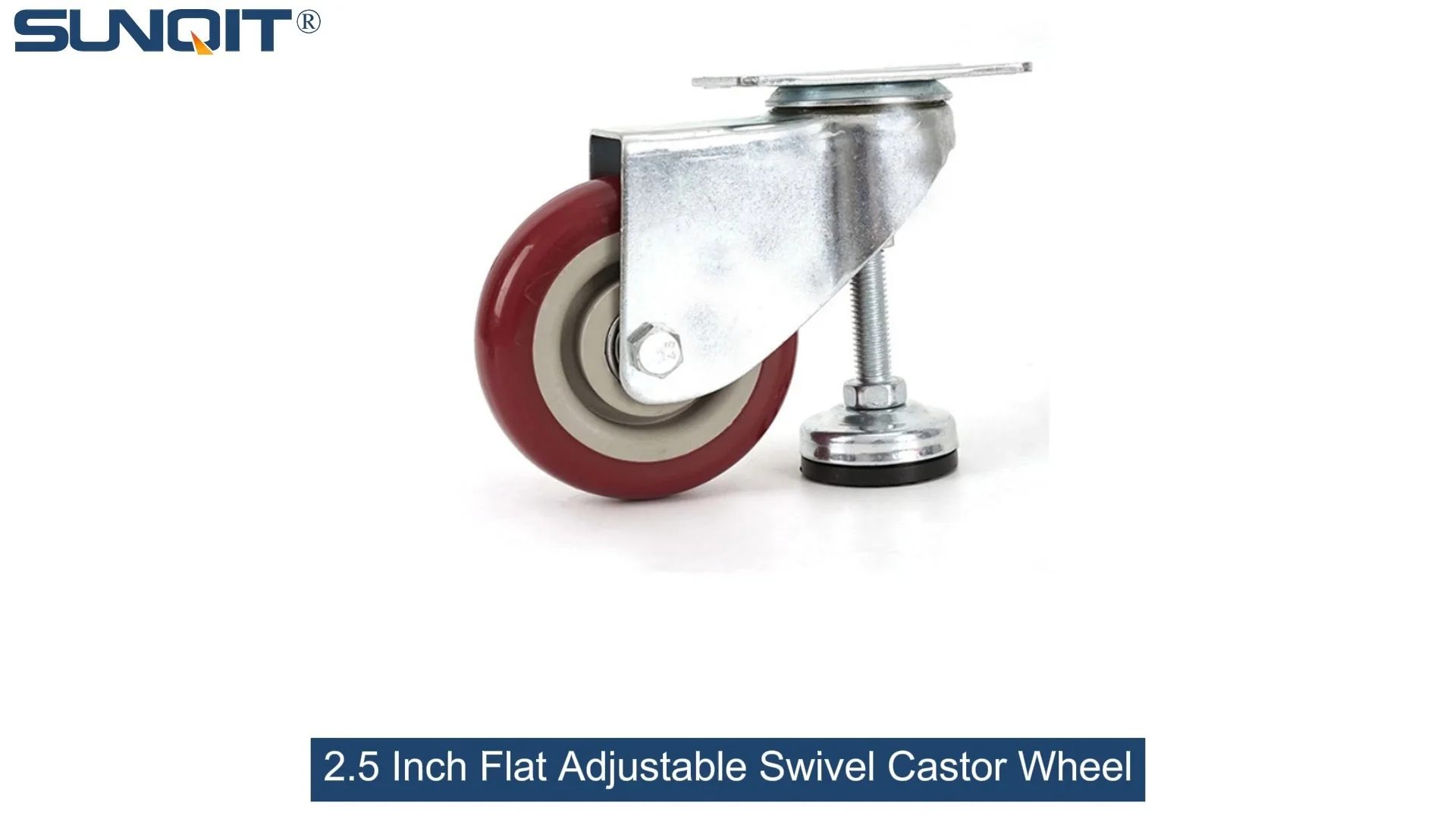
Flat Adjustable Swivel Castor Wheel
Swivel Chair Casters Ball Bearing Wheels Rubber Base with adjustable height function. Resistant to abrasion, impact and corrosion. Heavy payload can hold 80Kgs per pcs,which can make it works at a stable and smooth status.
How the right mobility solution transforms efficiency, safety, and workflow in industrial settings
Walk into any busy warehouse, manufacturing plant, or distribution center, and you'll quickly notice a hidden but critical player in the daily chaos: the wheels beneath the equipment. From loaded workbenches to bulky turnover racks, from assembly line trollies to heavy material carts—none of these would function smoothly without reliable castor wheels. In heavy-duty material handling, where every second counts and loads can weigh hundreds (or even thousands) of pounds, the choice of castors isn't just a detail—it's a decision that impacts productivity, worker safety, and long-term operational costs. Among the many options available, flat adjustable swivel castor wheels stand out as a versatile, problem-solving solution. Let's dive into why these unassuming components are becoming indispensable in modern industrial spaces.
The Hidden Costs of Cutting Corners on Mobility
Imagine a scenario: A warehouse manager, under pressure to meet tight shipping deadlines, opts for budget-friendly fixed castors on their new fleet of turnover trolleys. At first, things seem fine. But within weeks, the issues start. The trolleys, loaded with 500-pound pallets, are hard to maneuver around corners, requiring two workers instead of one to push. The fixed wheels scrape against uneven floor joints, leaving scuff marks and occasionally jamming, halting workflow. Worse, when workers need to adjust the height of a workbench to match a conveyor line, the non-adjustable castors force them to prop up the bench with wooden blocks—an unstable workaround that risks injury. Over time, these small frustrations add up: delayed orders, increased worker fatigue, higher maintenance costs, and even a few near-misses with accidents. This isn't just a hypothetical; it's a reality for many operations that overlook the importance of quality castors.
Heavy-duty material handling environments demand more than just "good enough" mobility. They need solutions that can handle extreme weights, navigate tight spaces, adapt to varying floor conditions, and reduce strain on workers. This is where flat adjustable swivel castor wheels step in—designed to address the specific pain points of industrial mobility, they turn cumbersome tasks into smooth, efficient processes.
What Are Flat Adjustable Swivel Castor Wheels, Anyway?
At their core, flat adjustable swivel castor wheels are a type of mobility component mounted to the bottom of equipment, allowing it to roll and pivot. But what sets them apart from standard castors? Let's break down the key terms:
- Flat design : Unlike some castors with bulky mounting plates or protruding brackets, flat adjustable castors have a low-profile base, making them ideal for equipment that needs to sit close to the floor or fit into tight under-shelf spaces. This design also improves stability by lowering the center of gravity, reducing the risk of tipping.
- Adjustable height : One of the most valuable features, height adjustability lets users fine-tune the equipment's elevation to match other work surfaces (like conveyor belts or lean pipe workbenches) or compensate for uneven floors. This adaptability eliminates the need for makeshift shims or blocks, ensuring a level, secure workspace.
- Swivel mechanism : Unlike fixed castors, which only roll forward and backward, swivel castors can rotate 360 degrees, allowing for easy maneuvering around obstacles, tight corners, and narrow aisles. This is a game-changer in crowded industrial settings where agility is key.
Together, these features make flat adjustable swivel castor wheels a versatile choice for everything from stationary workbenches that need occasional repositioning to heavy-duty trolleys that move constantly throughout a facility. They're not just wheels—they're a mobility system that adapts to your workflow, not the other way around.

Key Features That Make Flat Adjustable Swivel Castor Wheels Stand Out
Not all flat adjustable swivel castor wheels are created equal. To truly deliver in heavy-duty environments, they need to check several boxes. Let's explore the features that matter most:
1. Load Capacity: Built to Bear the Weight
In industrial settings, "heavy-duty" isn't just a buzzword—it's a requirement. A flat adjustable swivel castor wheel worth its salt should have a load capacity that far exceeds your typical daily needs. Most quality models are rated for 500 to 2,000 pounds per wheel, with some heavy-duty variants handling up to 5,000 pounds. This isn't just about avoiding breakage; it's about maintaining smooth operation even under maximum load. Overloading a castor can cause the swivel mechanism to seize, the wheel to deform, or the mounting plate to crack—all of which lead to downtime and safety risks.
2. Adjustable Height: Precision at Your Fingertips
The "adjustable" in flat adjustable swivel castor wheels is more than a convenience—it's a problem-solver. Imagine a lean pipe workbench used for assembling electronics: one day, it's positioned next to a conveyor belt at 36 inches high; the next, it needs to align with a lower packing station at 32 inches. With a turn of a wrench (or even a hand crank on some models), the castor's height can be adjusted by 1 to 4 inches, ensuring the workbench stays level and workers don't have to bend or stretch awkwardly. This adaptability also helps compensate for uneven concrete floors, which are common in older facilities. A few twists of the adjustment bolt can eliminate wobbling, making the equipment safer and more stable.
3. Swivel Radius: Maneuverability Without the Hassle
A swivel castor is only as good as its ability to pivot smoothly. The swivel radius—the distance from the center of the wheel to the center of the swivel mechanism—determines how tightly the equipment can turn. A smaller radius means better maneuverability in tight spaces, like between racking units or through doorways. High-quality flat adjustable swivel castors often feature precision ball bearings in the swivel head, reducing friction and ensuring the wheel rotates effortlessly, even under heavy loads. This is a stark contrast to cheaper castors, which may use plastic bushings that wear quickly, leading to stiff, jerky movement.
4. Wheel Material: Grip, Durability, and Floor Protection
The wheel itself is where the rubber meets the road—literally. The material chosen for the wheel affects traction, noise levels, floor protection, and resistance to wear and chemicals. Common options include:
- Polyurethane (PU) : A popular choice for industrial settings, PU wheels offer a balance of grip, durability, and floor protection. They're non-marking, quiet, and resistant to oils, grease, and most chemicals—ideal for warehouses and manufacturing plants.
- Rubber : Known for excellent traction, rubber wheels are great for uneven floors but may wear faster on smooth surfaces like concrete. They're also quieter than metal wheels, making them a good fit for noise-sensitive environments.
- Nylon : If you need extreme durability, nylon wheels are hard-wearing and resistant to heavy impacts, but they can be noisy and may scratch delicate floors (like polished concrete or tile).
- Steel : For the heaviest loads (think 10,000+ pounds), steel wheels are unbeatable. However, they're loud, prone to rust, and will damage most floors unless used on metal tracks.
Many flat adjustable swivel castor wheels let you choose the wheel material based on your environment, ensuring you get the right balance of performance and floor care.
5. Brake Systems: Stopping Power When You Need It
Mobility is important, but so is stability. Most flat adjustable swivel castors come with optional brake systems to lock the wheel in place, preventing unintended movement. The two most common types are:
- Total lock brakes : These lock both the wheel (preventing rolling) and the swivel mechanism (preventing pivoting), offering maximum stability. They're ideal for workbenches or equipment that needs to stay precisely positioned during use.
- Wheel lock brakes : These only lock the wheel, allowing the swivel to still rotate. Useful for trolleys that need to stay in place but may need minor repositioning without unlocking.
Brake levers should be easy to reach and engage, even with gloves on—a small detail that makes a big difference during a busy shift.

Real-World Applications: Where Flat Adjustable Swivel Castor Wheels Shine
Theory is one thing, but seeing these castors in action is where their value truly becomes clear. Let's look at a few key applications where flat adjustable swivel castor wheels are transforming workflows:
1. Lean Pipe Workbenches: Adaptable Workstations for Modern Manufacturing
Lean manufacturing principles emphasize flexibility and efficiency, and lean pipe workbenches are a cornerstone of this approach. Built from modular aluminum or steel pipes and joints, these workbenches are customizable, easy to reconfigure, and designed to minimize waste. But even the most modular workbench is only as flexible as its mobility system. Enter flat adjustable swivel castor wheels. By mounting the workbench on these castors, it becomes a mobile workstation that can be moved to where it's needed most—whether that's next to an assembly line, a quality control station, or a storage area. The adjustable height ensures it aligns perfectly with other equipment, reducing the need for workers to lift or transfer materials manually. And when the workbench is in place, the total lock brakes keep it steady, so precision tasks (like soldering or electronics assembly) can be done without wobbling.
2. Turnover Trolley and Rack: Streamlining Material Transport
Turnover trolleys and racks are workhorses in warehouses, used to transport everything from raw materials to finished goods. When loaded with heavy boxes or bulk items, these trolleys can be cumbersome to move—unless they're equipped with flat adjustable swivel castor wheels. The swivel function allows the trolley to navigate narrow aisles and tight corners with ease, while the flat design keeps the center of gravity low, reducing the risk of tipping. For example, a turnover rack loaded with 1,200 pounds of automotive parts can be pushed by a single worker instead of two, freeing up labor for other tasks. The adjustable height also helps when loading or unloading: raising the rack to match the height of a pallet jack or conveyor eliminates the need for bending, lowering the risk of back injuries.
3. Heavy-Duty Assembly Line Carts: Keeping Production Flowing
In manufacturing, assembly lines rely on a steady flow of components. Heavy-duty carts, loaded with parts for (cars) or appliances, need to move quickly and smoothly between stations. Flat adjustable swivel castor wheels ensure these carts can keep up with the pace. The precision swivel mechanism allows operators to maneuver the cart into tight spaces next to the line, while the durable wheel materials (like polyurethane) reduce noise, keeping the production floor quieter and less stressful. If the line is reconfigured (a common occurrence in agile manufacturing), the cart's height can be adjusted to match new workstations, avoiding costly modifications to the cart itself.

Beyond the Wheel: The Role of Caster Accessories
A flat adjustable swivel castor wheel is only part of the mobility system. To get the most out of your investment, it's worth considering caster accessories that enhance performance, extend lifespan, and simplify maintenance. Here are a few must-have accessories for industrial settings:
- Replacement wheels : Over time, even the toughest wheels wear down. Having spare wheels on hand means you can replace a worn one in minutes, instead of waiting for a new castor to arrive.
- Swivel head lubricant : To keep the swivel mechanism moving smoothly, regular lubrication is key. Silicone-based or lithium grease works best for most castors, preventing rust and reducing friction.
- Mounting plates and bolts : Upgrading to heavy-duty mounting plates (made of steel instead of aluminum) can increase the castor's load capacity and durability, especially in high-vibration environments.
- Floor protectors : For delicate floors (like polished concrete or hardwood in office-warehouse hybrids), plastic or rubber floor protectors can be added to the wheel to prevent scratches and scuffs.
- Brake extensions : In some cases, the brake lever on a castor may be hard to reach (e.g., on tall equipment). Brake extensions—long handles that attach to the lever—make it easier for workers to engage or disengage the brake without bending down.
Investing in these accessories isn't just about maintenance; it's about ensuring your flat adjustable swivel castor wheels continue to perform at their best for years to come.
How to Choose the Right Flat Adjustable Swivel Castor Wheel for Your Needs
With so many options available, selecting the right flat adjustable swivel castor wheel can feel overwhelming. But by breaking down your needs into clear categories, you can narrow down the choices and find the perfect fit. Here's a step-by-step guide:
Step 1: Calculate the Total Load
Start by determining the maximum weight the equipment will carry, including the weight of the equipment itself. For example, a lean pipe workbench that weighs 200 pounds and holds 800 pounds of tools and materials has a total load of 1,000 pounds. If the workbench uses four castors, each castor needs a load capacity of at least 250 pounds (1,000 ÷ 4). To be safe, add a 20% buffer—so 300 pounds per castor—to account for uneven weight distribution or occasional overloading.
Step 2: Assess Your Environment
Consider the conditions the castors will operate in:
- Floor type : Smooth concrete, uneven asphalt, tile, or carpet? Choose wheel materials that protect the floor and provide good traction.
- Environmental factors : Is the area wet (like a food processing plant), dusty (like a woodworking shop), or exposed to chemicals (like a automotive garage)? Look for castors with corrosion-resistant materials (stainless steel, galvanized steel) and sealed bearings to keep out debris.
- Noise restrictions : In offices or areas with noise-sensitive equipment, opt for polyurethane or rubber wheels, which are quieter than nylon or steel.
Step 3: Determine Mobility Needs
How often will the equipment be moved? How tight are the spaces it needs to navigate? If it's moved daily through narrow aisles, prioritize a small swivel radius and smooth-rolling wheels. If it stays in place most of the time but needs occasional repositioning, focus on stability and easy height adjustment.
Step 4: Decide on Adjustment Range
Measure the minimum and maximum heights you'll need. For example, if your workbench needs to align with surfaces ranging from 30 to 36 inches, look for castors with an adjustment range of at least 6 inches (to account for any overlap). Most adjustable castors offer 1 to 4 inches of adjustment, but extended-range models are available for specialized needs.
Step 5: Don't Forget Safety Features
Always prioritize castors with reliable brake systems, especially if the equipment will be used on inclines or near foot traffic. Total lock brakes are best for stationary tasks, while wheel locks may suffice for equipment that needs occasional movement.
Maintenance Tips to Extend the Life of Your Flat Adjustable Swivel Castor Wheels
Even the best flat adjustable swivel castor wheels need regular care to perform at their best. Here's a simple maintenance routine to keep them rolling smoothly for years:
- Inspect weekly : Check for loose bolts, worn wheels, or debris stuck in the swivel mechanism. Tighten any loose hardware and remove dirt or grime with a brush or compressed air.
- Lubricate monthly : Apply lubricant to the swivel head and wheel bearings to reduce friction. Use a silicone-based or lithium grease (avoid oil, which can attract dust).
- Clean as needed : In dirty or wet environments, wipe down the castors with a damp cloth to prevent rust and corrosion. For chemical exposure, rinse with water and dry thoroughly.
- replace worn parts promptly : If a wheel is cracked, the swivel is stiff, or the brake isn't working, replace the part immediately. Waiting can lead to further damage or safety risks.
- Train workers on proper use : Ensure employees know how to engage the brakes, adjust the height, and avoid overloading the equipment. Misuse is a common cause of castor failure.
Comparing Flat Adjustable Swivel Castor Wheels to Other Mobility Solutions
To truly appreciate the value of flat adjustable swivel castor wheels, it helps to compare them to other common mobility options. Here's a breakdown of how they stack up against fixed castors, non-adjustable swivel castors, and rigid industrial wheels:
| Feature | Flat Adjustable Swivel Castor Wheels | Fixed Castors | Non-Adjustable Swivel Castors | Rigid Industrial Wheels |
|---|---|---|---|---|
| Load Capacity | 500–5,000 lbs (high) | 500–3,000 lbs (medium-high) | 300–2,000 lbs (medium) | 1,000–10,000 lbs (very high) |
| Maneuverability | Excellent (360° swivel, tight turns) | Poor (only forward/backward) | Good (360° swivel, but no height adjustment) | Poor (fixed direction, no swivel) |
| Height Adjustment | Yes (1–4 inches) | No | No | No |
| Floor Protection | Excellent (choice of wheel materials) | Good (depends on wheel material) | Good (depends on wheel material) | Poor (often metal, prone to scratching) |
| Safety Features | Total lock brakes, stable base | Limited (some have wheel locks) | Wheel locks (no swivel lock) | None (fixed position only) |
| Best For | Mobile workbenches, turnover trolleys, assembly line carts | Heavy stationary equipment, straight-line transport | Light to medium loads needing basic maneuverability | Extreme heavy loads on fixed paths (e.g., rail systems) |
As the table shows, flat adjustable swivel castor wheels offer the best balance of load capacity, maneuverability, adaptability, and safety—making them the top choice for most heavy-duty material handling applications.
Final Thoughts: Investing in Mobility, Investing in Success
In the fast-paced world of industrial operations, every decision impacts the bottom line. Choosing flat adjustable swivel castor wheels isn't just about buying a better wheel—it's about investing in a mobility solution that reduces downtime, improves worker safety, and makes your equipment more versatile. Whether you're outfitting a lean pipe workbench, a fleet of turnover trolleys, or heavy-duty assembly line carts, these castors deliver the performance, durability, and adaptability you need to stay competitive.
So the next time you walk through your facility, take a moment to look at the wheels beneath your equipment. Are they holding you back, or are they helping you move forward? With flat adjustable swivel castor wheels, the answer can be the latter—transforming your workflow, one smooth roll at a time.