- Company Articles
- Products and Technology
- Product knowledge
- Using Flat Adjustable Swivel Castor Wheels for Medical Device Transport Carts

Using Flat Adjustable Swivel Castor Wheels for Medical Device Transport Carts
Related Product
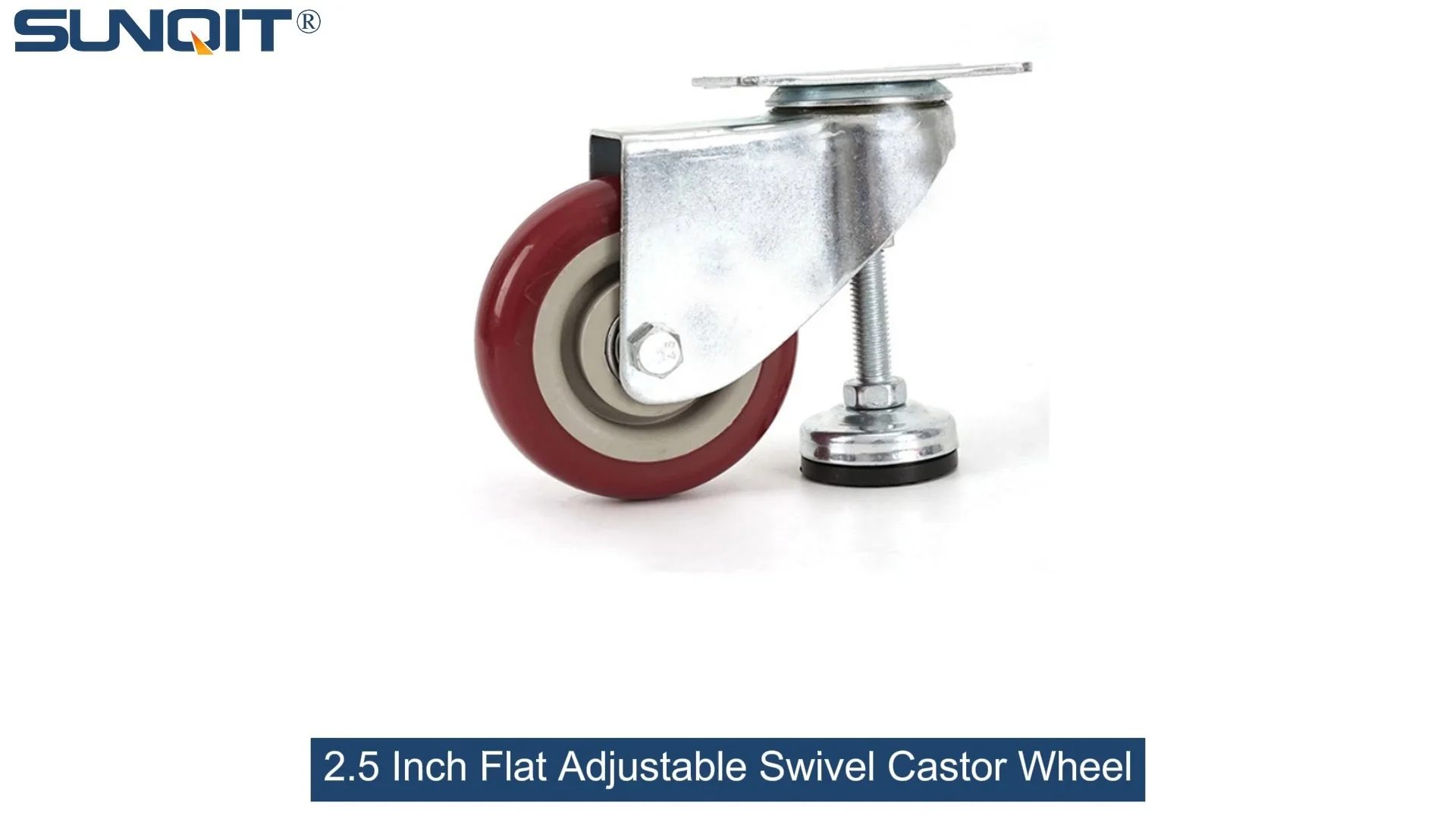
Flat Adjustable Swivel Castor Wheel
Swivel Chair Casters Ball Bearing Wheels Rubber Base with adjustable height function. Resistant to abrasion, impact and corrosion. Heavy payload can hold 80Kgs per pcs,which can make it works at a stable and smooth status.
Enhancing mobility, safety, and efficiency in healthcare environments
In the fast-paced world of healthcare, every second counts. From a nurse rushing to deliver medication to a patient in critical condition, to a lab technician transporting fragile samples for urgent testing, the ability to move equipment and supplies quickly and safely can quite literally be a matter of life and death. At the heart of this mobility lies an often-overlooked component: the wheels beneath the carts that keep hospitals, clinics, and labs running smoothly. Among these, flat adjustable swivel castor wheels have emerged as a game-changer, offering a unique blend of stability, maneuverability, and adaptability that's tailor-made for the demands of medical settings. In this article, we'll explore why these castors are becoming indispensable, how they integrate with other critical components like aluminum profiles and workbench systems, and why they're a cornerstone of efficient lean system implementation in healthcare.
The Critical Role of Mobility in Modern Healthcare
Walk through any hospital corridor, and you'll see a symphony of movement: medication carts gliding past gurneys, mobile workstations following nurses from room to room, and supply trolleys ferrying everything from bandages to IV fluids. These carts aren't just convenient—they're the backbone of patient care. A 2023 study by the American Hospital Association found that the average nurse spends nearly 25% of their shift retrieving or transporting items, a statistic that underscores just how dependent healthcare staff are on reliable mobility solutions.
Consider the case of a busy emergency department. During peak hours, nurses might need to access crash carts (equipped with life-saving defibrillators and medications) within seconds of a patient arriving in cardiac arrest. A cart that's slow to maneuver or prone to getting stuck could delay treatment by precious minutes. Similarly, in a lab, a transport cart carrying temperature-sensitive blood samples must move smoothly to avoid spills or temperature fluctuations that could render results inaccurate. In these scenarios, the wheels aren't just "parts"—they're partners in patient safety.
But mobility in healthcare isn't just about speed. It's about precision. Carts must navigate tight spaces: between hospital beds in a crowded ICU, through doorways barely wider than the cart itself, and over floors that shift from smooth linoleum to carpeted waiting areas. They must carry variable loads, from lightweight syringes to heavy imaging equipment. And they must do all this while maintaining sterility, reducing noise (to avoid disturbing patients), and minimizing strain on staff who push or pull them for hours on end. This is where flat adjustable swivel castor wheels shine—they're designed to address each of these challenges head-on.
The Unique Challenges of Medical Device Transport
To understand why not all castors are created equal, let's break down the specific hurdles medical transport carts face on a daily basis:
Weight Variability: From Feather-Light to Heavily Loaded
A typical medication cart might start the day empty (or lightly loaded with a few vials) and end it weighed down with dozens of pill bottles, IV bags, and medical tools. A mobile imaging cart, on the other hand, could carry equipment weighing 200 pounds or more. Castors must adapt to these extremes without compromising performance. A wheel that's too flimsy for heavy loads will wear out quickly or, worse, fail mid-transport. One that's overbuilt for light loads, however, will be and hard to push, increasing staff fatigue.
Floor Surfaces: A Maze of Textures and Obstacles
Hospital floors are a patchwork of materials. Operating rooms and labs often have polished, hard surfaces that are easy to clean but slippery. Patient rooms might have carpeted areas to reduce noise. Corridors could have transition strips between sections, or even small cracks from years of heavy foot traffic. A castor that works well on linoleum might struggle on carpet, and one that handles bumps poorly could jostle delicate equipment or cause spills.
Maneuverability: Navigating the "Human Obstacle Course"
Healthcare spaces are rarely designed with wide, open pathways. Nurses moving a medication cart must often weave between patients in wheelchairs, family members sitting in hallways, and other staff rushing to emergencies. In a pediatric ward, carts might need to make sharp turns around tiny beds or play areas. A cart with rigid, fixed wheels would get stuck constantly; one with poor swivel capability would require excessive force to turn, increasing the risk of collisions.
Safety and Sterility: Non-Negotiable Standards
In healthcare, "good enough" isn't enough. Carts must meet strict sterility standards, which means their wheels can't trap dirt, grime, or bacteria in hard-to-clean crevices. They must also minimize the risk of cross-contamination—no rust, no flaking materials, and easy to wipe down with disinfectants. Additionally, safety is paramount: a cart that tips over could injure staff or patients, or damage expensive equipment. Stability isn't optional.

Why Flat Adjustable Swivel Castor Wheels Are the Solution
Enter flat adjustable swivel castor wheels . These aren't your average office chair wheels. They're engineered with the unique demands of medical environments in mind, and their design addresses every challenge we've outlined. Let's break down their key features and why they matter:
Adjustable Height: Adapting to Uneven Surfaces
One of the most critical features of these castors is their adjustability. Unlike fixed-height wheels, which sit at a set distance from the cart's base, flat adjustable castors allow users to raise or lower each wheel individually. This is a game-changer for uneven floors. Imagine a lab cart being wheeled from a smooth concrete hallway into a room with a slightly warped floor—without adjustable castors, the cart might wobble, causing samples to slosh or equipment to shift. With adjustable castors, a quick turn of a wrench (or even a hand knob, in some models) levels the cart, ensuring stability. This adjustability also makes it easier to align the cart with workbench surfaces, so staff can slide materials directly from the cart to the bench without lifting—reducing strain and improving efficiency.
Swivel Functionality: 360-Degree Freedom
Swivel castors pivot on a vertical axis, allowing the wheel to turn independently of the cart. This means the cart can move in any direction with minimal effort. In tight spaces, this is invaluable. A nurse trying to maneuver a medication cart into a patient's room with a closed door can simply push the cart sideways, rather than backing up and repositioning. The "flat" design of these castors—where the mounting plate sits flush against the cart's base—adds an extra layer of stability. Unlike castors with bulky, raised mounts, flat castors lower the cart's center of gravity, reducing the risk of tipping, even when the cart is loaded unevenly.
Durable Materials: Built for the Long Haul
Medical environments are tough on equipment, so these castors are built to last. Many are made with aluminum profiles in their frames, a material chosen for its strength, light weight, and resistance to corrosion. Aluminum doesn't rust, even when exposed to frequent cleaning with harsh disinfectants—a must for maintaining sterility. The wheels themselves are often made from polyurethane, a material that offers the best of both worlds: it's soft enough to absorb shocks (protecting delicate cargo) and hard enough to resist wear. Polyurethane also provides excellent traction on both smooth and carpeted floors, and it's non-marking, so it won't leave scuffs on polished surfaces.
Brake Systems: Locking in Safety
Even the most maneuverable cart needs to stay put when in use. Flat adjustable swivel castors often come with integrated brakes that lock both the wheel (preventing rolling) and the swivel (preventing the wheel from turning). This dual-locking feature is crucial in settings like operating rooms, where a cart must stay perfectly still during procedures. Brakes are typically foot-operated, so staff can engage them without bending down—a small detail that adds up to big ergonomic benefits over a long shift.

Integration with Lean Systems and Aluminum Profile Carts
Healthcare facilities are increasingly adopting lean system principles to reduce waste, improve workflow, and focus resources on patient care. Lean is all about efficiency—eliminating unnecessary steps, streamlining processes, and ensuring every tool has a purpose. flat adjustable swivel castor wheels fit seamlessly into this philosophy, especially when paired with aluminum profile cart frames.
Aluminum profiles are modular, meaning they can be customized to build carts of any size or shape—no welding required. This flexibility is ideal for lean environments, where needs change frequently. A cart used for medication transport one month might be reconfigured as a mobile workbench the next, simply by adding or removing shelves. Flat adjustable castors complement this modularity perfectly. Their flat mounting plates attach easily to aluminum profiles, and their adjustability ensures the cart remains stable even as its configuration changes. For example, if a cart is modified to carry taller shelves, the castors can be adjusted to lower the center of gravity, maintaining stability.
Lean systems also emphasize reducing staff fatigue, which directly impacts patient care. A study by the World Health Organization found that nurses who use ergonomic equipment report 30% less musculoskeletal pain and are 15% more productive. By making carts easier to push, turn, and level, flat adjustable swivel castors reduce the physical strain of transport tasks. This means staff have more energy for patient interaction, not pushing heavy carts.
Consider a small clinic that recently switched to aluminum profile carts with flat adjustable castors. Previously, staff used heavy wooden carts with fixed wheels that were difficult to maneuver. Nurses often had to ask for help moving them, wasting time. The new carts, with their lightweight aluminum frames and swivel castors, can be pushed with one hand, even when fully loaded. The adjustable height feature means the carts can be aligned with exam tables, so supplies are at waist level—no more bending or reaching. The result? A 20% reduction in time spent on transport tasks, and staff reporting less back pain at the end of shifts. That's lean in action.

Comparing Castor Options: Why Flat Adjustable Swivel Wins for Medical Use
Not all castors are created equal, and choosing the right one for medical transport carts requires weighing the pros and cons of different designs. Below is a comparison of common castor types, highlighting why flat adjustable swivel castors stand out:
| Castor Type | Maneuverability | Stability | Adjustability | Sterility/Safety | Best For |
|---|---|---|---|---|---|
| Fixed Rigid Castors | Low (only moves forward/backward) | High (no swivel to cause tipping) | None | Medium (hard to clean around fixed mounts) | Heavy, straight-line transport (e.g., loading docks) |
| Swivel (Non-Adjustable) | High (360° movement) | Medium (higher center of gravity) | None | Medium (may have gaps for dirt) | Light, general-purpose carts (e.g., office supplies) |
| Flat Adjustable Swivel | High (360° + low profile) | Very High (low center of gravity + height adjustment) | High (individual height adjustment) | High (aluminum frames, sealed bearings, easy to clean) | Medical transport, lab carts, mobile workstations |
| Heavy-Duty Industrial Castors | Low (bulky, hard to turn) | Very High (built for extreme loads) | Limited | Low (often have crevices for dirt, heavy materials) | Warehouse machinery, construction equipment |
As the table shows, flat adjustable swivel castors strike the perfect balance for medical use. They offer the maneuverability of swivel castors without sacrificing stability, and their adjustability solves the floor unevenness problem that plagues other designs. When paired with aluminum profiles, they become part of a system that's not just functional, but adaptable—exactly what lean healthcare environments need.
Maintenance and Longevity: Keeping Castors Rolling Smoothly
Like any equipment, flat adjustable swivel castors perform best when properly maintained. Fortunately, their design makes upkeep straightforward—another reason they're ideal for busy healthcare settings.
Regular Inspection
Staff should check castors daily for signs of wear: cracks in the wheel, loose bolts, or debris stuck in the swivel joint. Even a small pebble trapped in the bearing can cause the wheel to drag, increasing strain on the cart and the person pushing it. A quick visual inspection takes less than a minute and can prevent costly breakdowns.
Cleaning Protocols
Disinfecting castors is critical for sterility. Most models can be wiped down with alcohol-based cleaners or hospital-grade disinfectants. The flat mounting plate and aluminum frame leave few hiding spots for bacteria, but pay special attention to the swivel joint and brake mechanism—these areas can collect dust if not cleaned regularly.
Lubrication
Swivel joints and wheel bearings should be lubricated every 3–6 months, depending on use. Use a food-grade or medical-grade lubricant to avoid contamination. A few drops of lubricant will keep the swivel smooth and prevent rust from forming in the bearing.
Replacement of Caster Accessories
Over time, parts like brake pads or wheel bearings may wear out. The good news is that most flat adjustable swivel castor wheels are designed with replaceable components, so you don't have to buy a whole new castor. This reduces waste (aligning with lean principles) and keeps costs down.
Real-World Impact: How These Castors Improve Patient Care
To understand the real difference these castors make, let's look at a few examples from healthcare facilities that have made the switch:
Case Study 1: Reducing Nurse Fatigue in a Busy ICU
A large urban hospital was struggling with high nurse turnover, partly due to complaints about heavy, hard-to-push medication carts. The carts used fixed, non-adjustable wheels that were difficult to maneuver in the ICU's tight spaces. After upgrading to aluminum profile carts with flat adjustable swivel castors, the hospital conducted a survey: 87% of nurses reported less back and shoulder pain, and 92% said they could navigate the carts more quickly. The result? Fewer missed breaks, lower turnover, and more time spent at the bedside with patients.
Case Study 2: Improving Lab Sample Integrity
A diagnostic lab was losing 5% of blood samples due to spills during transport. The lab's old carts had rigid wheels that jostled samples when rolling over uneven floors. Switching to carts with adjustable castors allowed staff to level the carts, even on warped lab floors. Spills dropped to less than 1%, reducing the need for costly redraws and speeding up test results for patients.
Case Study 3: Enhancing Operating Room Efficiency
An outpatient surgery center needed to turn over operating rooms faster between procedures. The center's equipment carts had bulky, hard-to-lock castors that required staff to spend extra time securing them. After installing flat adjustable swivel castors with dual-locking brakes, setup time per procedure decreased by 15 minutes. Over a day with 10 procedures, that added up to 2.5 hours of extra time—time that could be used to schedule more patients or give staff a much-needed break.
The Future of Medical Mobility: Innovations in Castor Design
As healthcare continues to evolve, so too will the tools that support it. Flat adjustable swivel castors are already at the cutting edge, but manufacturers are exploring new innovations to make them even better. One emerging trend is smart castors equipped with sensors that monitor wear and tear, sending alerts when parts need replacement. Imagine a cart that automatically notifies maintenance when a wheel bearing is starting to fail—preventing breakdowns before they happen.
Another area of focus is sustainability. Many manufacturers are using recycled aluminum in their aluminum profiles and plant-based polyurethane in wheels, reducing the environmental impact of castor production. There's also research into self-cleaning wheel materials that repel bacteria, further enhancing sterility in critical care settings.
Finally, ergonomics will continue to drive design.,,,.,:,,.
Conclusion: Investing in the Foundation of Healthcare Mobility
,. ,,. , .
,""——,,.,.