- Company Articles
- Products and Technology
- Product knowledge
- Using Flat Adjustable Swivel Castor Wheels to Upgrade Traditional Workbenches

Using Flat Adjustable Swivel Castor Wheels to Upgrade Traditional Workbenches
Related Product
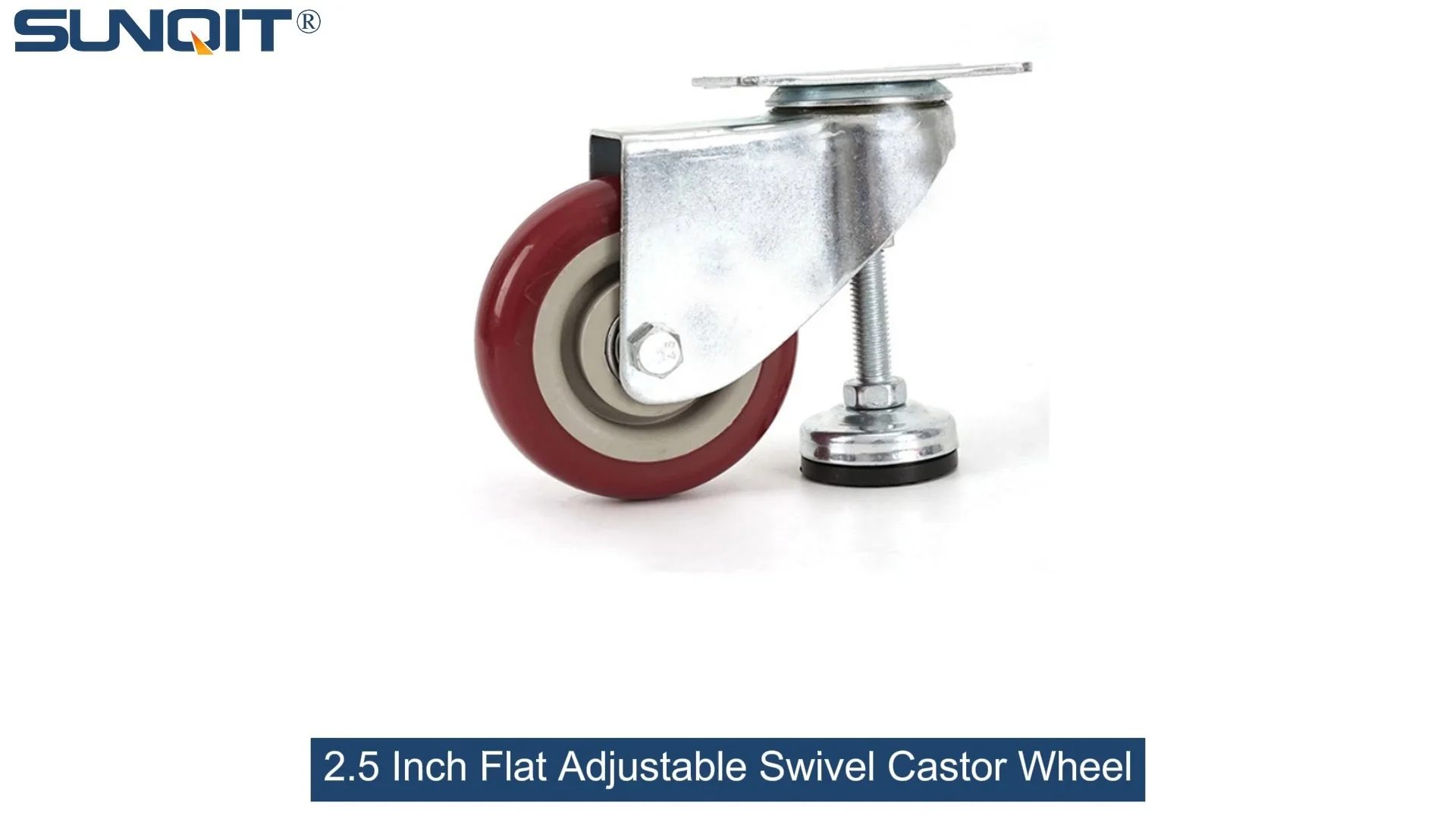
Flat Adjustable Swivel Castor Wheel
Swivel Chair Casters Ball Bearing Wheels Rubber Base with adjustable height function. Resistant to abrasion, impact and corrosion. Heavy payload can hold 80Kgs per pcs,which can make it works at a stable and smooth status.
The Frustration of Fixed Workbenches: A Common Workshop Headache
If you've ever spent a day in a busy workshop, garage, or manufacturing facility, you know the rhythm of the space: tools clinking, machines humming, and people moving—except, all too often, the workbenches stay put. For decades, traditional workbenches have been the backbone of these environments, sturdy and reliable but stubbornly immobile. They're bolted to the floor or so heavy that rearranging them feels like a Herculean task, leaving workers to adapt their movements to the workspace rather than the other way around.
Take Maria, for example. She runs a small custom furniture workshop where every project is unique. Last month, she had a rush order for a dining table that required sanding, staining, and assembly—each step needing a different setup. Her main workbench, a solid oak behemoth, was stuck in the corner near the sanding station. To stain the table, she had to carry the half-finished piece across the shop to the ventilation hood, risking scratches or dents. Then, when assembling, she hauled it back. By the end of the day, she was exhausted, and the project took twice as long as it should have. "I love that bench—it's sturdy enough to handle anything—but I wish it could keep up with how we work now," she told me. "Sometimes, I feel like I'm working around the bench instead of with it."
Maria's story isn't unique. Across industries, from auto repair to electronics assembly, workers and managers alike grapple with the limitations of fixed workbenches. They restrict workflow flexibility, create bottlenecks when reconfiguring for new projects, and even contribute to ergonomic issues when workers strain to reach tools or materials across a static surface. The problem isn't the workbench itself—it's the lack of mobility and adaptability. And that's where a simple but transformative upgrade comes in: flat adjustable swivel castor wheels.
What Are Flat Adjustable Swivel Castor Wheels, Anyway?
Before we dive into how these castors can revolutionize your workspace, let's clarify what they are. At first glance, a flat adjustable swivel castor wheel might look like any other caster, but it's designed with precision to solve the specific challenges of workbench mobility. Unlike basic fixed casters that only roll forward and backward, "swivel" means the wheel can rotate 360 degrees, making it easy to maneuver tight corners or pivot in place. "Flat adjustable" refers to the mounting plate—low-profile and designed to attach securely to the bottom of workbenches without adding unnecessary height—and the ability to adjust the wheel's height or level, ensuring stability even on uneven floors.
These aren't your average office chair casters, either. Industrial-grade flat adjustable swivel castor wheels are built to handle heavy loads—often up to 500 pounds per wheel—with durable materials like reinforced steel frames, polyurethane treads (which grip floors without scratching), and precision ball bearings for smooth rolling. Some models even come with locking brakes to keep the workbench steady when you need it to stay put, combining mobility with stability in a way that fixed workbenches can't match.
But what really sets them apart is their compatibility with a wide range of workbench types, including the increasingly popular lean pipe workbench. Lean pipe workbenches, made from modular aluminum or steel pipes and joints, are prized for their flexibility—you can add shelves, tool hooks, or bins as needed. Pairing them with flat adjustable swivel castor wheels takes that flexibility to the next level, turning a static work surface into a mobile workstation that can adapt to any task.

The Benefits of Upgrading: Why These Castors Are a Game-Changer
Mobility Without Compromise
The most obvious benefit is mobility, but it's more than just "being able to move the bench." It's about reclaiming control over your workspace. Imagine needing to reorganize your shop for a large project: instead of dismantling and rebuilding workbenches, you simply unlock the brakes, roll each bench into place, and lock them down. For Maria, this would mean moving her lean pipe workbench from the sanding area to the staining station in seconds, eliminating the need to carry heavy materials. In manufacturing settings, where production lines often shift to meet demand, this can cut setup time from hours to minutes.
Mobility also fosters collaboration. In a garage where two mechanics are working on different parts of a car, a mobile workbench can be wheeled between bays, keeping tools and parts within arm's reach. In a classroom or maker space, students can cluster their workbenches together for group projects, then spread out again for individual tasks—no heavy lifting required.
Ergonomic Adjustments for Happier, Healthier Workers
Ergonomics is a buzzword in workplaces these days, and for good reason: comfortable workers are more productive and less prone to injury. Traditional fixed workbenches often force workers into awkward positions—reaching up for tools on a high shelf, bending down to access parts in a lower bin, or stretching across the bench to grab a measuring tape. With flat adjustable swivel castor wheels, many models let you tweak the height of the workbench by adjusting the castor's extension, ensuring the surface sits at elbow height for each worker. No more hunching or straining—just a workspace that adapts to you .
Even the smallest adjustments matter. A study by the Occupational Safety and Health Administration (OSHA) found that workstations adjusted to individual ergonomic needs reduce musculoskeletal disorders by up to 35%. For a workshop with multiple employees of different heights, this adaptability isn't just a luxury—it's a necessity.
Durability That Stands Up to Workshop Life
Workshops are tough environments: sawdust, oil, grease, and heavy loads are part of daily life. Cheap casters might crack, rust, or seize up after a few months, but quality flat adjustable swivel castor wheels are built to last. Look for models with sealed bearings to keep out dust and debris, corrosion-resistant finishes (like zinc plating), and treads that can handle rough floors without wearing down. Many manufacturers back these castors with warranties of 5 years or more, a testament to their durability.
Take a metalworking shop, for example, where sparks fly and oil drips are constant. A castor with a polyurethane tread won't melt from heat, and a steel frame won't rust when exposed to cutting fluids. In a woodshop, the same castor will roll smoothly over sawdust without getting clogged, keeping the workbench moving even in messy conditions.
Compatibility with Your Existing Setup (No Need to replace Everything)
One of the biggest concerns when upgrading equipment is cost—do you have to buy a brand-new workbench to use these castors? The answer is almost always no. Most flat adjustable swivel castor wheels are designed to fit standard workbench legs or bases, with mounting plates that can be bolted or welded on (depending on the bench material). Even older, heavier workbenches can often be retrofitted, saving you the expense of replacing perfectly good furniture.
This compatibility extends to specialized workbenches, too. Lean pipe workbenches, with their modular design, are especially easy to upgrade—since they're built from lightweight but strong materials, adding castors doesn't compromise their structural integrity. You can even mix and match caster accessories, like extra-sturdy mounting brackets or heavy-duty brakes, to customize the setup for your specific needs.

How to Choose the Right Flat Adjustable Swivel Castor Wheels
Not all castors are created equal, and choosing the right ones for your workbench depends on a few key factors. Let's break down what to consider before making a purchase.
Weight Capacity: Know What You're Rolling
First, calculate the total weight your workbench will need to support. This includes the bench itself, plus any tools, materials, or equipment that will be on it regularly. Most workbenches use four castors, so divide the total weight by four to get the minimum weight capacity per castor. It's always smart to add a 20-30% buffer—if your bench and tools weigh 800 pounds total, look for castors rated for at least 250 pounds each (800 ÷ 4 = 200; 200 + 30% = 260). This ensures the castors won't wear out prematurely or fail under stress.
For lean pipe workbenches, which are often lighter than traditional wooden or steel benches, you might opt for castors with a lower capacity (around 150-200 pounds each), but if you're adding heavy machinery or tool chests, go higher. Always check the manufacturer's specs—skimping on weight capacity is a recipe for broken castors and potential injuries.
Brake Mechanisms: Locking In Stability
A mobile workbench is great, but you need it to stay put when you're using it. That's where brakes come in. There are two main types: wheel brakes (which lock the wheel itself, preventing rolling) and swivel locks (which lock the castor's rotation, keeping the wheel facing one direction). The best models have both, giving you maximum control—lock the swivel to keep the bench moving straight, or lock the wheel to stop it entirely.
Look for brakes that are easy to engage with your foot—you don't want to bend down every time you need to lock or unlock. Some castors even have "total lock" mechanisms that engage both the wheel and swivel with a single pedal, which is a huge time-saver in busy environments.
Tread Material: Protecting Your Floors and Improving Grip
The tread (the part of the wheel that touches the floor) matters more than you might think. Polyurethane treads are a popular choice because they're durable, quiet, and gentle on floors—they won't scratch hardwood, tile, or concrete. Rubber treads offer better grip, making them ideal for slippery environments (like garages with oil spills), but they can leave marks on some floors. Nylon treads are the toughest, resistant to chemicals and high temperatures, but they're noisier and can damage soft floors.
Consider your floor type: if you have polished concrete or hardwood, polyurethane is a safe bet. If you're in a metal shop with rough concrete, nylon might hold up better. And if noise is a concern (like in a classroom or office workshop), go for rubber or polyurethane—your ears will thank you.
Caster Accessories: Customizing for Your Needs
Don't overlook the little extras that can make a big difference. Caster accessories like mounting plates (to fit non-standard bench legs), shock-absorbing pads (for uneven floors), or extension stems (to adjust height) can turn a good castor setup into a great one. For example, if your workshop floor has cracks or bumps, adjustable-height castors with leveling feet can keep the workbench stable, preventing wobbling that could ruin precise work.
Another useful accessory is a dust cover for the swivel mechanism, which keeps sawdust, dirt, and debris from gumming up the bearings—essential for woodshops or outdoor workshops. And if you're retrofitting an older workbench, check if you need adapter plates to attach the castors to uneven or non-standard legs—many manufacturers sell these as add-ons.

Step-by-Step Installation: Upgrading Your Workbench in a Afternoon
You don't need to be a DIY expert to install flat adjustable swivel castor wheels—with a few basic tools and some patience, you can upgrade your workbench in under two hours. Here's how:
Pre-Installation Checks
First, clear the workbench of all tools and materials. Then, flip it upside down (or prop it on its side, using blocks to support it safely). Inspect the legs or base—are there existing holes for mounting, or will you need to drill new ones? If the bench is made of wood, check for rot or weakness in the legs; if it's metal, look for rust or bent sections. You want a solid foundation for the castors—repair any damage before proceeding.
Measure the distance between the legs to ensure the castors will be evenly spaced (this helps with stability). Most workbenches have legs at the corners, so each castor will go on a corner leg. For longer benches, you might need additional castors in the middle, but four is standard for most sizes.
Gathering Your Tools
You'll need: a drill (with bits matching the size of your castor bolts), a wrench or socket set, a level (to ensure the bench sits evenly), and possibly a pencil and ruler for marking drill points. If you're mounting to metal, you'll need metal drill bits and maybe a tap set to create threads for bolts. For wood, wood screws or bolts with nuts (if the legs are hollow) work best.
Mounting the Castors
1. Mark the mounting holes: Place the castor's mounting plate on the bottom of the workbench leg, centering it as much as possible. Use a pencil to mark the holes where you'll drill.
2. Drill the holes: Use a drill bit slightly smaller than the diameter of your bolts (this ensures a tight fit). For wood, drill straight through; for metal, drill until the bit penetrates the other side, then use a tap to create threads if needed.
3. Attach the castor: Line up the mounting plate with the drilled holes, insert the bolts, and tighten them with a wrench. Don't overtighten—you could strip the wood or metal.
4. Repeat for all castors: Do this for each leg, making sure the plates are aligned similarly on each one.
Testing and Adjusting
Once all four castors are mounted, carefully flip the workbench back over. Give it a gentle push—does it roll smoothly? If it wobbles, check if the castors are all at the same height (use a level on the workbench surface). Most flat adjustable castors have a height adjustment knob or bolt—turn it to raise or lower the leg until the bench is stable.
Test the brakes, too: engage them and try to push the bench. It should stay firmly in place. If the brakes slip, check that the bolts are tight or adjust the brake pad position (some models let you tweak this for better contact with the wheel).
Finally, load the bench with its usual tools and materials and take it for a spin—roll it across different floor surfaces, around corners, and up small inclines (like thresholds). If everything feels smooth and stable, you're done! If not, double-check the mounting or adjust the castor height.
Real-World Impact: Stories of Workshops Transformed
Still not convinced? Let's look at how these castors have changed the game for real people.
Case Study 1: A Small Electronics Repair Shop Cuts Downtime by 40%
Javier owns a phone and laptop repair shop in a busy mall. His shop is small—just 300 square feet—so space is precious. Before upgrading, he had two fixed workbenches: one for diagnostics and one for repairs. When a customer brought in a laptop that needed both services, he'd have to carry the device between benches, often juggling tools and parts. "It was chaotic," he says. "I'd drop screws, lose track of parts, and customers would get impatient waiting."
He decided to upgrade his main repair bench—a lean pipe workbench—with flat adjustable swivel castor wheels. Now, he rolls the bench to the diagnostic station, does the initial check, then rolls it back to his repair area without touching the device. "It sounds small, but it's cut my setup time in half," he says. "I can take on more repairs now because I'm not wasting time moving things around. Plus, the bench is so easy to clean—just roll it outside, hose it down, and roll it back in. My shop feels bigger and more organized, and customers notice the difference."
Case Study 2: A High-School Woodshop Gets Safer and More Collaborative
Ms. Carter teaches woodworking at a public high school. Her classroom has 12 fixed workbenches, each bolted to the floor in rows. "Group projects were a nightmare," she recalls. "Students would crowd around one bench, or carry heavy pieces across the room, which led to accidents—dropped boards, scraped knees, even a few broken tools."
Last year, the school allocated funds for shop upgrades, and Ms. Carter prioritized flat adjustable swivel castor wheels for the lean pipe workbenches they'd recently installed. "Now, students can roll their benches together in teams, then spread out when they need space," she says. "If someone needs to use the band saw, they roll their bench over, do the cut, and roll back. No more carrying heavy wood. We've had zero accidents since the upgrade, and the kids are more engaged because they're not stuck in one spot."
The castors have also made cleanup easier: students roll their benches to the side, sweep the floors, then roll them back—no more moving around fixed obstacles. "It's transformed the classroom from a rigid space into a flexible one," Ms. Carter adds. "And the best part? The castors are so durable, I don't have to worry about teenagers breaking them. They lock securely, so even when the kids are leaning on the benches, they don't budge."
Traditional vs. Upgraded Workbenches: A Side-by-Side Comparison
| Feature | Traditional Fixed Workbench | Workbench with Flat Adjustable Swivel Castor Wheels |
|---|---|---|
| Mobility | None—stuck in one spot | Full 360° movement; easy to roll and pivot |
| Space Flexibility | Static layout; hard to reconfigure | Easily rearranged for projects, events, or cleaning |
| Ergonomics | Fixed height; workers adapt to the bench | Adjustable height (on some models); bench adapts to workers |
| Setup Time for New Tasks | 1-2 hours (dismantling/rebuilding) | 5-10 minutes (rolling into place) |
| Weight Capacity | High (but immobile) | High (up to 2000+ pounds total with 4 castors) |
| Floor Protection | None—can scratch floors if moved (rarely done) | Polyurethane/rubber treads prevent scratches |
| Stability When In Use | High (bolted to floor) | High (with locking brakes) |
| Cost (Initial + Long-Term) | Lower upfront, but higher long-term (due to inefficiency) | Higher upfront ($100-$200 for 4 castors), but lower long-term (time saved, fewer injuries) |
Common Misconceptions: Debunking Myths About Mobile Workbenches
Even with all these benefits, some people are hesitant to upgrade. Let's tackle the most common myths.
Myth #1: "Mobile workbenches are wobbly and unstable."
Not true—with quality castors and locking brakes, a mobile workbench can be just as stable as a fixed one. The key is choosing castors with swivel locks and wheel brakes, which prevent movement in both rotation and rolling. In fact, adjustable-height castors can make a workbench more stable than fixed ones on uneven floors, since you can level it precisely.
Myth #2: "They're only for large workshops—small spaces can't benefit."
Small spaces benefit most from mobile workbenches. In a tiny garage or shop, being able to roll a workbench out of the way when you need to park a car or use a larger tool is a game-changer. Javier's 300-square-foot electronics shop is proof—he now fits more projects into less space because his workbench isn't taking up permanent real estate.
Myth #3: "They're too expensive—we can't afford to upgrade."
While quality castors aren't cheap (expect to pay $25-$50 per wheel), they're a fraction of the cost of a new workbench. For $100-$200, you can transform an existing bench into a mobile workstation, which pays for itself in time saved and reduced injuries. Many small businesses find that the ROI is less than a month—imagine cutting setup time by 40% and taking on more work.
Myth #4: "They'll damage our floors."
This depends on the tread material. Polyurethane or rubber treads are designed to grip floors without scratching—they're even safe for hardwood and tile. Avoid plastic or metal treads, which can scuff, but with the right castors, your floors will be fine. In fact, mobile workbenches can reduce floor damage by eliminating the need to drag heavy tools or materials across the floor.
Conclusion: Invest in Mobility, Reap the Rewards
Traditional workbenches have served us well, but in a world where flexibility and efficiency are key, they're holding us back. Flat adjustable swivel castor wheels offer a simple, affordable way to upgrade—turning static work surfaces into mobile, adaptable workstations that keep up with how we work now.
Whether you're a small-shop owner like Maria, a teacher like Ms. Carter, or a manufacturing manager looking to streamline production, these castors deliver tangible benefits: less time wasted moving materials, fewer ergonomic injuries, more flexibility to adapt to new projects, and a workspace that feels designed for you, not against you.
So why wait? Grab a set of castors, spend an afternoon upgrading your workbench, and see the difference for yourself. Your back, your productivity, and your workspace will thank you.