- Company Articles
- Products and Technology
- Product knowledge
- Using Flat Rigid Castor Wheels in Flexible Production Lines: Fixed Position Stability

Using Flat Rigid Castor Wheels in Flexible Production Lines: Fixed Position Stability
Related Product
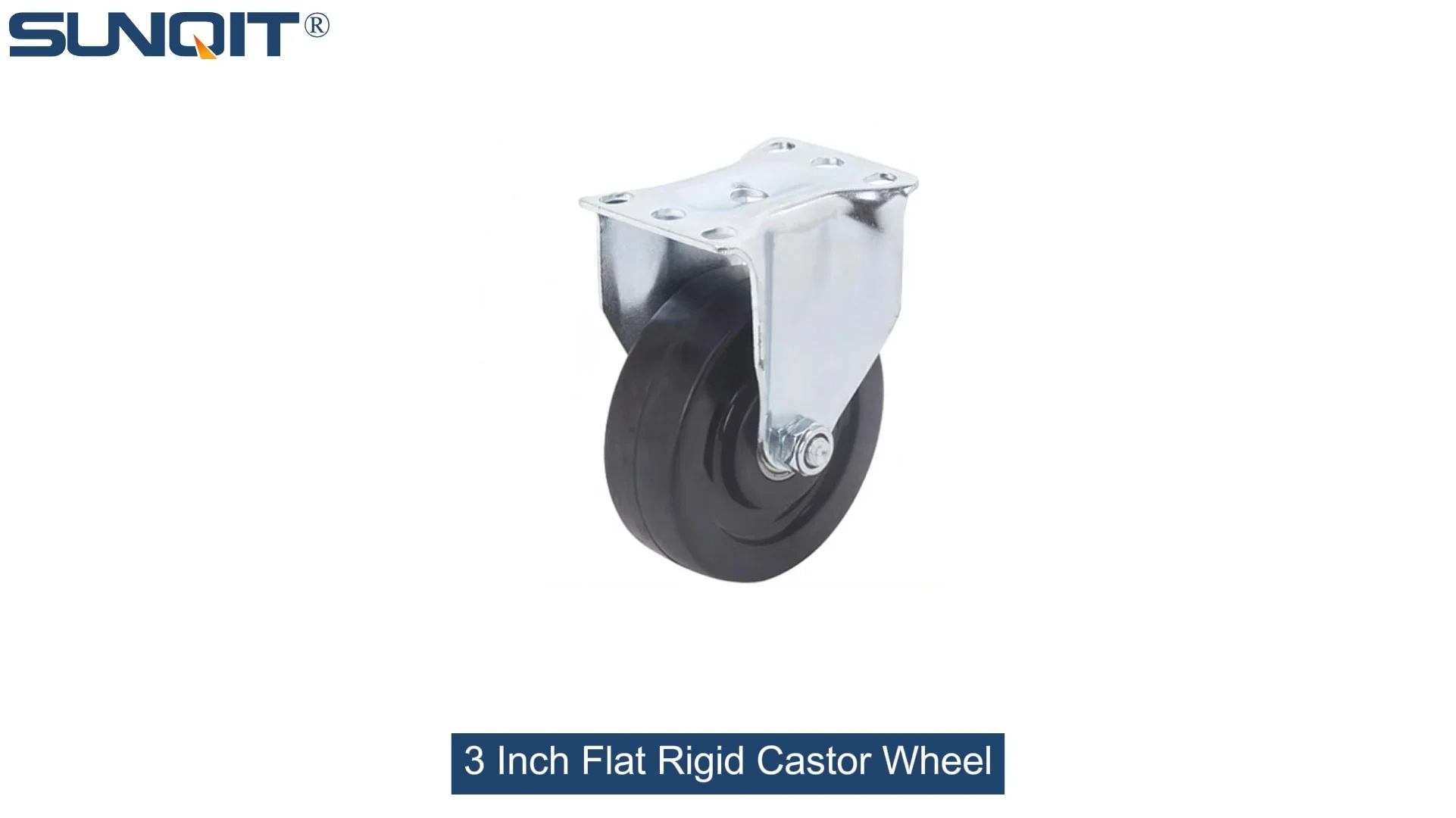
Flat Rigid Castor Wheel
Chair Casters Ball Bearing Wheels Rubber Base. Resistant to abrasion, impact and corrosion. Heavy payload can hold 70Kgs per pcs,which can make it works at a stable and smooth status.
The Evolution of Flexible Production: Where Mobility Meets Stability
In today's fast-paced manufacturing landscape, the ability to adapt is everything. Whether it's shifting between product variants, scaling production up or down, or reconfiguring workflows to meet sudden demand changes, flexible production lines have become the backbone of modern factories. But here's the catch: flexibility doesn't mean sacrificing precision. In fact, the most effective flexible systems are those that balance mobility— the ability to move equipment quickly—with stability, ensuring that once in place, tools, workstations, and conveyors stay exactly where they need to be. This is where flat rigid castor wheels step into the spotlight.
Imagine a production floor where assembly workbenches glide into new layouts in minutes, conveyor systems shift to support a new product line, and material racks reposition to optimize flow—all without a single tool or heavy lifting. Now, picture that same floor without the frustration of wobbly workstations, misaligned conveyors, or carts that drift mid-operation. That's the promise of flat rigid castor wheels: they let you move when you need to, and stay put when you don't. In an era where lean system principles drive efficiency, this balance isn't just convenient—it's critical to reducing waste, improving safety, and maximizing throughput.
What Are Flat Rigid Castor Wheels, Anyway?
Let's start with the basics. Castor wheels come in two primary types: swivel and rigid. Swivel castors rotate 360 degrees, making them ideal for equipment that needs to maneuver tight corners or change direction frequently—think of a hospital cart or a shopping trolley. Rigid castors, on the other hand, are fixed in direction: they only roll forward and backward, no swiveling. Now, add "flat" to the mix, and you're talking about a castor with a flat mounting plate that attaches directly to the bottom of equipment, providing a low-profile, secure connection.
Flat rigid castor wheels are designed for stability first. Their fixed orientation means they resist side-to-side movement, keeping equipment aligned even when pushed or pulled along a straight path. The flat mounting plate distributes weight evenly, reducing stress on the equipment frame—whether it's a steel workbench, an aluminum profile conveyor, or a heavy-duty material rack. And unlike some swivel castors with complex ball bearings, rigid castors have simpler mechanics, which often translates to lower maintenance and longer lifespans in high-use environments.
But don't mistake "simple" for "limited." Modern flat rigid castors are engineered with precision. Wheel materials range from durable polyurethane (gentle on factory floors) to tough nylon (for heavy loads) and rubber (for extra grip). Frames are often made of steel or aluminum—lightweight yet strong enough to handle the demands of daily production. Some even come with integrated brakes, adding an extra layer of security when equipment needs to stay locked in place during operation.

Why Fixed Position Stability Matters in Flexible Lines
Flexible production lines thrive on change, but that change needs to be controlled. When a workbench or conveyor shifts even a fraction of an inch during use, the consequences can ripple through the entire process. A misaligned conveyor might jam, causing delays. A wobbly workbench could lead to assembly errors, requiring rework that eats into profits. In precision industries like electronics or automotive manufacturing, where components are measured in millimeters, stability isn't just a nice-to-have—it's a requirement.
Flat rigid castor wheels address this by providing "fixed position stability": the ability to lock equipment into place with minimal play or movement. When properly selected and installed, they ensure that once a workstation is positioned, it stays there—even when operators lean on it, tools are set down, or materials are loaded. This stability reduces human error, speeds up training (since workers don't have to adjust for shifting equipment), and creates a more predictable workflow—all key pillars of a lean system.
Safety is another critical factor. Unstable equipment is a hazard: a cart that rolls unexpectedly could injure a worker, or a toppling rack could damage inventory. Flat rigid castors, especially those with brakes, minimize these risks by keeping equipment grounded. In busy facilities where foot traffic and machinery operate side by side, this peace of mind is invaluable.

Applications: Where Flat Rigid Castors Make the Biggest Impact
Flat rigid castor wheels aren't a one-size-fits-all solution, but they shine in specific scenarios across the production floor. Let's break down their most common applications and why they're a better fit than swivel or other castor types.
Workbenches: The Heart of Assembly Lines
Assembly workbenches are where the magic happens—where workers piece together products, inspect components, or package finished goods. These workstations need to be mobile (to reconfigure lines for new products) but rock-solid during use. A workbench equipped with flat rigid castors can be easily pushed into a new position, then locked down to create a stable surface for tasks that demand precision, like soldering circuit boards or assembling small mechanical parts. Unlike swivel castors, which can cause the bench to "walk" when leaned on, rigid castors keep the bench planted, reducing fatigue and errors.
Conveyors: Keeping Material Flow Smooth
Conveyors are the arteries of production lines, moving materials from one station to the next. For flexible lines, modular conveyors that can be repositioned are a game-changer—but they need to stay aligned to avoid jams. Flat rigid castors excel here: they keep the conveyor frame straight, ensuring that belts or rollers move materials evenly. In gravity-fed roller conveyors, where momentum is key, even a slight tilt from swivel castors can disrupt flow. Rigid castors maintain the conveyor's angle, keeping materials moving at the right speed.
Material Racks and Trolleys: Heavy Loads, Steady Movement
Racks and trolleys carrying raw materials or finished products often need to move between storage and production areas. Flat rigid castors are ideal for these heavy-duty tasks because they distribute weight evenly, reducing strain on floors anding equipment life. When loaded with boxes or pallets, a trolley with rigid castors is easier to push in a straight line than one with swivel castors, which can veer off course. And when parked, the fixed position stability ensures the trolley won't roll, even on sloped floors.

Choosing the Right Flat Rigid Castor: Key Factors to Consider
Not all flat rigid castors are created equal. To maximize stability and performance, you'll need to match the castor to your specific application. Below is a breakdown of the most important factors to consider, along with a comparison of common wheel materials to help guide your decision.
| Wheel Material | Load Capacity (Static/Dynamic, lbs) | Floor Compatibility | Key Stability Features | Best For |
|---|---|---|---|---|
| Polyurethane (PU) | 500–2,000 / 400–1,600 | Smooth floors (concrete, vinyl, tile); gentle on surfaces | Shock-absorbing, non-marking, good grip | Workbenches, light conveyors, electronics assembly |
| Nylon | 1,000–5,000 / 800–4,000 | Rough floors (industrial concrete, asphalt); resistant to chemicals | High strength, low rolling resistance, minimal flex | Heavy material racks, steel trolleys, outdoor use |
| Rubber | 300–1,500 / 250–1,200 | All floor types; excellent traction on slippery surfaces | Quiet operation, shock absorption, high friction | Food processing, cleanrooms, areas with moisture |
| Steel | 2,000–10,000+ / 1,500–8,000+ | Rough, uneven floors; high-temperature environments | Maximum durability, no flex under heavy loads | Heavy machinery, foundries, construction sites |
Load Capacity: Don't Underestimate the Weight
Every castor has a "dynamic" load capacity (weight it can handle while moving) and a "static" capacity (weight when stationary). Always choose a castor with a static capacity higher than the maximum load your equipment will bear—including the weight of the equipment itself plus materials, tools, and workers. Overloading a castor can cause the wheel to deform or the frame to bend, leading to instability.
Wheel Diameter and Tread Width
Larger wheels (4–8 inches) roll more easily over uneven floors, reducing the effort needed to move equipment. Wider treads distribute weight better, improving stability. For workbenches and conveyors that stay in one area, smaller wheels (2–4 inches) may suffice, but for trolleys that move long distances, larger diameters are better.
Mounting and Locking Mechanisms
Flat rigid castors typically mount via a plate with pre-drilled holes, which should align with the equipment's frame (e.g., aluminum profile, steel tubing). For maximum stability, use all mounting holes and secure with high-strength bolts. If your application requires extra security, look for castors with integrated brakes—either foot-operated or hand-locked—to prevent movement during operation.
Integration with Lean Systems: Stability as a Driver of Efficiency
A lean system is all about eliminating waste—whether it's time, materials, or effort. Flat rigid castor wheels support this by creating a more efficient, predictable production environment. Here's how:
Faster Changeovers: In lean manufacturing, quick changeovers (SMED) reduce downtime between production runs. Flat rigid castors make reconfiguring lines faster by allowing workers to move equipment without tools. Once in place, the castors' stability ensures the new layout is accurate, so there's no need for time-consuming adjustments.
Reduced Rework: Stability minimizes errors, which means less rework. For example, a stable workbench reduces assembly mistakes, while an aligned conveyor prevents jams that damage materials. This directly cuts waste and improves overall equipment effectiveness (OEE).
5S Compliance: The 5S methodology (Sort, Set in Order, Shine, Standardize, Sustain) relies on organized, clutter-free workspaces. Flat rigid castors help "Set in Order" by keeping equipment in its designated location, creating a visually organized floor plan that's easy to maintain.
In short, flat rigid castors don't just support lean systems—they enable them. By balancing mobility and stability, they turn flexible production lines from a concept into a practical, daily reality.
Case Study: How One Electronics Manufacturer Improved Efficiency with Flat Rigid Castors
The Challenge: A mid-sized electronics manufacturer was struggling with frequent changeovers between smartphone and tablet assembly lines. Their existing workstations used swivel castors, which often shifted during use, leading to misaligned component trays and assembly errors. Changeovers took 2 hours on average, and rework rates were 8%—well above industry standards.
The Solution: The manufacturer replaced swivel castors with flat rigid polyurethane castors on 20 workbenches and 5 conveyors. They chose PU wheels for their shock absorption (protecting delicate electronics) and aluminum frames to reduce weight. Each castor was equipped with a foot brake for added stability.
The Results: Within 3 months, changeover time dropped to 45 minutes (a 75% improvement). Rework rates fell to 2%, saving $40,000 annually in labor and materials. Workers reported less fatigue, as they no longer had to adjust workstations mid-shift. The plant manager noted, "The stability these castors provide has made our lean initiatives finally stick—we're not just talking about efficiency; we're living it."
Maintenance Tips: Keeping Your Castors Stable for the Long Haul
To ensure your flat rigid castors maintain their stability and performance, regular maintenance is key. Here are some simple steps to follow:
Clean Wheels Regularly: Dust, debris, and oil can build up on wheel treads, reducing grip and causing uneven wear. Wipe wheels with a damp cloth weekly, and use a brush to remove debris from axle housings.
Inspect for Wear: Check wheel treads for cracks, flat spots, or uneven wear. replace worn wheels promptly—damaged treads can compromise stability and damage floors.
Lubricate Axles: Apply a light machine oil to axles every 3 months to reduce friction and prevent rust. Avoid over-lubricating, as excess oil can attract dirt.
Tighten Mounting Bolts: Vibration from daily use can loosen bolts. Check mounting hardware monthly and tighten as needed to prevent the castor from shifting on the equipment frame.
Test Brakes: If your castors have brakes, test them monthly to ensure they engage fully and release smoothly. Adjust or replace brake pads as needed.
By following these steps, you'll extend the life of your castors and ensure they continue to provide the stability your production line depends on.
Conclusion: Stability as the Foundation of Flexible Manufacturing
In the world of flexible production, flat rigid castor wheels are the unsung heroes. They bridge the gap between mobility and stability, allowing manufacturers to adapt quickly without sacrificing precision. From workbenches to conveyors, these castors create a foundation of reliability that supports lean systems, reduces waste, and improves safety.
As manufacturing continues to evolve—with smaller batches, faster changeovers, and higher precision requirements—the demand for stable, mobile equipment will only grow. Flat rigid castor wheels are more than just a component; they're a strategic investment in the future of production. By choosing the right castor for your application, maintaining it properly, and integrating it into your lean system, you'll unlock a new level of efficiency that drives growth and competitiveness.
So, the next time you walk through a production line, take a moment to notice the wheels beneath the workstations and conveyors. Chances are, the ones that keep everything running smoothly are flat, rigid, and quietly ensuring that flexibility and stability work hand in hand.