- Company Articles
- Products and Technology
- Application Cases
- Using Heavy Duty Split Foot Seats in Cleanroom Environments (Medical Industry)

Using Heavy Duty Split Foot Seats in Cleanroom Environments (Medical Industry)
Related Product
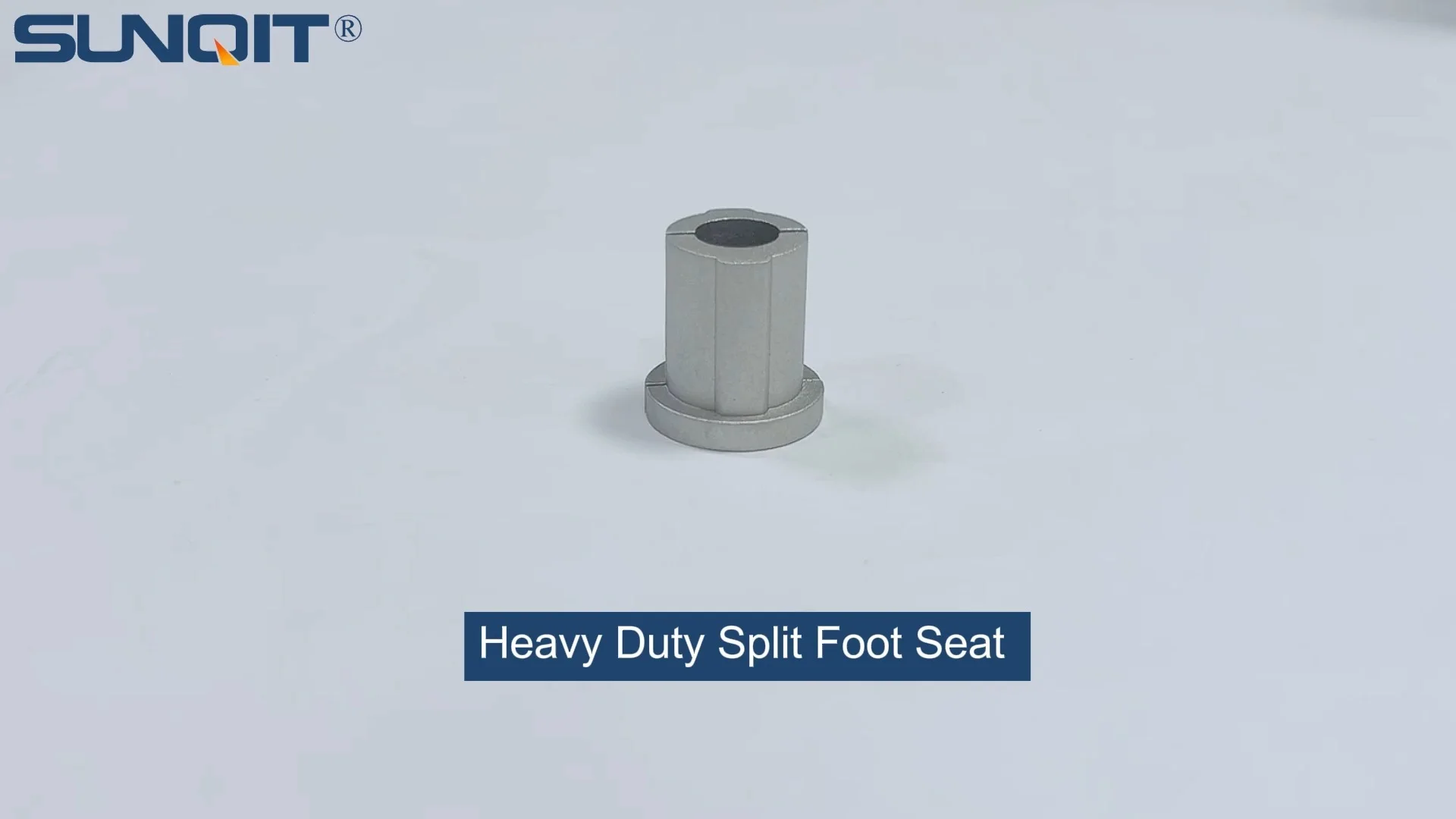
Heavy Duty Split Foot Seat
M10 aluminum heavy duty split foot deat with foot adjuster for workbench and flow rack.
In the hushed, sterile corridors of medical device manufacturing facilities, where precision is measured in fractions of a millimeter and contamination risks can have life-altering consequences, every piece of equipment plays a silent but critical role. Among these unsung heroes are the components we rarely notice—like the heavy duty split foot seats that anchor workbenches, material racks, and testing stations to the ground. These unassuming parts don't just hold things up; they stabilize workflows, protect sensitive electronics, and ensure that the tools medical professionals rely on are built with the care patients deserve. Today, let's pull back the curtain on how these small but mighty components shape the backbone of cleanroom operations, and why they've become indispensable in an industry where "good enough" simply doesn't exist.
What Are Heavy Duty Split Foot Seats, Anyway?
Before diving into their role in cleanrooms, let's get familiar with the star of the show. Heavy duty split foot seats are specialized support bases designed to anchor equipment like workbenches, racks, and assembly stations to the floor. Unlike generic furniture feet, they're engineered with two key priorities: stability and adjustability . Picture a sturdy, split-style base—often made of reinforced plastic or metal—that clamps securely to the bottom of a workbench leg, then bolts or adheres to the cleanroom floor. Their "split" design allows for micro-adjustments, so even if the floor isn't perfectly level (and let's face it, few are), the workbench stays rock-solid. This might sound trivial, but in a space where a shaky surface could cause a technician to misalign a surgical instrument or damage a delicate sensor, stability isn't just a convenience—it's a safety imperative.
But heavy duty split foot seats aren't one-size-fits-all. They come in various sizes and load capacities, tailored to the equipment they support. A lightweight testing station might use a compact model, while a workbench loaded with automated assembly tools could require a beefier version rated to handle hundreds of pounds. What unites them all? A commitment to precision that mirrors the medical industry itself.
Why Cleanrooms Can't Afford "Standard" Support
Cleanrooms are not ordinary workspaces. They're controlled environments where air particles, temperature, humidity, and even static electricity are meticulously regulated. In medical manufacturing—think implantable devices, diagnostic tools, or surgical robots—even a single dust particle or a tiny vibration can compromise product integrity. That's why the furniture and equipment inside can't rely on basic table legs or generic floor anchors.
Let's break down the risks of cutting corners with support systems:
- Vibration transfer: Traditional feet might not absorb vibrations from nearby machinery, causing sensitive equipment like microscopes or laser calibrators to shake. In a cleanroom assembling pacemakers, for example, a vibrating workbench could throw off the alignment of a 0.5mm electrode, rendering the device ineffective.
- Contamination hotspots: Gaps between generic feet and the floor can trap dust, lint, or moisture—perfect breeding grounds for bacteria. Heavy duty split foot seats, by contrast, are designed with smooth, non-porous surfaces and tight seals to eliminate these hiding spots, making them easier to clean and sterilize.
- Static buildup: Many medical devices are sensitive to electrostatic discharge (ESD), which can fry circuit boards or damage delicate components. Some heavy duty split foot seats are engineered with anti-static materials or grounding capabilities, ensuring that static doesn't jump from the workbench to the product.
- Regulatory compliance: Organizations like the FDA and ISO set strict standards for medical manufacturing environments. Using uncertified support components could lead to compliance violations, delays in product launches, or even recalls—costs no company can afford, and no patient should endure.
In short, cleanrooms demand support systems that are as rigorous as the standards they uphold. Heavy duty split foot seats aren't just "parts"; they're compliance tools in disguise.

The Aluminum Profile Connection: Strength Meets Cleanliness
To truly understand heavy duty split foot seats, we need to talk about their frequent partner: aluminum profiles. If split foot seats are the "feet" of cleanroom furniture, aluminum profiles are often the "bones." These lightweight, durable extrusions are used to build workbenches, material racks, and even conveyor systems, thanks to their modularity, corrosion resistance, and easy-to-clean surfaces. But aluminum profiles alone aren't enough—they need a stable foundation, which is where our split foot seats come in.
Aluminum profiles and heavy duty split foot seats form a symbiotic relationship. The profiles provide the structural framework for a workbench, while the foot seats anchor that framework to the floor, ensuring the entire setup remains rigid and level. This combination is particularly valuable in medical cleanrooms, where workbenches are often customized with tool holders, lighting, and ESD mats. An aluminum profile workbench with poorly secured feet might wobble under the weight of these add-ons, but with split foot seats, it becomes a steady, reliable platform—one technicians can trust with their most precise tasks.
What's more, aluminum profiles are inherently compatible with modular design, allowing facilities to reconfigure workbenches as needs change. Heavy duty split foot seats support this flexibility: they can be easily adjusted or reinstalled when a workbench is moved, ensuring that even after a layout shift, stability and compliance aren't compromised.

Integrating Split Foot Seats into Lean Systems: Efficiency Without Compromise
The medical industry doesn't just prioritize precision—it also thrives on efficiency. Lean systems, which focus on minimizing waste and streamlining workflows, have become a cornerstone of modern medical manufacturing. But lean principles and strict cleanroom requirements can sometimes feel at odds: How do you keep workflows agile while maintaining the stability and sterility needed for life-saving products?
Heavy duty split foot seats bridge this gap. Here's how:
1. Reducing Downtime with Quick Adjustments
Lean systems hate waste, and nothing wastes time like a workbench that's out of level. Traditional feet might require shims, tools, or even disassembly to adjust. Heavy duty split foot seats, with their built-in adjustment knobs or bolts, let technicians tweak the height or level in minutes—no need to halt production for hours. In a facility assembling 500 insulin pumps a day, those saved minutes add up to thousands of units over a year.
2. Supporting Modular Workflows
Lean manufacturing often relies on modular workstations that can be reconfigured for different products. A workbench used for assembling surgical scissors one week might be repurposed for catheter components the next. Heavy duty split foot seats, which attach securely but can be removed without damaging floors or profiles, make these transitions seamless. Technicians can disassemble, move, and reassemble the workstation with confidence, knowing the new setup will be just as stable as the old one.
3. Minimizing Maintenance Headaches
Worn-out feet can lead to wobbly workbenches, which in turn cause errors, rework, and frustration—all lean no-nos. Heavy duty split foot seats are built to last, with materials that resist wear, corrosion, and chemical damage from harsh cleanroom disinfectants. This means fewer replacements, less maintenance, and more time spent on value-adding tasks (like building better medical devices).
| Feature | Traditional Furniture Feet | Heavy Duty Split Foot Seats |
|---|---|---|
| Stability | Prone to wobbling on uneven floors | Micro-adjustable for rock-solid support |
| Cleanability | Gaps trap dust and debris | Smooth, sealed design for easy sterilization |
| Adjustment Time | Hours (requires tools/shims) | Minutes (built-in adjustment mechanisms) |
| ESD Compatibility | Rarely included | Available with anti-static materials/grounding |
| Durability | Wears quickly in harsh environments | Resists corrosion, chemicals, and heavy loads |

Real-World Impact: A Day in the Life of a Medical Cleanroom
To understand why heavy duty split foot seats matter, let's step into the shoes of Maria, a lead technician at a medical device plant outside Boston. Her team assembles neurostimulation devices—implantable tools that help patients with chronic pain. The work is delicate: each device contains a battery the size of a quarter, wires thinner than human hair, and a microchip that must be calibrated to within 0.01 volts.
Maria's workstation is an aluminum profile workbench, customized with an ESD mat, magnifying lamp, and a precision torque driver. Underneath, four heavy duty split foot seats keep the bench steady. This morning, the facility's HVAC system kicked on with a slight vibration—common in large buildings—but Maria doesn't notice. The split foot seats absorb the movement, so her hands remain steady as she attaches a wire to the microchip. Later, a new batch of devices arrives, requiring a taller fixture on her bench. She adjusts the split foot seats by turning a few bolts, raising the bench by 2 inches in under 5 minutes. No shims, no tools beyond a hex key, no disruption to the day's production quota.
After lunch, the cleanroom undergoes its daily wipe-down. Maria sprays a disinfectant on the workbench legs and foot seats; the smooth, non-porous surface repels the liquid, leaving no streaks or residue. No hidden crevices mean no bacteria lingering. At the end of the day, her team has assembled 120 neurostimulators—all passing initial quality checks. "You don't think about the feet until they fail," she says, laughing. "But when they work this well, they let us focus on what really matters: making sure these devices help people."
Maria's story isn't unique. In cleanrooms worldwide, heavy duty split foot seats quietly enable the precision, efficiency, and compliance that define medical manufacturing. They're not glamorous, but they're essential—much like the technicians who rely on them.
Choosing the Right Split Foot Seats: Key Considerations
Not all heavy duty split foot seats are created equal, and selecting the right ones for a medical cleanroom requires careful thought. Here are the questions facility managers and engineers should ask:
1. What's the Load Capacity?
Start with the basics: How much weight will the workbench or rack hold? Include the weight of the equipment, tools, materials, and even the technician's occasional leaning. Err on the side of overestimating—better to have a foot seat rated for 500 lbs than to risk a 400-lb load on a 300-lb seat.
2. What Materials Are Best for the Environment?
Cleanrooms use harsh disinfectants (like hydrogen peroxide or isopropyl alcohol) that can corrode some metals or degrade low-quality plastics. Look for foot seats made from chemical-resistant materials like reinforced nylon, stainless steel, or anodized aluminum. If ESD protection is critical, opt for conductive or static-dissipative materials.
3. How Adjustable Do You Need Them to Be?
Floors in older facilities might have more unevenness, requiring a wider range of adjustment. Some split foot seats offer 1-2 inches of height adjustment, while others go up to 4 inches. Consider future needs, too—will the workbench ever need to be raised for taller equipment or ergonomic adjustments?
4. Are They Compliant with Industry Standards?
Check for certifications like ISO 14644 (for cleanroom compatibility) or FDA guidelines for medical device manufacturing. A reputable supplier should provide documentation proving their foot seats meet these standards—don't settle for vague claims.
5. How Easy Are They to Install and Maintain?
Time is money, especially in lean environments. Look for foot seats that attach with common tools (no proprietary wrenches!) and require minimal upkeep. Avoid designs with small, easily lost parts—cleanrooms have enough to keep track of without hunting for tiny screws.
Conclusion: The Quiet Foundation of Quality
In the high-stakes world of medical manufacturing, where every component must meet uncompromising standards, heavy duty split foot seats are more than just hardware—they're guardians of quality. They stabilize the workbenches where life-saving devices are born, protect against contamination, and enable the lean workflows that keep production efficient and compliant. They may not grace the cover of industry magazines or win awards, but they earn the gratitude of technicians like Maria, who can focus on their craft knowing their tools are anchored in reliability.
As medical technology advances—with smaller devices, tighter tolerances, and stricter regulations—the demand for specialized support systems will only grow. Heavy duty split foot seats, as they are, will continue to evolve, too: perhaps with smarter adjustment mechanisms, more sustainable materials, or even integrated sensors to alert technicians to wear. But no matter how they change, their core purpose will remain the same: to provide the steady, unwavering foundation that medical manufacturing demands.
So the next time you walk through a cleanroom, take a moment to look down. Under those workbenches and racks, you'll see the quiet heroes of precision—proof that even the smallest components can make a world of difference.